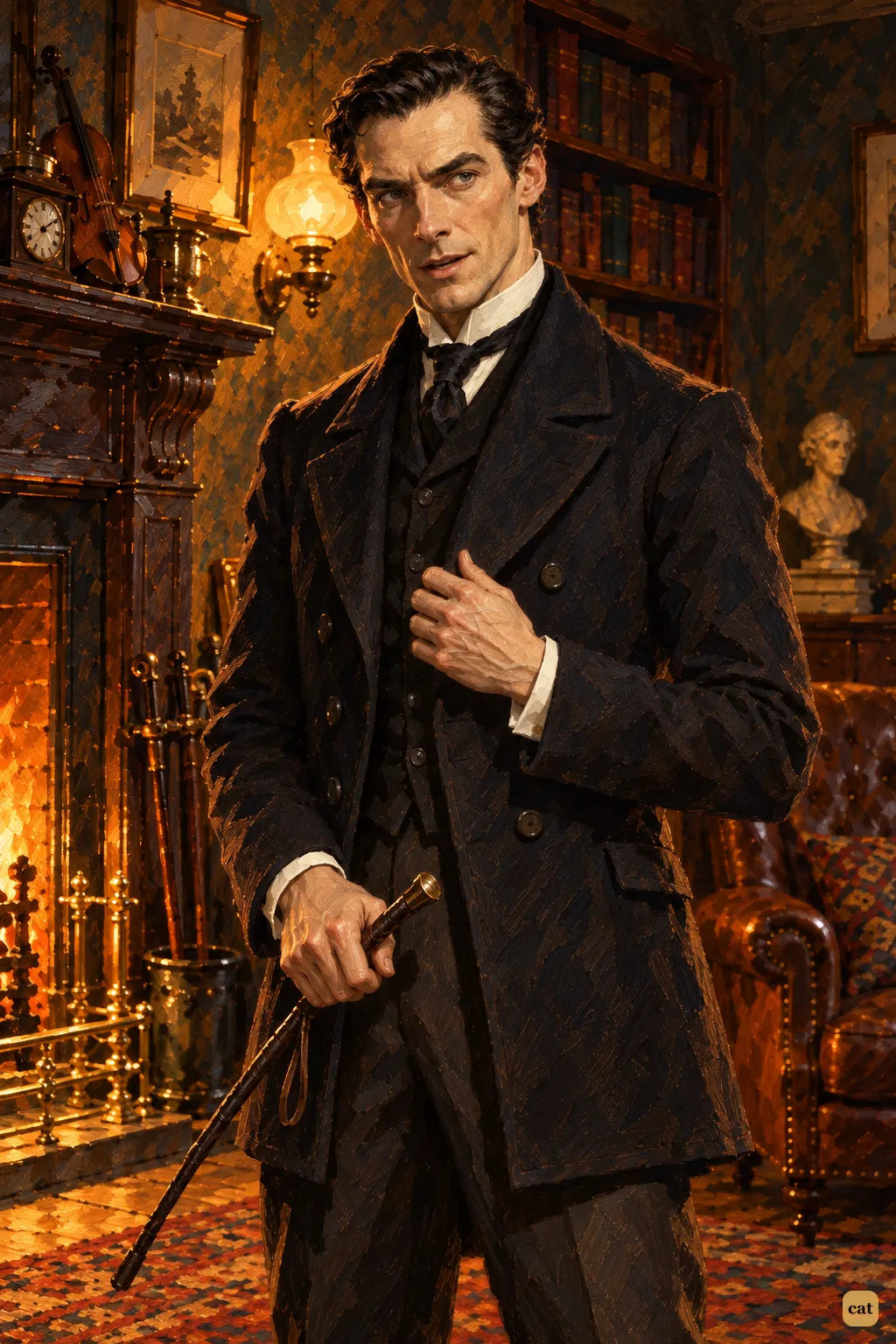
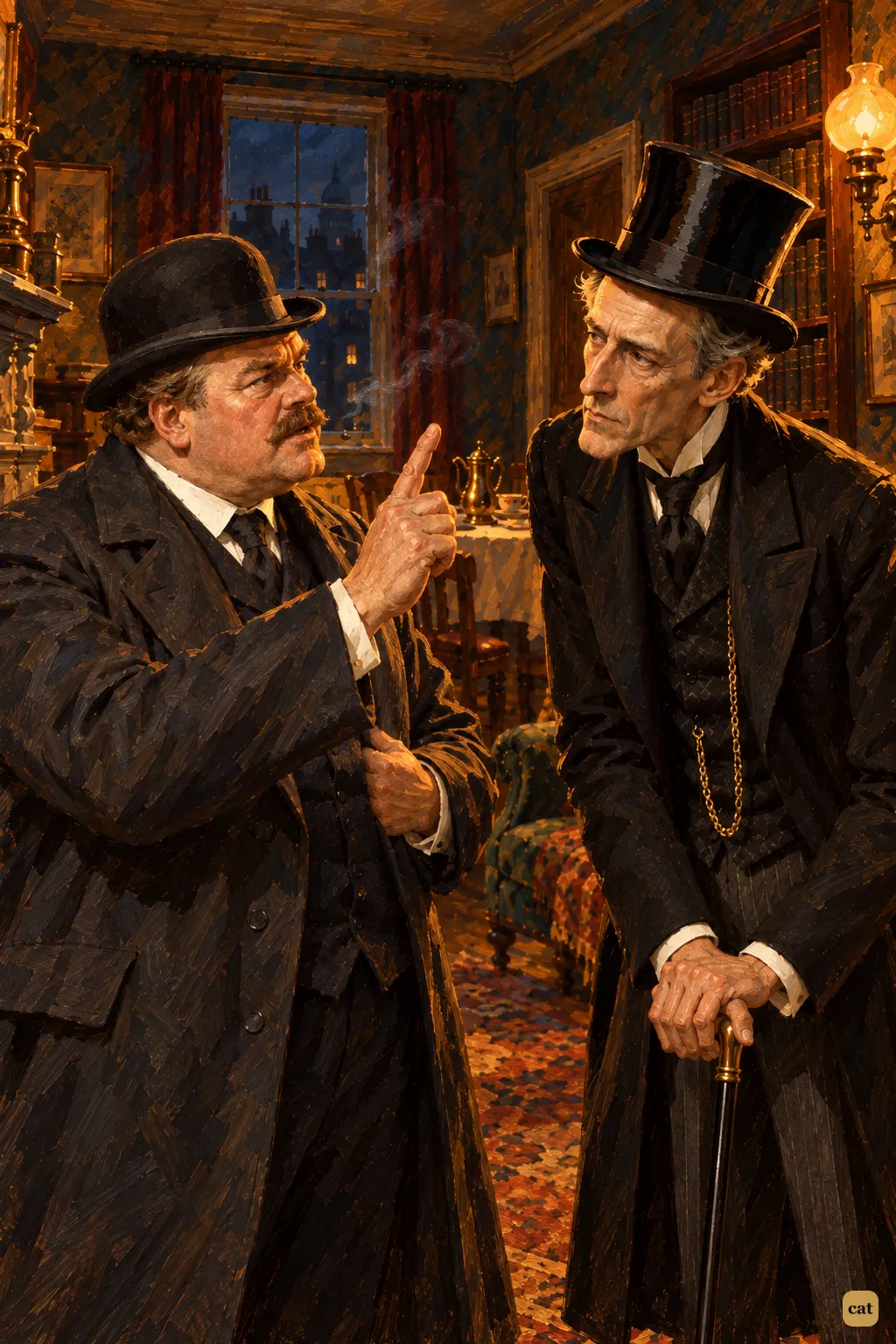
 Author
-
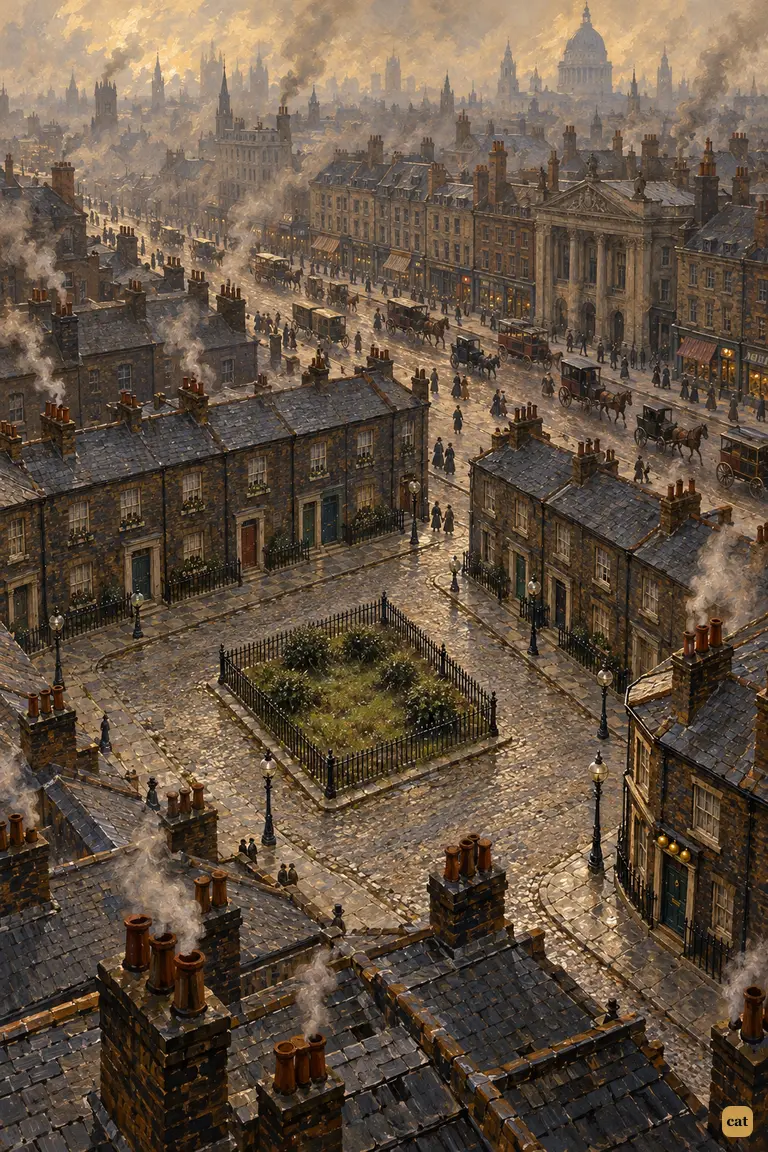
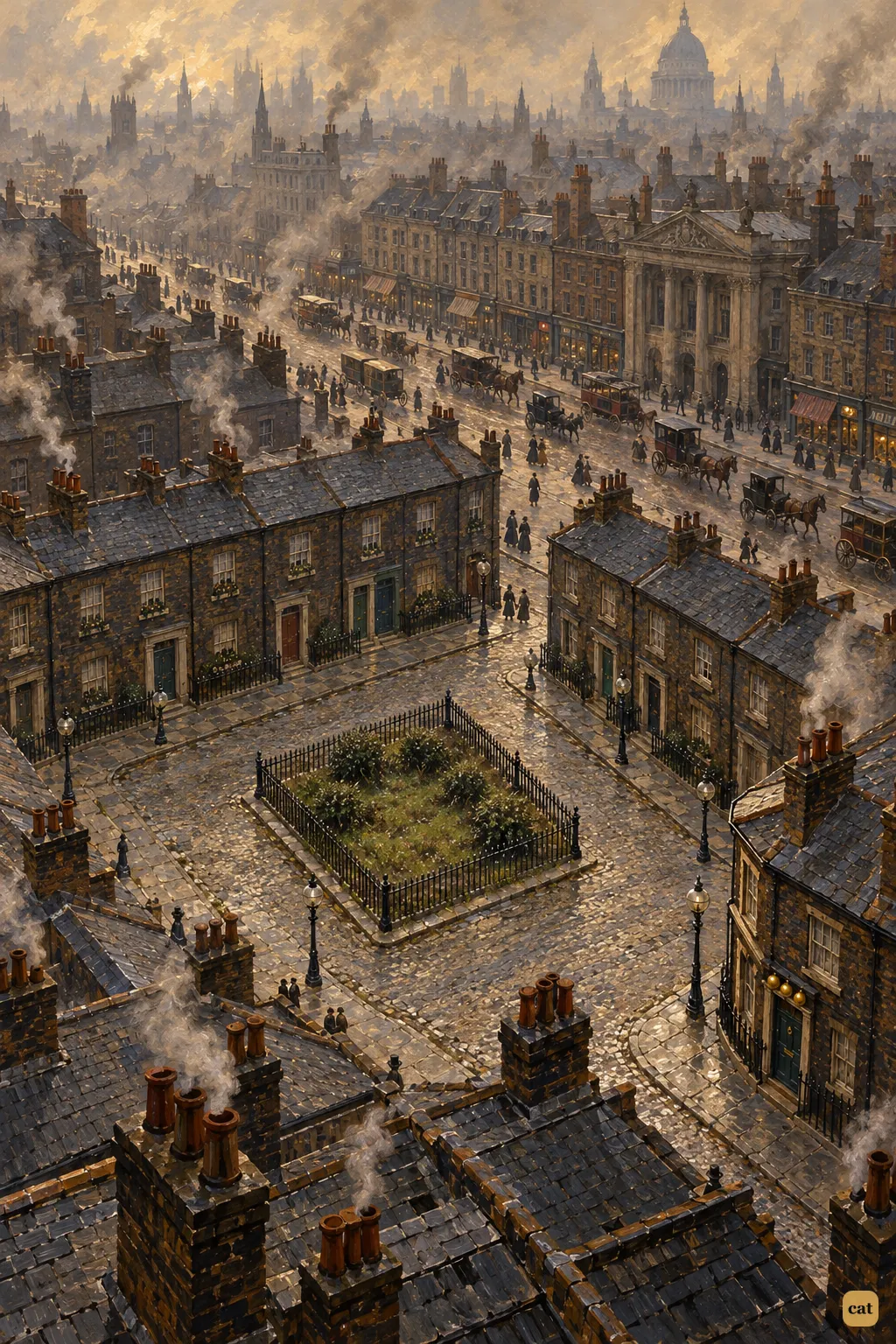
Smoky Square from Above
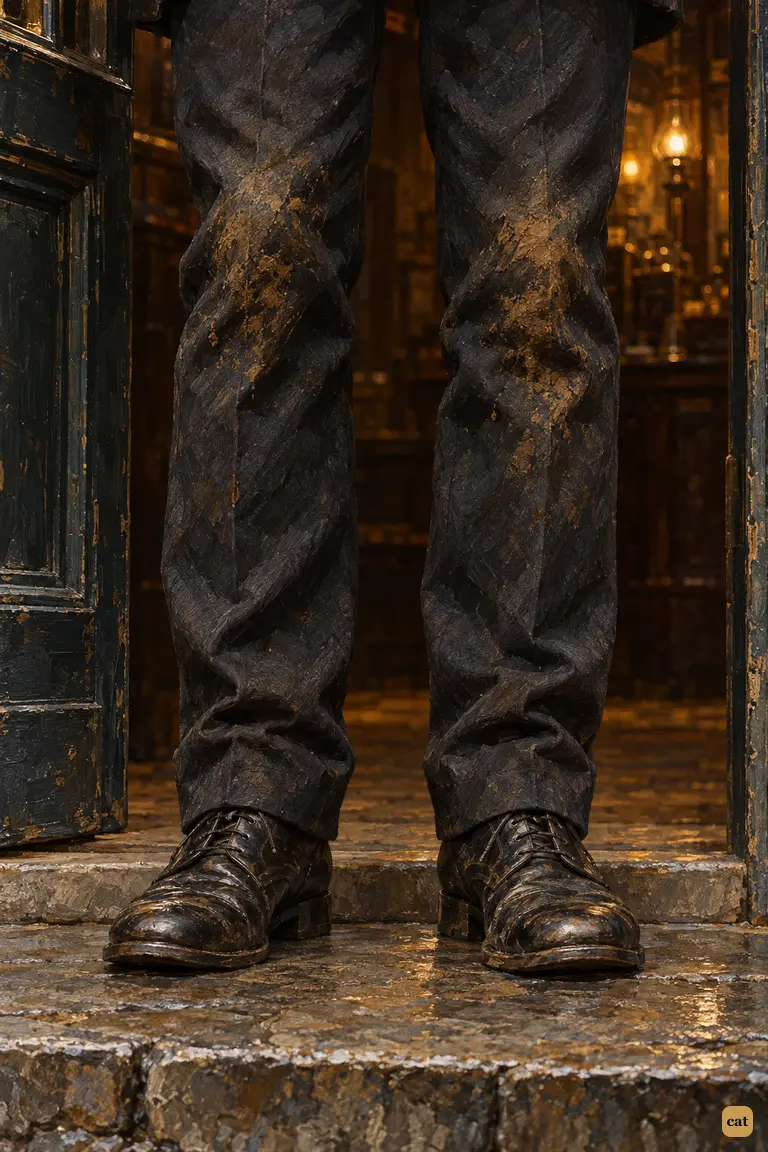
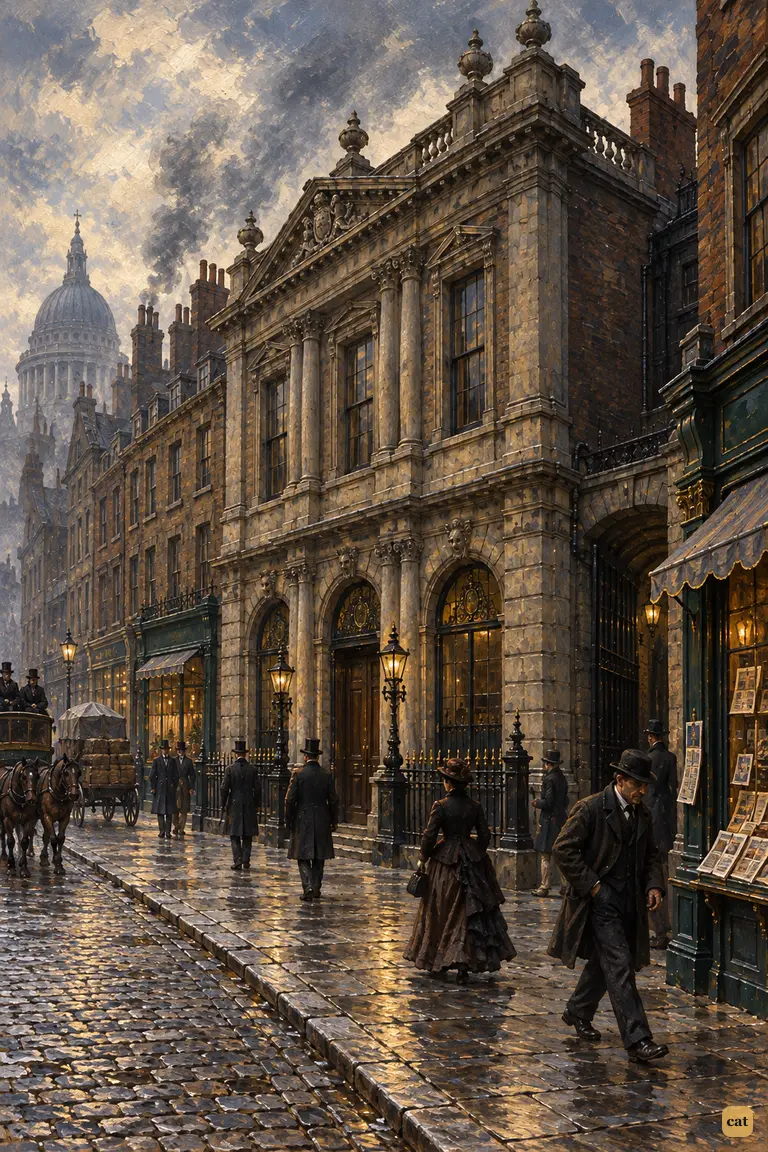
We travelled by the Underground as far as Aldersgate; and a short walk took us to Saxe-Coburg Square, the scene of the singular story which we had listened to in the morning. It was a poky, little, shabby-genteel place, where four lines of dingy two-storied brick houses looked out into a small railed-in enclosure, where a lawn of weedy grass and a few clumps of faded laurel bushes made a hard fight against a smoke-laden and uncongenial atmosphere. Three gilt balls and a brown board with “JABEZ WILSON” in white letters, upon a corner house, announced the place where our red-headed client carried on his business. Sherlock Holmes stopped in front of it with his head on one side and looked it all over, with his eyes shining brightly between puckered lids. Then he walked slowly up the street, and then down again to the corner, still looking keenly at the houses. Finally he returned to the pawnbroker’s, and, having thumped vigorously upon the pavement with his stick two or three times, he went up to the door and knocked. It was instantly opened by a bright-looking, clean-shaven young fellow, who asked him to step in.
Read from here → -
-
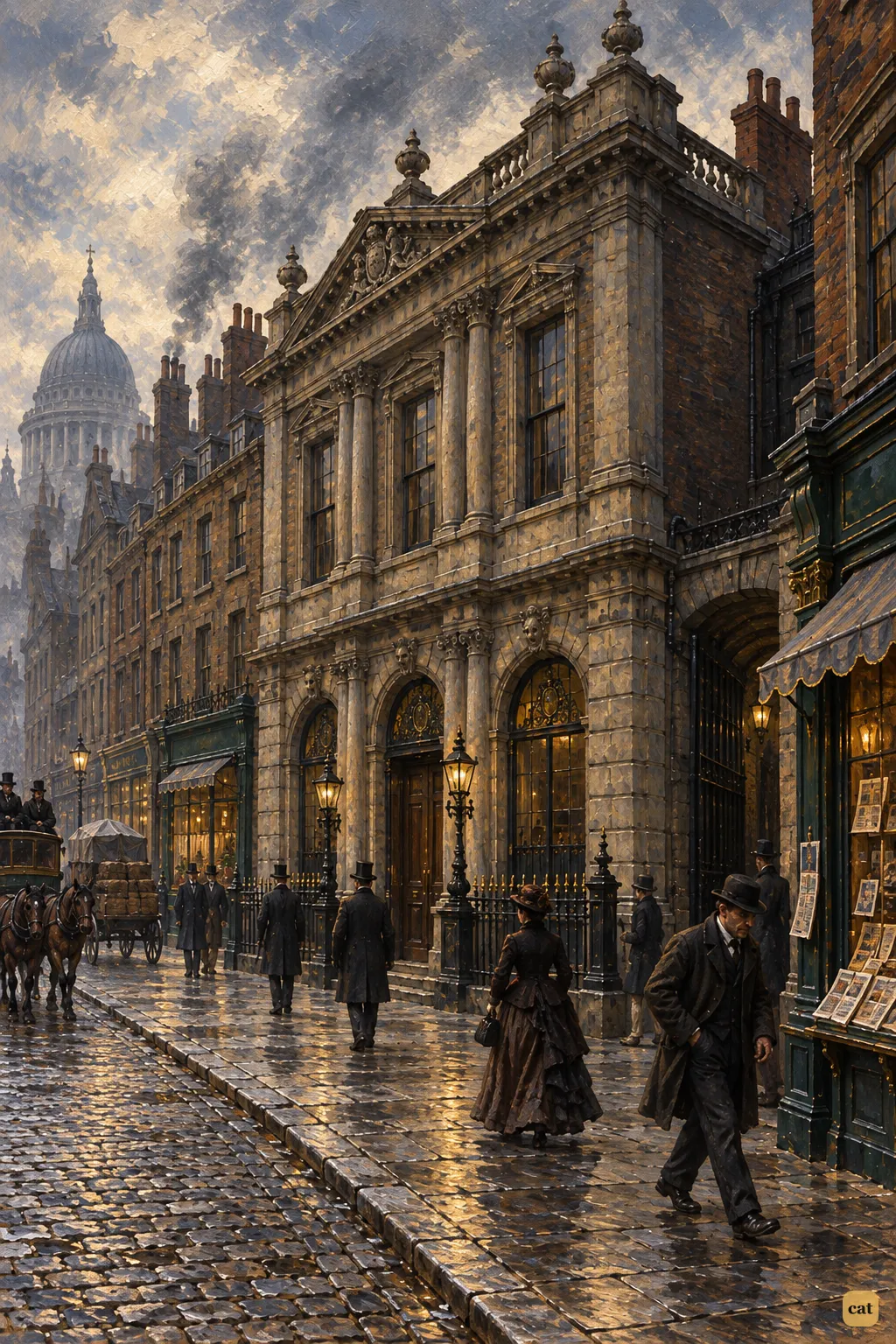
The Bank in the Row
“Let me see,” said Holmes, standing at the corner and glancing along the line, “I should like just to remember the order of the houses here. It is a hobby of mine to have an exact knowledge of London. There is Mortimer’s, the tobacconist, the little newspaper shop, the Coburg branch of the City and Suburban Bank, the Vegetarian Restaurant, and McFarlane’s carriage-building depot. That carries us right on to the other block. And now, Doctor, we’ve done our work, so it’s time we had some play. A sandwich and a cup of coffee, and then off to violin-land, where all is sweetness and delicacy and harmony, and there are no red-headed clients to vex us with their conundrums.”
Read from here → -
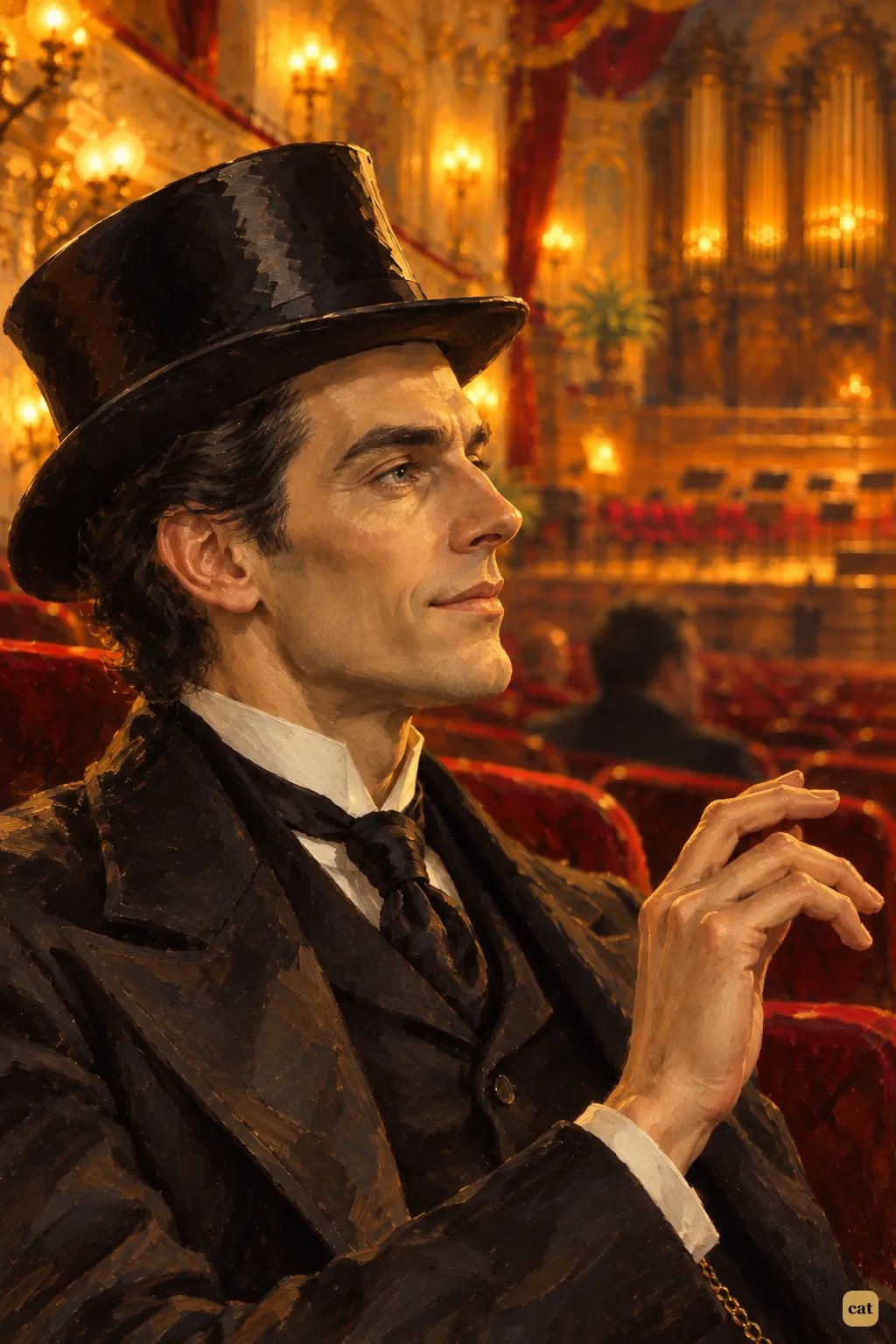
The Dreamy Face
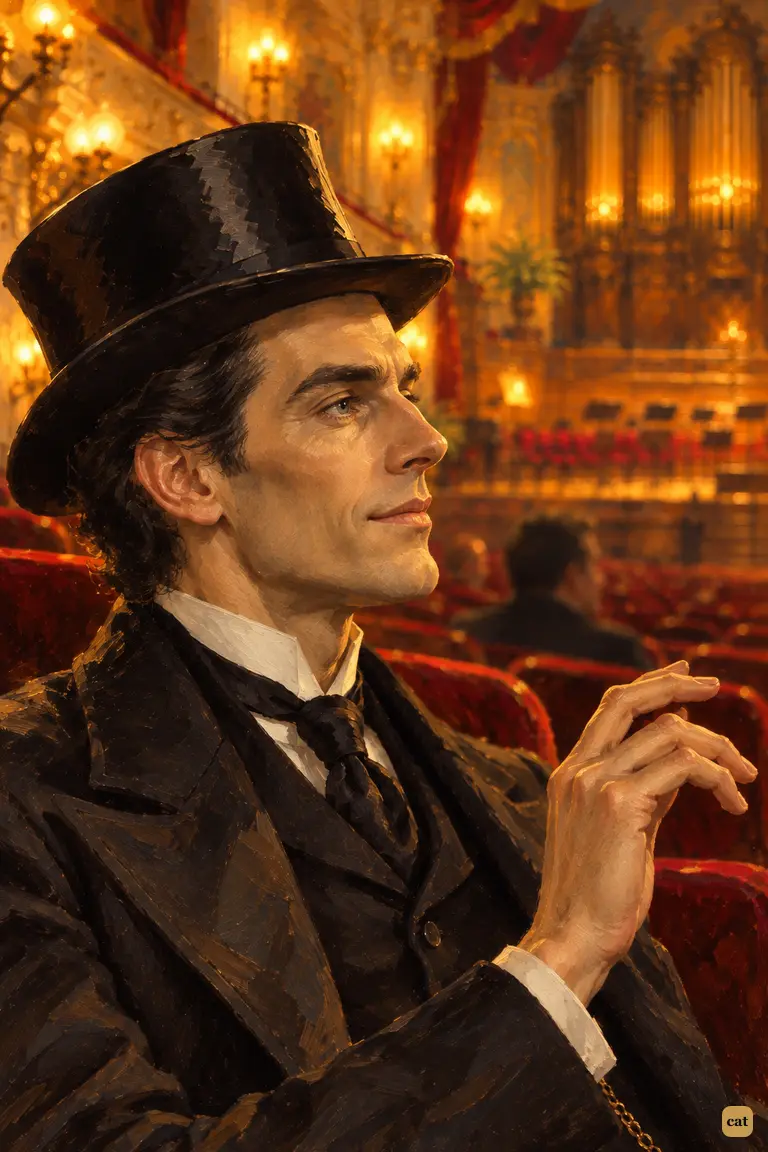
My friend was an enthusiastic musician, being himself not only a very capable performer but a composer of no ordinary merit. All the afternoon he sat in the stalls wrapped in the most perfect happiness, gently waving his long, thin fingers in time to the music, while his gently smiling face and his languid, dreamy eyes were as unlike those of Holmes the sleuth-hound, Holmes the relentless, keen-witted, ready-handed criminal agent, as it was possible to conceive. In his singular character the dual nature alternately asserted itself, and his extreme exactness and astuteness represented, as I have often thought, the reaction against the poetic and contemplative mood which occasionally predominated in him. The swing of his nature took him from extreme languor to devouring energy; and, as I knew well, he was never so truly formidable as when, for days on end, he had been lounging in his armchair amid his improvisations and his black-letter editions. Then it was that the lust of the chase would suddenly come upon him, and that his brilliant reasoning power would rise to the level of intuition, until those who were unacquainted with his methods would look askance at him as on a man whose knowledge was not that of other mortals. When I saw him that afternoon so enwrapped in the music at St. James’s Hall I felt that an evil time might be coming upon those whom he had set himself to hunt down.
Read from here → -

A Higher Stake
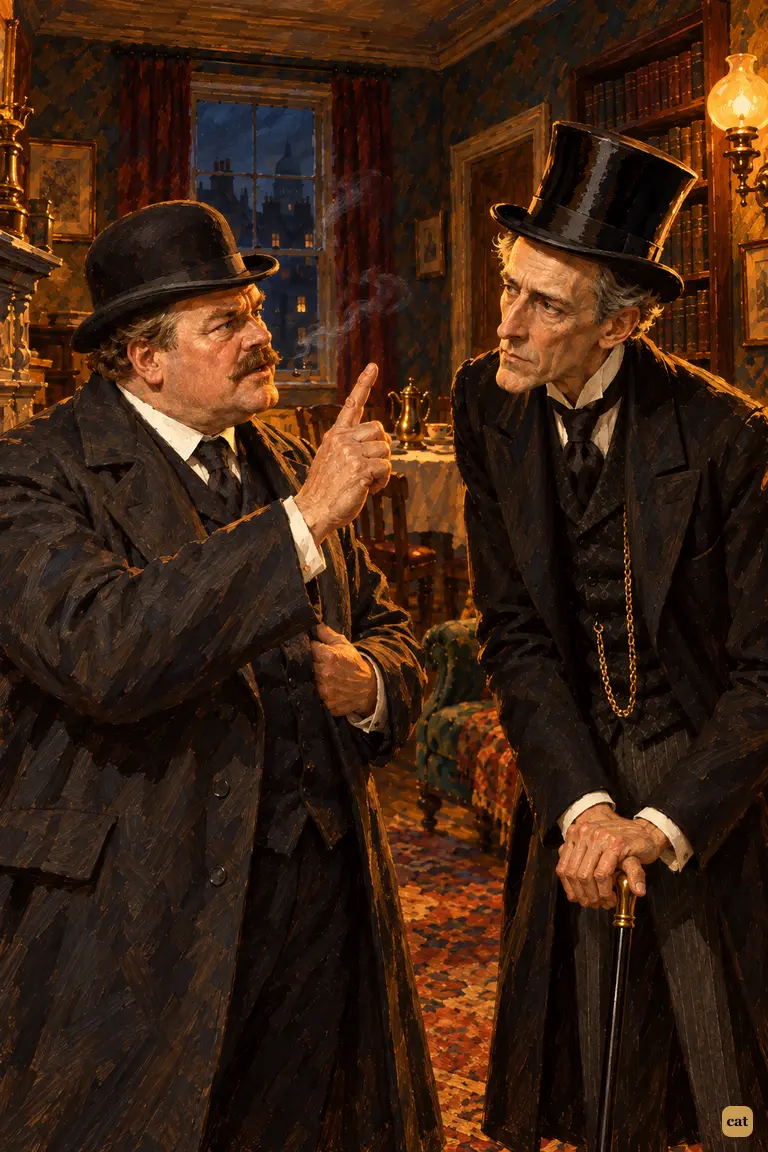
“I think you will find,” said Sherlock Holmes, “that you will play for a higher stake to-night than you have ever done yet, and that the play will be more exciting. For you, Mr. Merryweather, the stake will be some £ 30,000; and for you, Jones, it will be the man upon whom you wish to lay your hands.”
Read from here → -
John Clay
“John Clay, the murderer, thief, smasher, and forger. He’s a young man, Mr. Merryweather, but he is at the head of his profession, and I would rather have my bracelets on him than on any criminal in London. He’s a remarkable man, is young John Clay. His grandfather was a royal duke, and he himself has been to Eton and Oxford. His brain is as cunning as his fingers, and though we meet signs of him at every turn, we never know where to find the man himself. He’ll crack a crib in Scotland one week, and be raising money to build an orphanage in Cornwall the next. I’ve been on his track for years and have never set eyes on him yet.”
Read from here → -
Chapter 2
Reconnaissance, music and the night party
Next chapter: The bank cellar ambush and Holmes's explanation Read this chapter