 Author
-

Eye to the new slit
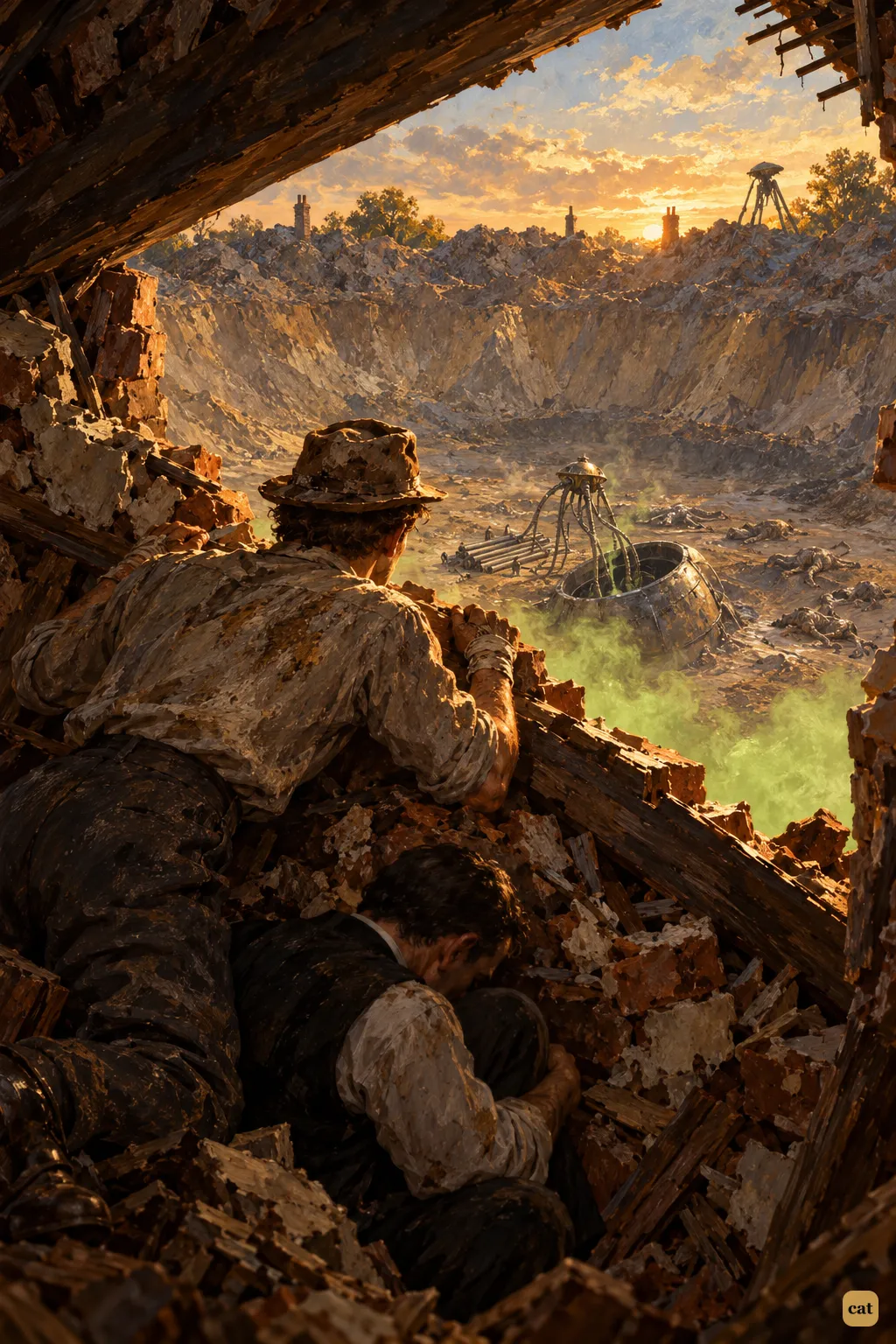
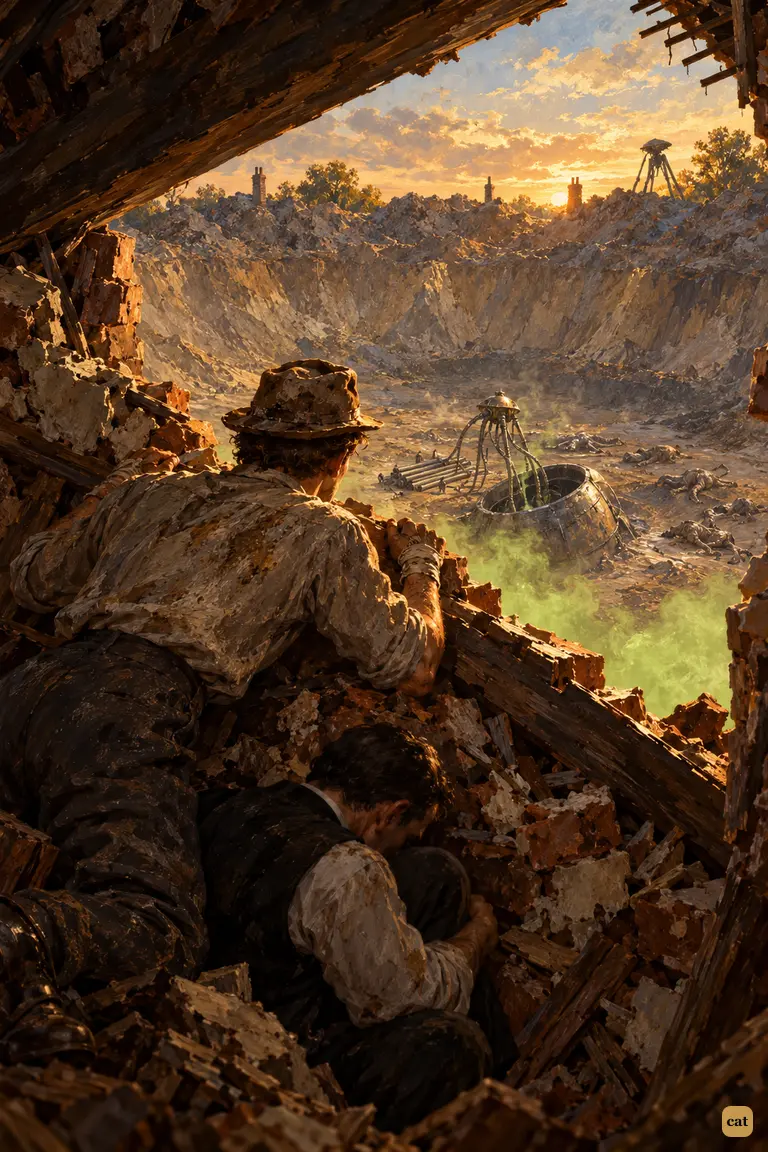
I touched the curate’s leg, and he started so violently that a mass of plaster went sliding down outside and fell with a loud impact. I gripped his arm, fearing he might cry out, and for a long time we crouched motionless. Then I turned to see how much of our rampart remained. The detachment of the plaster had left a vertical slit open in the debris, and by raising myself cautiously across a beam I was able to see out of this gap into what had been overnight a quiet suburban roadway. Vast, indeed, was the change that we beheld.
Read from here → -
The vast new pit
The fifth cylinder must have fallen right into the midst of the house we had first visited. The building had vanished, completely smashed, pulverised, and dispersed by the blow. The cylinder lay now far beneath the original foundations—deep in a hole, already vastly larger than the pit I had looked into at Woking. The earth all round it had splashed under that tremendous impact—“splashed” is the only word—and lay in heaped piles that hid the masses of the adjacent houses. It had behaved exactly like mud under the violent blow of a hammer. Our house had collapsed backward; the front portion, even on the ground floor, had been destroyed completely; by a chance the kitchen and scullery had escaped, and stood buried now under soil and ruins, closed in by tons of earth on every side save towards the cylinder. Over that aspect we hung now on the very edge of the great circular pit the Martians were engaged in making. The heavy beating sound was evidently just behind us, and ever and again a bright green vapour drove up like a veil across our peephole.
Read from here → -
The handling-machine at work
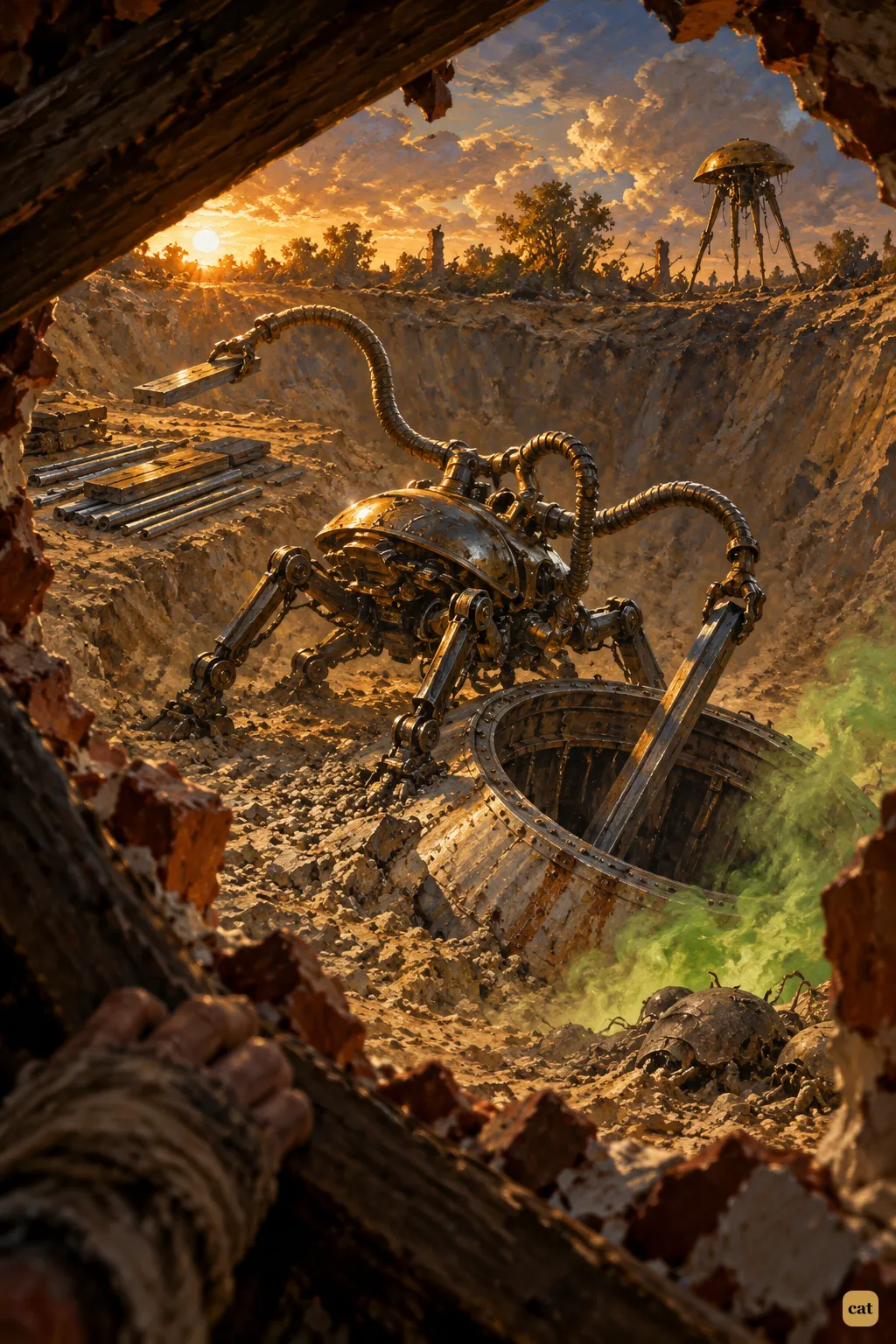
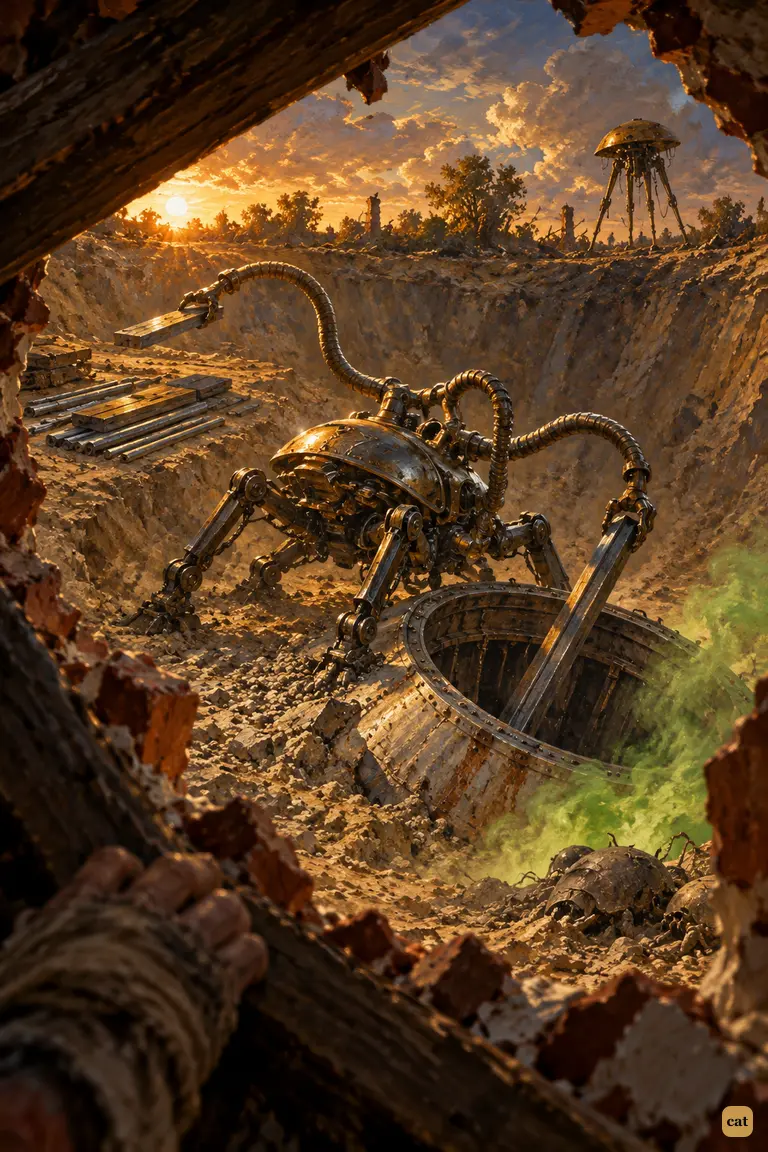
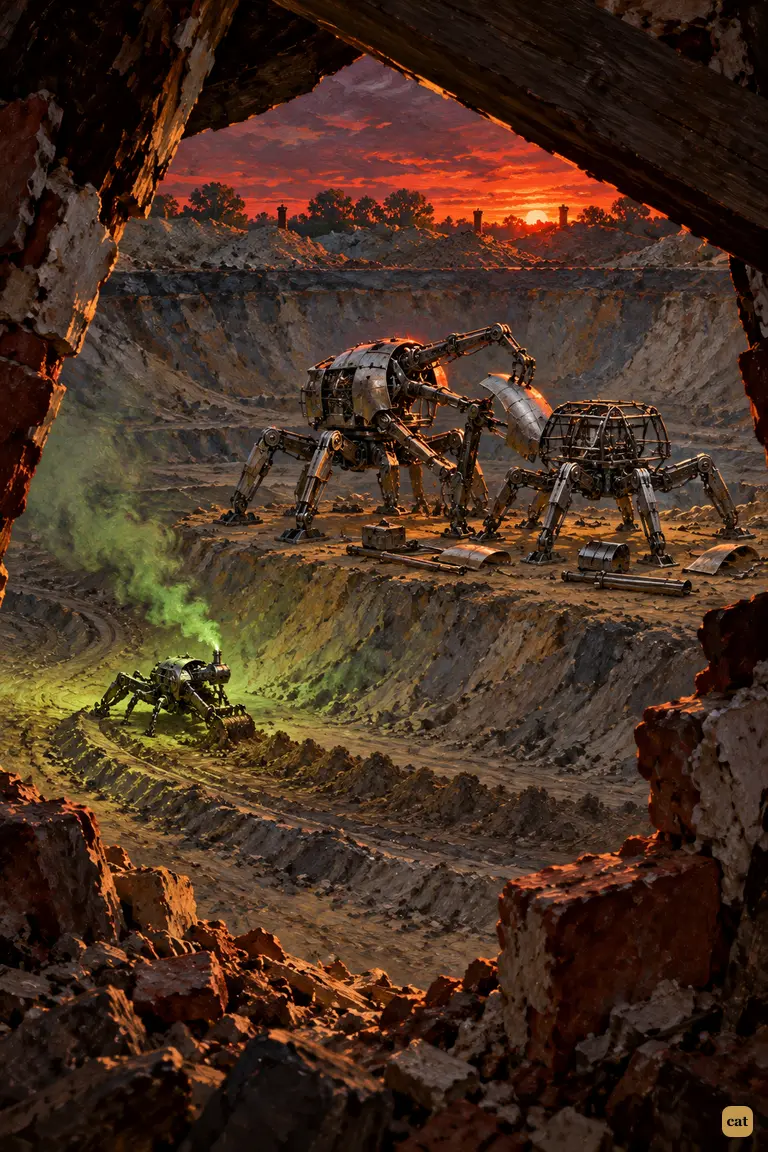
The mechanism it certainly was that held my attention first. It was one of those complicated fabrics that have since been called handling-machines, and the study of which has already given such an enormous impetus to terrestrial invention. As it dawned upon me first, it presented a sort of metallic spider with five jointed, agile legs, and with an extraordinary number of jointed levers, bars, and reaching and clutching tentacles about its body. Most of its arms were retracted, but with three long tentacles it was fishing out a number of rods, plates, and bars which lined the covering and apparently strengthened the walls of the cylinder. These, as it extracted them, were lifted out and deposited upon a level surface of earth behind it.
Read from here → -
Heads that cannot rise
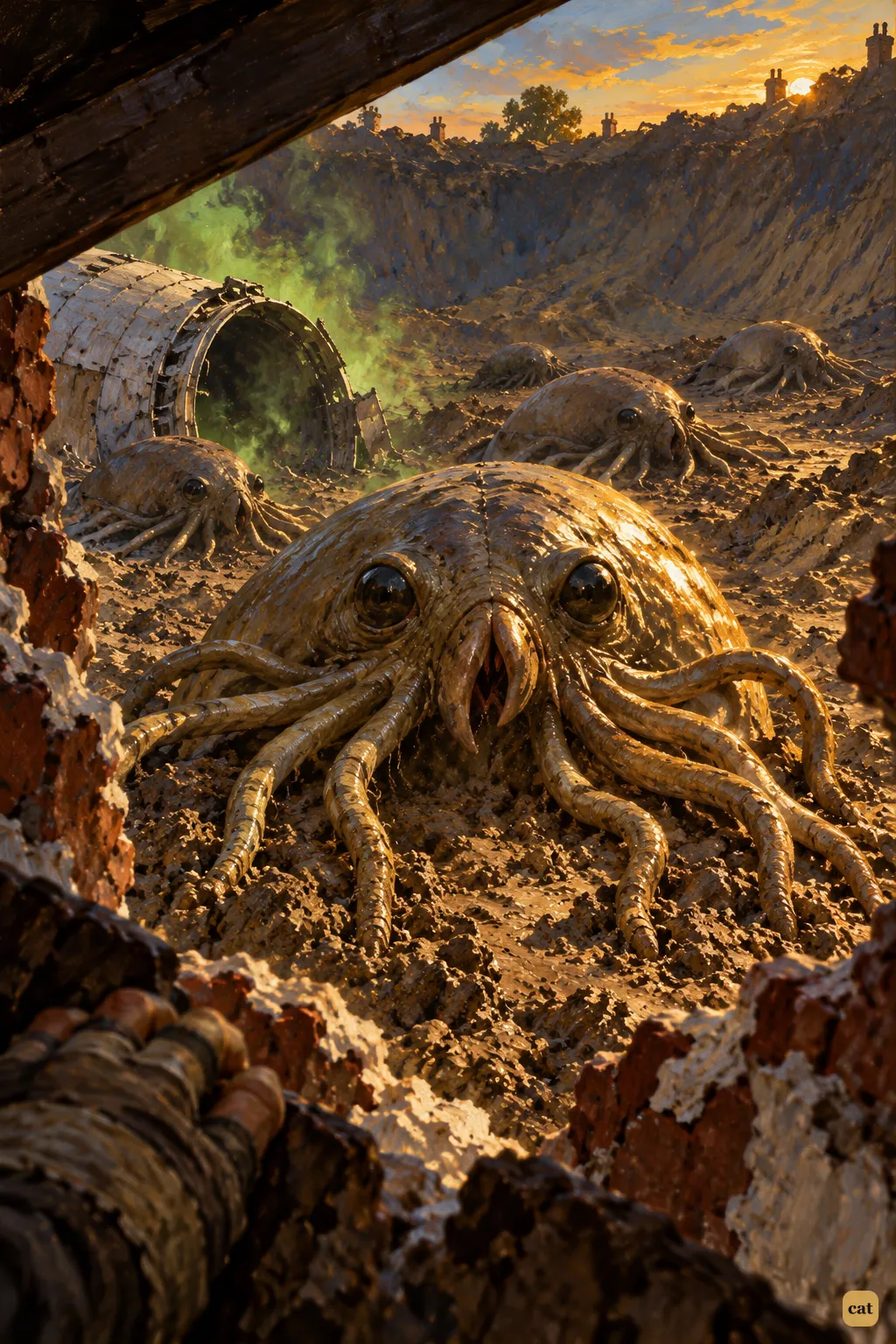
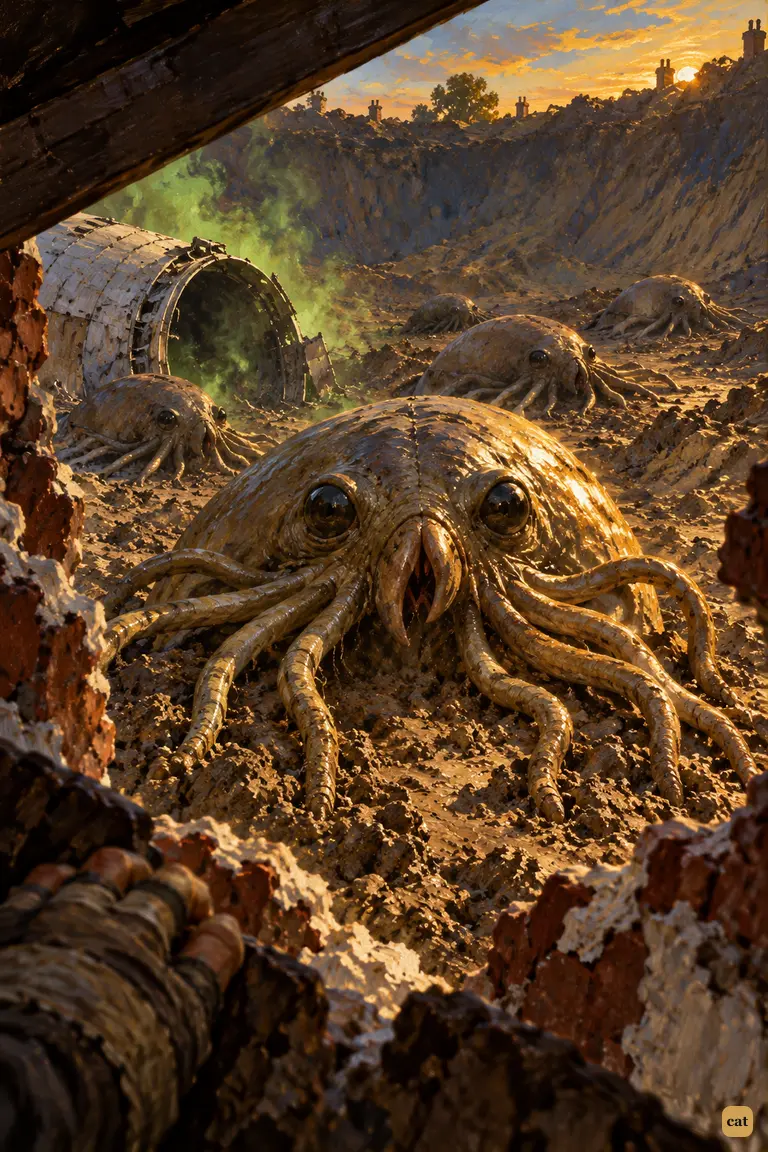
They were, I now saw, the most unearthly creatures it is possible to conceive. They were huge round bodies—or, rather, heads—about four feet in diameter, each body having in front of it a face. This face had no nostrils—indeed, the Martians do not seem to have had any sense of smell, but it had a pair of very large dark-coloured eyes, and just beneath this a kind of fleshy beak. In the back of this head or body—I scarcely know how to speak of it—was the single tight tympanic surface, since known to be anatomically an ear, though it must have been almost useless in our dense air. In a group round the mouth were sixteen slender, almost whiplike tentacles, arranged in two bunches of eight each. These bunches have since been named rather aptly, by that distinguished anatomist, Professor Howes, the hands. Even as I saw these Martians for the first time they seemed to be endeavouring to raise themselves on these hands, but of course, with the increased weight of terrestrial conditions, this was impossible. There is reason to suppose that on Mars they may have progressed upon them with some facility.
Read from here → -

Heads, merely heads
And this was the sum of the Martian organs. Strange as it may seem to a human being, all the complex apparatus of digestion, which makes up the bulk of our bodies, did not exist in the Martians. They were heads—merely heads. Entrails they had none. They did not eat, much less digest. Instead, they took the fresh, living blood of other creatures, and injected it into their own veins. I have myself seen this being done, as I shall mention in its place. But, squeamish as I may seem, I cannot bring myself to describe what I could not endure even to continue watching. Let it suffice to say, blood obtained from a still living animal, in most cases from a human being, was run directly by means of a little pipette into the recipient canal. . . .
Read from here → -
Carmine fringe days later
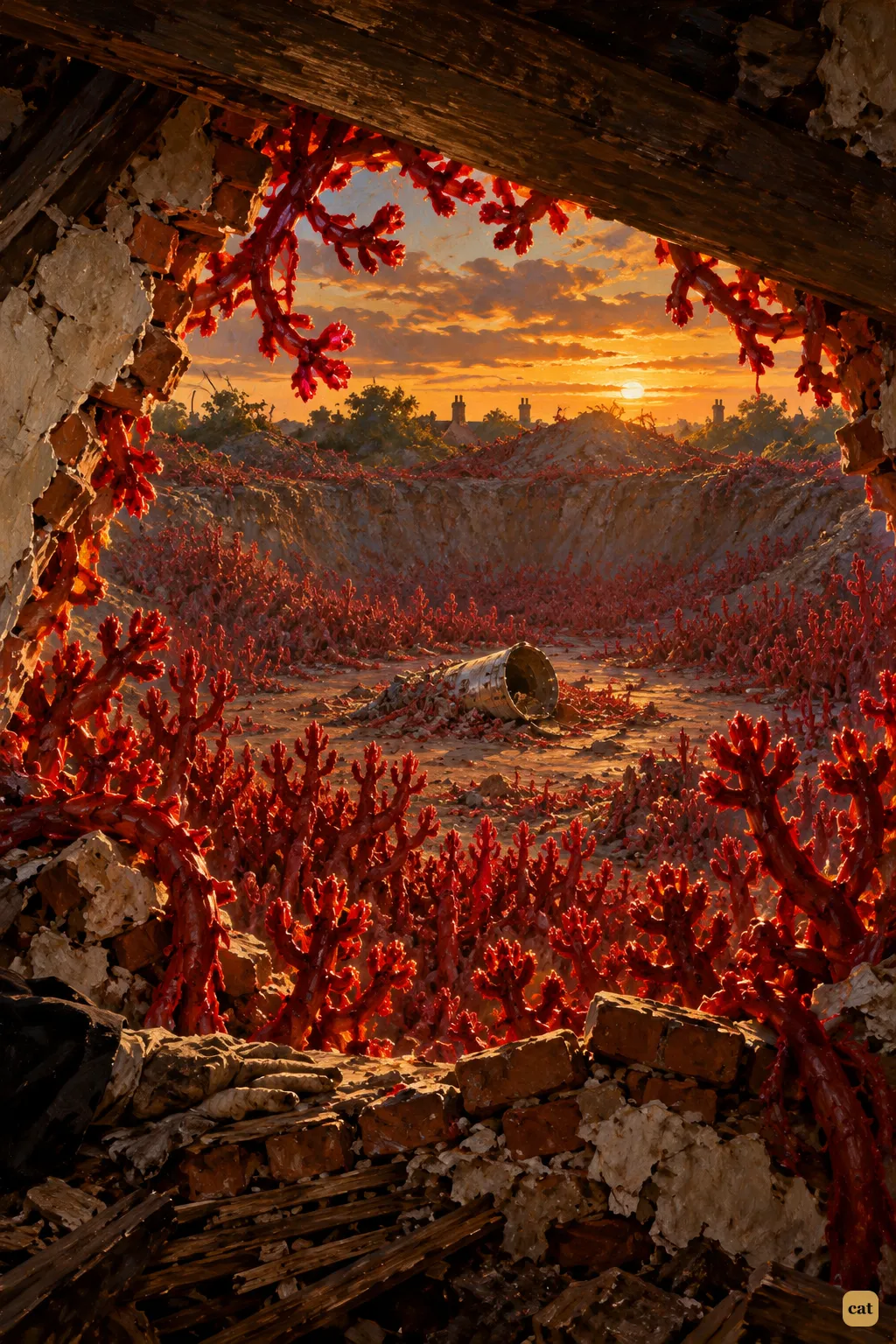
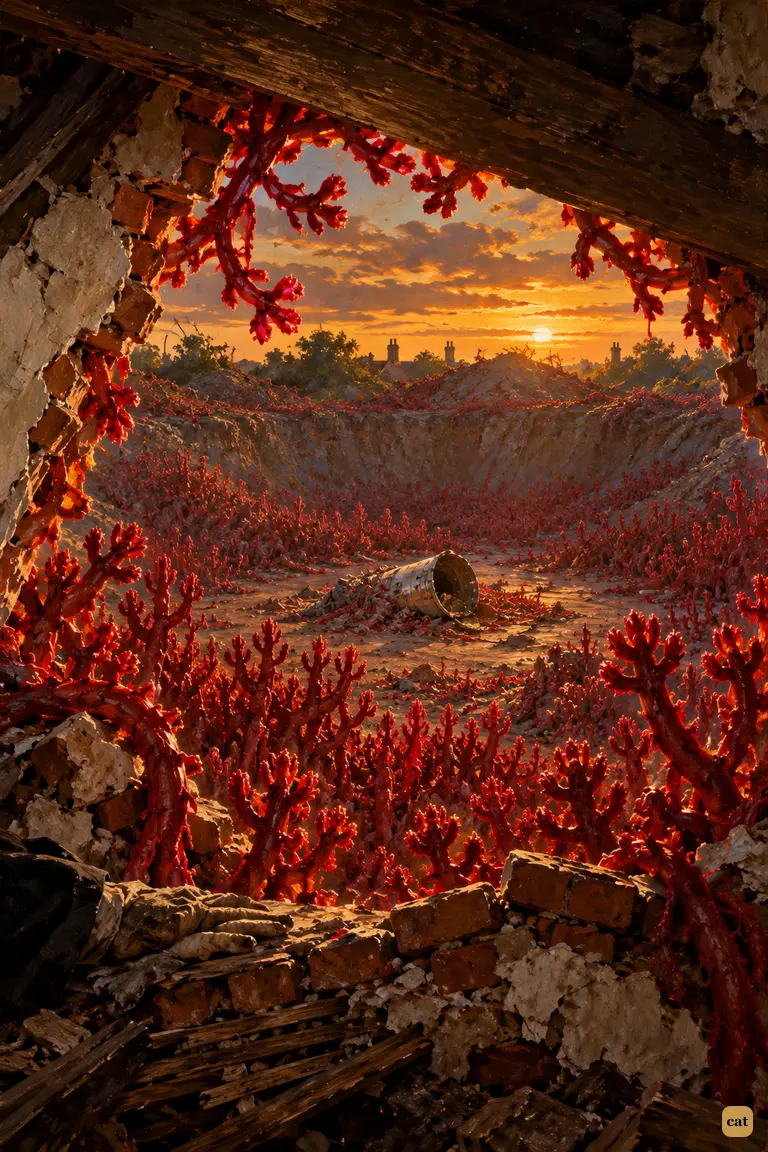
Apparently the vegetable kingdom in Mars, instead of having green for a dominant colour, is of a vivid blood-red tint. At any rate, the seeds which the Martians (intentionally or accidentally) brought with them gave rise in all cases to red-coloured growths. Only that known popularly as the red weed, however, gained any footing in competition with terrestrial forms. The red creeper was quite a transitory growth, and few people have seen it growing. For a time, however, the red weed grew with astonishing vigour and luxuriance. It spread up the sides of the pit by the third or fourth day of our imprisonment, and its cactus-like branches formed a carmine fringe to the edges of our triangular window. And afterwards I found it broadcast throughout the country, and especially wherever there was a stream of water.
Read from here → -

Scowling, silent lips
While I was still watching their sluggish motions in the sunlight, and noting each strange detail of their form, the curate reminded me of his presence by pulling violently at my arm. I turned to a scowling face, and silent, eloquent lips. He wanted the slit, which permitted only one of us to peep through; and so I had to forego watching them for a time while he enjoyed that privilege.
Read from here → -
A twin taking shape
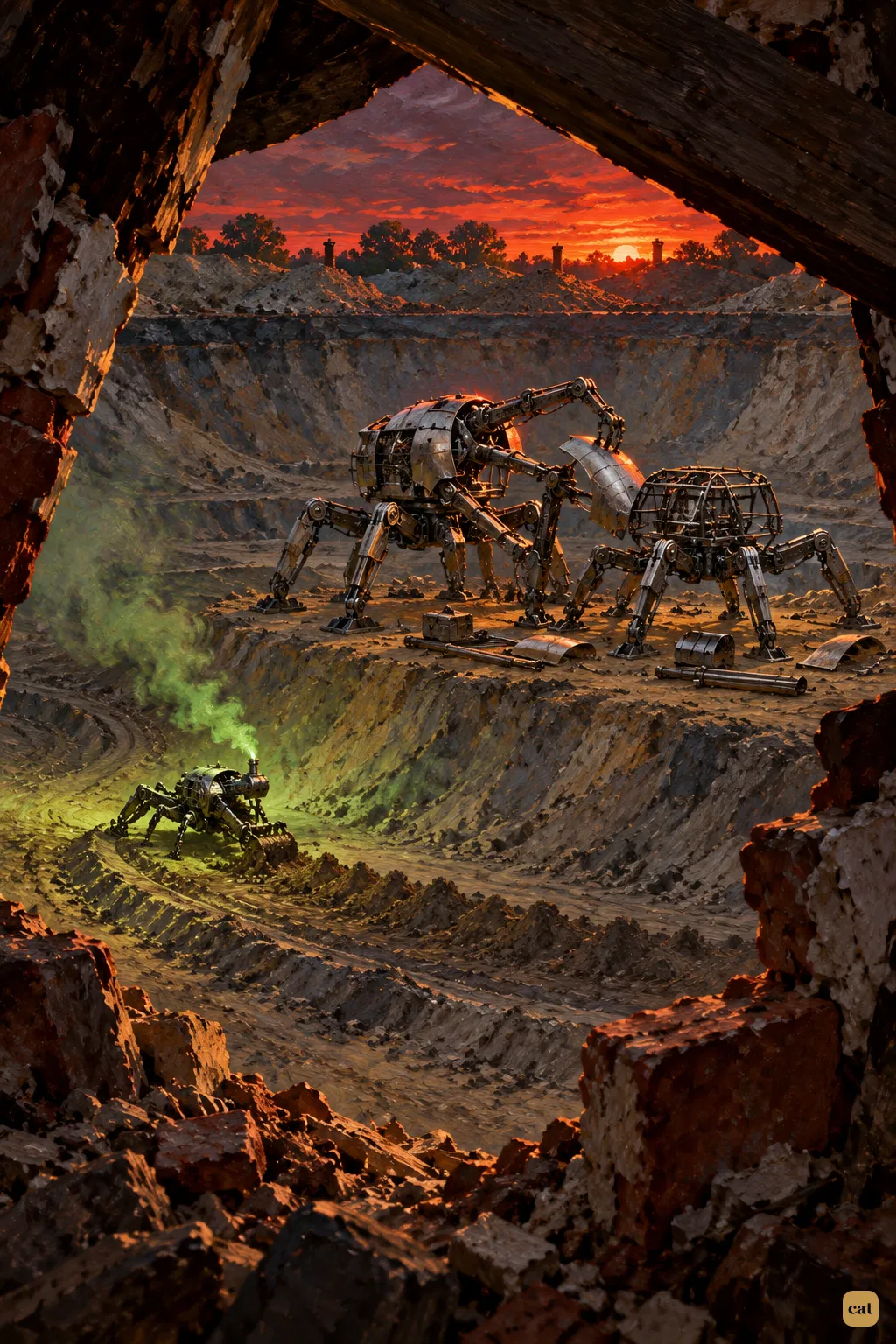
When I looked again, the busy handling-machine had already put together several of the pieces of apparatus it had taken out of the cylinder into a shape having an unmistakable likeness to its own; and down on the left a busy little digging mechanism had come into view, emitting jets of green vapour and working its way round the pit, excavating and embanking in a methodical and discriminating manner. This it was which had caused the regular beating noise, and the rhythmic shocks that had kept our ruinous refuge quivering. It piped and whistled as it worked. So far as I could see, the thing was without a directing Martian at all.
Read from here → -
Chapter 19
The Martians seen through the slit
Next chapter: Quarrel in the dark, Martians in the pit Read this chapter