-
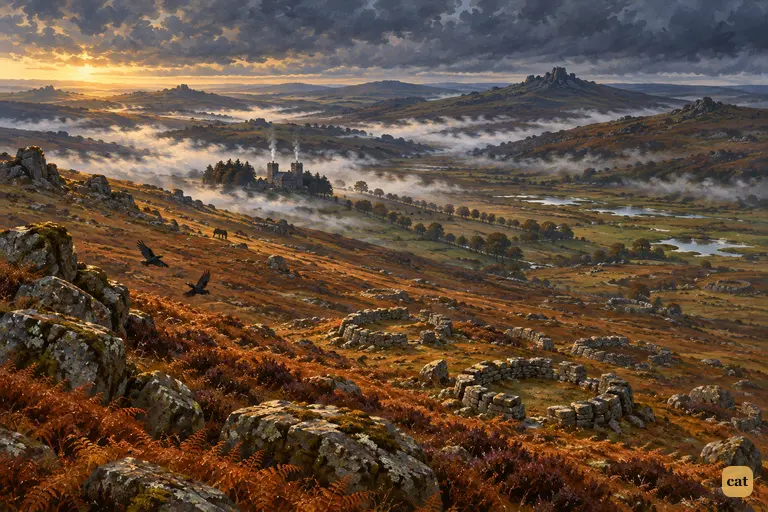
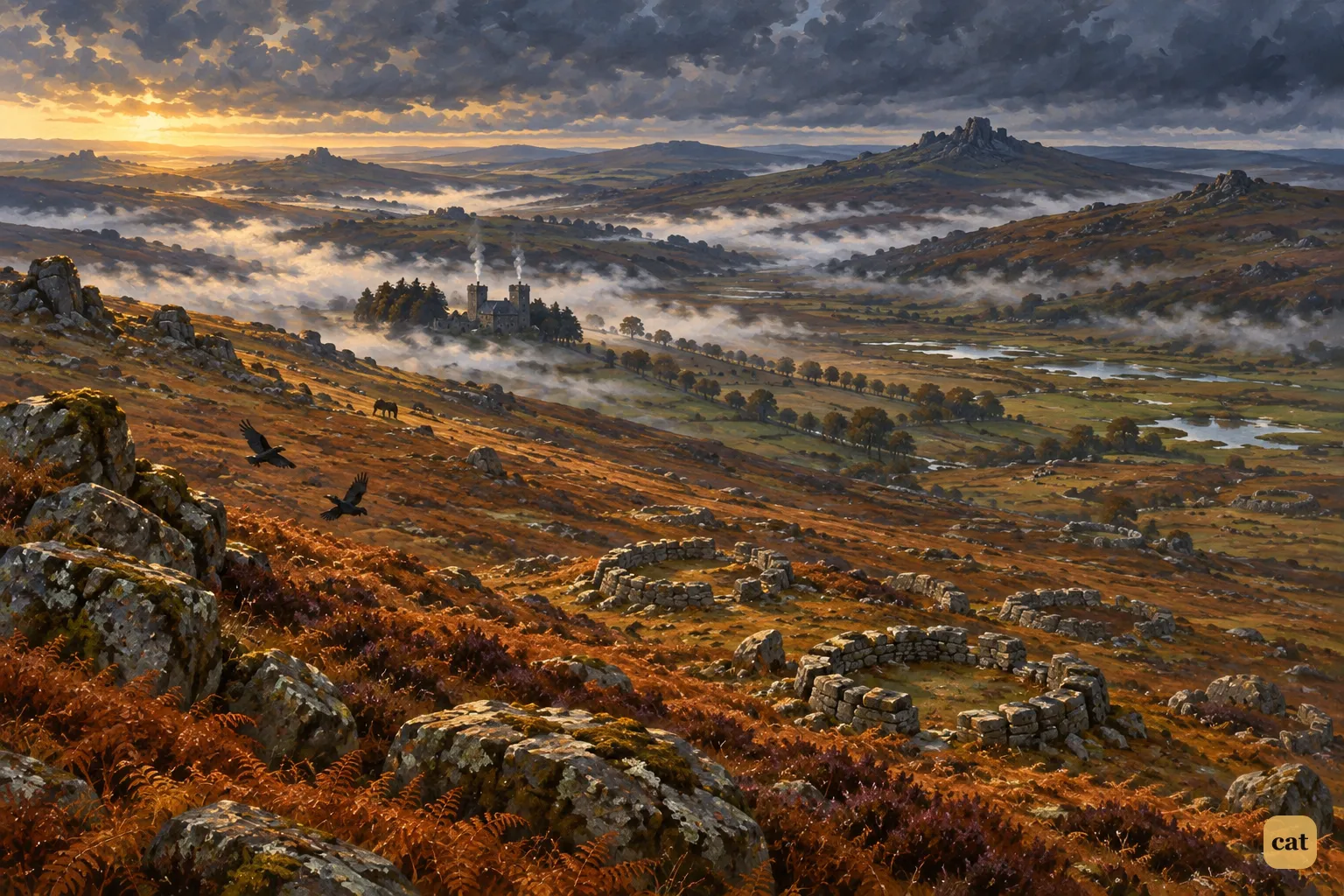
Dartmoor at dawn
The extract from my private diary which forms the last chapter has brought my narrative up to the eighteenth of October, a time when these strange events began to move swiftly towards their terrible conclusion. The incidents of the next few days are indelibly graven upon my recollection, and I can tell them without reference to the notes made at the time. I start them from the day which succeeded that upon which I had established two facts of great importance, the one that Mrs. Laura Lyons of Coombe Tracey had written to Sir Charles Baskerville and made an appointment with him at the very place and hour that he met his death, the other that the lurking man upon the moor was to be found among the stone huts upon the hillside. With these two facts in my possession I felt that either my intelligence or my courage must be deficient if I could not throw some further light upon these dark places.
Read from here → -
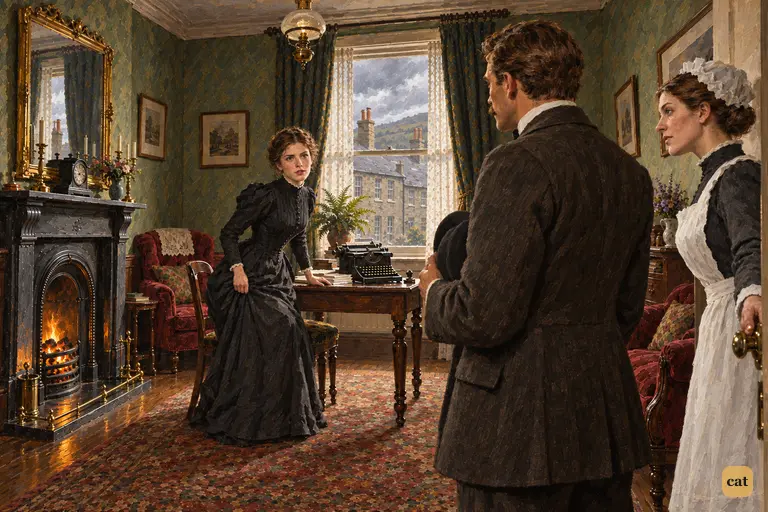
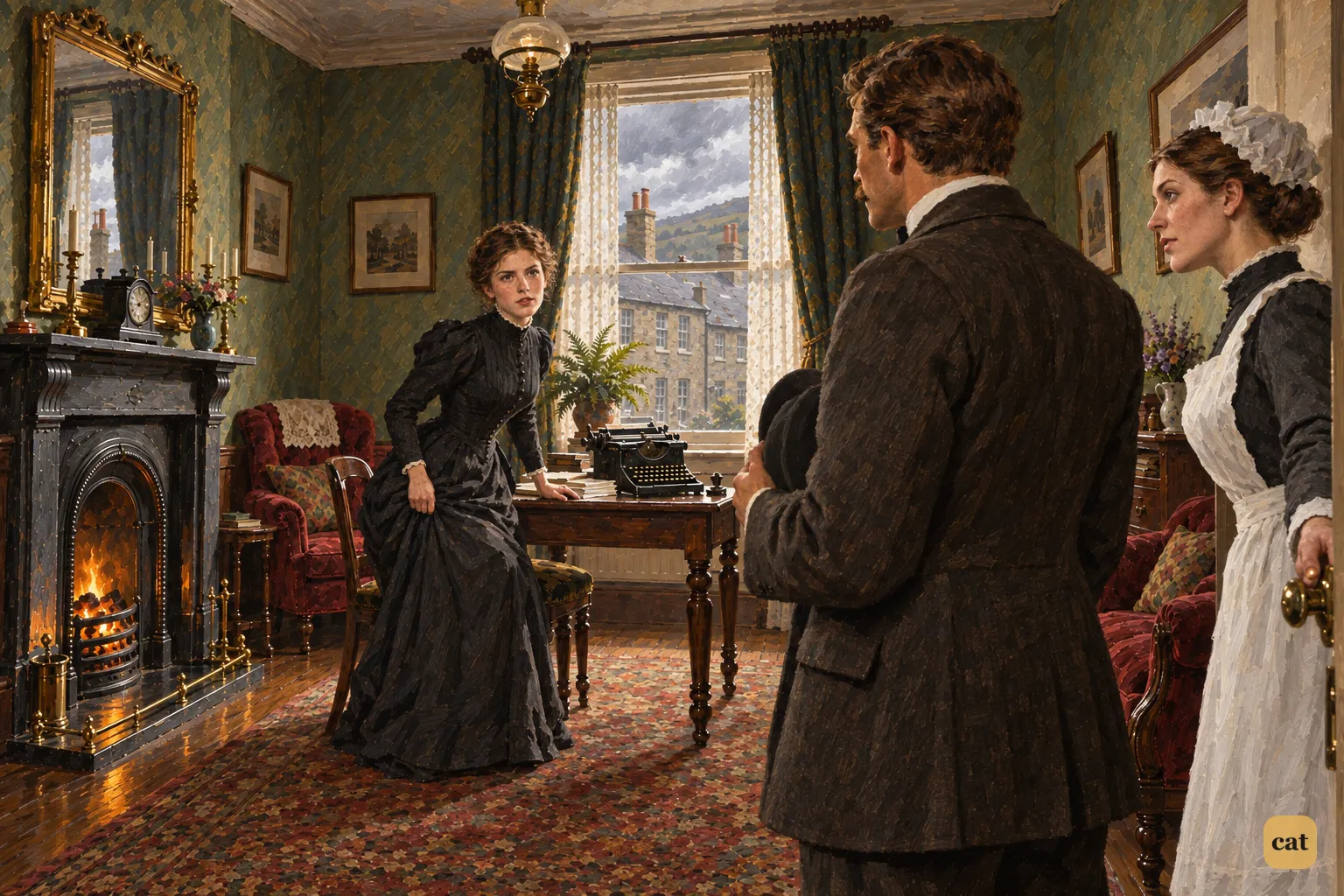
The smile that falls
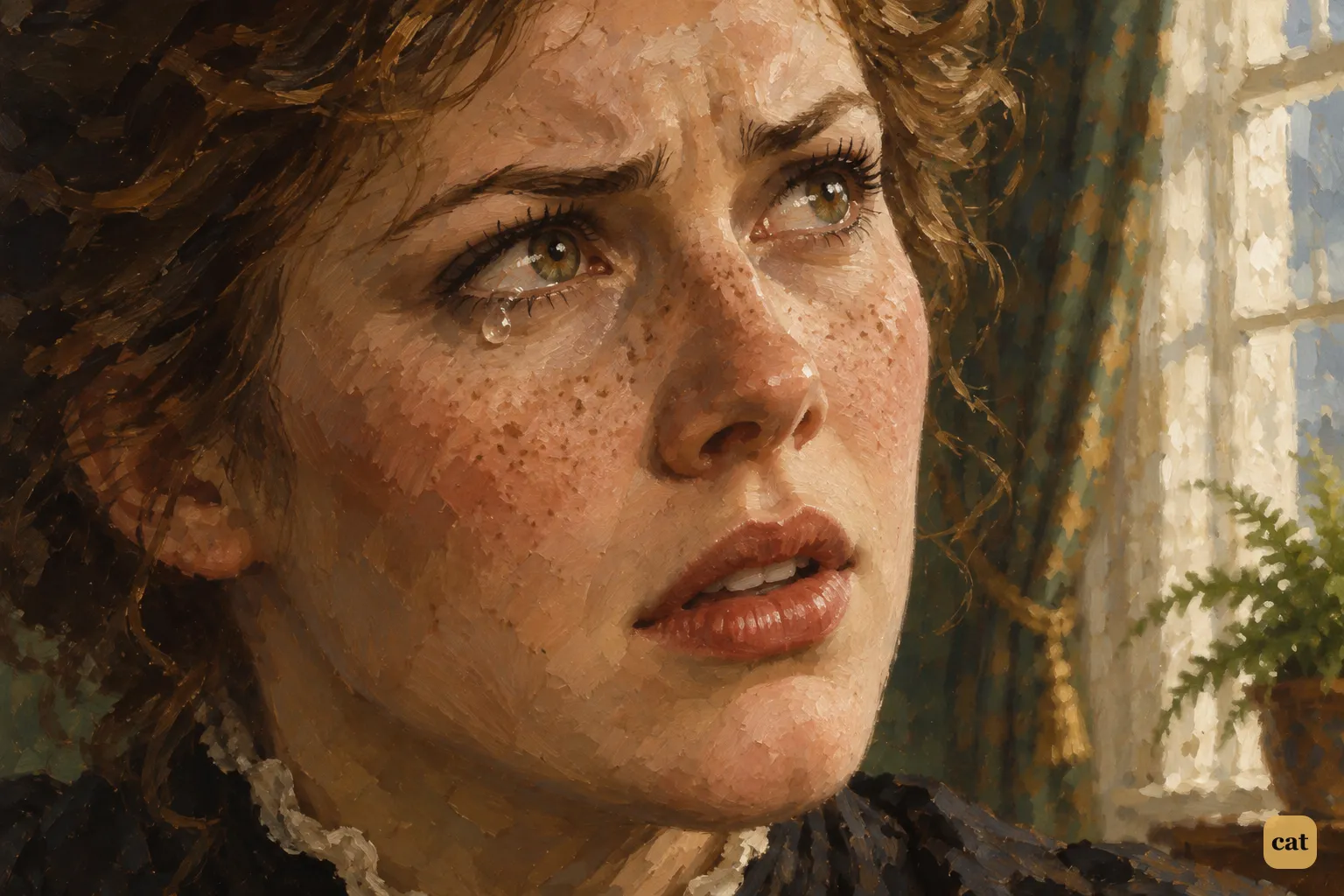
When I reached Coombe Tracey I told Perkins to put up the horses, and I made inquiries for the lady whom I had come to interrogate. I had no difficulty in finding her rooms, which were central and well appointed. A maid showed me in without ceremony, and as I entered the sitting-room a lady, who was sitting before a Remington typewriter, sprang up with a pleasant smile of welcome. Her face fell, however, when she saw that I was a stranger, and she sat down again and asked me the object of my visit.
Read from here → -
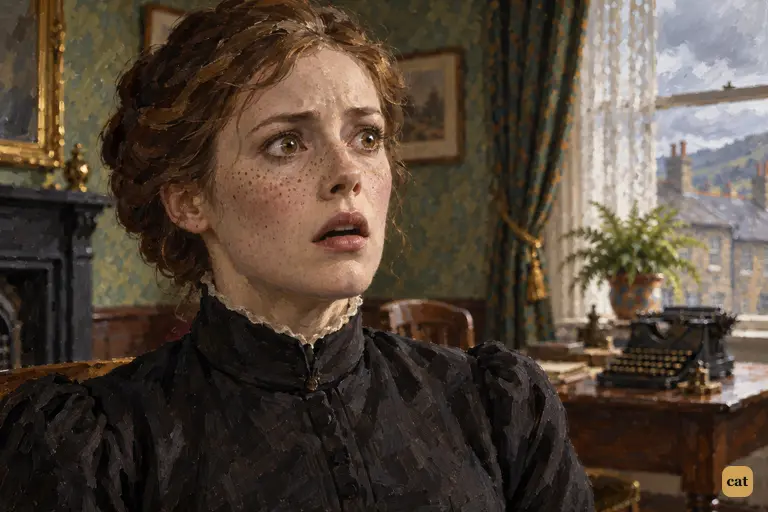
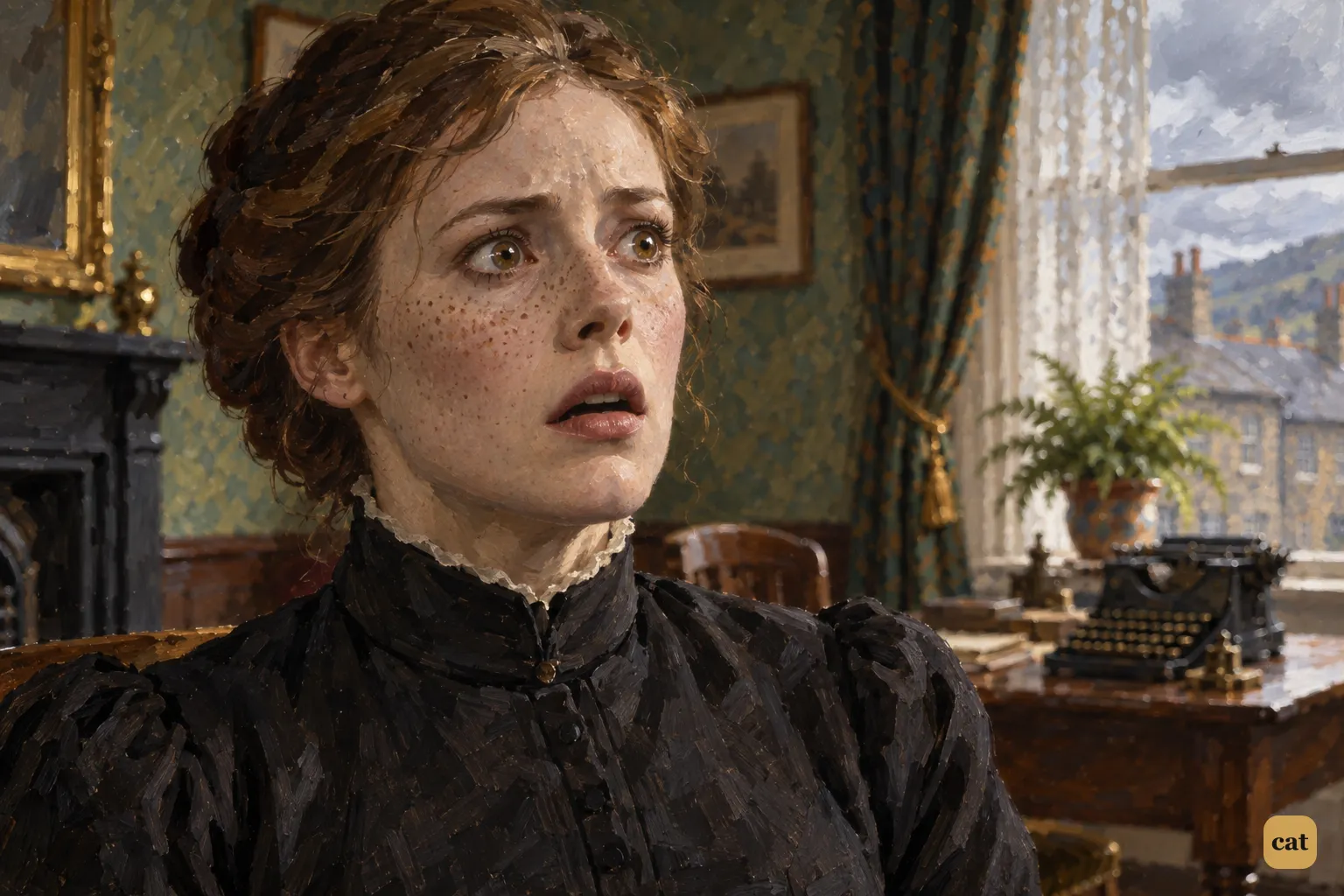
A deathly face
The flush had faded in an instant, and a deathly face was before me. Her dry lips could not speak the “No” which I saw rather than heard.
Read from here → -
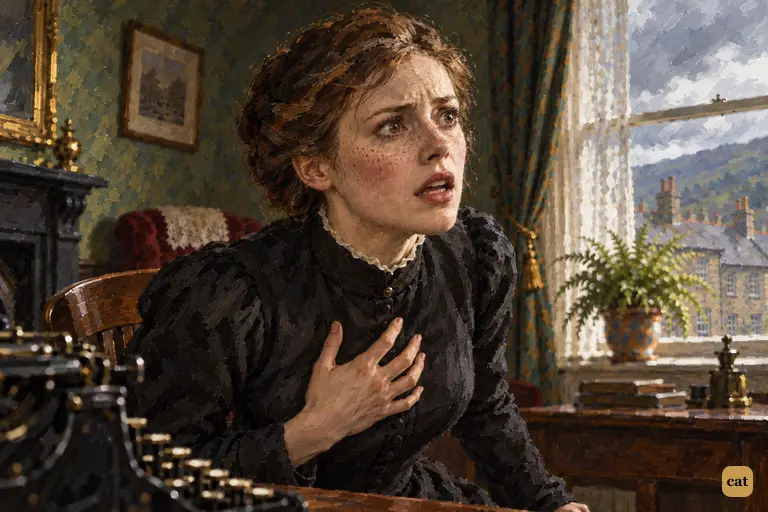
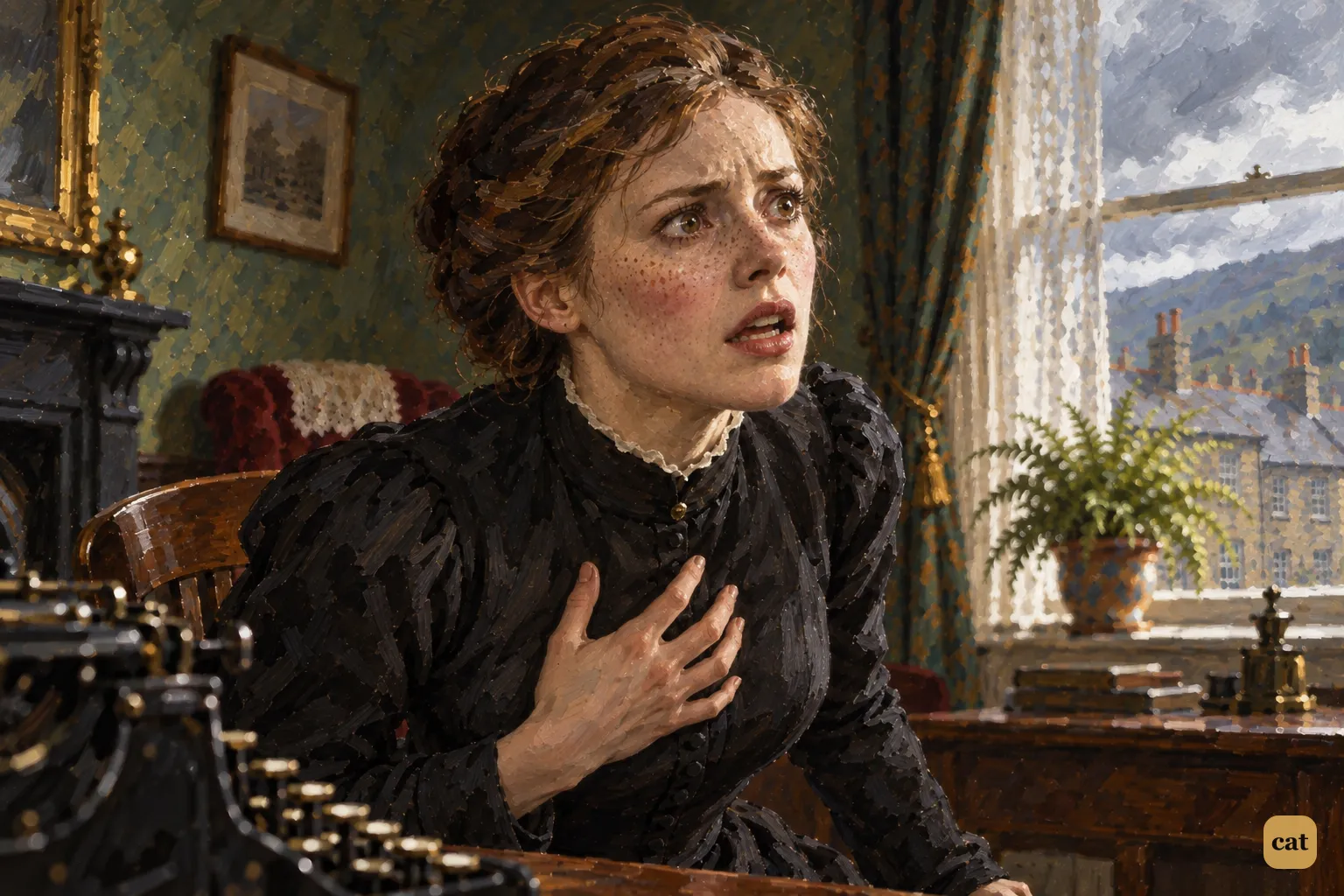
Yes, I did write it
“Yes, I did write it,” she cried, pouring out her soul in a torrent of words. “I did write it. Why should I deny it? I have no reason to be ashamed of it. I wished him to help me. I believed that if I had an interview I could gain his help, so I asked him to meet me.”
Read from here → -
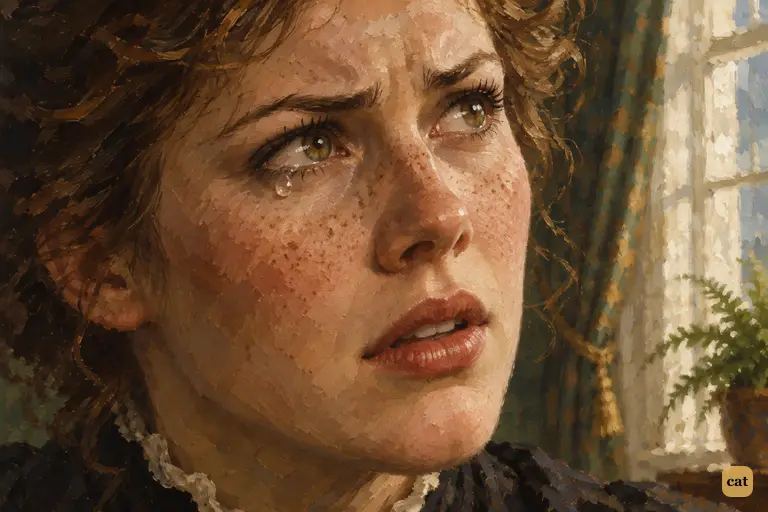
It meant everything
“My life has been one incessant persecution from a husband whom I abhor. The law is upon his side, and every day I am faced by the possibility that he may force me to live with him. At the time that I wrote this letter to Sir Charles I had learned that there was a prospect of my regaining my freedom if certain expenses could be met. It meant everything to me—peace of mind, happiness, self-respect—everything. I knew Sir Charles’s generosity, and I thought that if he heard the story from my own lips he would help me.”
Read from here → -
The Black Tor as centre
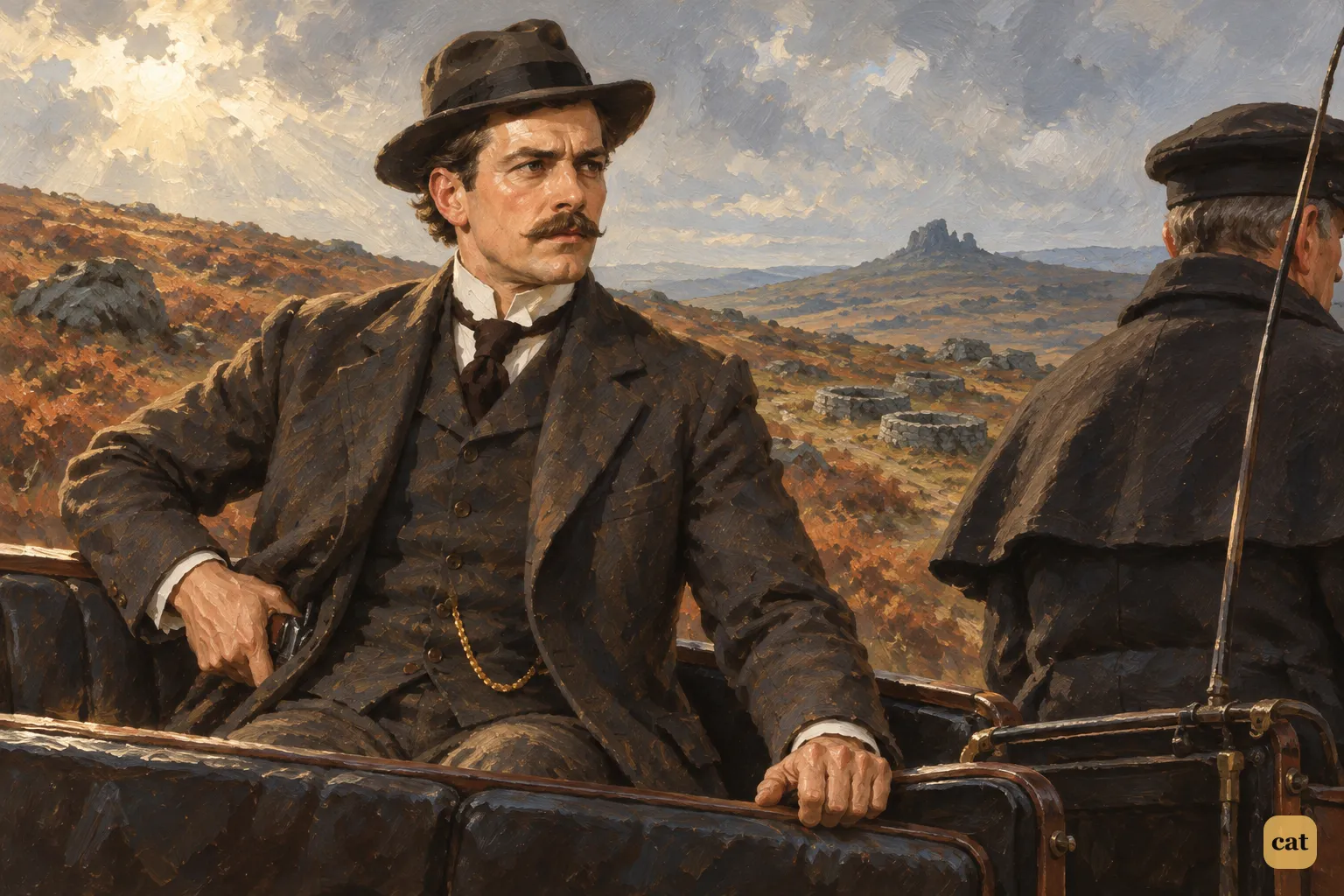
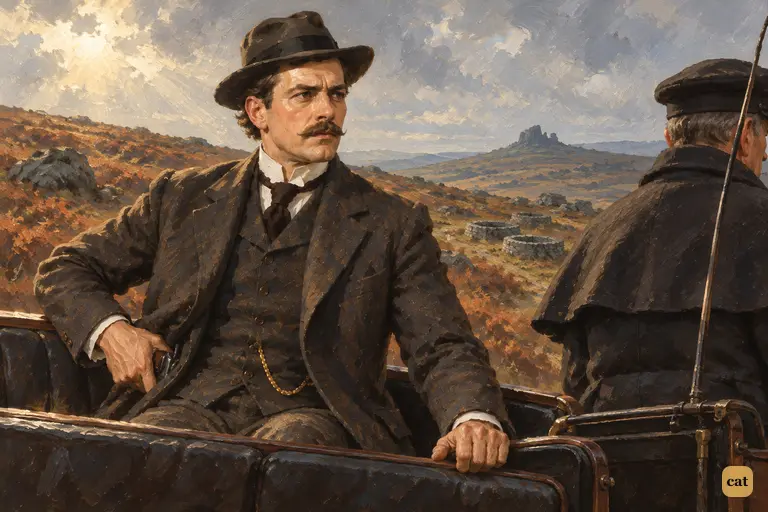
And that was a most vague direction. I realised it as I drove back and noted how hill after hill showed traces of the ancient people. Barrymore’s only indication had been that the stranger lived in one of these abandoned huts, and many hundreds of them are scattered throughout the length and breadth of the moor. But I had my own experience for a guide since it had shown me the man himself standing upon the summit of the Black Tor. That, then, should be the centre of my search. From there I should explore every hut upon the moor until I lighted upon the right one. If this man were inside it I should find out from his own lips, at the point of my revolver if necessary, who he was and why he had dogged us so long. He might slip away from us in the crowd of Regent Street, but it would puzzle him to do so upon the lonely moor. On the other hand, if I should find the hut and its tenant should not be within it I must remain there, however long the vigil, until he returned. Holmes had missed him in London. It would indeed be a triumph for me if I could run him to earth where my master had failed.
Read from here → -
Urchin on the crest
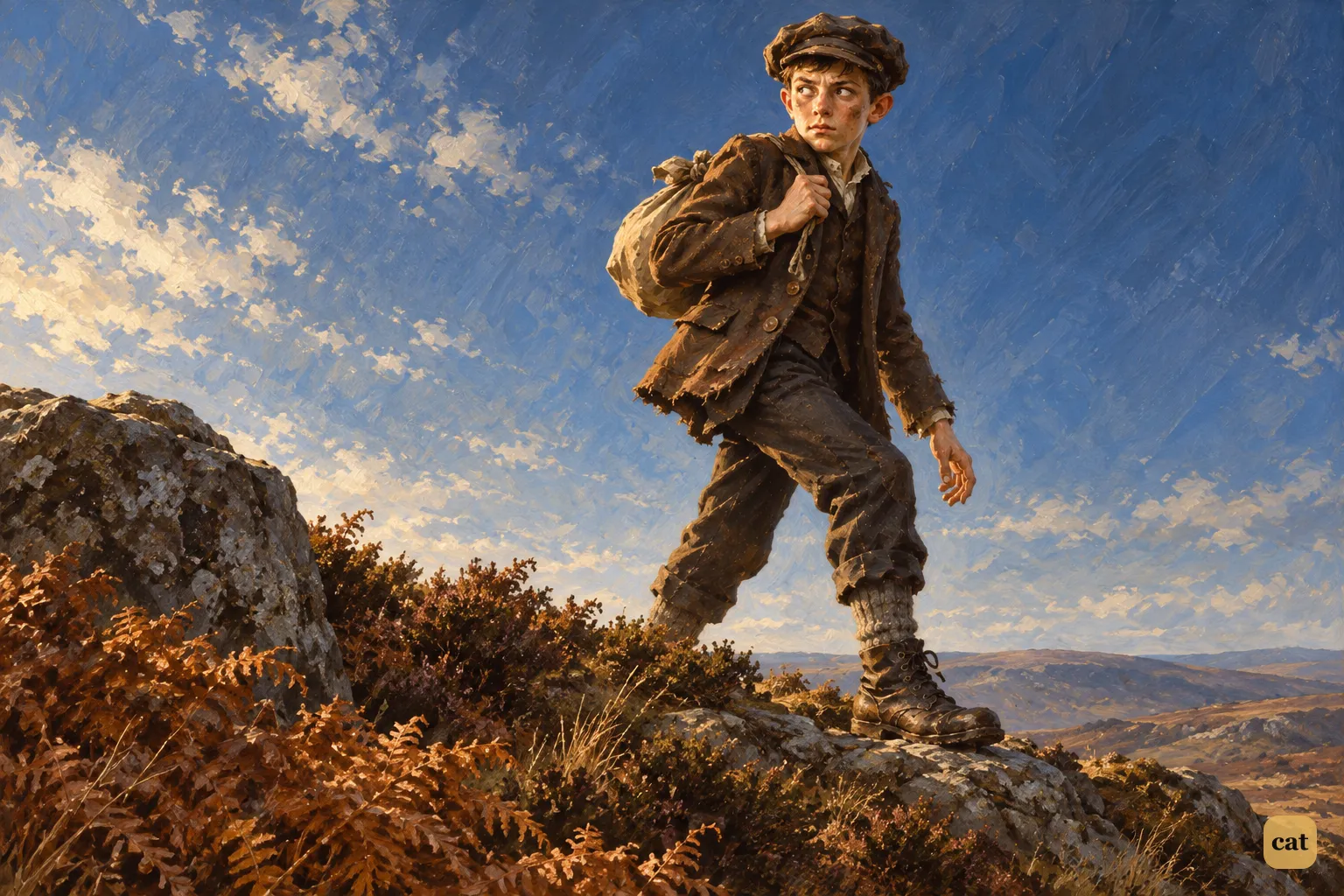
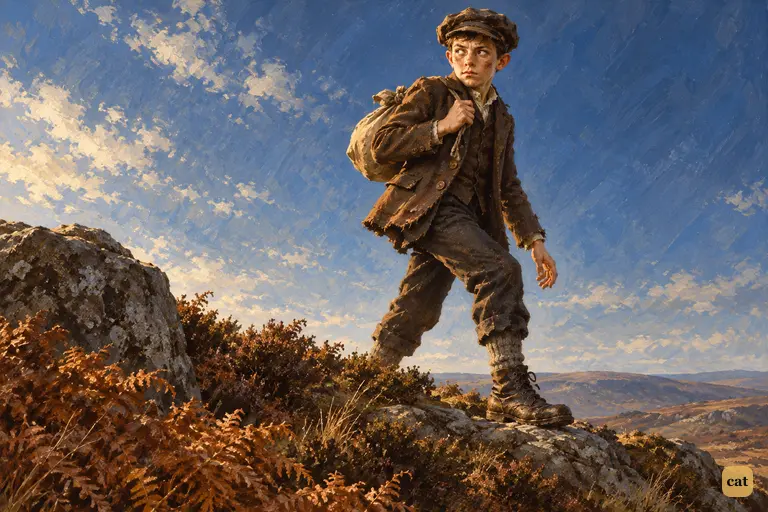
There he was, sure enough, a small urchin with a little bundle upon his shoulder, toiling slowly up the hill. When he reached the crest I saw the ragged uncouth figure outlined for an instant against the cold blue sky. He looked round him with a furtive and stealthy air, as one who dreads pursuit. Then he vanished over the hill.
Read from here → -
The hut in the cleft
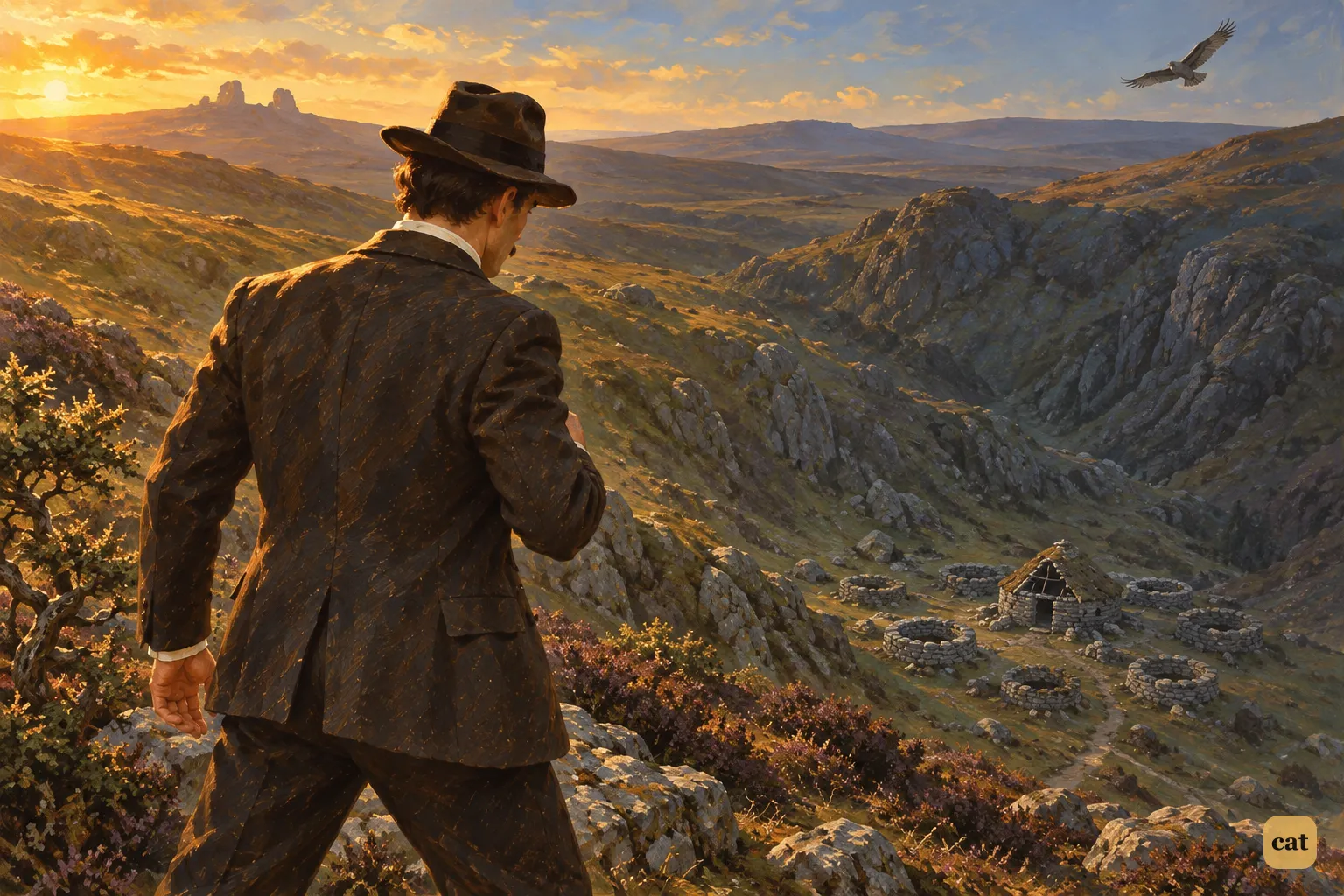
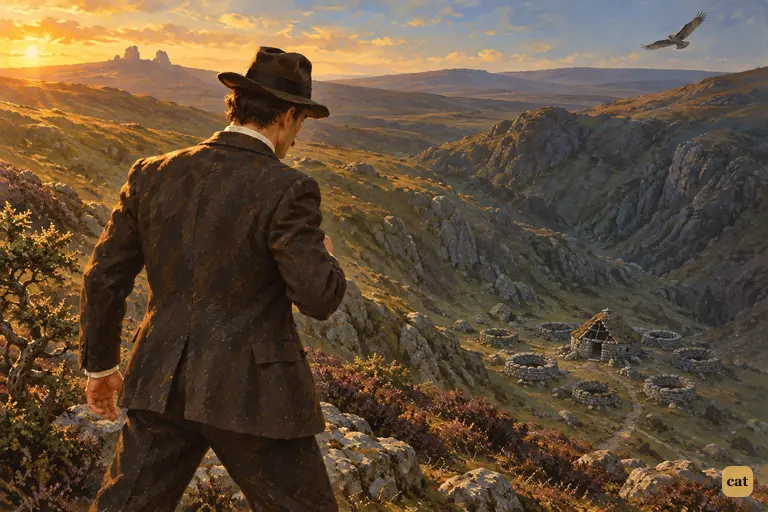
The sun was already sinking when I reached the summit of the hill, and the long slopes beneath me were all golden-green on one side and grey shadow on the other. A haze lay low upon the farthest sky-line, out of which jutted the fantastic shapes of Belliver and Vixen Tor. Over the wide expanse there was no sound and no movement. One great grey bird, a gull or curlew, soared aloft in the blue heaven. He and I seemed to be the only living things between the huge arch of the sky and the desert beneath it. The barren scene, the sense of loneliness, and the mystery and urgency of my task all struck a chill into my heart. The boy was nowhere to be seen. But down beneath me in a cleft of the hills there was a circle of the old stone huts, and in the middle of them there was one which retained sufficient roof to act as a screen against the weather. My heart leaped within me as I saw it. This must be the burrow where the stranger lurked. At last my foot was on the threshold of his hiding place—his secret was within my grasp.
Read from here → -
The pencilled report
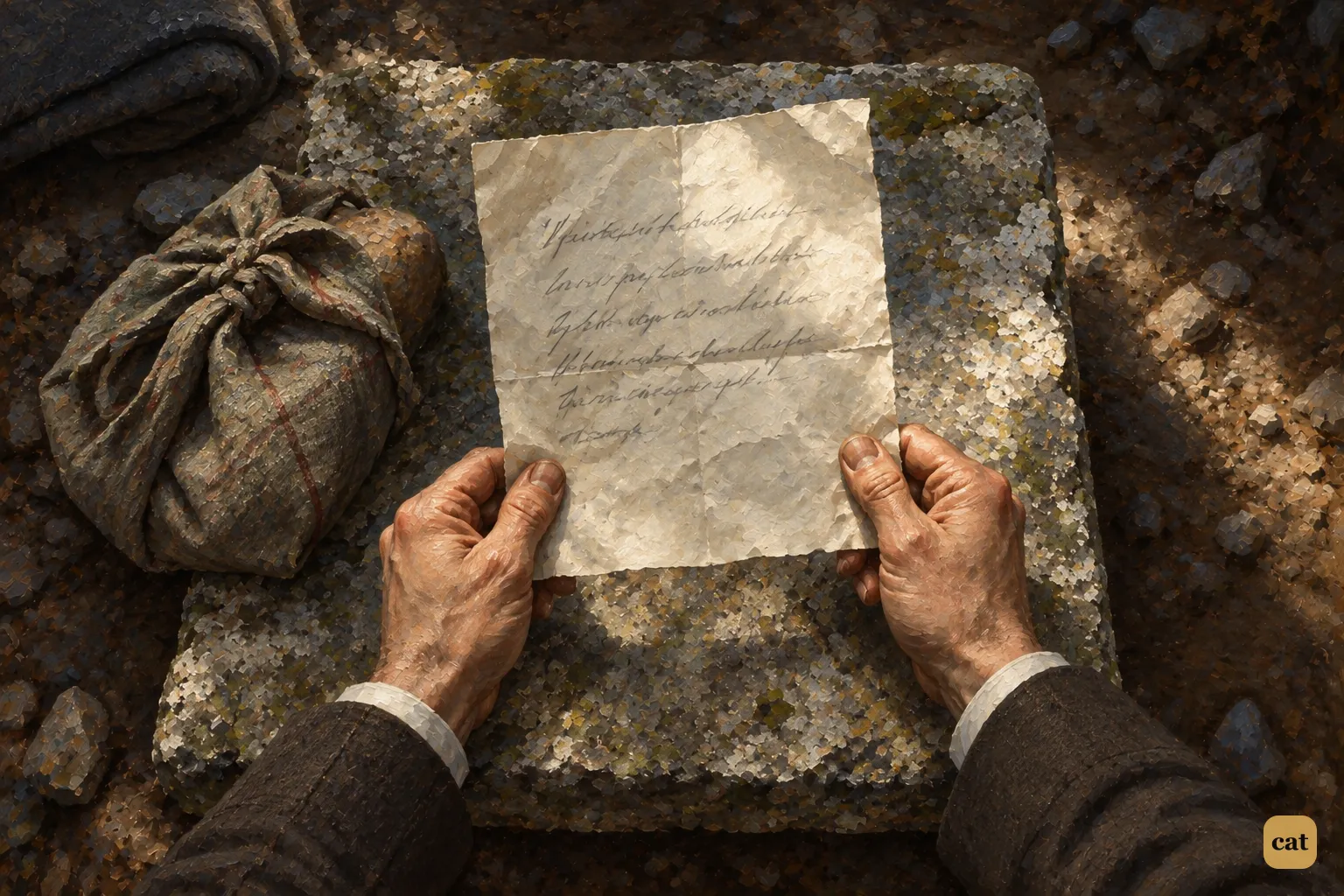
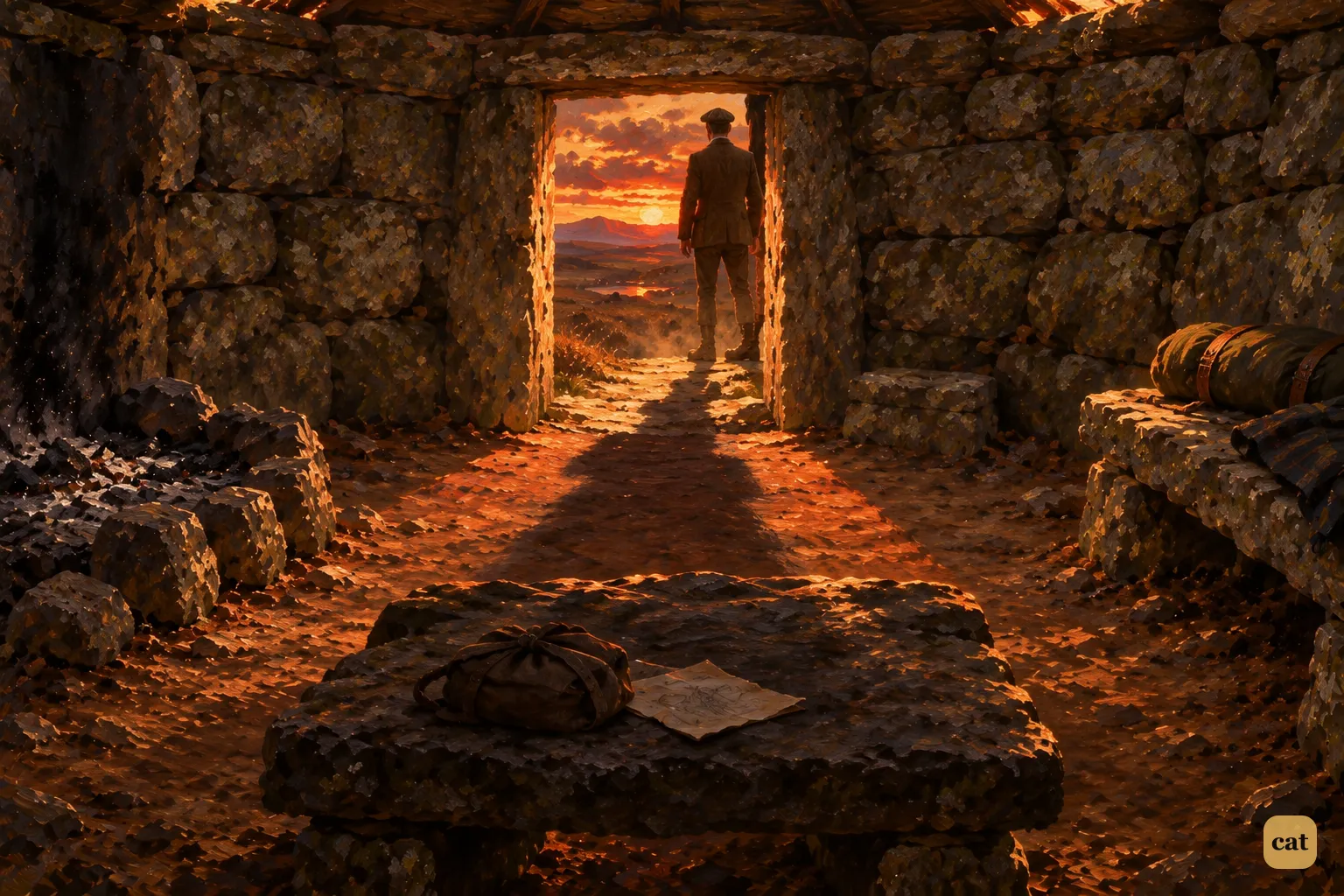
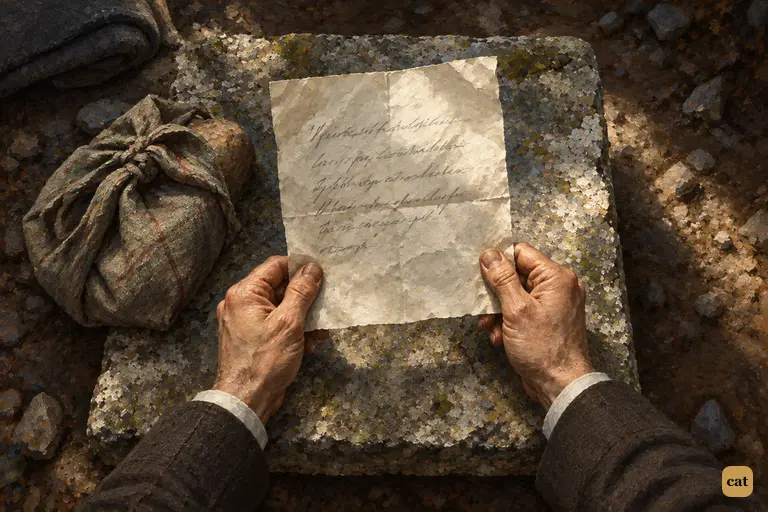
But there were ample signs that I had not come upon a false scent. This was certainly where the man lived. Some blankets rolled in a waterproof lay upon that very stone slab upon which Neolithic man had once slumbered. The ashes of a fire were heaped in a rude grate. Beside it lay some cooking utensils and a bucket half-full of water. A litter of empty tins showed that the place had been occupied for some time, and I saw, as my eyes became accustomed to the checkered light, a pannikin and a half-full bottle of spirits standing in the corner. In the middle of the hut a flat stone served the purpose of a table, and upon this stood a small cloth bundle—the same, no doubt, which I had seen through the telescope upon the shoulder of the boy. It contained a loaf of bread, a tinned tongue, and two tins of preserved peaches. As I set it down again, after having examined it, my heart leaped to see that beneath it there lay a sheet of paper with writing upon it. I raised it, and this was what I read, roughly scrawled in pencil: “Dr. Watson has gone to Coombe Tracey.”
Read from here → -
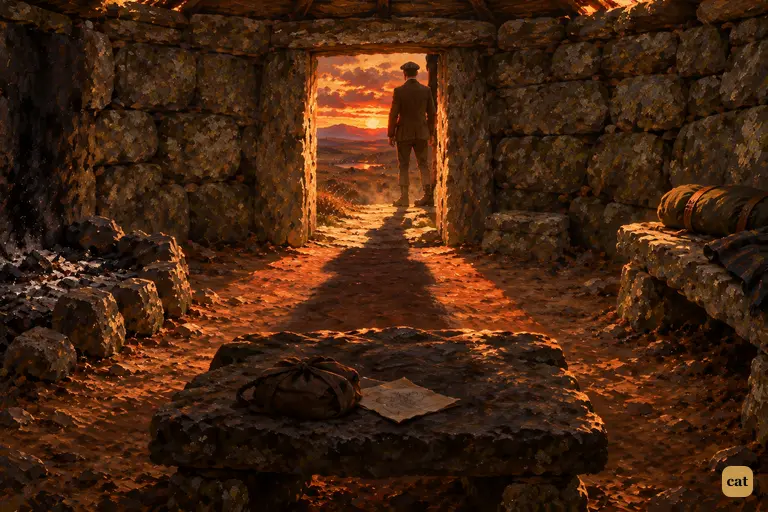
A shadow across the door
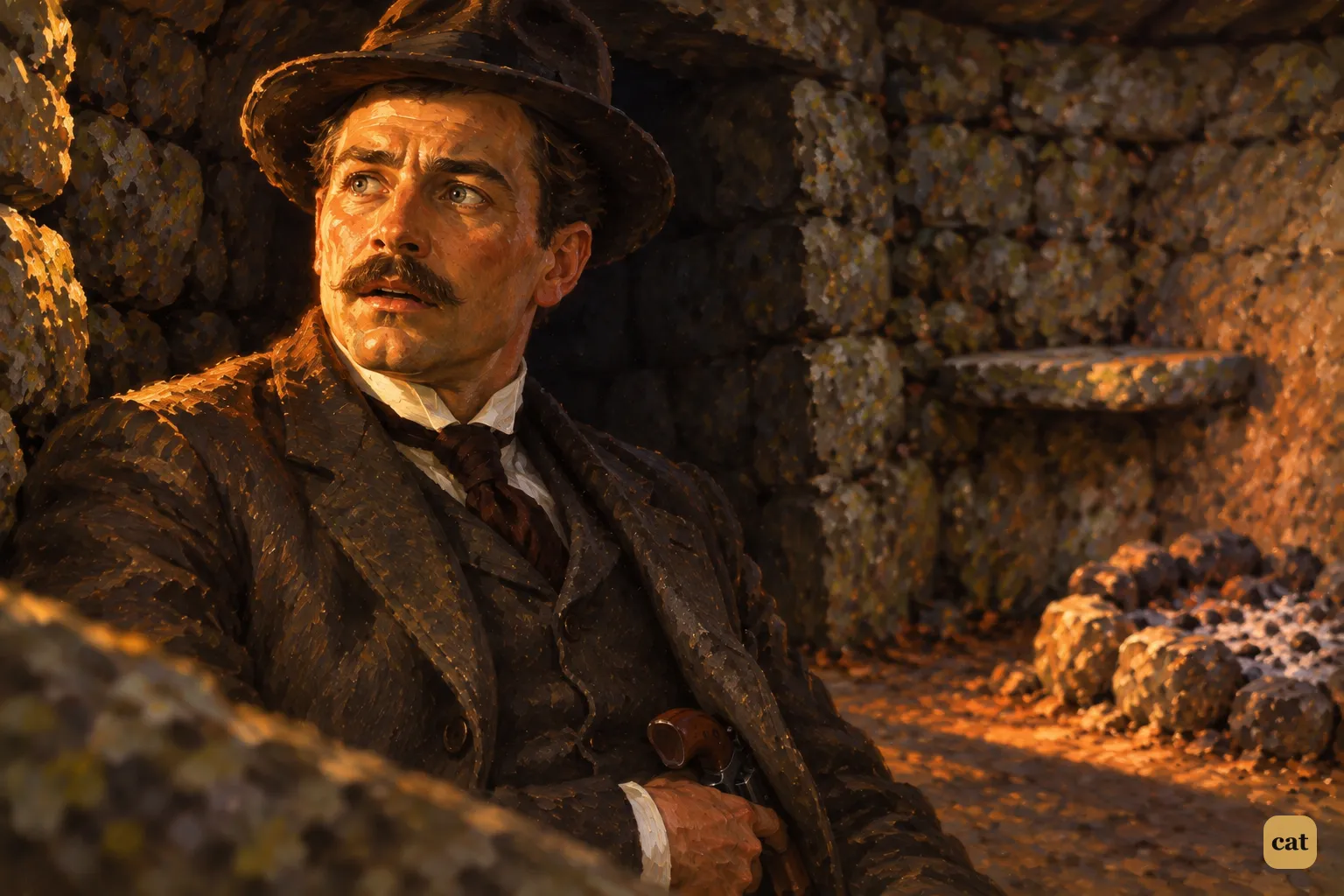
And then at last I heard him. Far away came the sharp clink of a boot striking upon a stone. Then another and yet another, coming nearer and nearer. I shrank back into the darkest corner and cocked the pistol in my pocket, determined not to discover myself until I had an opportunity of seeing something of the stranger. There was a long pause which showed that he had stopped. Then once more the footsteps approached and a shadow fell across the opening of the hut.
Read from here → -
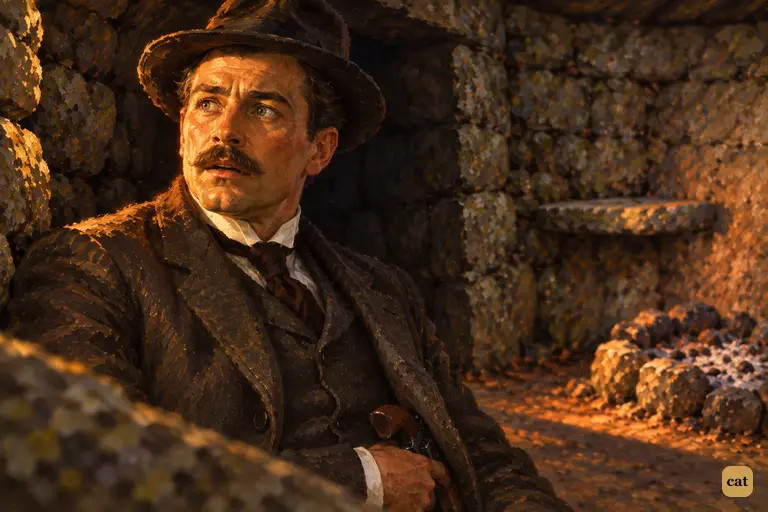
A well-known voice
“It is a lovely evening, my dear Watson,” said a well-known voice. “I really think that you will be more comfortable outside than in.”
Read from here → -
Chapter 14
The Hut on the Moor and the Familiar Voice
Next chapter: Holmes Revealed; Selden Dies in Sir Henry's Place Read this chapter