 Author
-
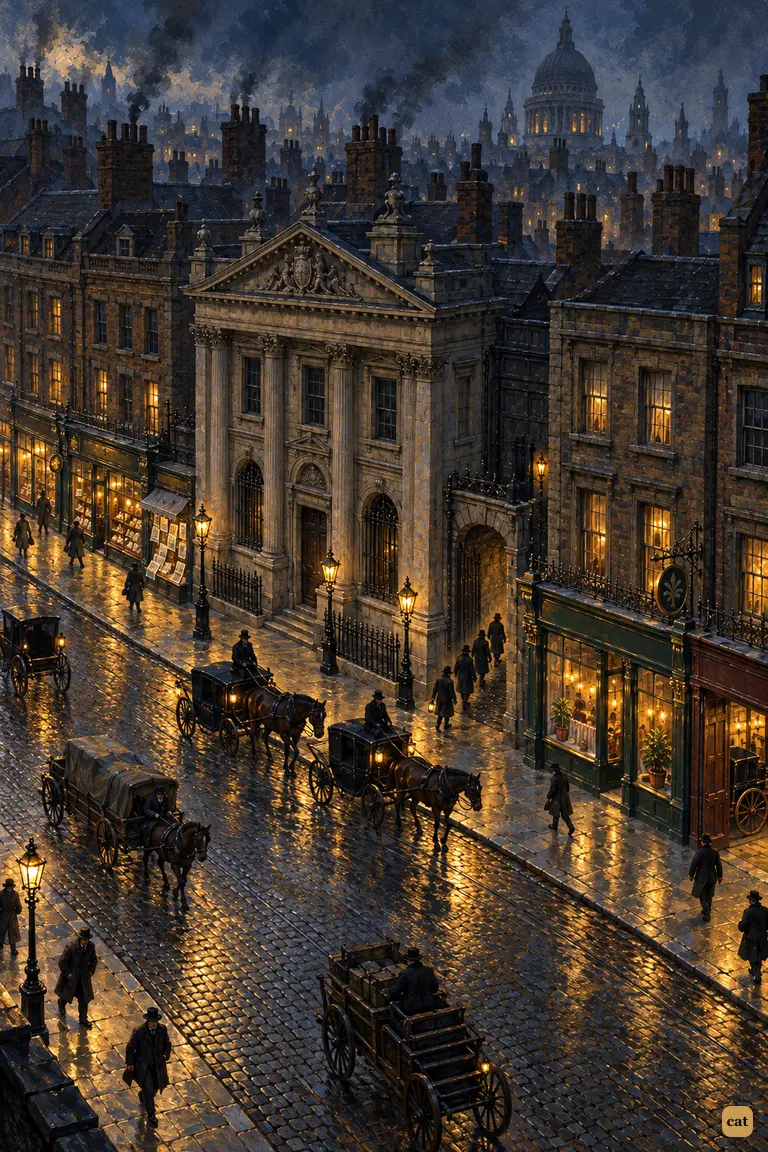
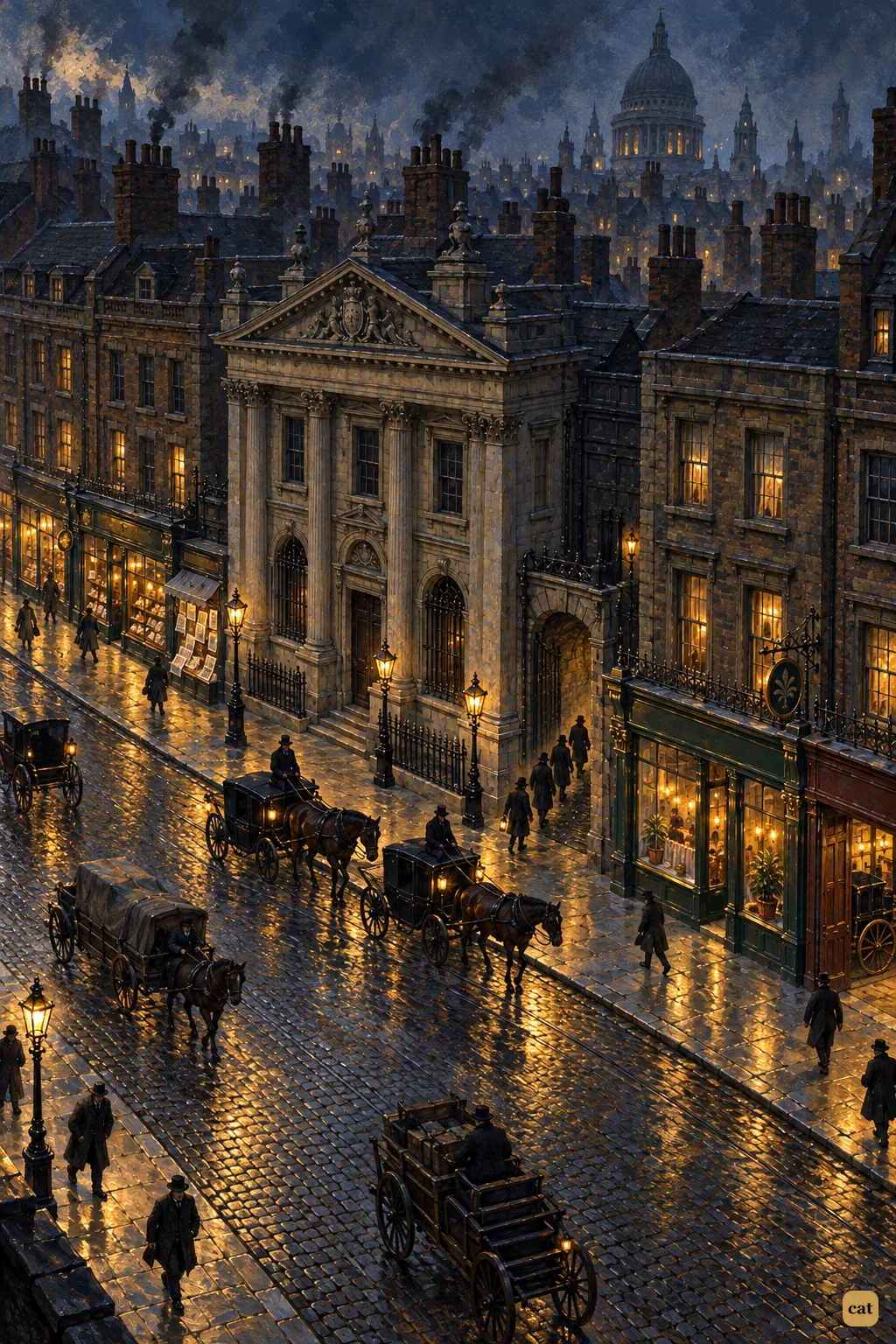
Night street above the bank
We had reached the same crowded thoroughfare in which we had found ourselves in the morning. Our cabs were dismissed, and, following the guidance of Mr. Merryweather, we passed down a narrow passage and through a side door, which he opened for us. Within there was a small corridor, which ended in a very massive iron gate. This also was opened, and led down a flight of winding stone steps, which terminated at another formidable gate. Mr. Merryweather stopped to light a lantern, and then conducted us down a dark, earth-smelling passage, and so, after opening a third door, into a huge vault or cellar, which was piled all round with crates and massive boxes.
Read from here → -
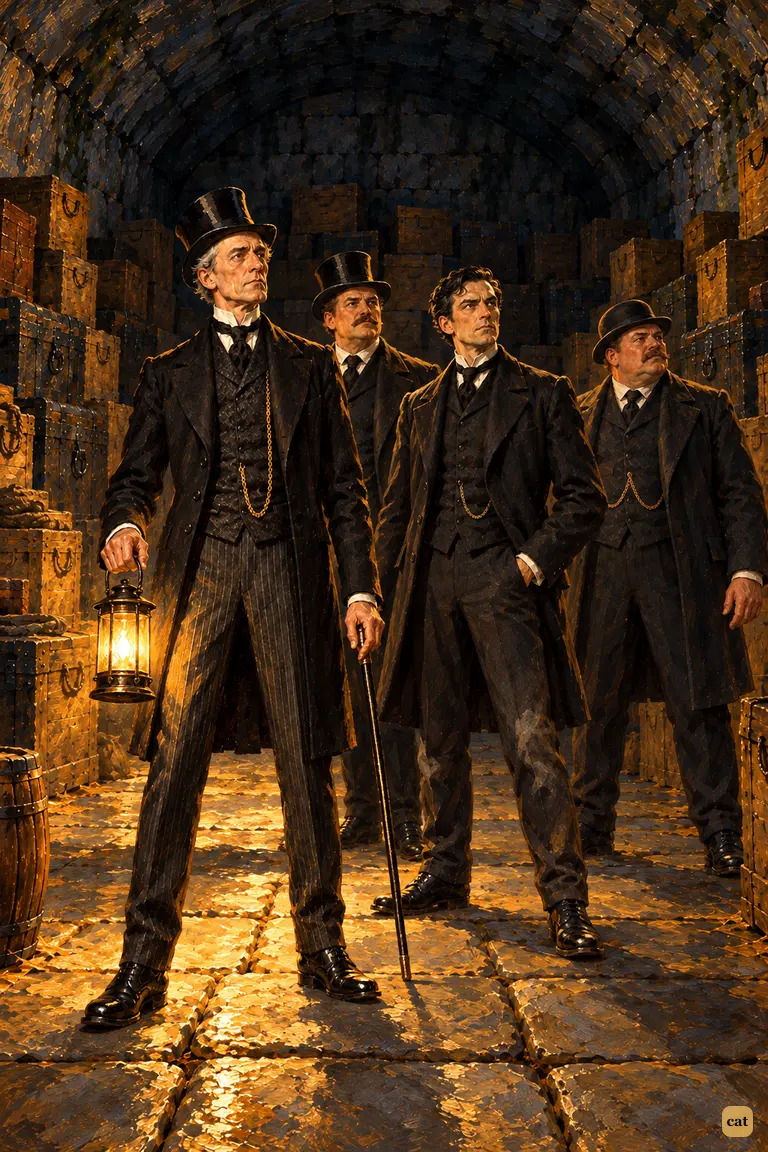
The vault revealed
We had reached the same crowded thoroughfare in which we had found ourselves in the morning. Our cabs were dismissed, and, following the guidance of Mr. Merryweather, we passed down a narrow passage and through a side door, which he opened for us. Within there was a small corridor, which ended in a very massive iron gate. This also was opened, and led down a flight of winding stone steps, which terminated at another formidable gate. Mr. Merryweather stopped to light a lantern, and then conducted us down a dark, earth-smelling passage, and so, after opening a third door, into a huge vault or cellar, which was piled all round with crates and massive boxes.
Read from here → -
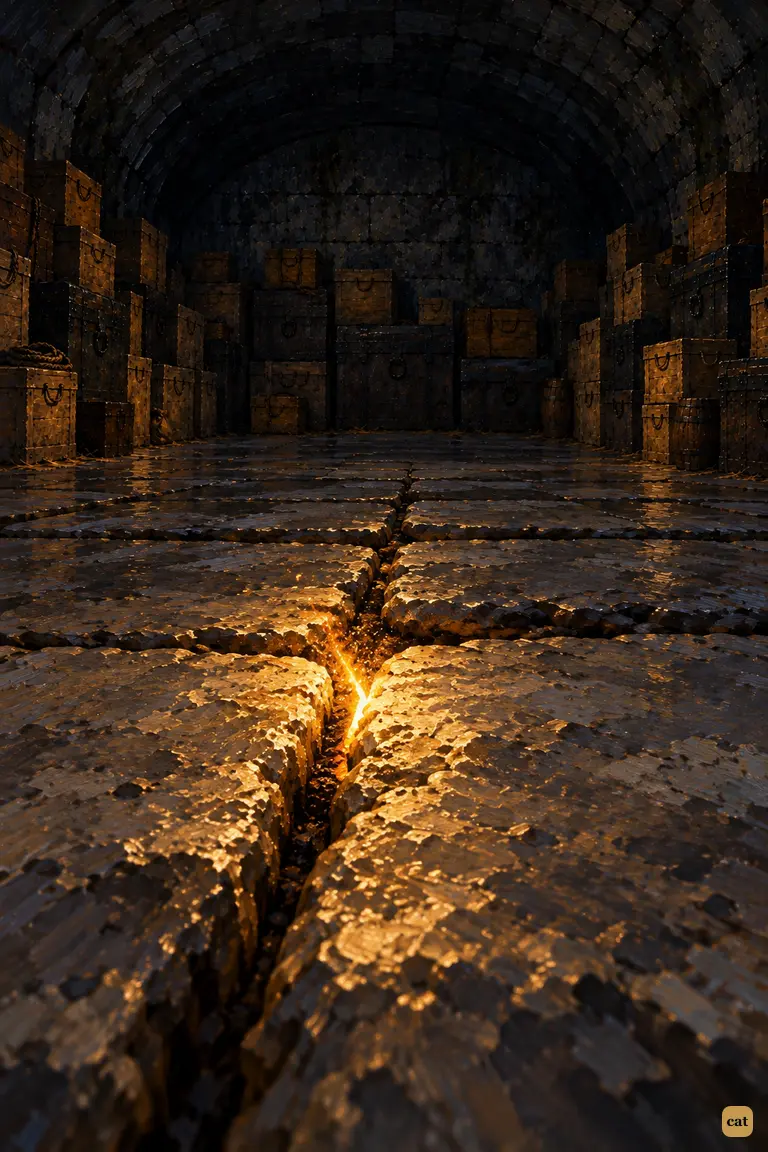
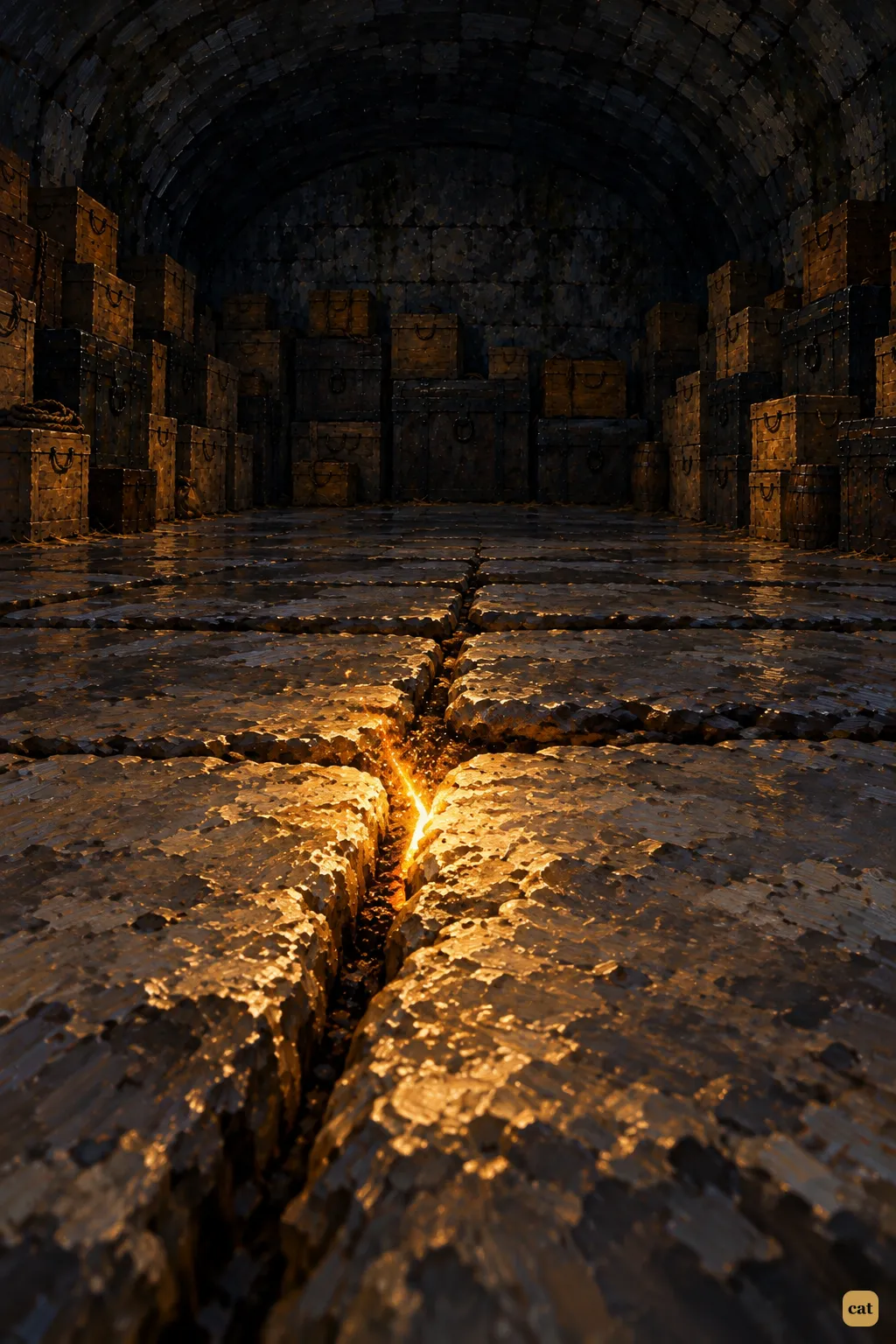
A spark between the stones
What a time it seemed! From comparing notes afterwards it was but an hour and a quarter, yet it appeared to me that the night must have almost gone, and the dawn be breaking above us. My limbs were weary and stiff, for I feared to change my position; yet my nerves were worked up to the highest pitch of tension, and my hearing was so acute that I could not only hear the gentle breathing of my companions, but I could distinguish the deeper, heavier in-breath of the bulky Jones from the thin, sighing note of the bank director. From my position I could look over the case in the direction of the floor. Suddenly my eyes caught the glint of a light.
Read from here → -
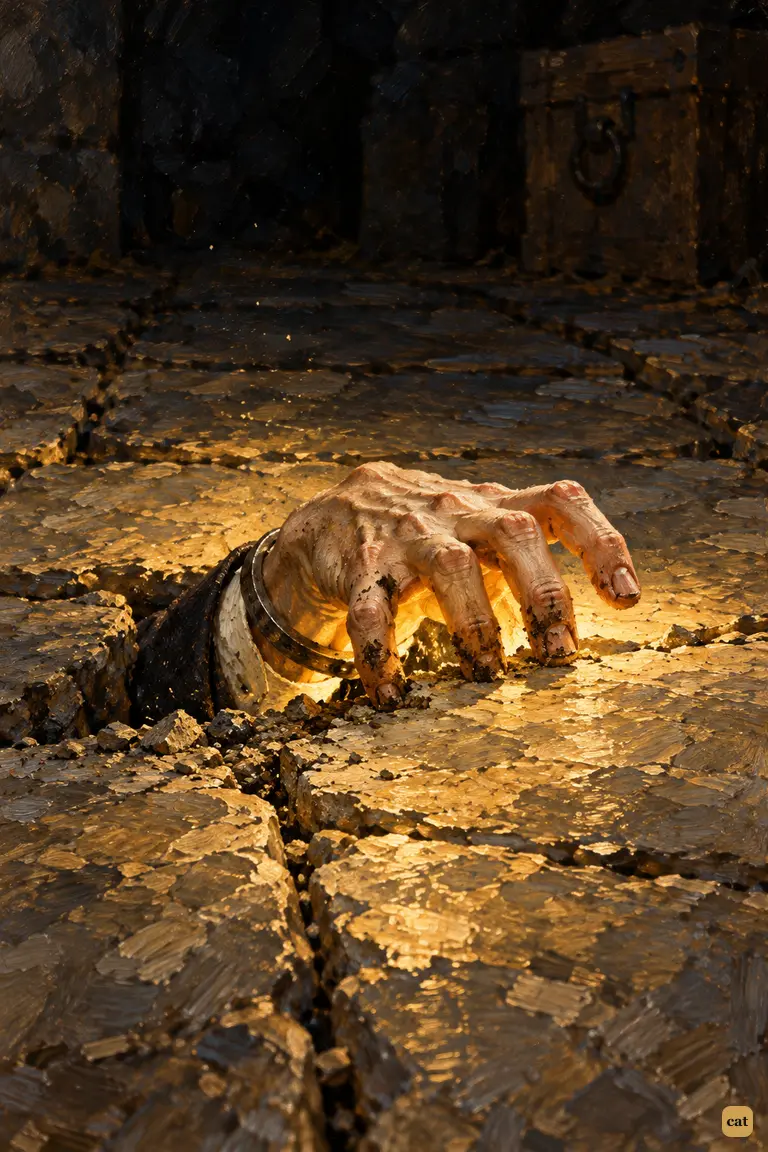
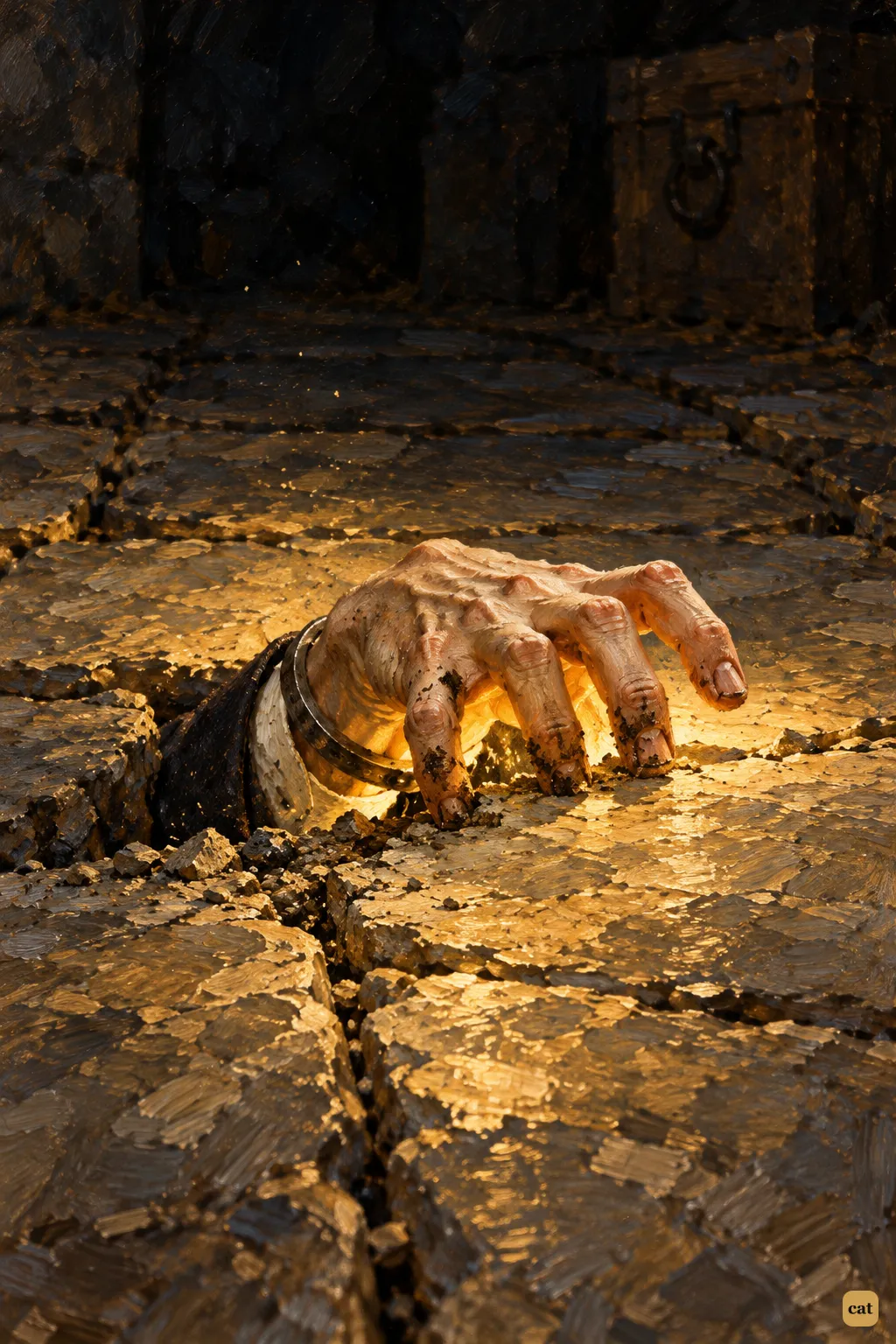
The hand in the floor
At first it was but a lurid spark upon the stone pavement. Then it lengthened out until it became a yellow line, and then, without any warning or sound, a gash seemed to open and a hand appeared, a white, almost womanly hand, which felt about in the centre of the little area of light. For a minute or more the hand, with its writhing fingers, protruded out of the floor. Then it was withdrawn as suddenly as it appeared, and all was dark again save the single lurid spark which marked a chink between the stones.
Read from here → -
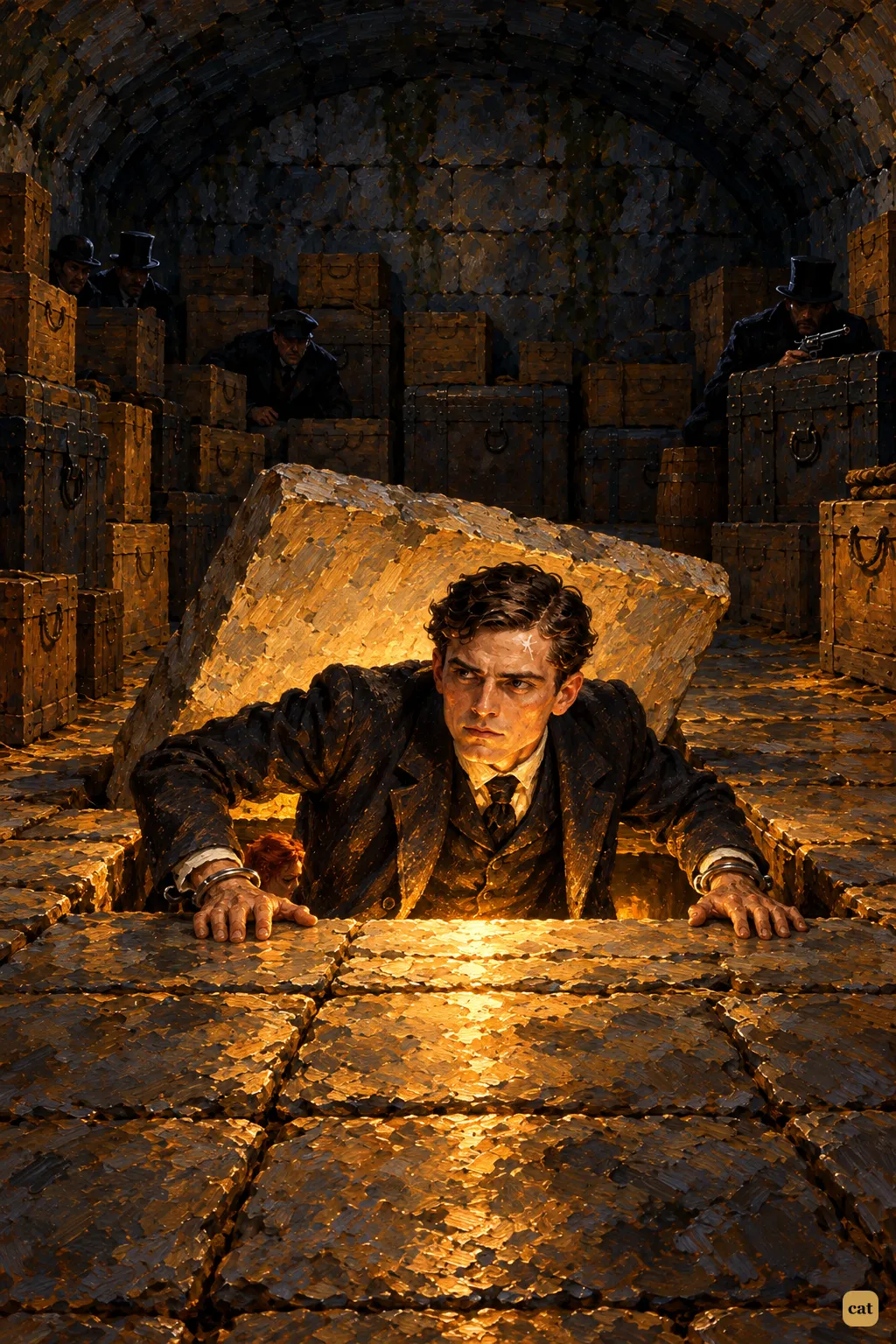
The boyish face appears
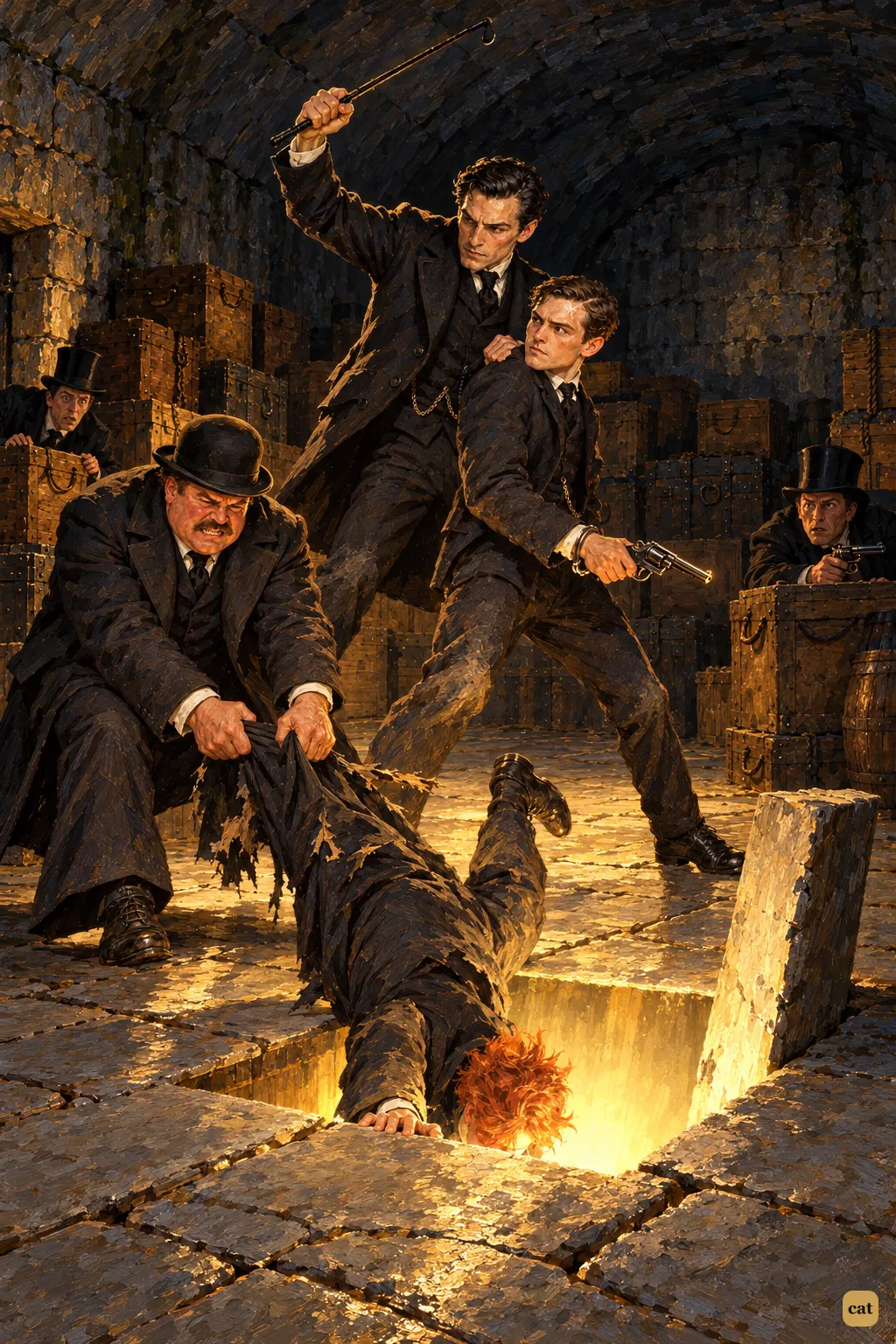
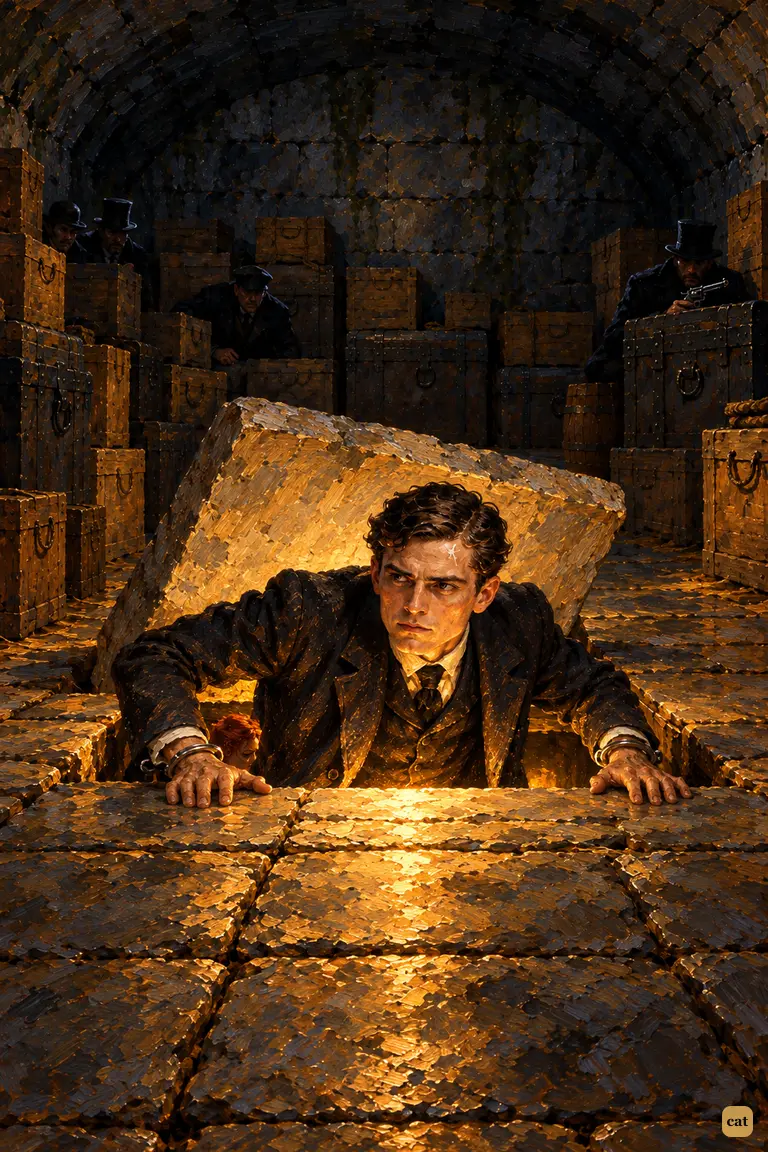
Its disappearance, however, was but momentary. With a rending, tearing sound, one of the broad, white stones turned over upon its side and left a square, gaping hole, through which streamed the light of a lantern. Over the edge there peeped a clean-cut, boyish face, which looked keenly about it, and then, with a hand on either side of the aperture, drew itself shoulder-high and waist-high, until one knee rested upon the edge. In another instant he stood at the side of the hole and was hauling after him a companion, lithe and small like himself, with a pale face and a shock of very red hair.
Read from here → -
Holmes springs
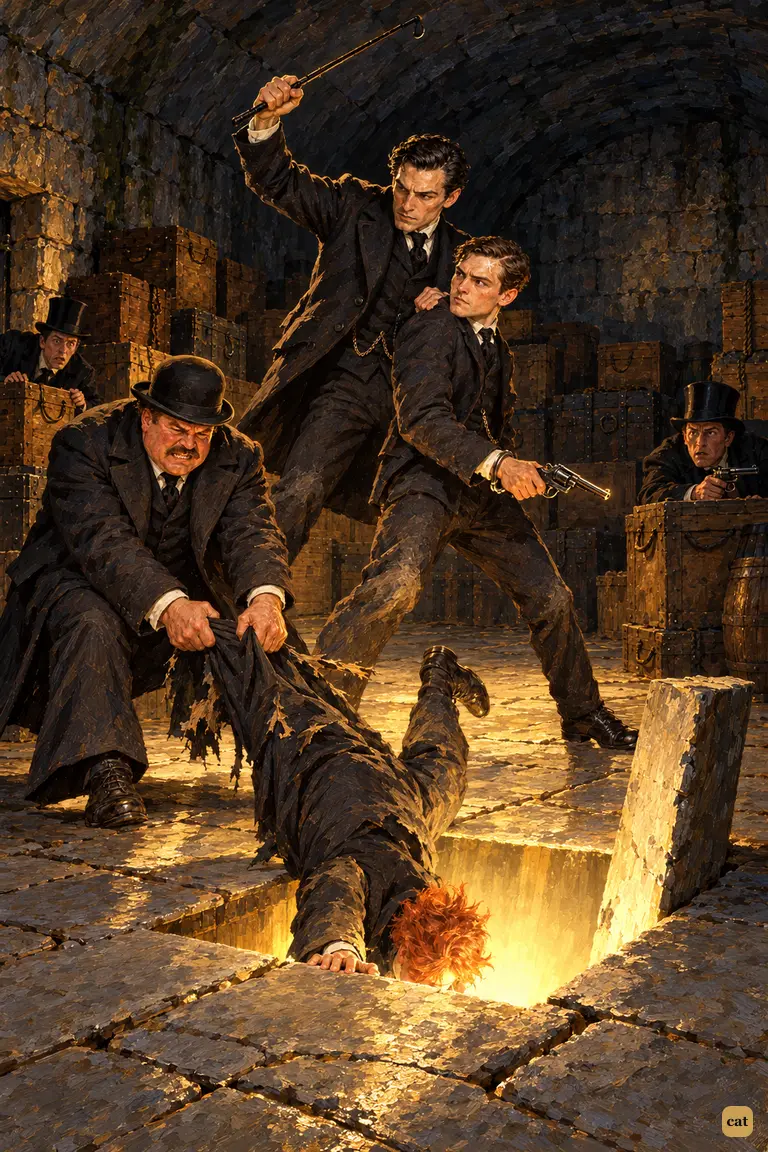
Sherlock Holmes had sprung out and seized the intruder by the collar. The other dived down the hole, and I heard the sound of rending cloth as Jones clutched at his skirts. The light flashed upon the barrel of a revolver, but Holmes’ hunting crop came down on the man’s wrist, and the pistol clinked upon the stone floor.
Read from here → -
The sweeping bow
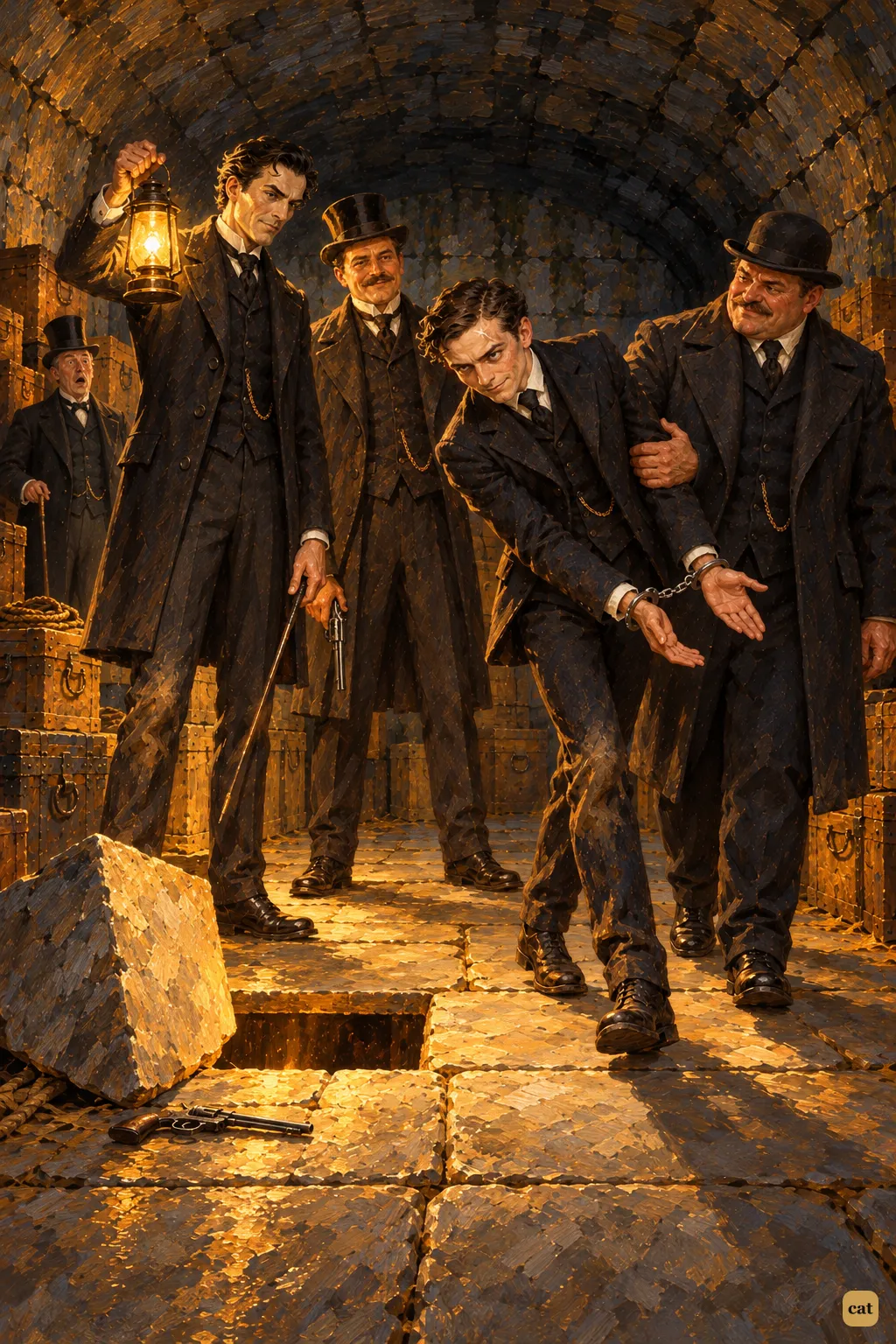
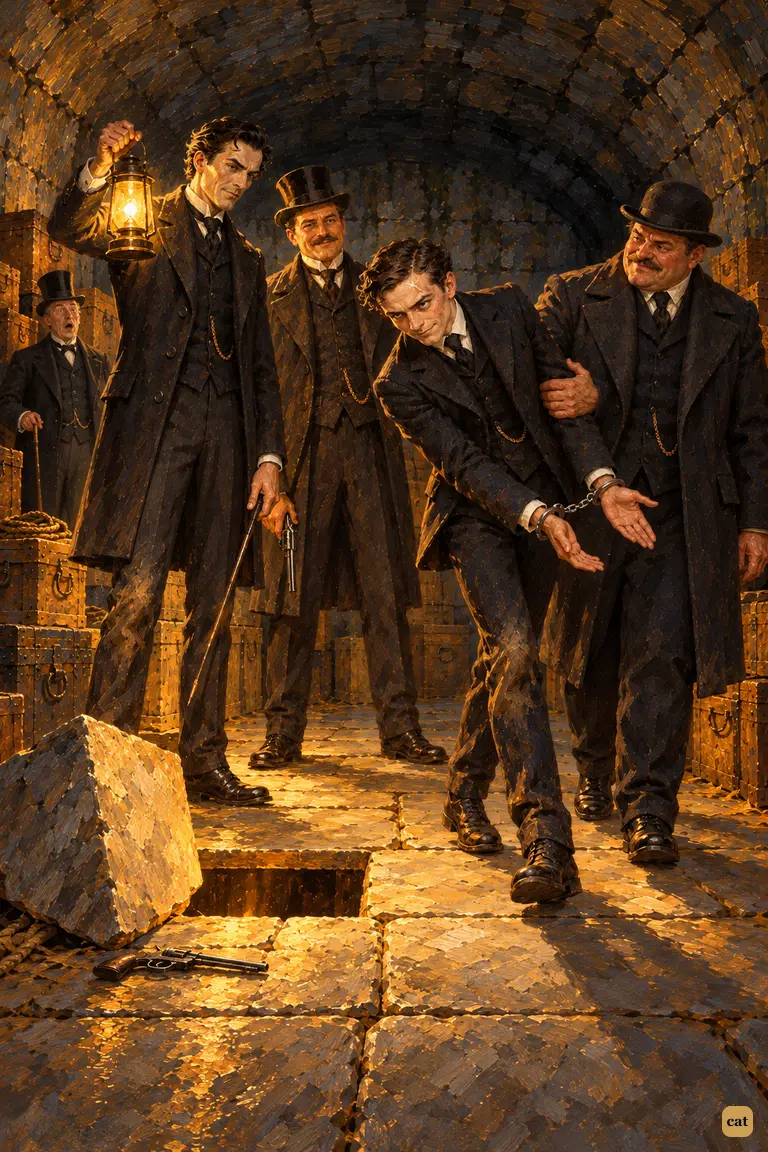
“That is better,” said John Clay serenely. He made a sweeping bow to the three of us and walked quietly off in the custody of the detective.
Read from here → -
Worn knees
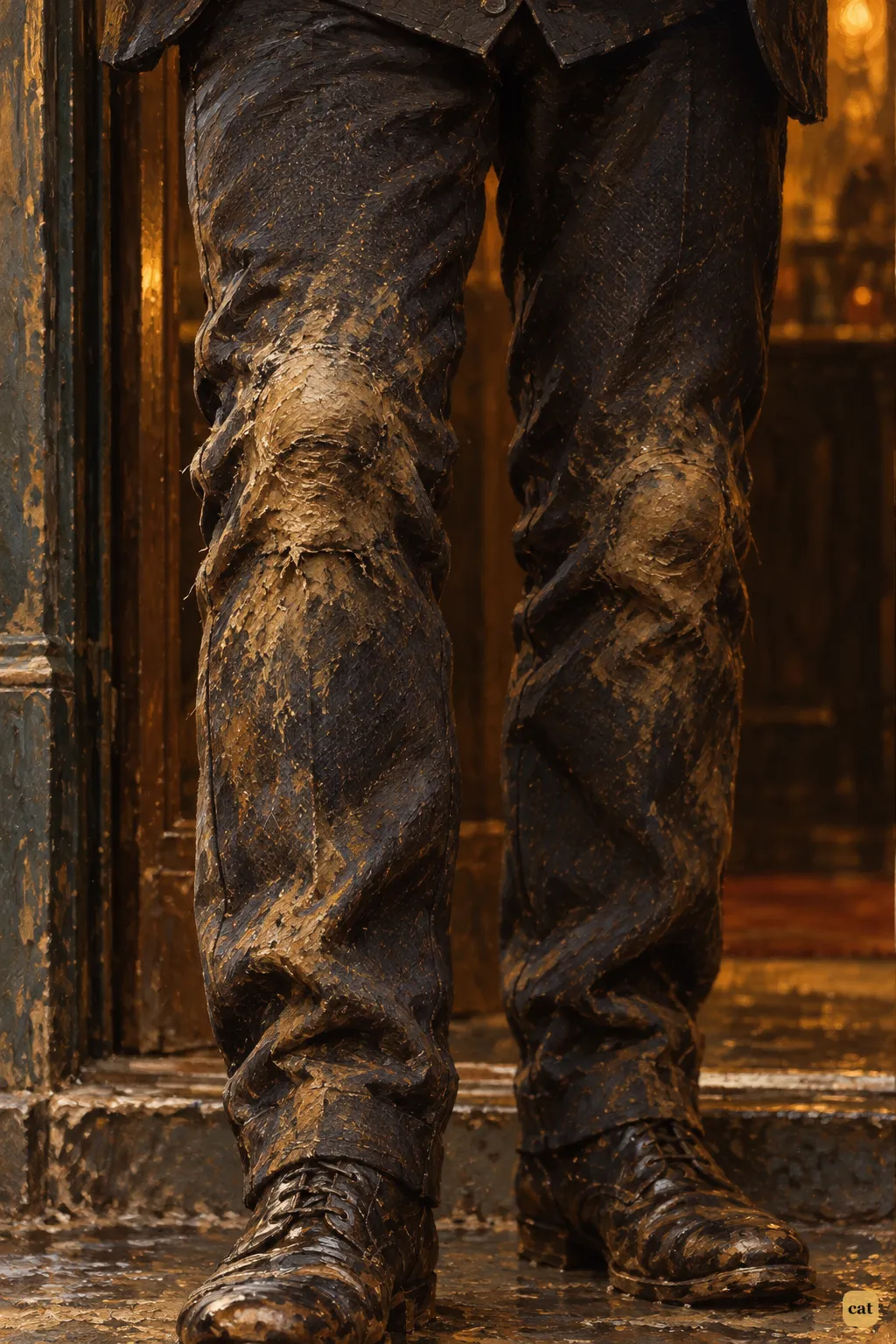
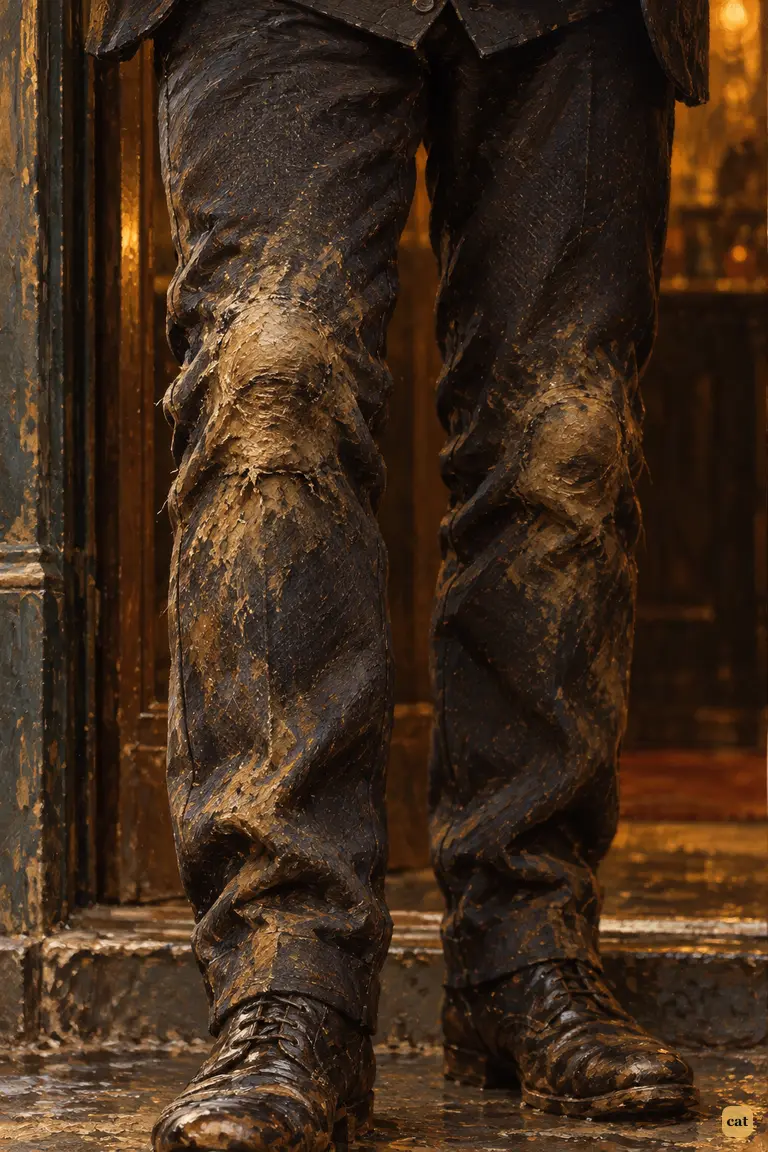
“So far I had got when we went to visit the scene of action. I surprised you by beating upon the pavement with my stick. I was ascertaining whether the cellar stretched out in front or behind. It was not in front. Then I rang the bell, and, as I hoped, the assistant answered it. We have had some skirmishes, but we had never set eyes upon each other before. I hardly looked at his face. His knees were what I wished to see. You must yourself have remarked how worn, wrinkled, and stained they were. They spoke of those hours of burrowing. The only remaining point was what they were burrowing for. I walked round the corner, saw the City and Suburban Bank abutted on our friend’s premises, and felt that I had solved my problem. When you drove home after the concert I called upon Scotland Yard and upon the chairman of the bank directors, with the result that you have seen.”
Read from here → -
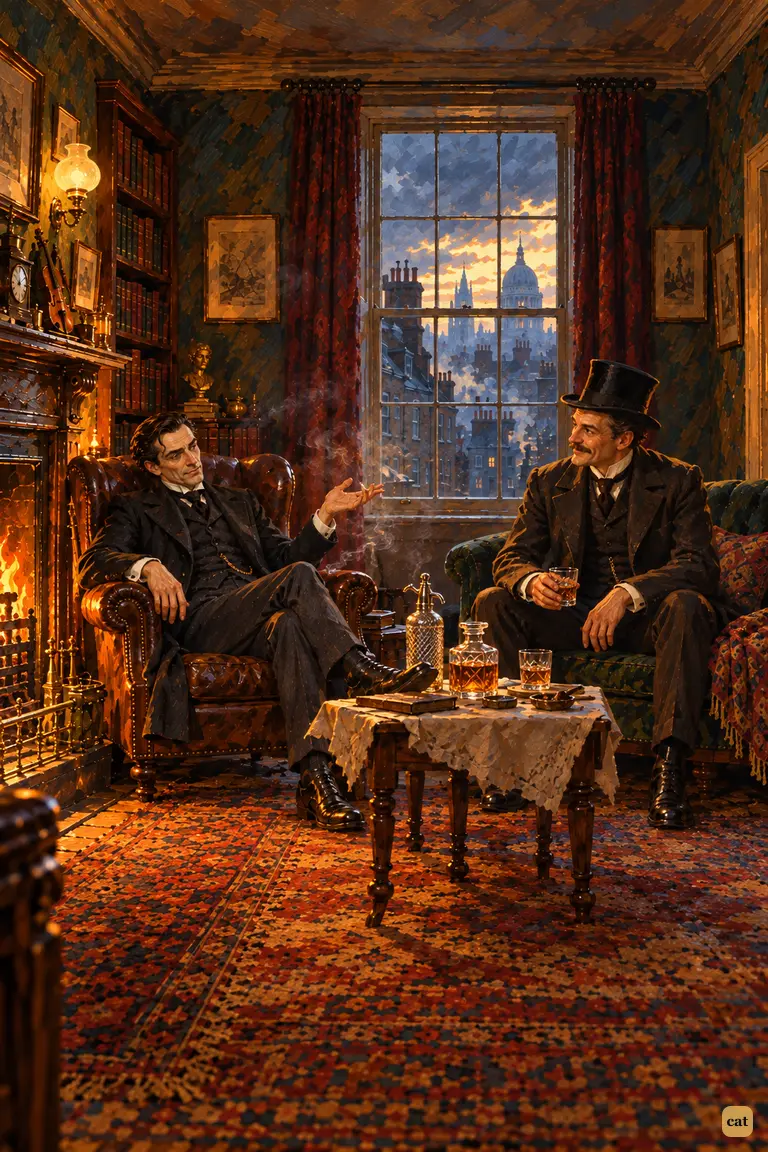
L'œuvre c'est tout
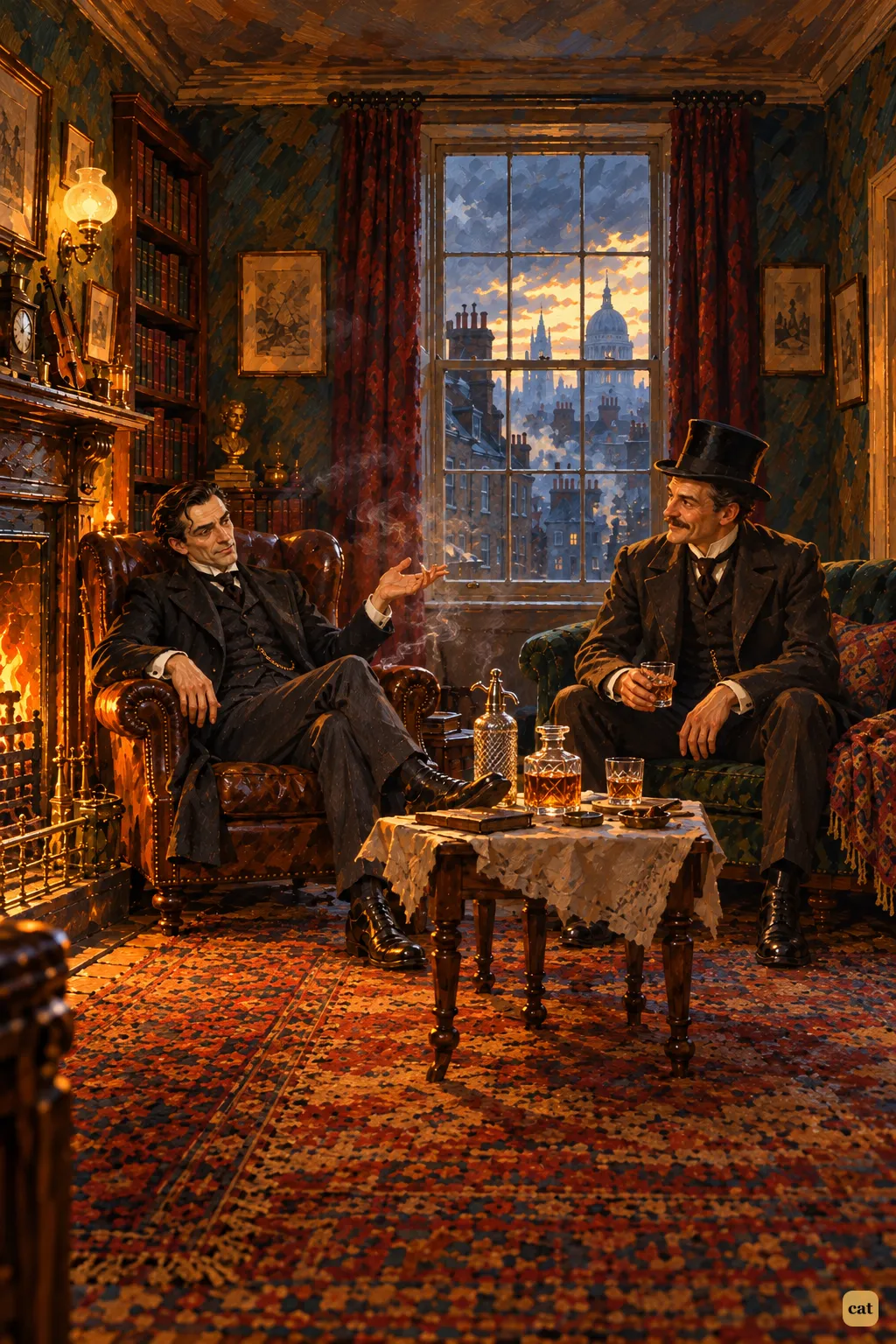
He shrugged his shoulders. “Well, perhaps, after all, it is of some little use,” he remarked. “‘L’homme c’est rien—l’œuvre c’est tout,’ as Gustave Flaubert wrote to George Sand.”
Read from here → -
Chapter 3
The bank cellar ambush and Holmes's explanation
The end · Back to the book Read this chapter