 Author
-

The memory goes blank
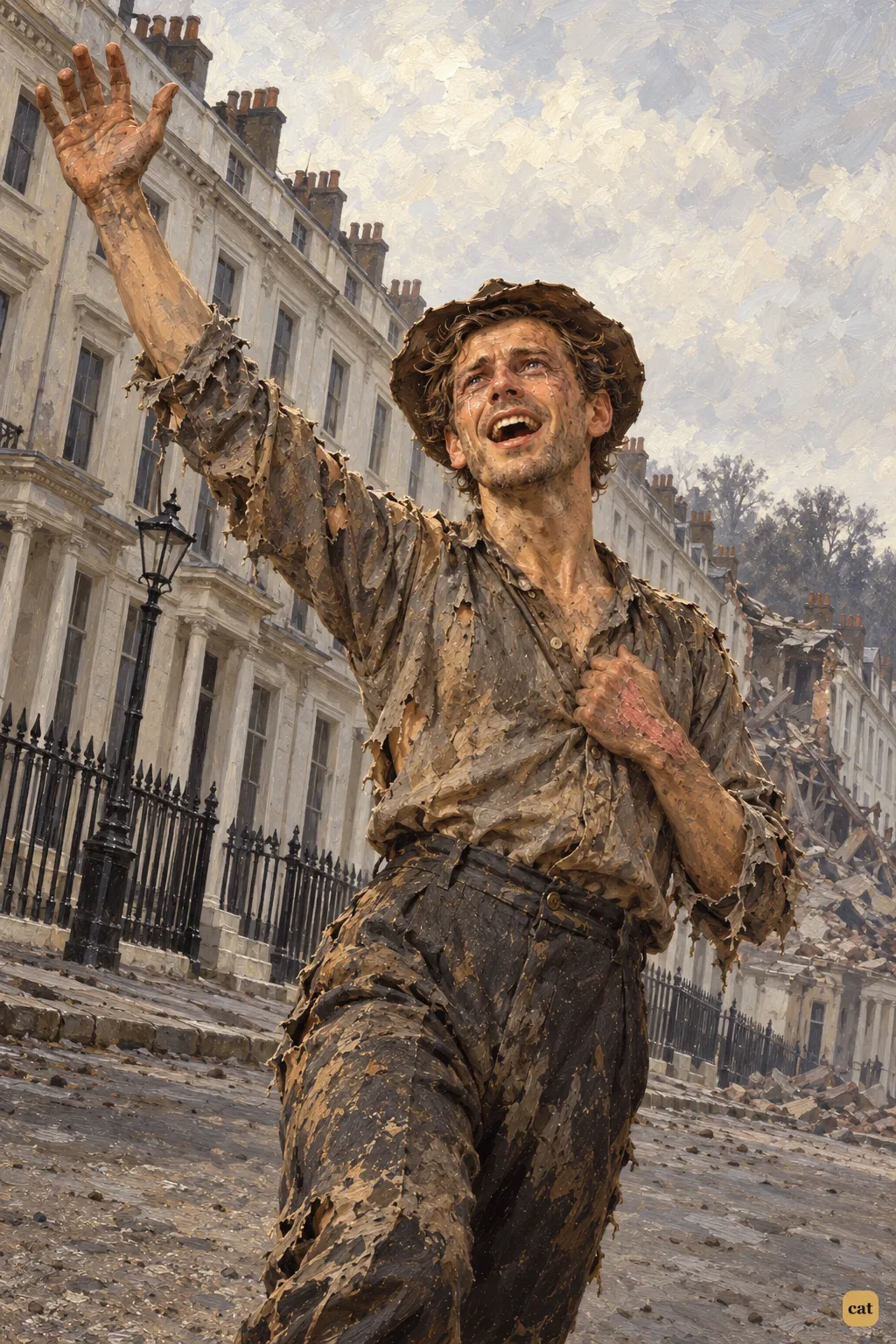
And now comes the strangest thing in my story. Yet, perhaps, it is not altogether strange. I remember, clearly and coldly and vividly, all that I did that day until the time that I stood weeping and praising God upon the summit of Primrose Hill. And then I forget.
Read from here → -
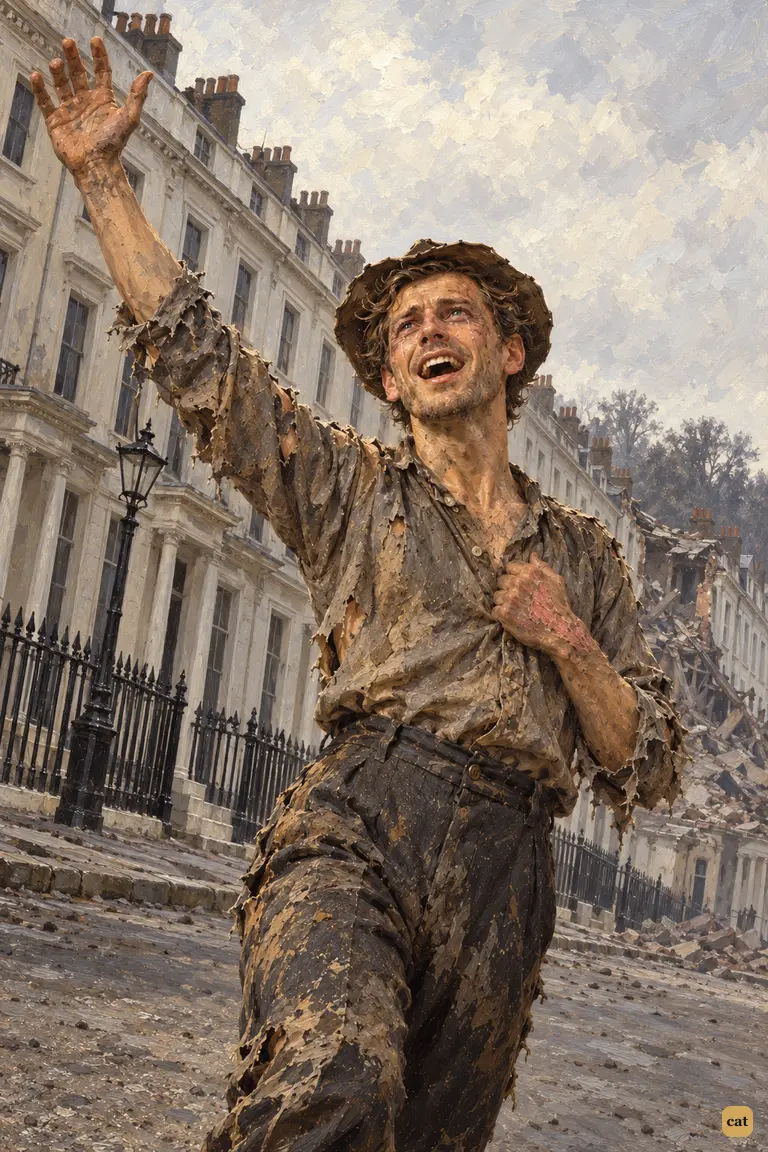
The Last Man song
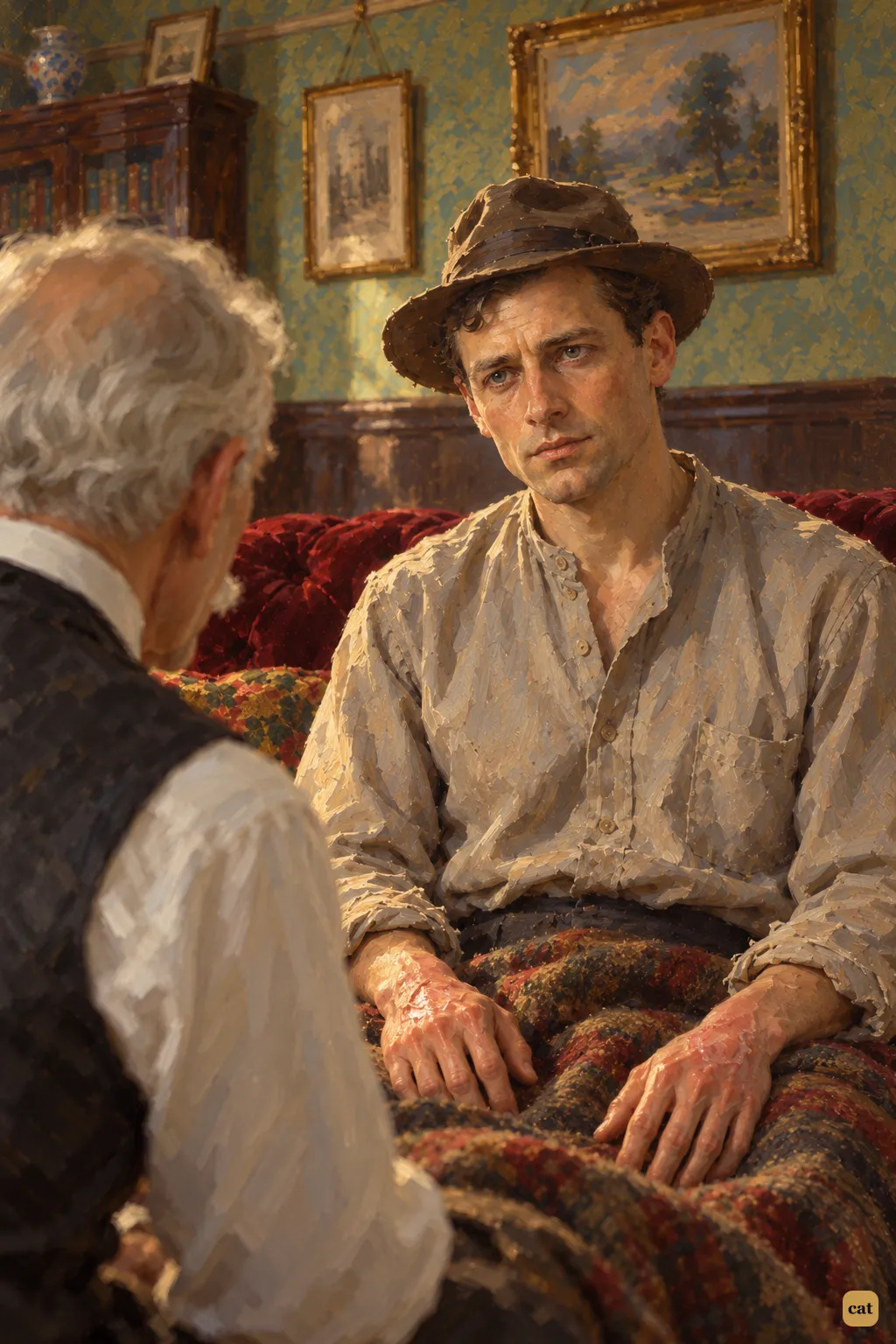
Of the next three days I know nothing. I have learned since that, so far from my being the first discoverer of the Martian overthrow, several such wanderers as myself had already discovered this on the previous night. One man—the first—had gone to St. Martin’s-le-Grand, and, while I sheltered in the cabmen’s hut, had contrived to telegraph to Paris. Thence the joyful news had flashed all over the world; a thousand cities, chilled by ghastly apprehensions, suddenly flashed into frantic illuminations; they knew of it in Dublin, Edinburgh, Manchester, Birmingham, at the time when I stood upon the verge of the pit. Already men, weeping with joy, as I have heard, shouting and staying their work to shake hands and shout, were making up trains, even as near as Crewe, to descend upon London. The church bells that had ceased a fortnight since suddenly caught the news, until all England was bell-ringing. Men on cycles, lean-faced, unkempt, scorched along every country lane shouting of unhoped deliverance, shouting to gaunt, staring figures of despair. And for the food! Across the Channel, across the Irish Sea, across the Atlantic, corn, bread, and meat were tearing to our relief. All the shipping in the world seemed going Londonward in those days. But of all this I have no memory. I drifted—a demented man. I found myself in a house of kindly people, who had found me on the third day wandering, weeping, and raving through the streets of St. John’s Wood. They have told me since that I was singing some insane doggerel about “The Last Man Left Alive! Hurrah! The Last Man Left Alive!” Troubled as they were with their own affairs, these people, whose name, much as I would like to express my gratitude to them, I may not even give here, nevertheless cumbered themselves with me, sheltered me, and protected me from myself. Apparently they had learned something of my story from me during the days of my lapse.
Read from here → -
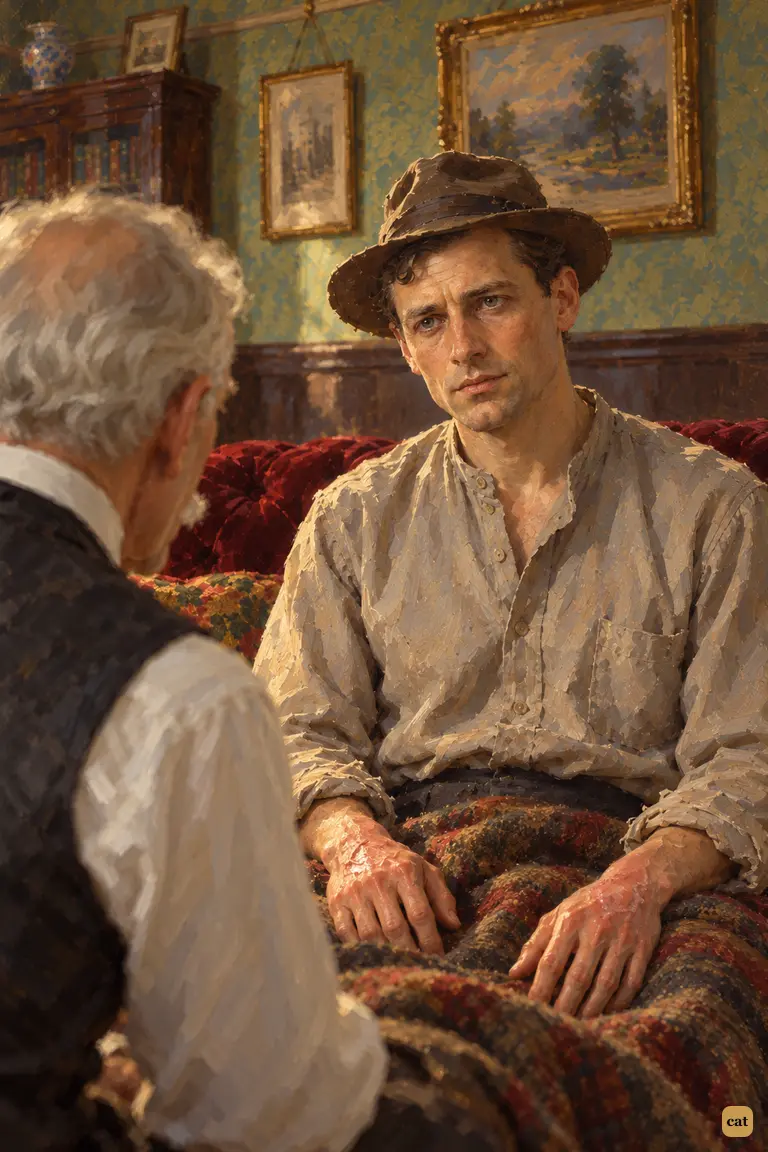
Swept out of existence
Very gently, when my mind was assured again, did they break to me what they had learned of the fate of Leatherhead. Two days after I was imprisoned it had been destroyed, with every soul in it, by a Martian. He had swept it out of existence, as it seemed, without any provocation, as a boy might crush an ant hill, in the mere wantonness of power.
Read from here → -
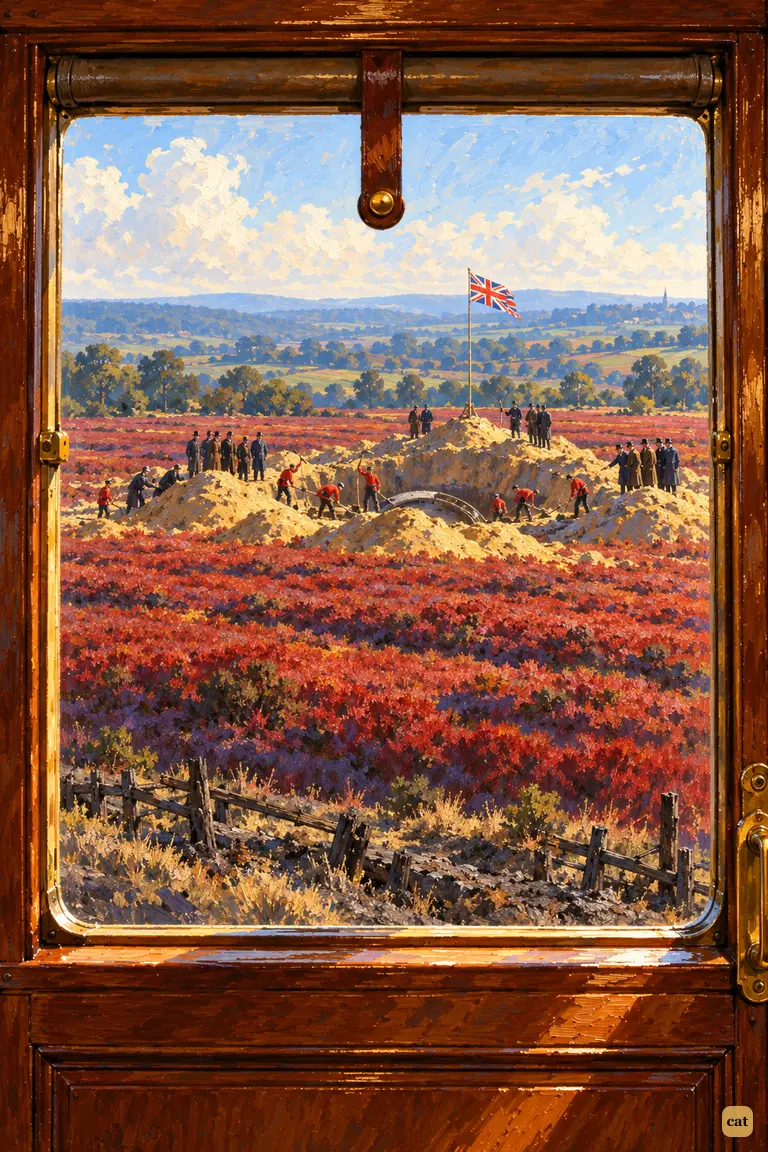
Union Jack over the cylinder
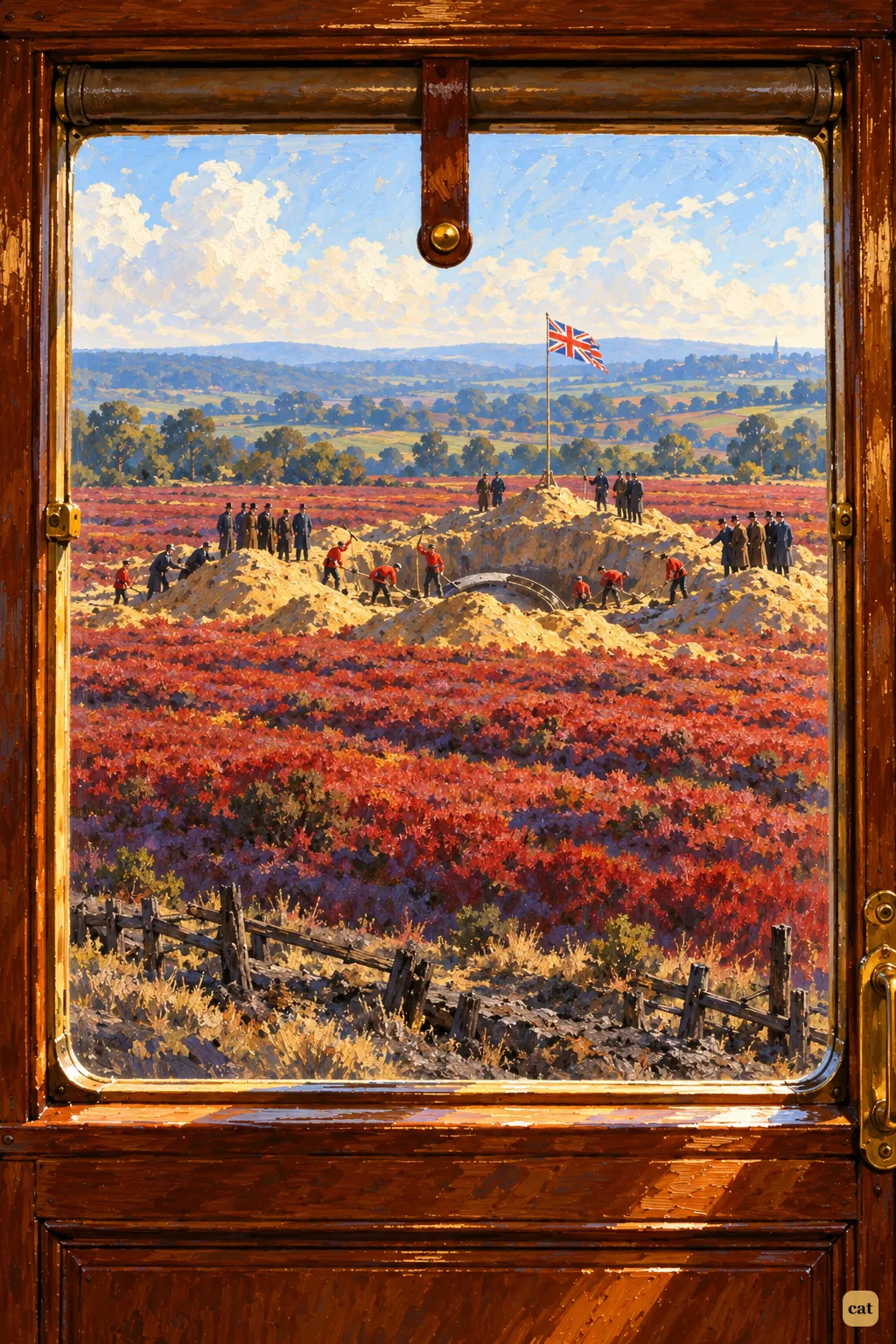
All down the line from there the aspect of the country was gaunt and unfamiliar; Wimbledon particularly had suffered. Walton, by virtue of its unburned pine woods, seemed the least hurt of any place along the line. The Wandle, the Mole, every little stream, was a heaped mass of red weed, in appearance between butcher’s meat and pickled cabbage. The Surrey pine woods were too dry, however, for the festoons of the red climber. Beyond Wimbledon, within sight of the line, in certain nursery grounds, were the heaped masses of earth about the sixth cylinder. A number of people were standing about it, and some sappers were busy in the midst of it. Over it flaunted a Union Jack, flapping cheerfully in the morning breeze. The nursery grounds were everywhere crimson with the weed, a wide expanse of livid colour cut with purple shadows, and very painful to the eye. One’s gaze went with infinite relief from the scorched greys and sullen reds of the foreground to the blue-green softness of the eastward hills.
Read from here → -
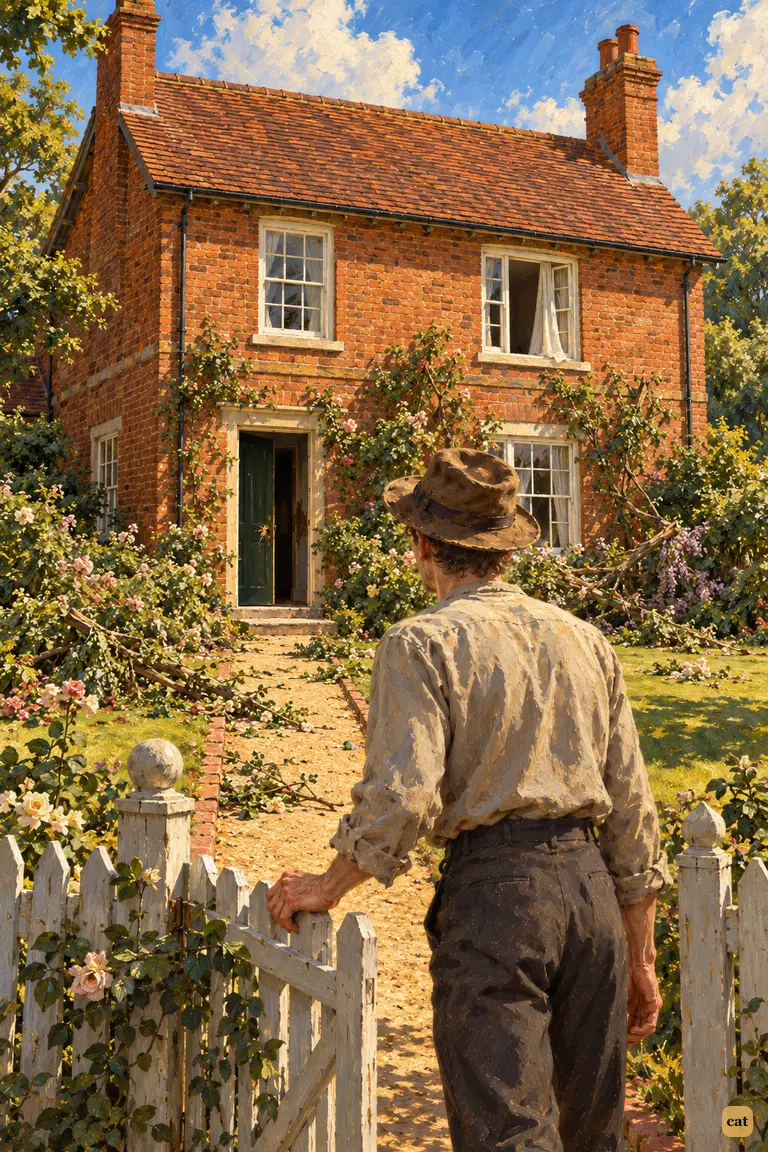
The door swinging open
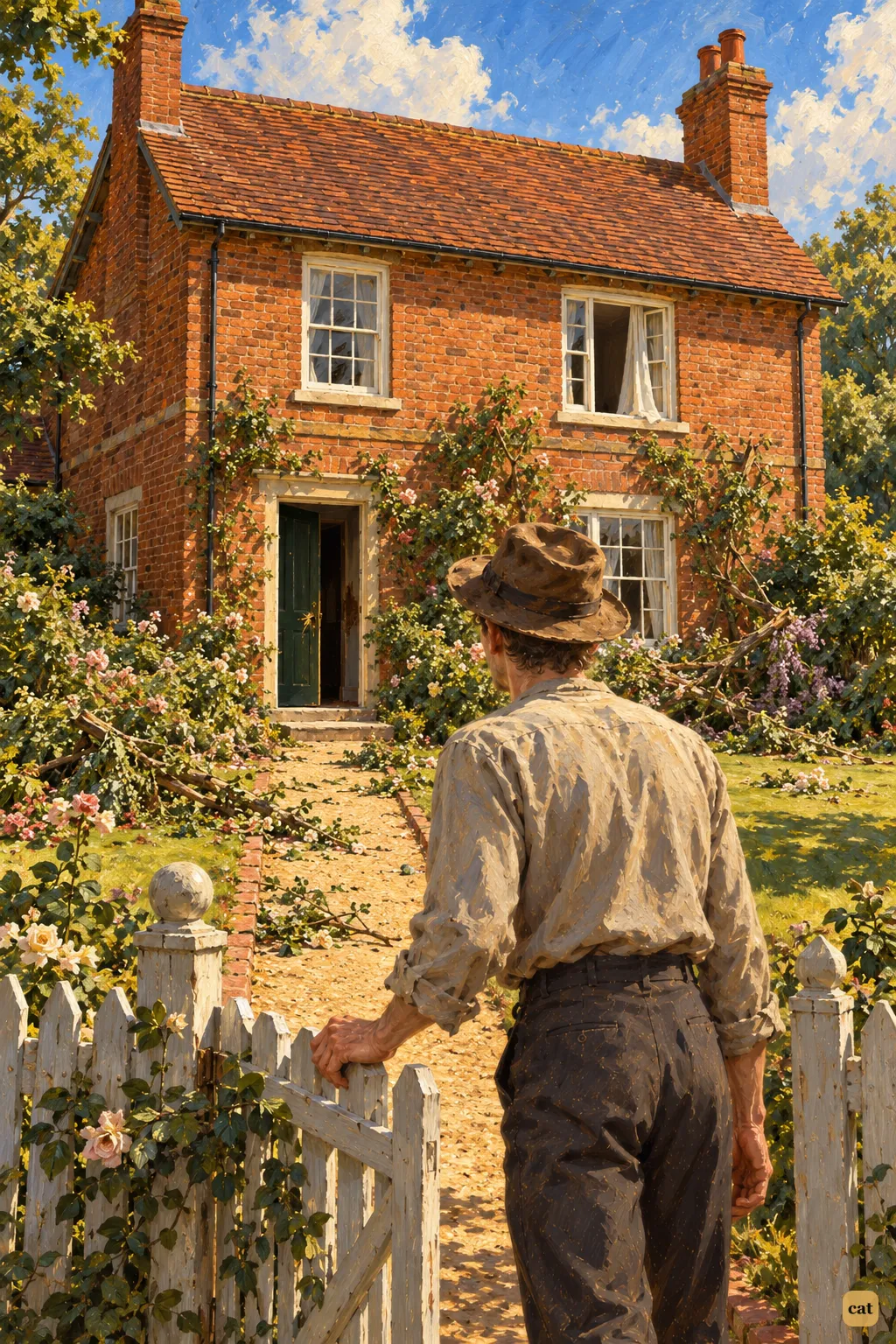
I looked at my house with a quick flash of hope that faded immediately. The door had been forced; it was unfast and was opening slowly as I approached.
Read from here → -
We may expect——
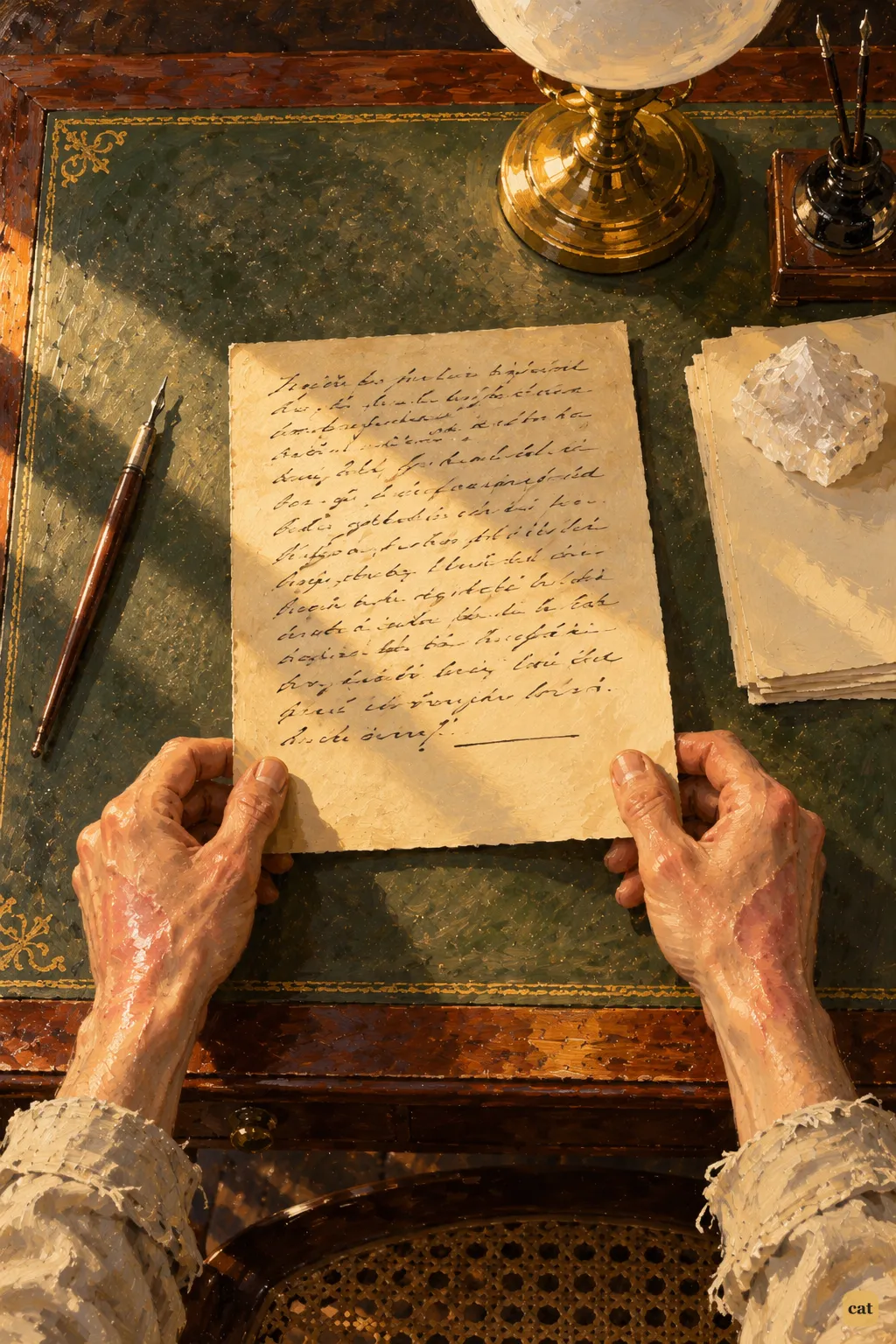
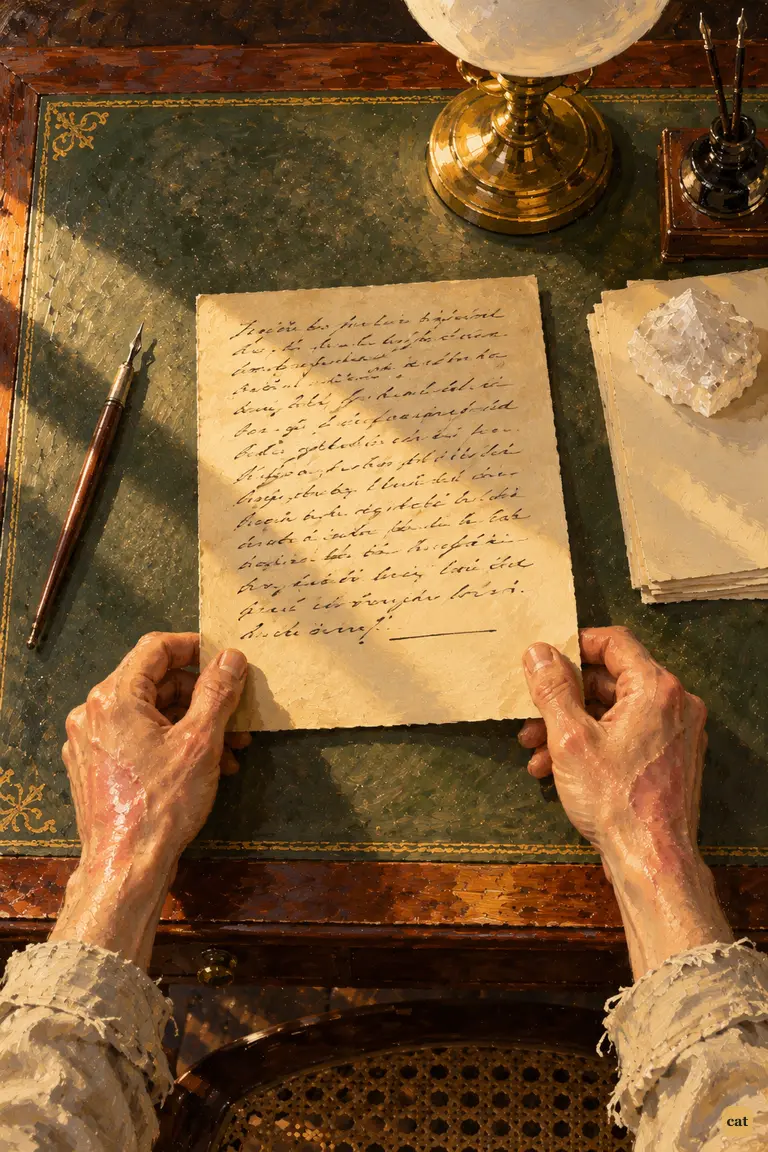
I followed them to my study, and found lying on my writing-table still, with the selenite paper weight upon it, the sheet of work I had left on the afternoon of the opening of the cylinder. For a space I stood reading over my abandoned arguments. It was a paper on the probable development of Moral Ideas with the development of the civilising process; and the last sentence was the opening of a prophecy: “In about two hundred years,” I had written, “we may expect——” The sentence ended abruptly. I remembered my inability to fix my mind that morning, scarcely a month gone by, and how I had broken off to get my Daily Chronicle from the newsboy. I remembered how I went down to the garden gate as he came along, and how I had listened to his odd story of “Men from Mars.”
Read from here → -
A voice from nowhere
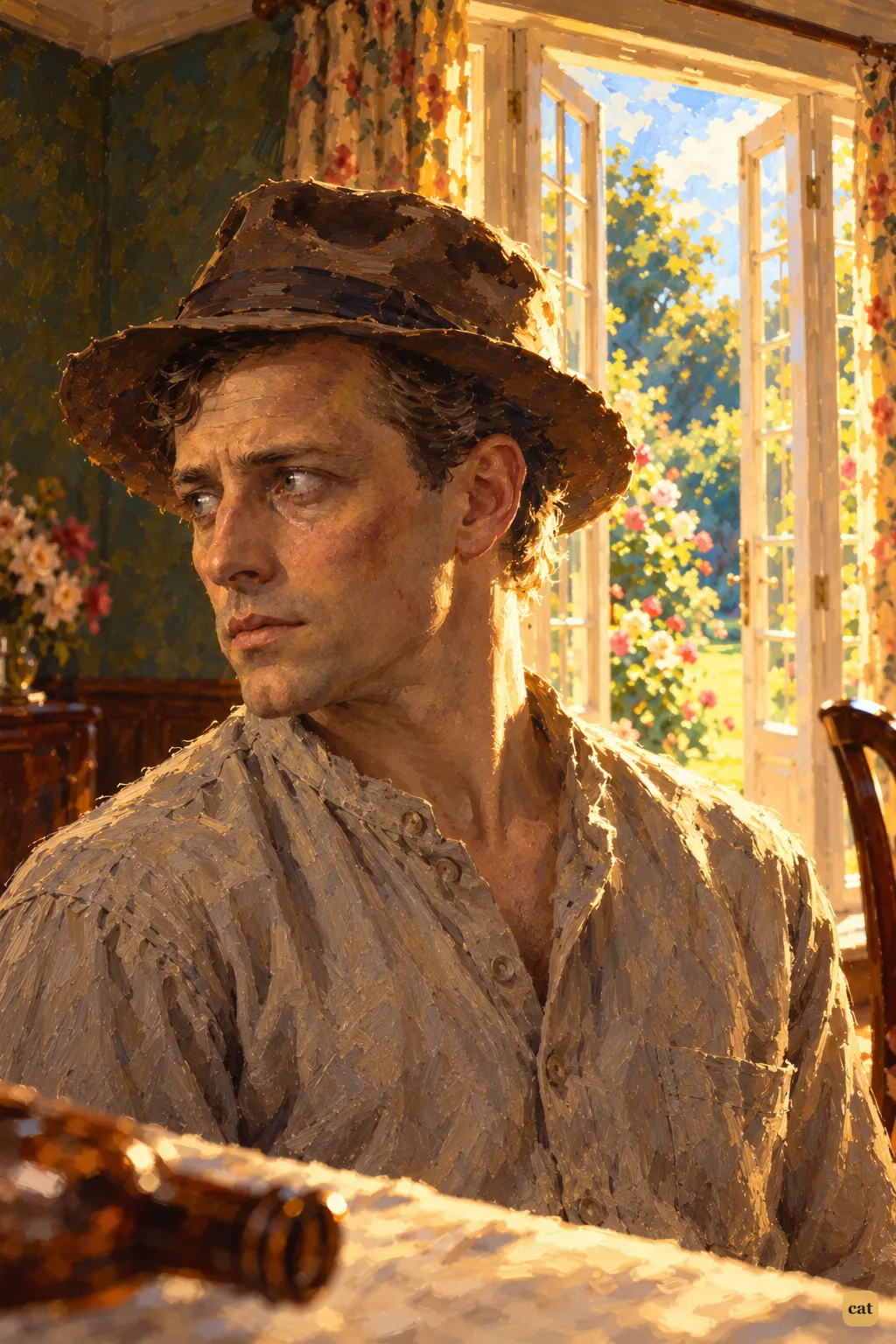
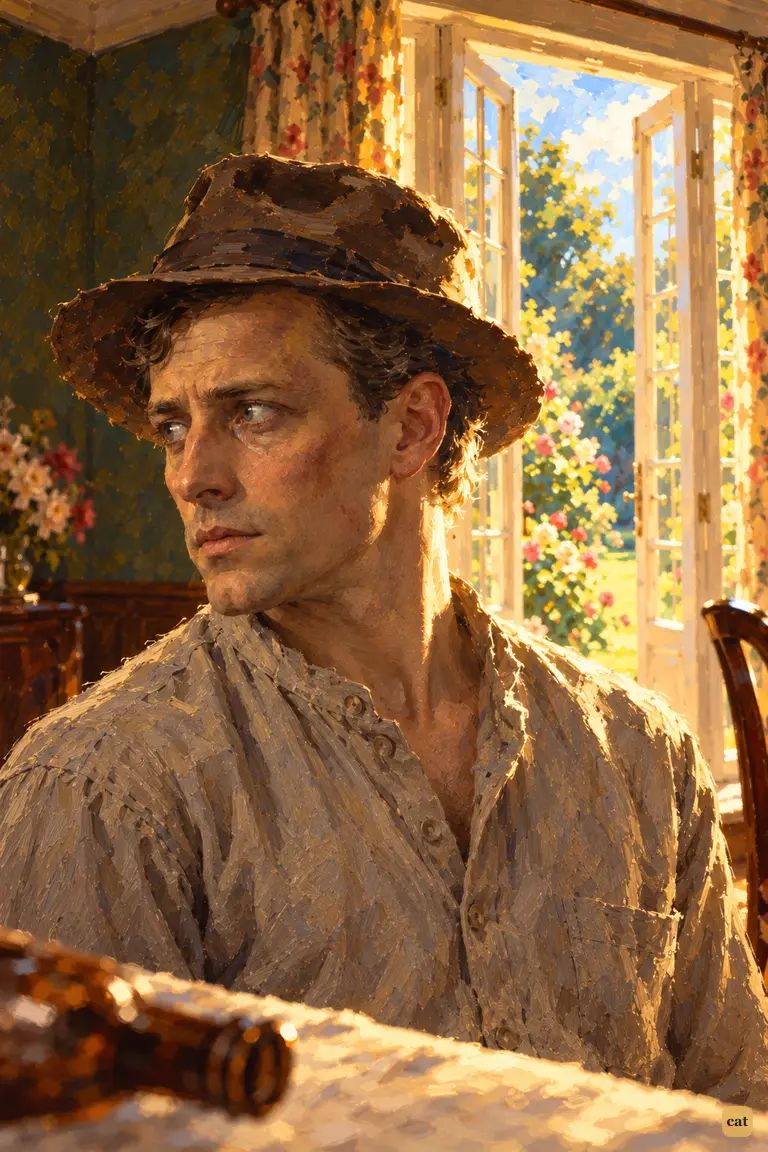
I came down and went into the dining room. There were the mutton and the bread, both far gone now in decay, and a beer bottle overturned, just as I and the artilleryman had left them. My home was desolate. I perceived the folly of the faint hope I had cherished so long. And then a strange thing occurred. “It is no use,” said a voice. “The house is deserted. No one has been here these ten days. Do not stay here to torment yourself. No one escaped but you.”
Read from here → -
My cousin and my wife
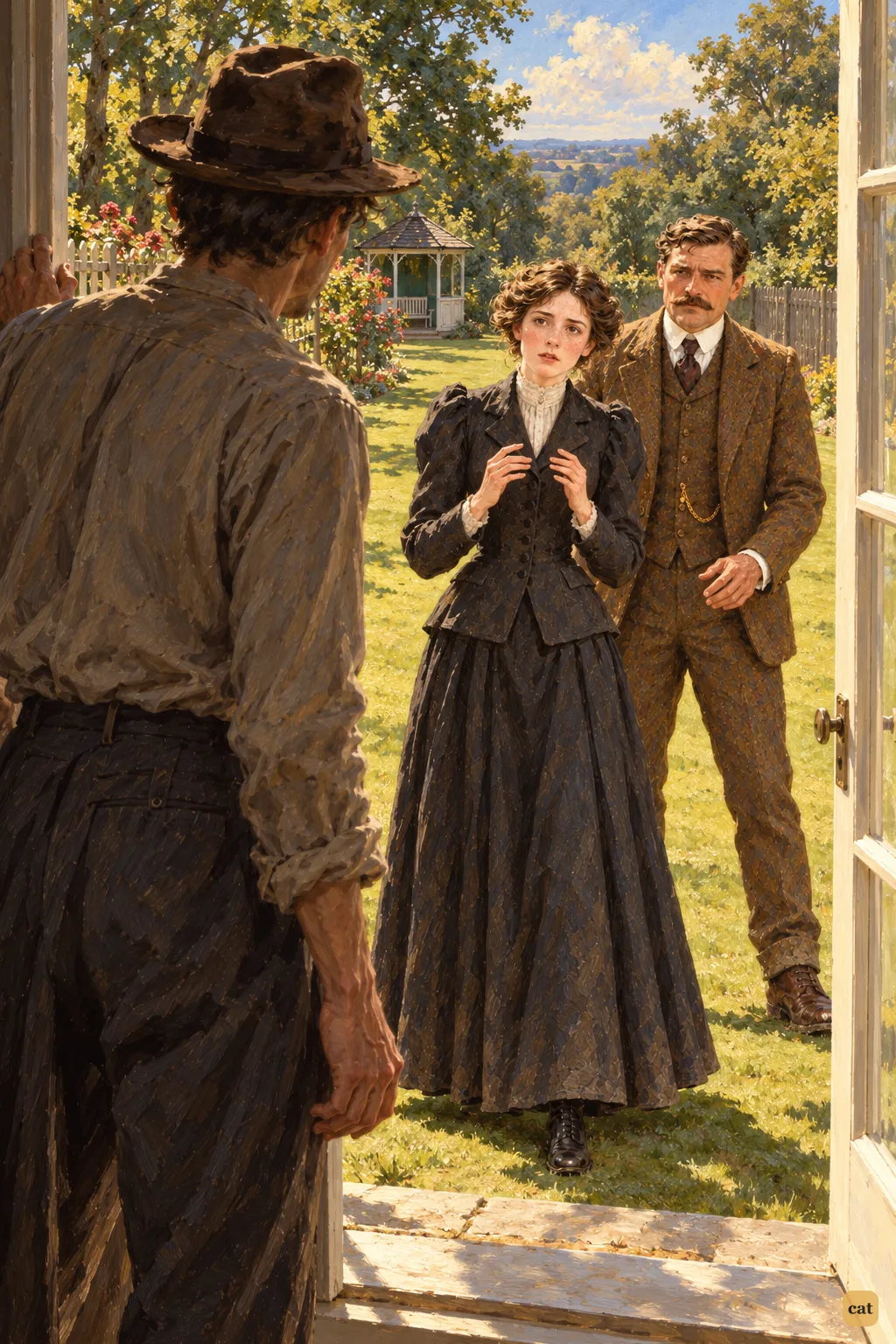
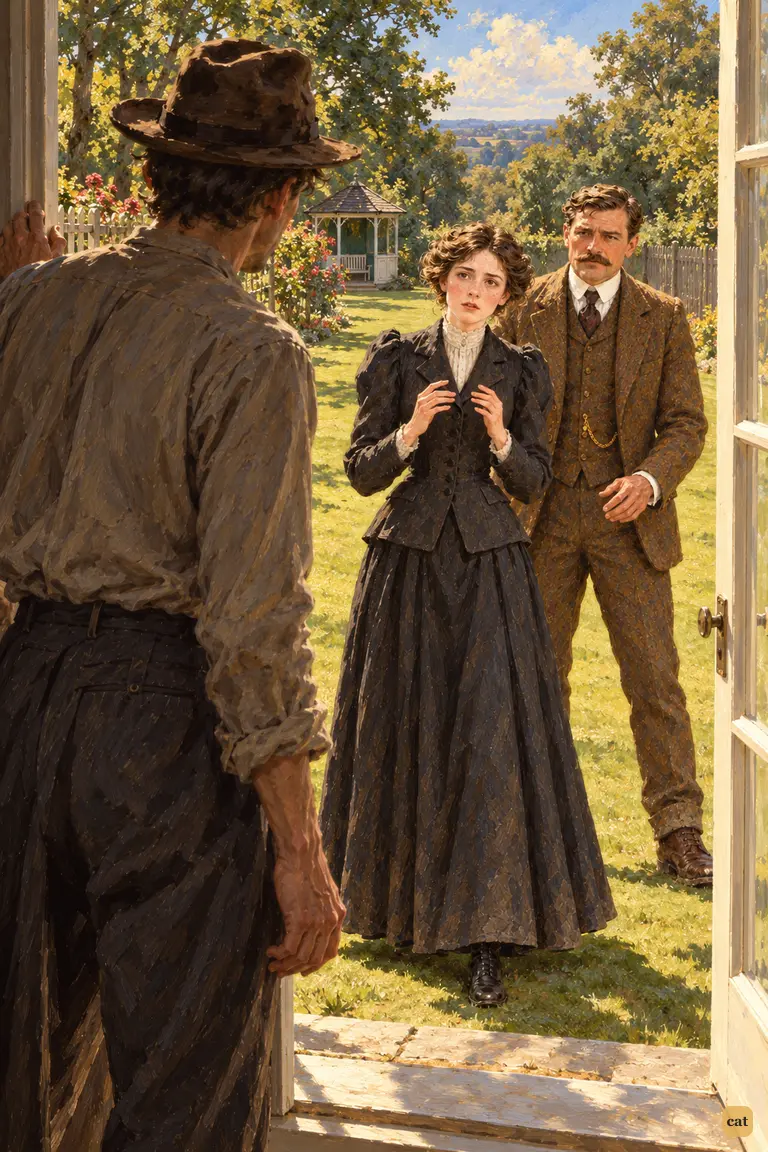
And there, amazed and afraid, even as I stood amazed and afraid, were my cousin and my wife—my wife white and tearless. She gave a faint cry.
Read from here → -

-
She sways
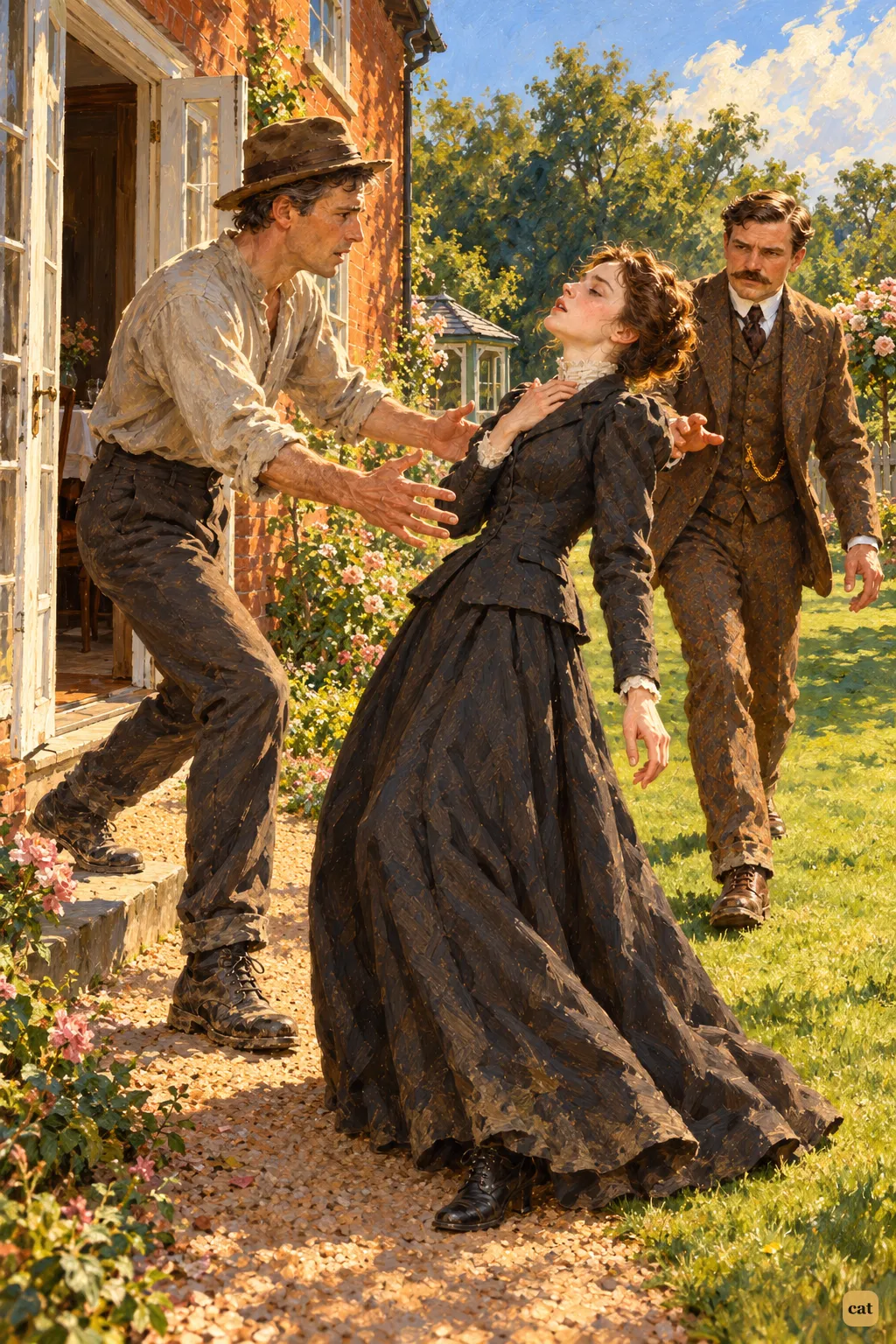
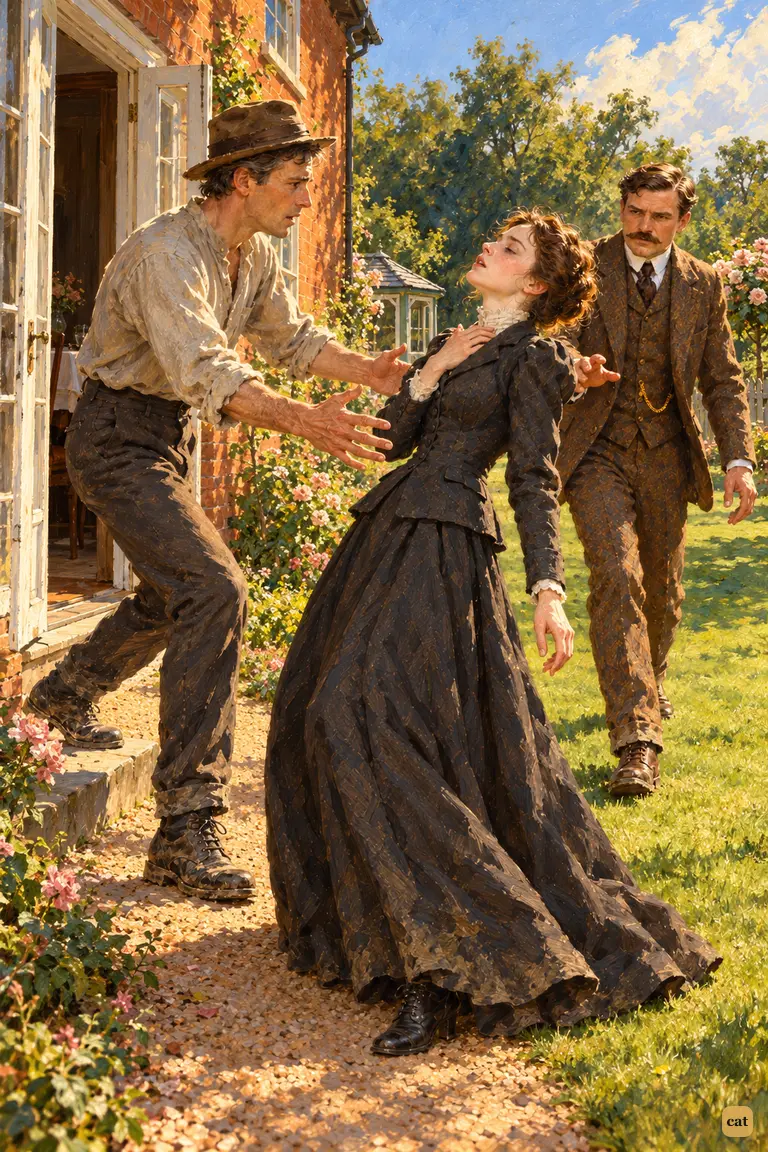
She put her hand to her throat—swayed. I made a step forward, and caught her in my arms.
Read from here →