-
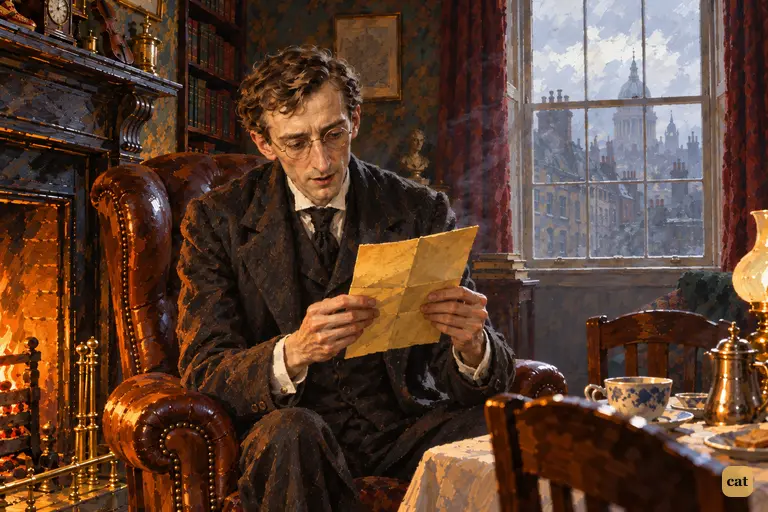
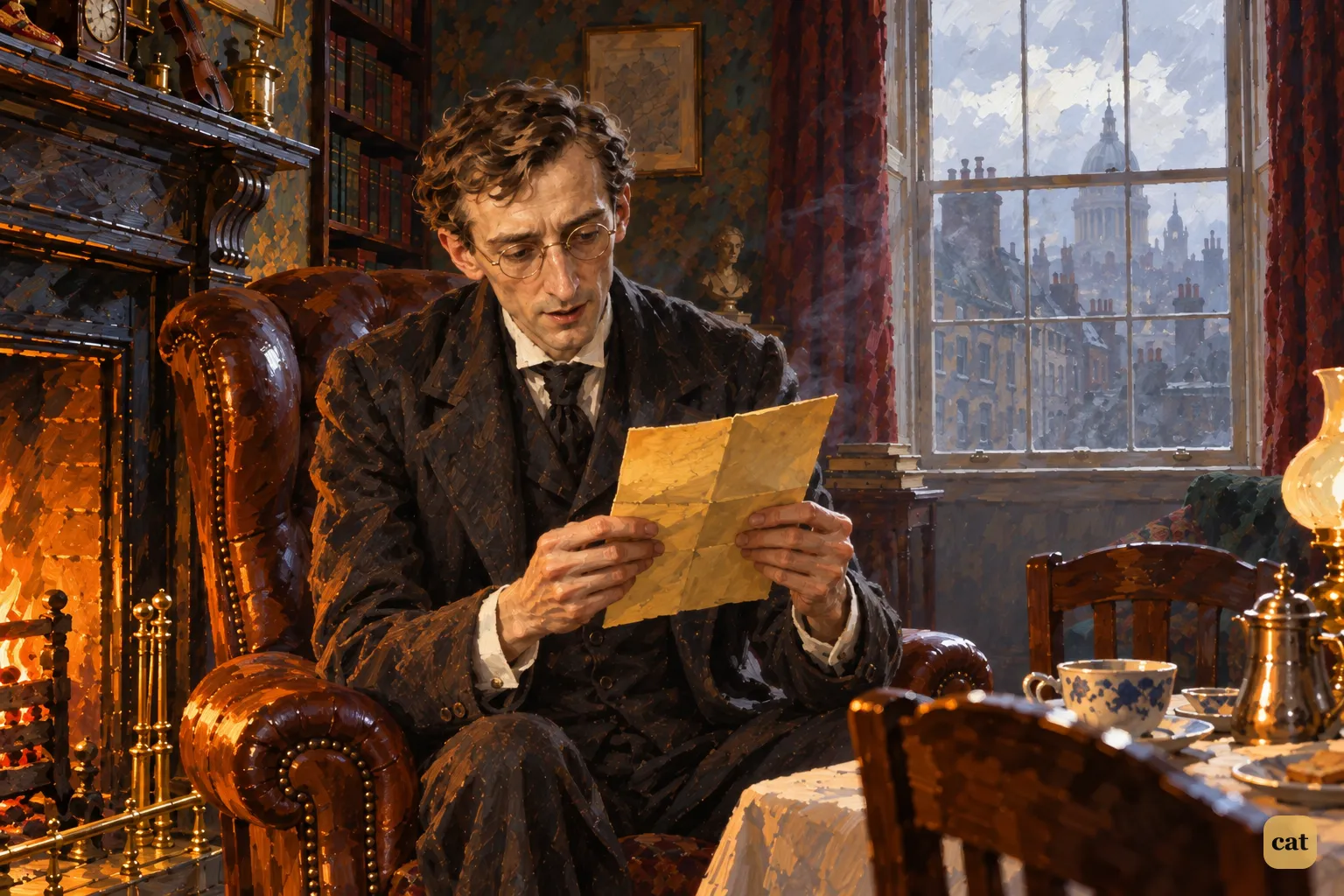
The family paper drawn out
“The exact date is 1742.” Dr. Mortimer drew it from his breast-pocket. “This family paper was committed to my care by Sir Charles Baskerville, whose sudden and tragic death some three months ago created so much excitement in Devonshire. I may say that I was his personal friend as well as his medical attendant. He was a strong-minded man, sir, shrewd, practical, and as unimaginative as I am myself. Yet he took this document very seriously, and his mind was prepared for just such an end as did eventually overtake him.”
Read from here → -
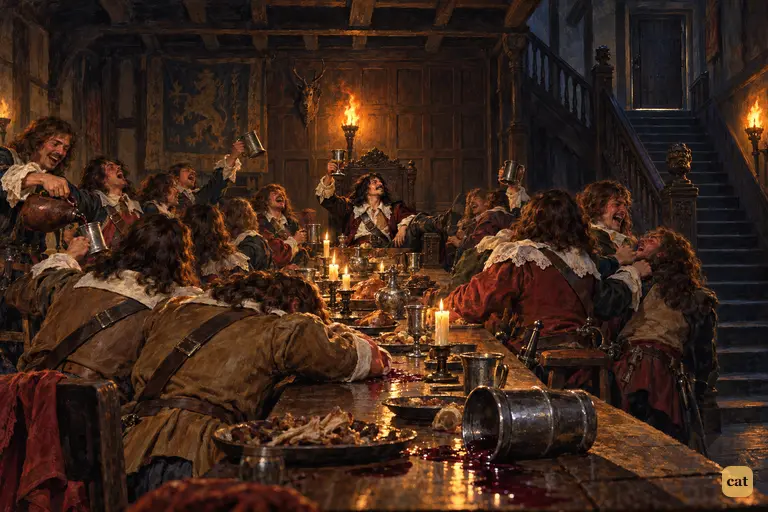
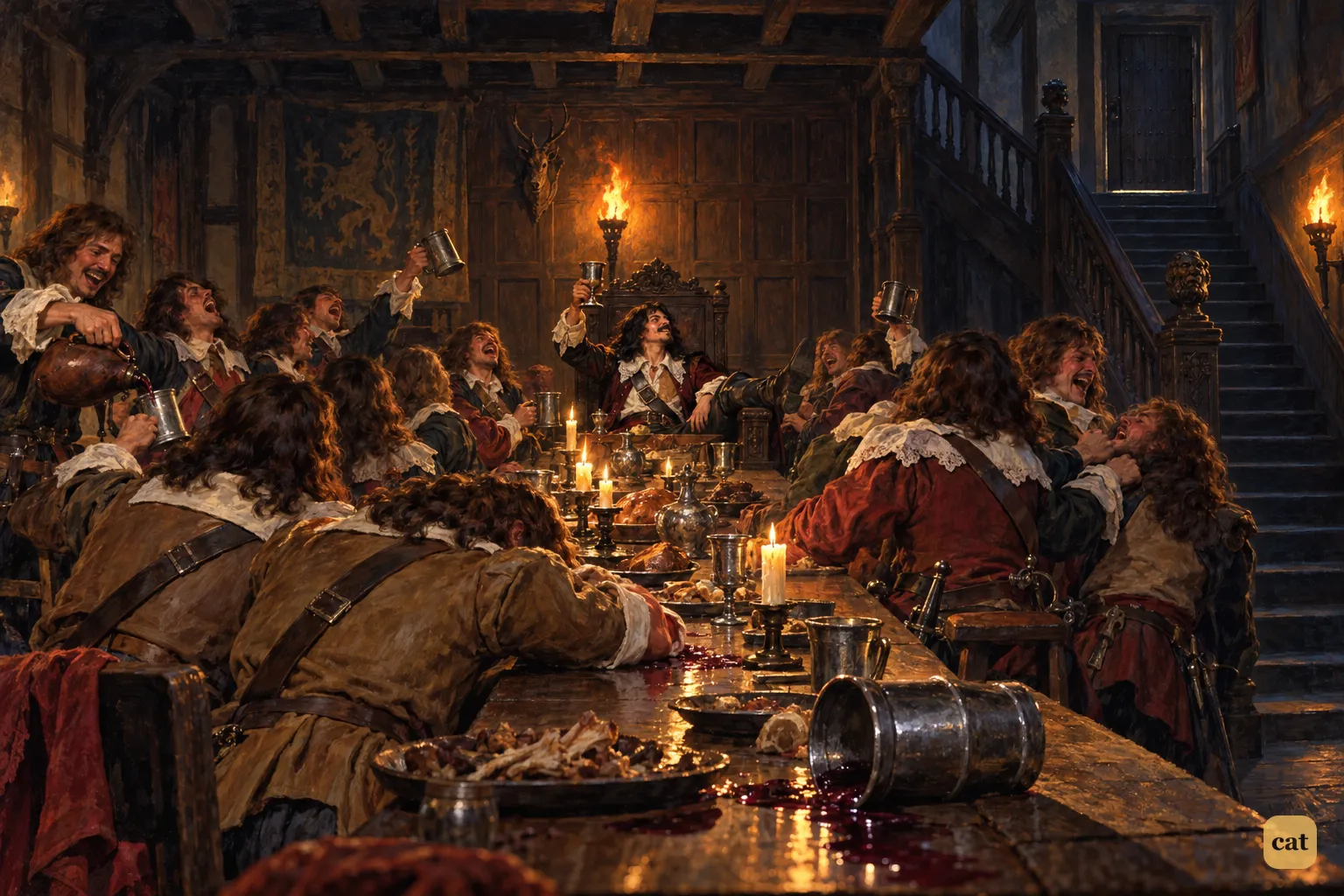
The carouse at the Hall
“Know then that in the time of the Great Rebellion (the history of which by the learned Lord Clarendon I most earnestly commend to your attention) this Manor of Baskerville was held by Hugo of that name, nor can it be gainsaid that he was a most wild, profane, and godless man. This, in truth, his neighbours might have pardoned, seeing that saints have never flourished in those parts, but there was in him a certain wanton and cruel humour which made his name a by-word through the West. It chanced that this Hugo came to love (if, indeed, so dark a passion may be known under so bright a name) the daughter of a yeoman who held lands near the Baskerville estate. But the young maiden, being discreet and of good repute, would ever avoid him, for she feared his evil name. So it came to pass that one Michaelmas this Hugo, with five or six of his idle and wicked companions, stole down upon the farm and carried off the maiden, her father and brothers being from home, as he well knew. When they had brought her to the Hall the maiden was placed in an upper chamber, while Hugo and his friends sat down to a long carouse, as was their nightly custom. Now, the poor lass upstairs was like to have her wits turned at the singing and shouting and terrible oaths which came up to her from below, for they say that the words used by Hugo Baskerville, when he was in wine, were such as might blast the man who said them. At last in the stress of her fear she did that which might have daunted the bravest or most active man, for by the aid of the growth of ivy which covered (and still covers) the south wall she came down from under the eaves, and so homeward across the moor, there being three leagues betwixt the Hall and her father’s farm.
Read from here → -
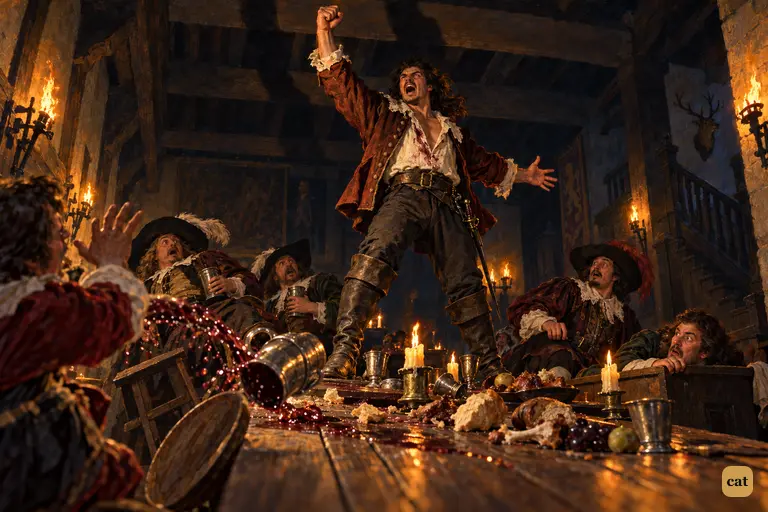
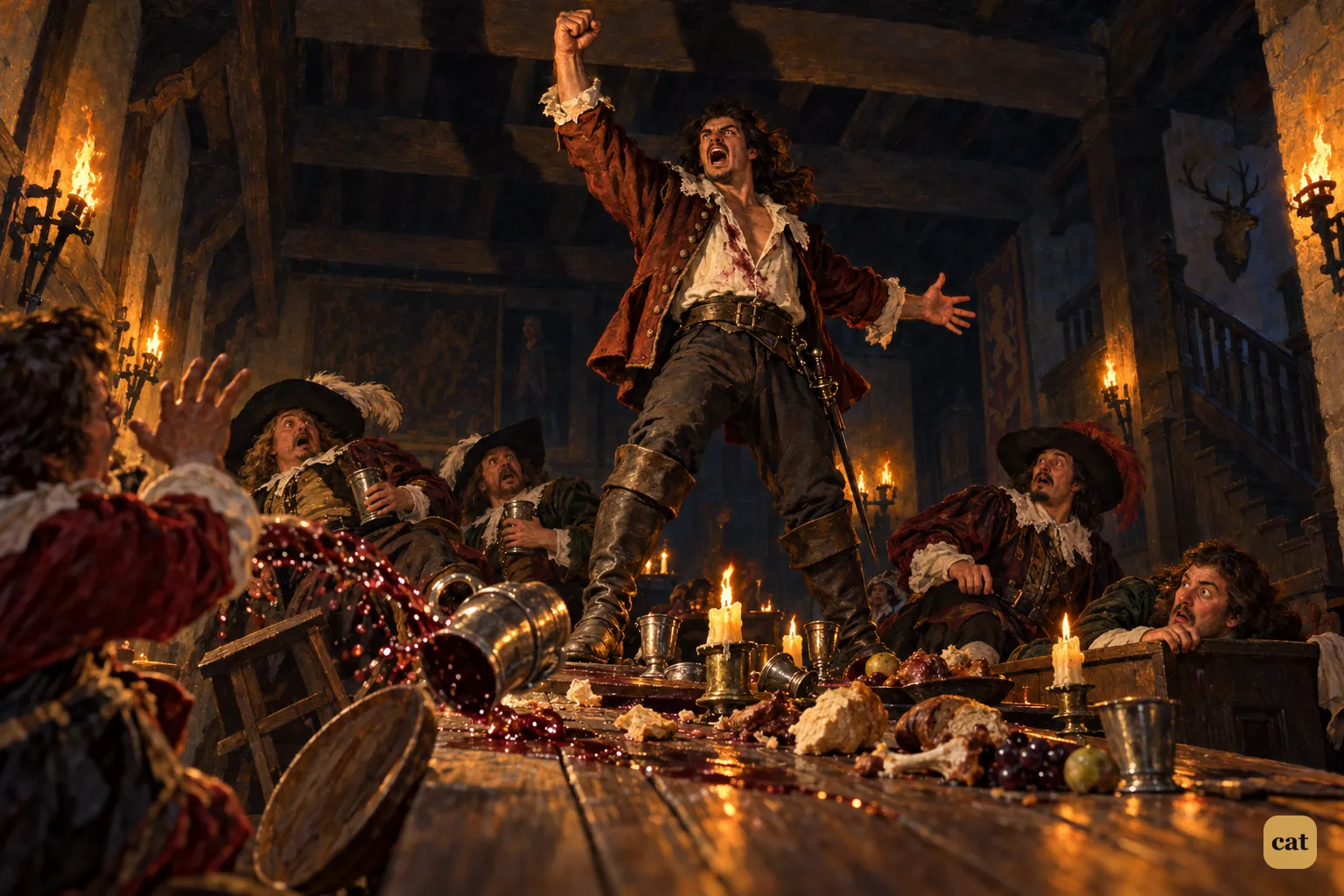
Hugo upon the table
“It chanced that some little time later Hugo left his guests to carry food and drink—with other worse things, perchance—to his captive, and so found the cage empty and the bird escaped. Then, as it would seem, he became as one that hath a devil, for, rushing down the stairs into the dining-hall, he sprang upon the great table, flagons and trenchers flying before him, and he cried aloud before all the company that he would that very night render his body and soul to the Powers of Evil if he might but overtake the wench. And while the revellers stood aghast at the fury of the man, one more wicked or, it may be, more drunken than the rest, cried out that they should put the hounds upon her. Whereat Hugo ran from the house, crying to his grooms that they should saddle his mare and unkennel the pack, and giving the hounds a kerchief of the maid’s, he swung them to the line, and so off full cry in the moonlight over the moor.
Read from here → -
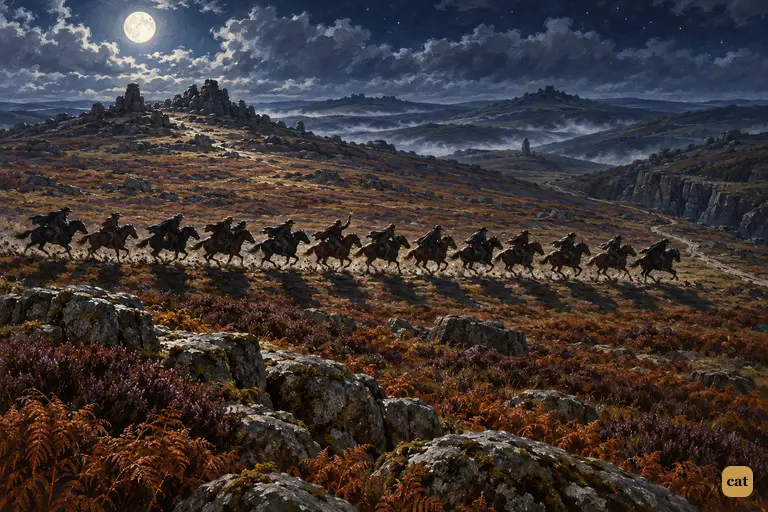
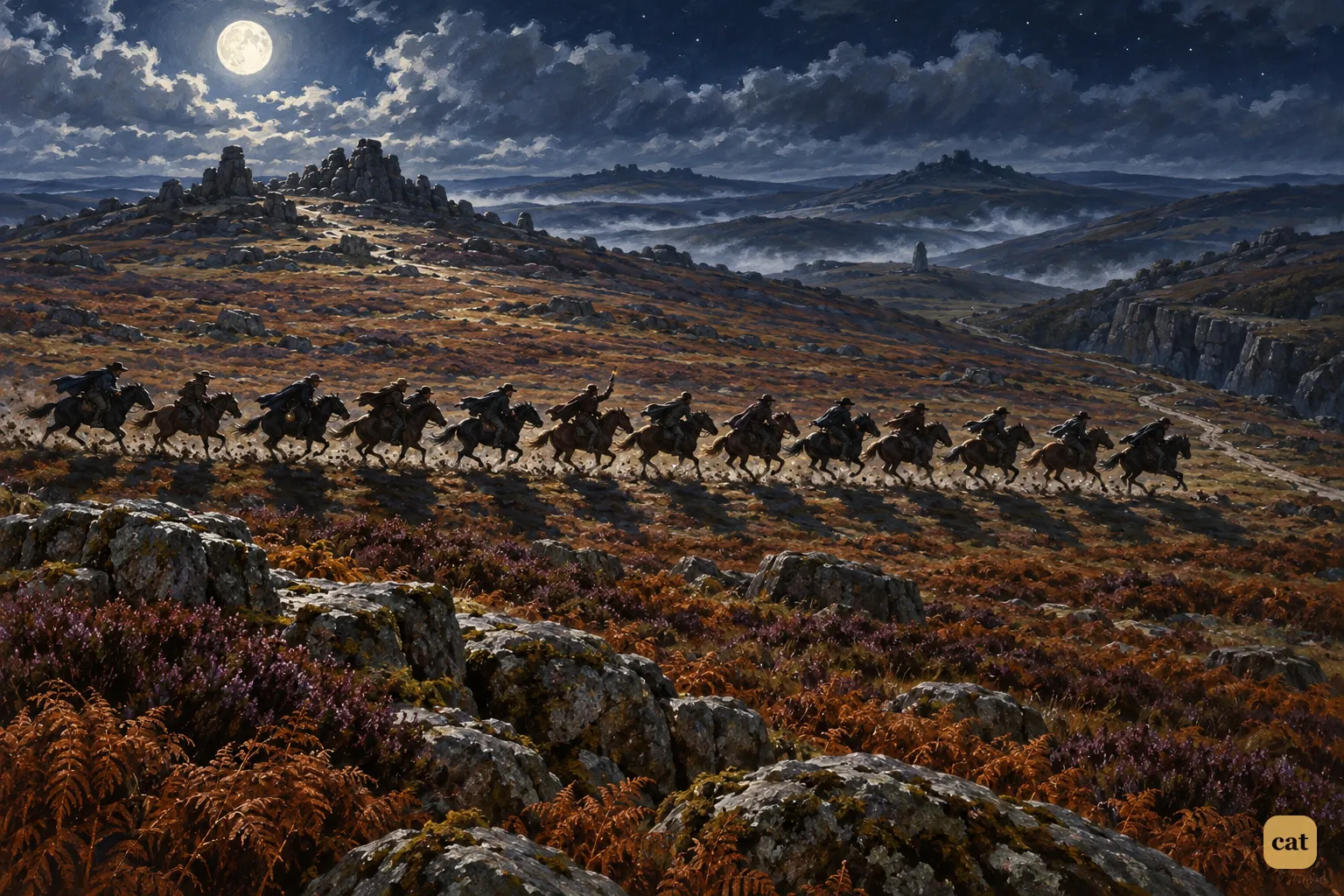
Thirteen riders abreast
“Now, for some space the revellers stood agape, unable to understand all that had been done in such haste. But anon their bemused wits awoke to the nature of the deed which was like to be done upon the moorlands. Everything was now in an uproar, some calling for their pistols, some for their horses, and some for another flask of wine. But at length some sense came back to their crazed minds, and the whole of them, thirteen in number, took horse and started in pursuit. The moon shone clear above them, and they rode swiftly abreast, taking that course which the maid must needs have taken if she were to reach her own home.
Read from here → -
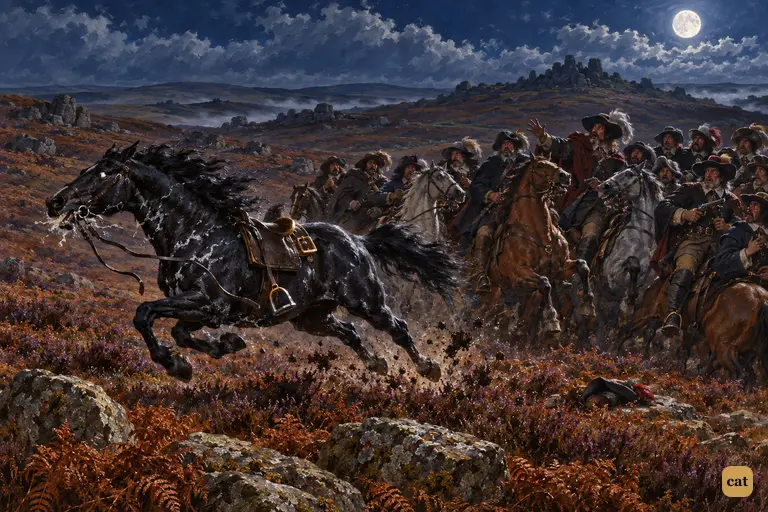
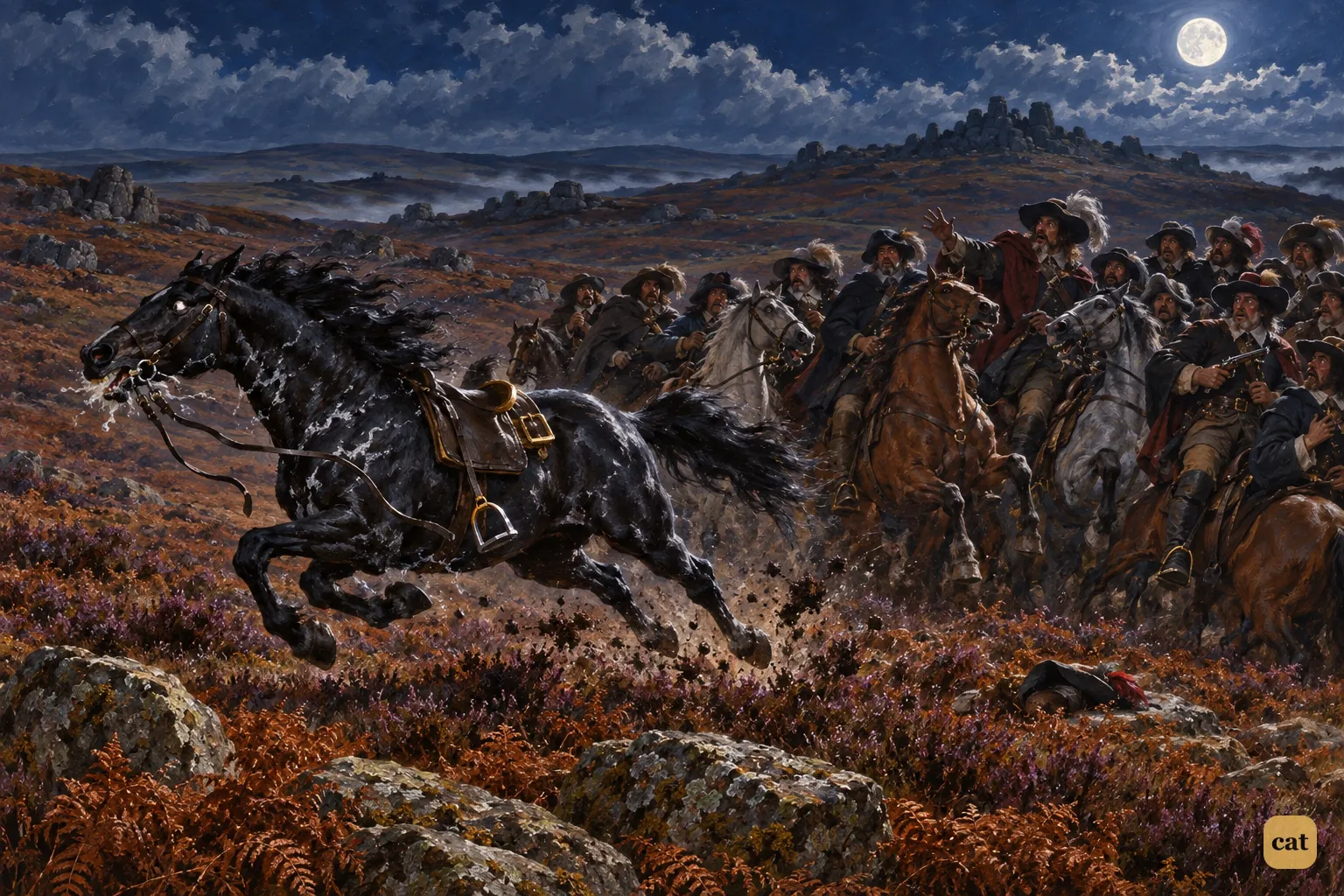
The riderless black mare
“They had gone a mile or two when they passed one of the night shepherds upon the moorlands, and they cried to him to know if he had seen the hunt. And the man, as the story goes, was so crazed with fear that he could scarce speak, but at last he said that he had indeed seen the unhappy maiden, with the hounds upon her track. ‘But I have seen more than that,’ said he, ‘for Hugo Baskerville passed me upon his black mare, and there ran mute behind him such a hound of hell as God forbid should ever be at my heels.’ So the drunken squires cursed the shepherd and rode onward. But soon their skins turned cold, for there came a galloping across the moor, and the black mare, dabbled with white froth, went past with trailing bridle and empty saddle. Then the revellers rode close together, for a great fear was on them, but they still followed over the moor, though each, had he been alone, would have been right glad to have turned his horse’s head. Riding slowly in this fashion they came at last upon the hounds. These, though known for their valour and their breed, were whimpering in a cluster at the head of a deep dip or goyal, as we call it, upon the moor, some slinking away and some, with starting hackles and staring eyes, gazing down the narrow valley before them.
Read from here → -
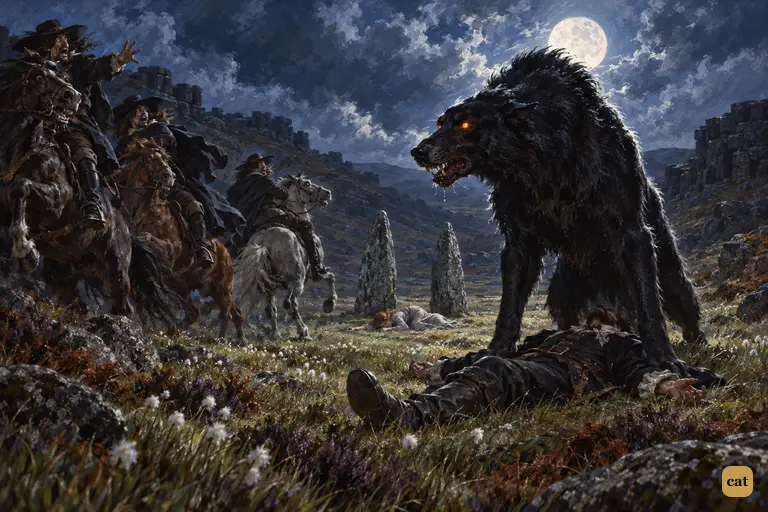
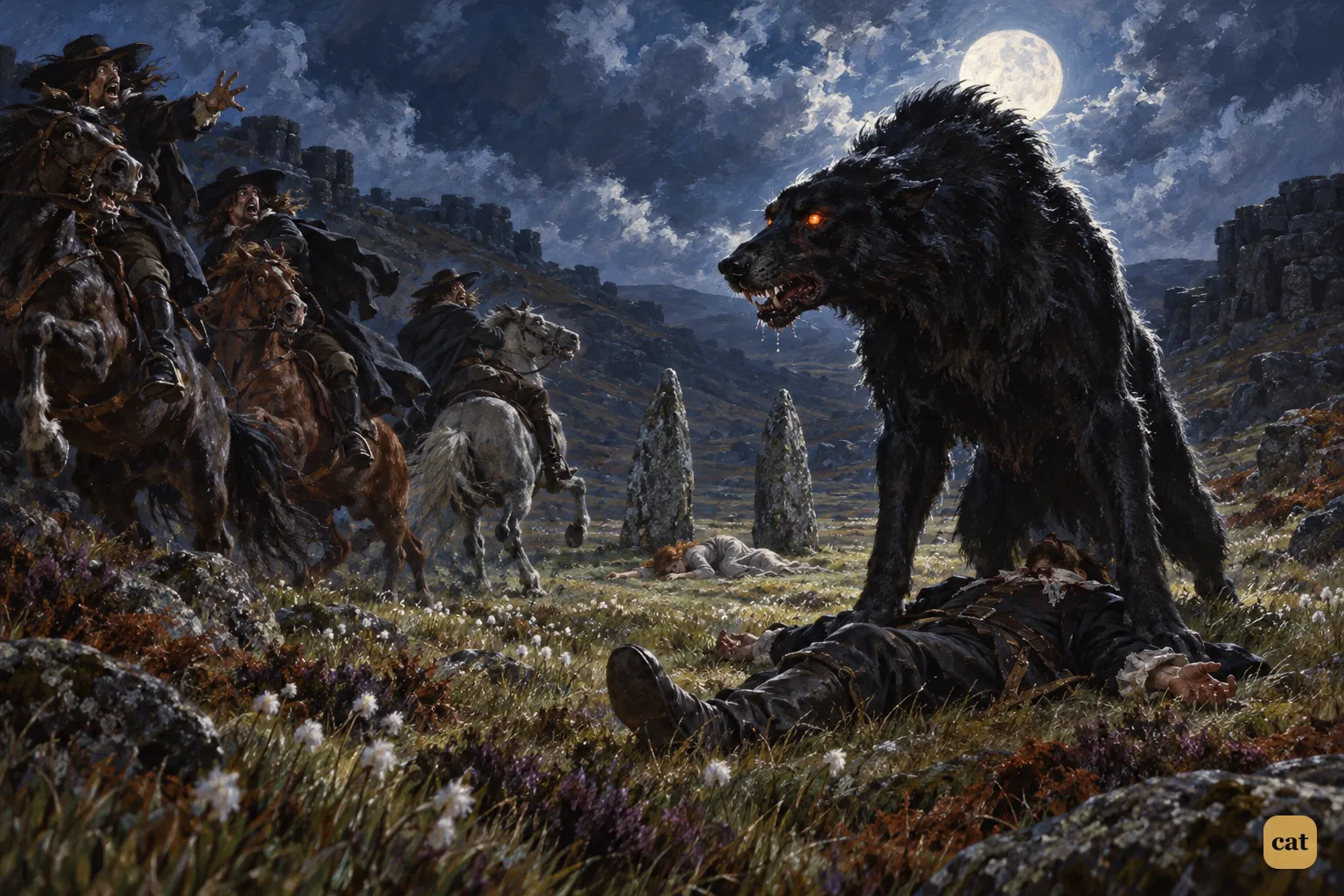
The hound over Hugo
“The company had come to a halt, more sober men, as you may guess, than when they started. The most of them would by no means advance, but three of them, the boldest, or it may be the most drunken, rode forward down the goyal. Now, it opened into a broad space in which stood two of those great stones, still to be seen there, which were set by certain forgotten peoples in the days of old. The moon was shining bright upon the clearing, and there in the centre lay the unhappy maid where she had fallen, dead of fear and of fatigue. But it was not the sight of her body, nor yet was it that of the body of Hugo Baskerville lying near her, which raised the hair upon the heads of these three dare-devil roysterers, but it was that, standing over Hugo, and plucking at his throat, there stood a foul thing, a great, black beast, shaped like a hound, yet larger than any hound that ever mortal eye has rested upon. And even as they looked the thing tore the throat out of Hugo Baskerville, on which, as it turned its blazing eyes and dripping jaws upon them, the three shrieked with fear and rode for dear life, still screaming, across the moor. One, it is said, died that very night of what he had seen, and the other twain were but broken men for the rest of their days.
Read from here → -
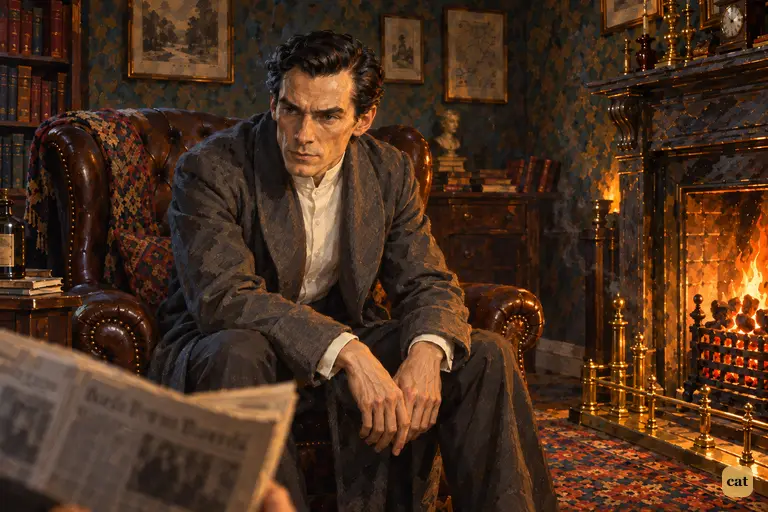
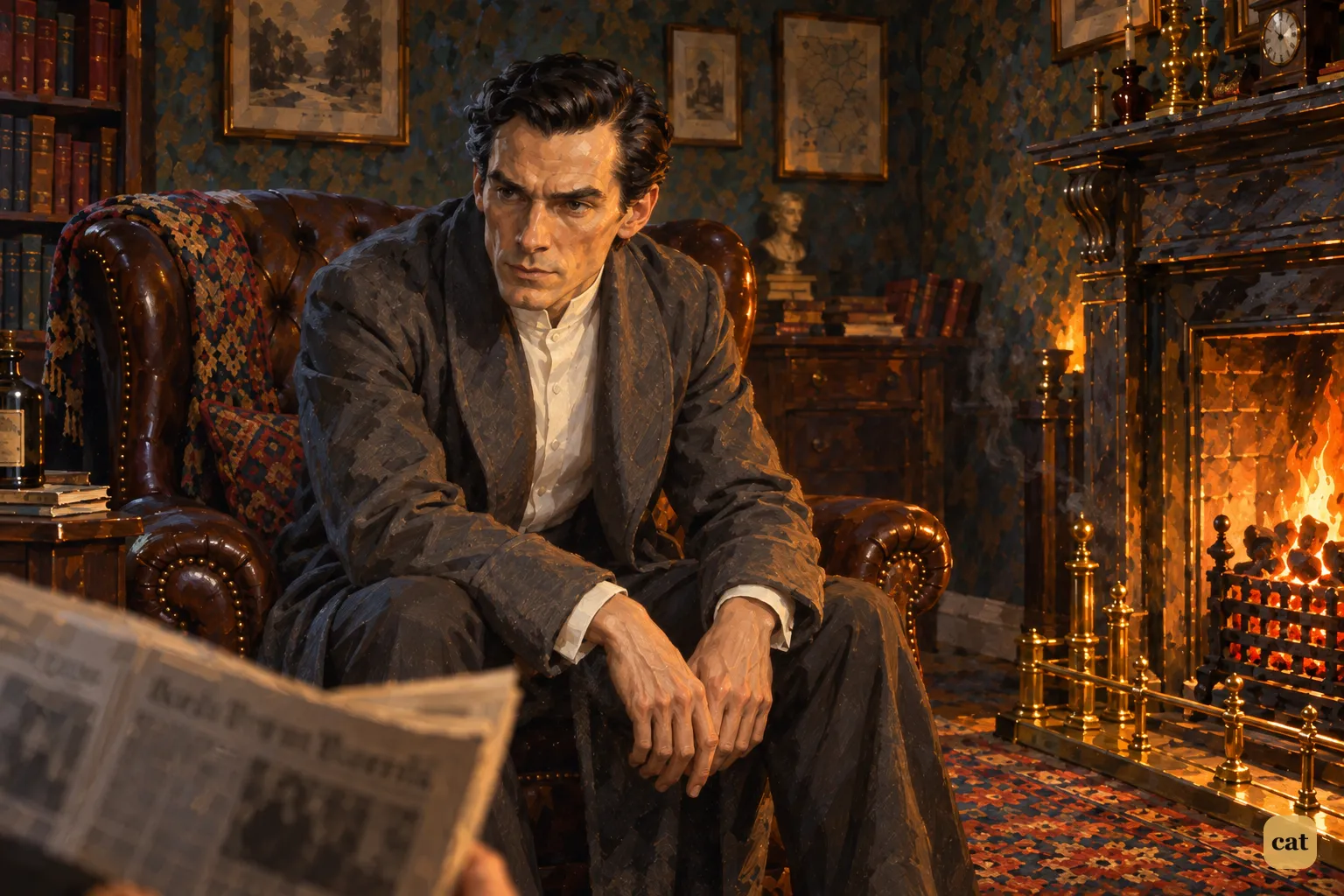
Holmes leans forward
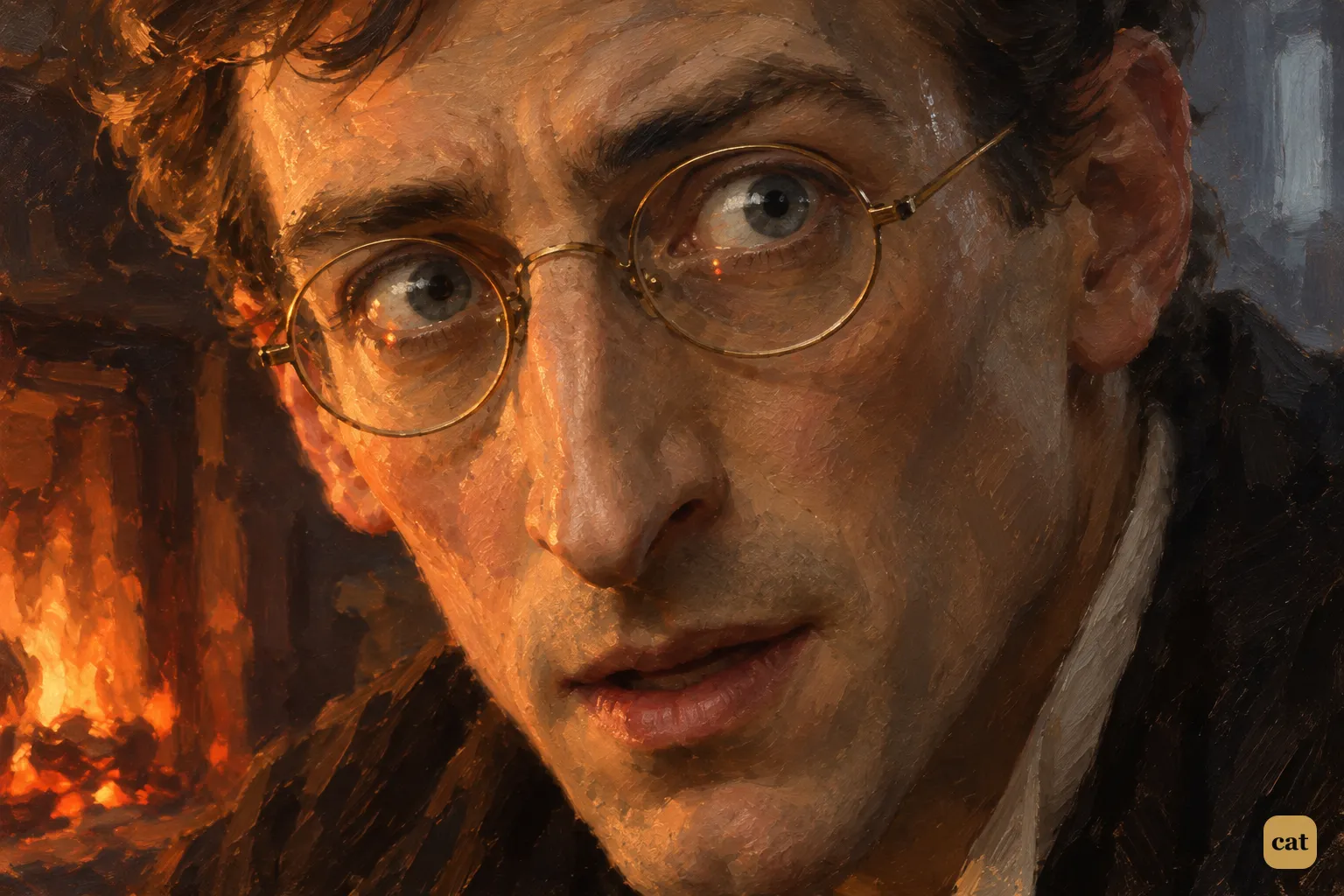
My friend leaned a little forward and his expression became intent. Our visitor readjusted his glasses and began:
Read from here → -
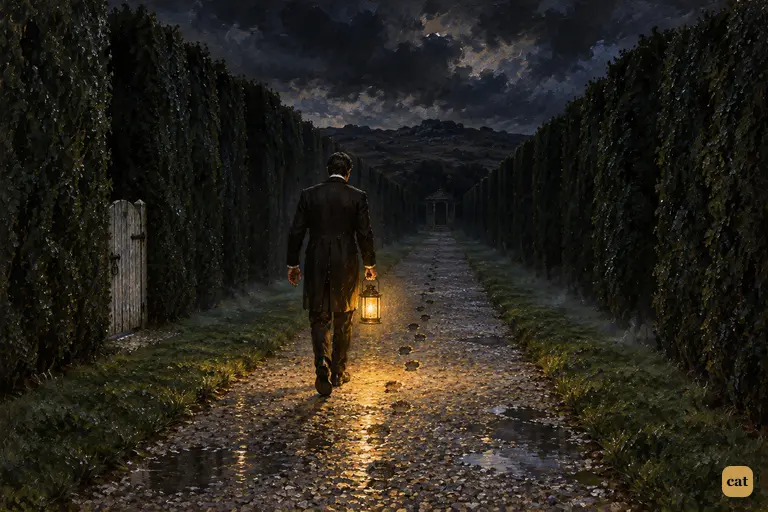
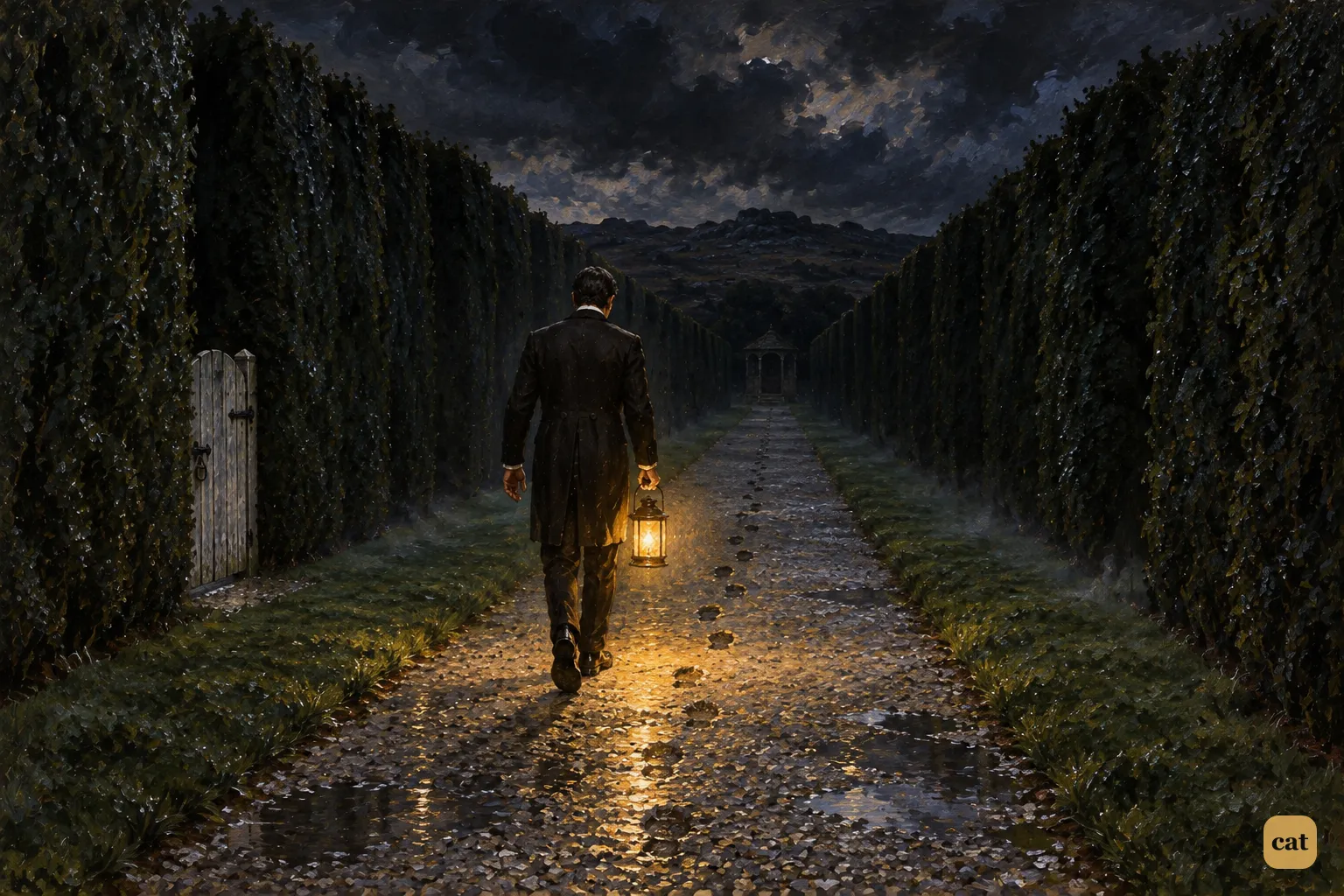
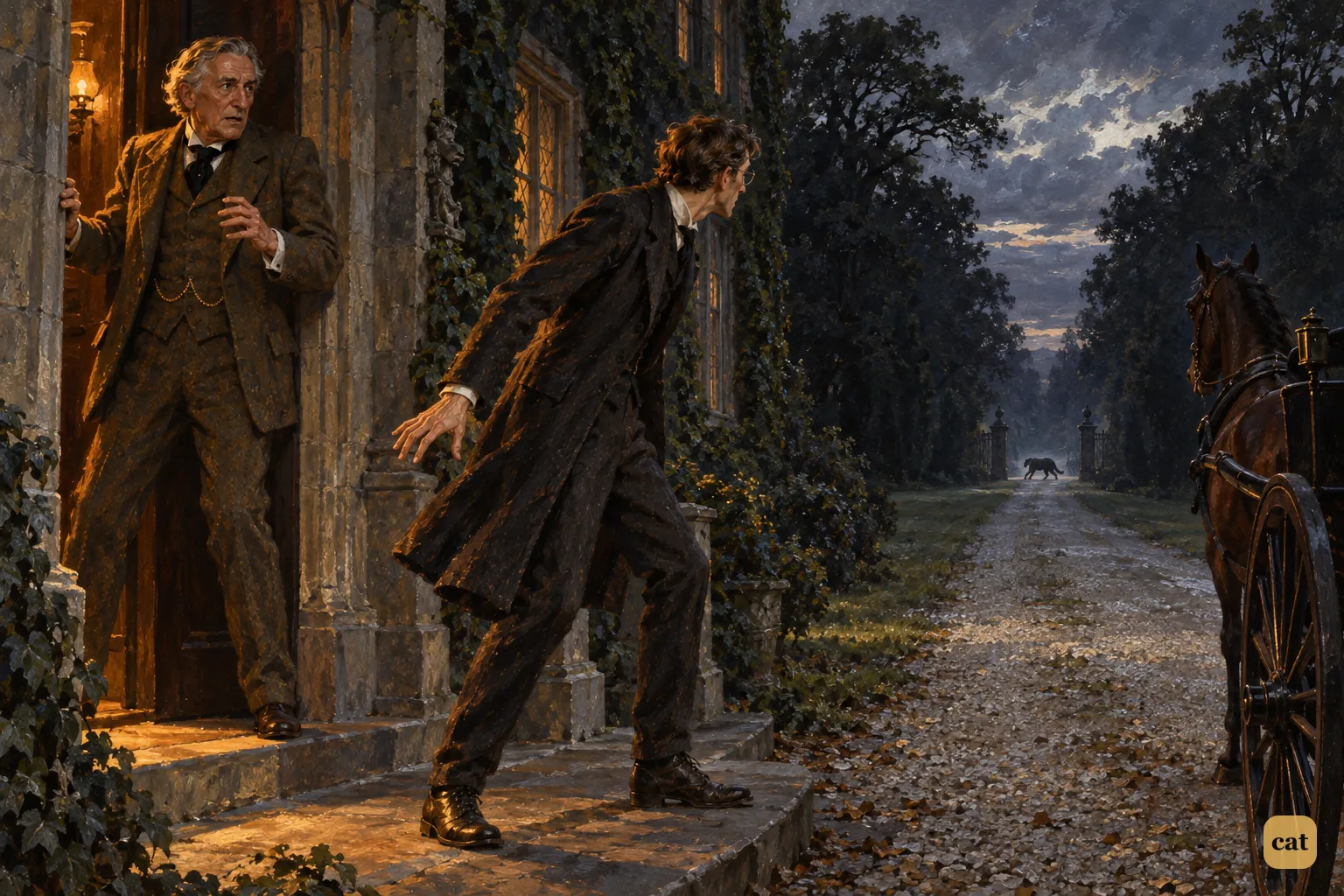
Barrymore's lantern
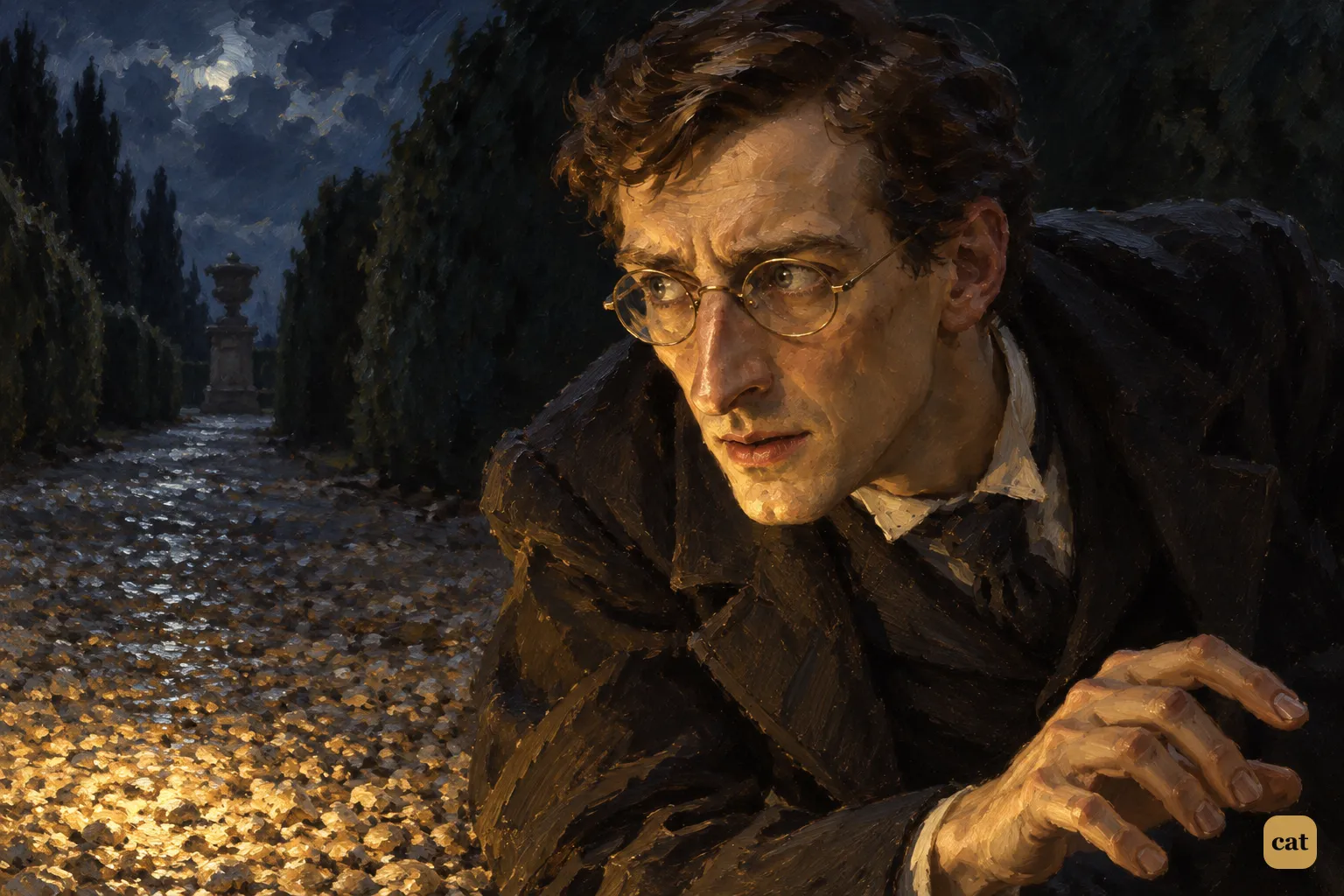
“The facts of the case are simple. Sir Charles Baskerville was in the habit every night before going to bed of walking down the famous yew alley of Baskerville Hall. The evidence of the Barrymores shows that this had been his custom. On the fourth of May Sir Charles had declared his intention of starting next day for London, and had ordered Barrymore to prepare his luggage. That night he went out as usual for his nocturnal walk, in the course of which he was in the habit of smoking a cigar. He never returned. At twelve o’clock Barrymore, finding the hall door still open, became alarmed, and, lighting a lantern, went in search of his master. The day had been wet, and Sir Charles’s footmarks were easily traced down the alley. Halfway down this walk there is a gate which leads out on to the moor. There were indications that Sir Charles had stood for some little time here. He then proceeded down the alley, and it was at the far end of it that his body was discovered. One fact which has not been explained is the statement of Barrymore that his master’s footprints altered their character from the time that he passed the moor-gate, and that he appeared from thence onward to have been walking upon his toes. One Murphy, a gipsy horse-dealer, was on the moor at no great distance at the time, but he appears by his own confession to have been the worse for drink. He declares that he heard cries but is unable to state from what direction they came. No signs of violence were to be discovered upon Sir Charles’s person, and though the doctor’s evidence pointed to an almost incredible facial distortion—so great that Dr. Mortimer refused at first to believe that it was indeed his friend and patient who lay before him—it was explained that that is a symptom which is not unusual in cases of dyspnœa and death from cardiac exhaustion. This explanation was borne out by the post-mortem examination, which showed long-standing organic disease, and the coroner’s jury returned a verdict in accordance with the medical evidence. It is well that this is so, for it is obviously of the utmost importance that Sir Charles’s heir should settle at the Hall and continue the good work which has been so sadly interrupted. Had the prosaic finding of the coroner not finally put an end to the romantic stories which have been whispered in connection with the affair, it might have been difficult to find a tenant for Baskerville Hall. It is understood that the next of kin is Mr. Henry Baskerville, if he be still alive, the son of Sir Charles Baskerville’s younger brother. The young man when last heard of was in America, and inquiries are being instituted with a view to informing him of his good fortune.”
Read from here → -
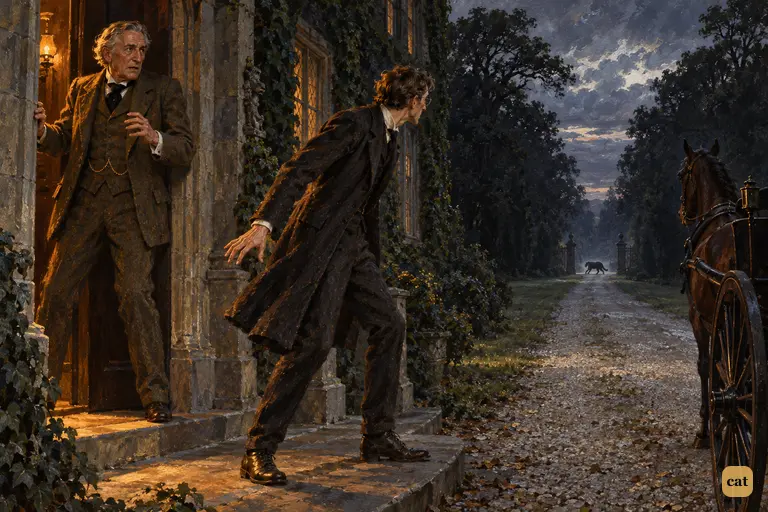
Something on the drive
“I can well remember driving up to his house in the evening some three weeks before the fatal event. He chanced to be at his hall door. I had descended from my gig and was standing in front of him, when I saw his eyes fix themselves over my shoulder and stare past me with an expression of the most dreadful horror. I whisked round and had just time to catch a glimpse of something which I took to be a large black calf passing at the head of the drive. So excited and alarmed was he that I was compelled to go down to the spot where the animal had been and look around for it. It was gone, however, and the incident appeared to make the worst impression upon his mind. I stayed with him all the evening, and it was on that occasion, to explain the emotion which he had shown, that he confided to my keeping that narrative which I read to you when first I came. I mention this small episode because it assumes some importance in view of the tragedy which followed, but I was convinced at the time that the matter was entirely trivial and that his excitement had no justification.
Read from here → -
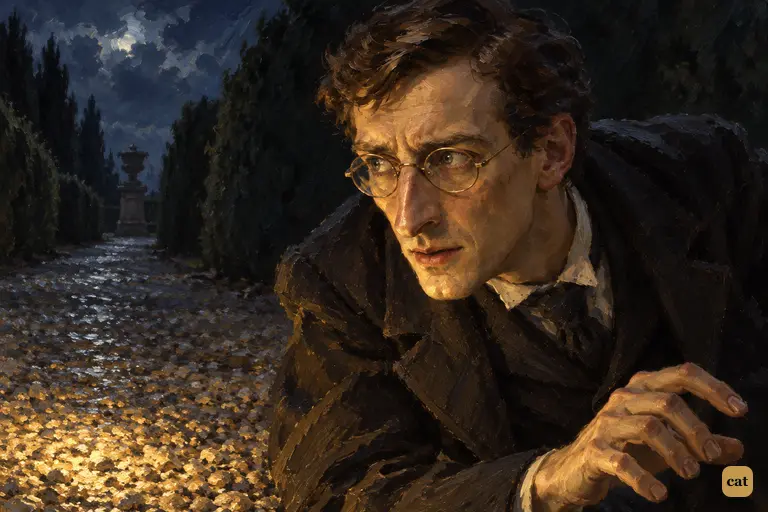
But I did
“On the night of Sir Charles’s death Barrymore the butler, who made the discovery, sent Perkins the groom on horseback to me, and as I was sitting up late I was able to reach Baskerville Hall within an hour of the event. I checked and corroborated all the facts which were mentioned at the inquest. I followed the footsteps down the yew alley, I saw the spot at the moor-gate where he seemed to have waited, I remarked the change in the shape of the prints after that point, I noted that there were no other footsteps save those of Barrymore on the soft gravel, and finally I carefully examined the body, which had not been touched until my arrival. Sir Charles lay on his face, his arms out, his fingers dug into the ground, and his features convulsed with some strong emotion to such an extent that I could hardly have sworn to his identity. There was certainly no physical injury of any kind. But one false statement was made by Barrymore at the inquest. He said that there were no traces upon the ground round the body. He did not observe any. But I did—some little distance off, but fresh and clear.”
Read from here → -
-
Chapter 2
The Legend, the Inquest and the Hound's Footprints
Next chapter: Holmes Takes the Case of the Spectral Hound Read this chapter