-

Sunday sunrise over village
The sun rose upon a tranquil world, and beamed down upon the peaceful village like a benediction. Breakfast over, Aunt Polly had family worship: it began with a prayer built from the ground up of solid courses of Scriptural quotations, welded together with a thin mortar of originality; and from the summit of this she delivered a grim chapter of the Mosaic Law, as from Sinai.
Read from here → -
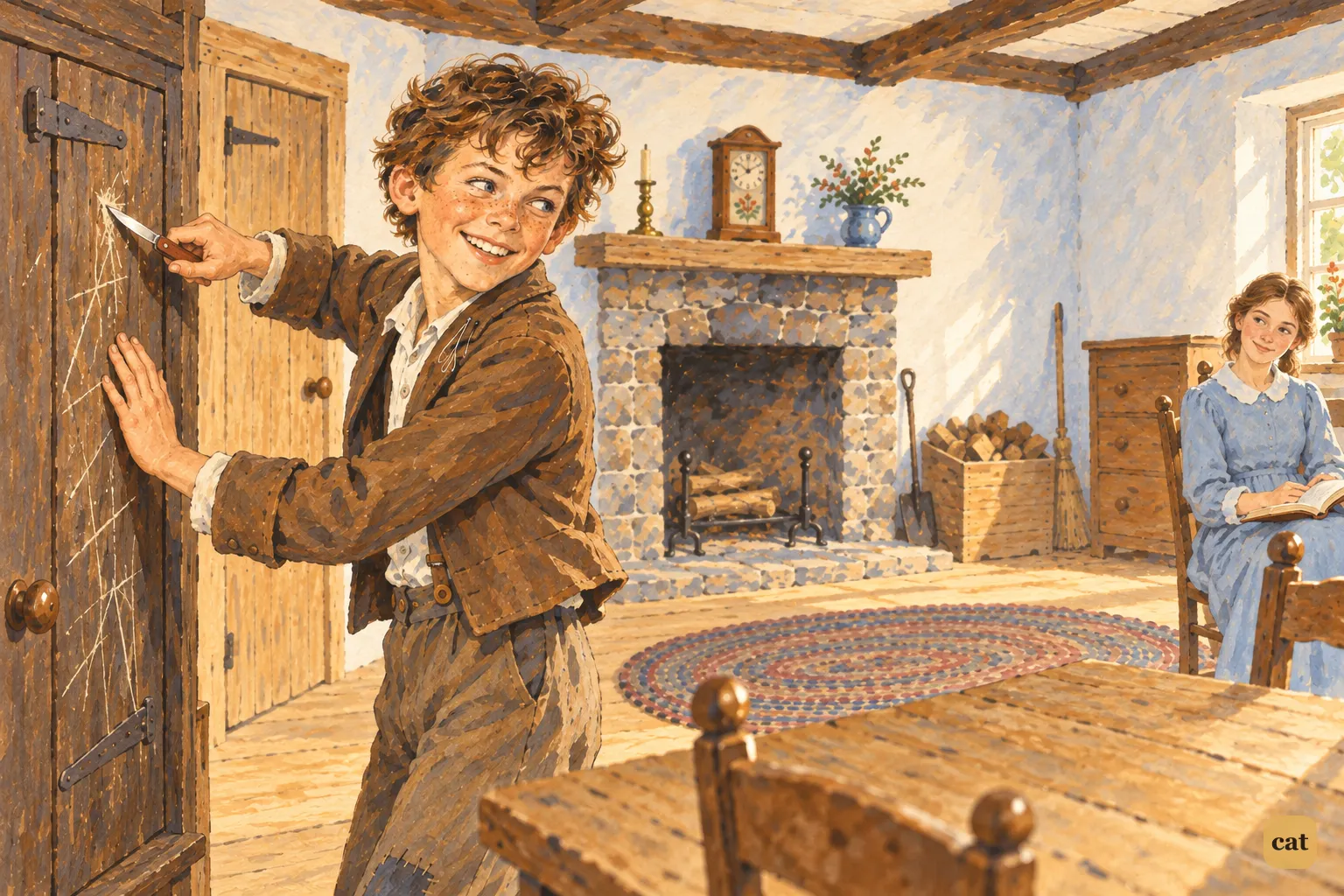
Scarifying the cupboard
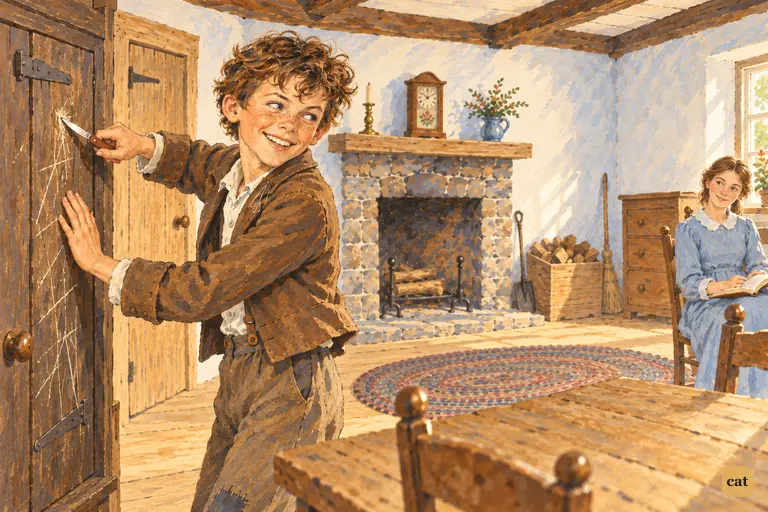
And he did “tackle it again”—and under the double pressure of curiosity and prospective gain he did it with such spirit that he accomplished a shining success. Mary gave him a brand-new “Barlow” knife worth twelve and a half cents; and the convulsion of delight that swept his system shook him to his foundations. True, the knife would not cut anything, but it was a “sure-enough” Barlow, and there was inconceivable grandeur in that—though where the Western boys ever got the idea that such a weapon could possibly be counterfeited to its injury is an imposing mystery and will always remain so, perhaps. Tom contrived to scarify the cupboard with it, and was arranging to begin on the bureau, when he was called off to dress for Sunday-school.
Read from here → -
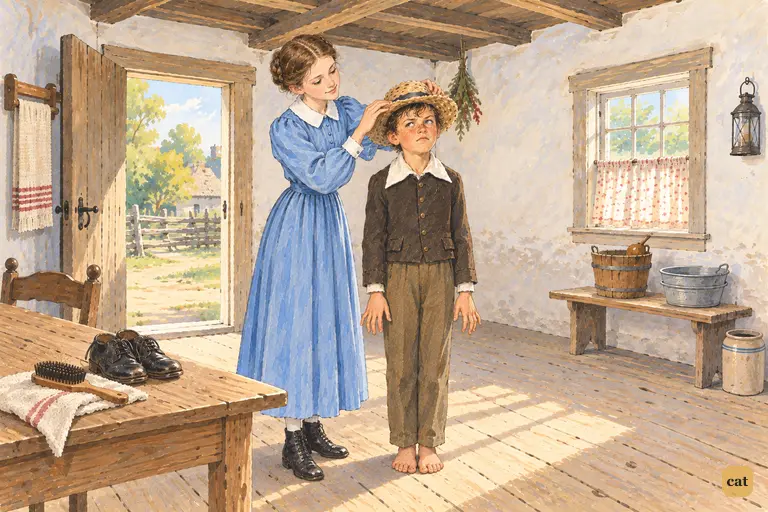
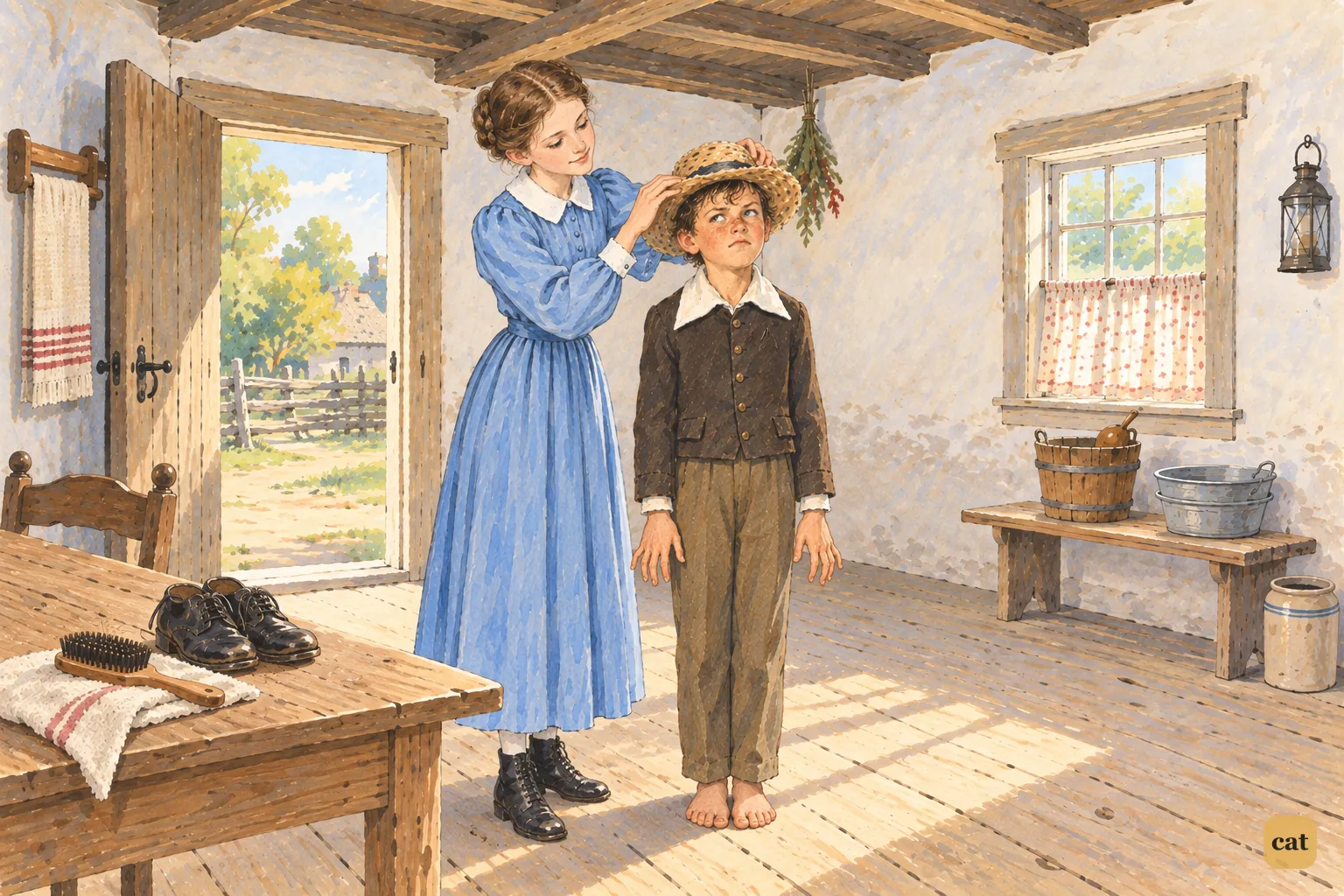
Improved and uncomfortable
Tom was a trifle disconcerted. The basin was refilled, and this time he stood over it a little while, gathering resolution; took in a big breath and began. When he entered the kitchen presently, with both eyes shut and groping for the towel with his hands, an honorable testimony of suds and water was dripping from his face. But when he emerged from the towel, he was not yet satisfactory, for the clean territory stopped short at his chin and his jaws, like a mask; below and beyond this line there was a dark expanse of unirrigated soil that spread downward in front and backward around his neck. Mary took him in hand, and when she was done with him he was a man and a brother, without distinction of color, and his saturated hair was neatly brushed, and its short curls wrought into a dainty and symmetrical general effect. [He privately smoothed out the curls, with labor and difficulty, and plastered his hair close down to his head; for he held curls to be effeminate, and his own filled his life with bitterness.] Then Mary got out a suit of his clothing that had been used only on Sundays during two years—they were simply called his “other clothes”—and so by that we know the size of his wardrobe. The girl “put him to rights” after he had dressed himself; she buttoned his neat roundabout up to his chin, turned his vast shirt collar down over his shoulders, brushed him off and crowned him with his speckled straw hat. He now looked exceedingly improved and uncomfortable. He was fully as uncomfortable as he looked; for there was a restraint about whole clothes and cleanliness that galled him. He hoped that Mary would forget his shoes, but the hope was blighted; she coated them thoroughly with tallow, as was the custom, and brought them out. He lost his temper and said he was always being made to do everything he didn’t want to do. But Mary said, persuasively:
Read from here → -
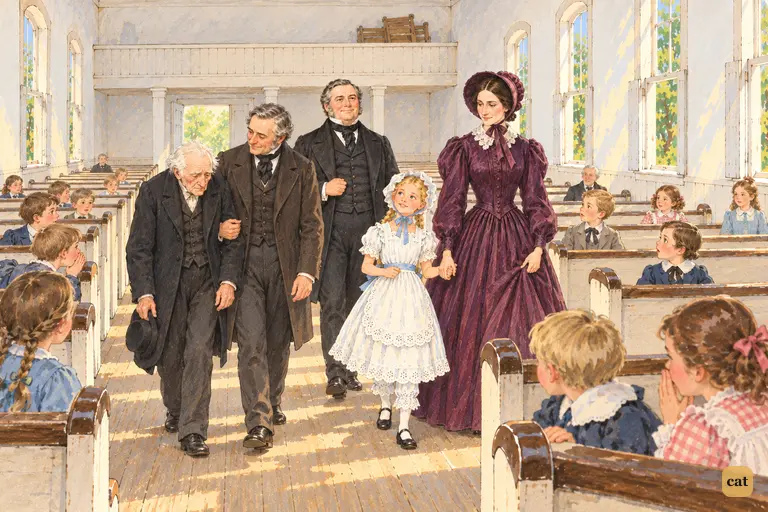
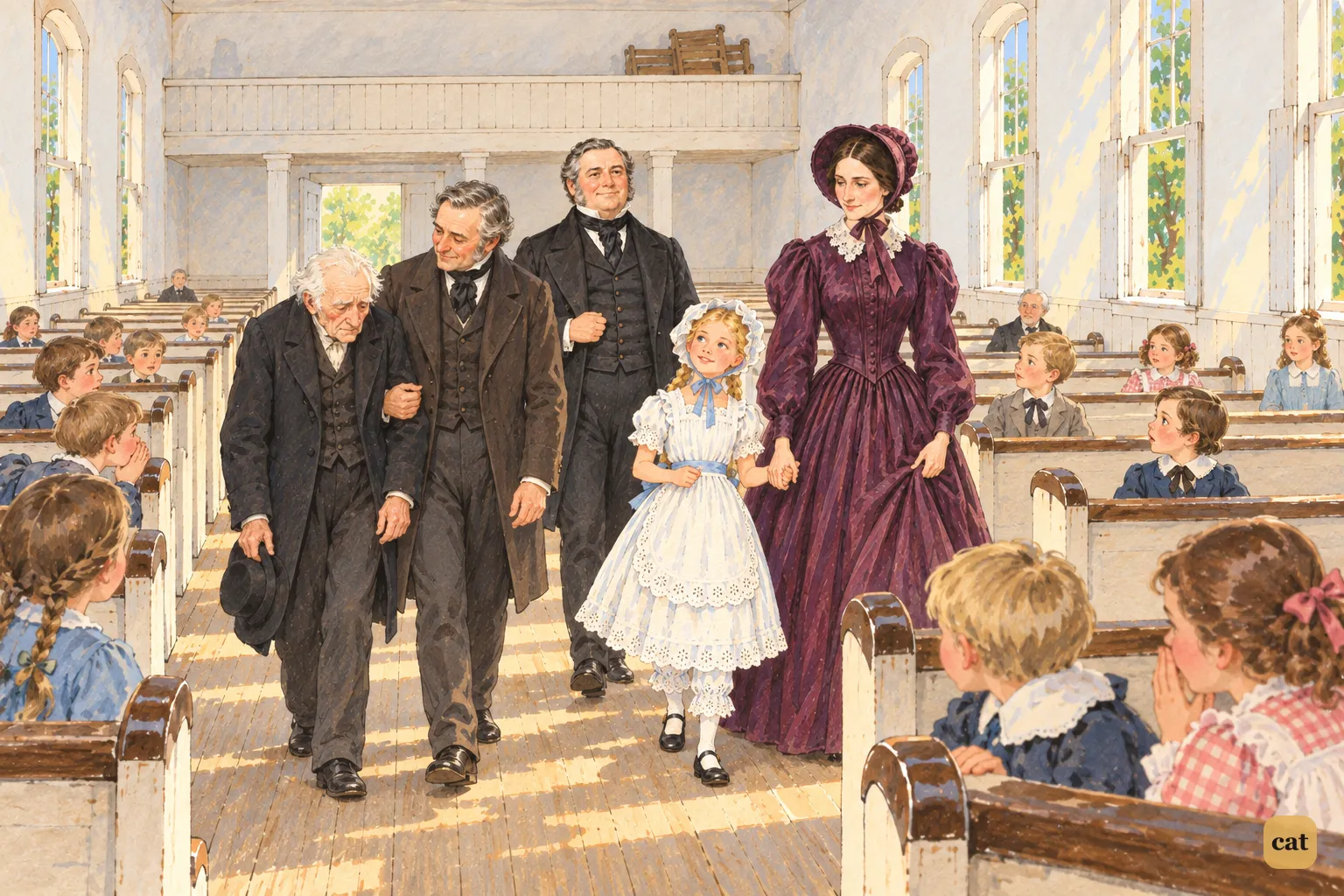
The visitors enter
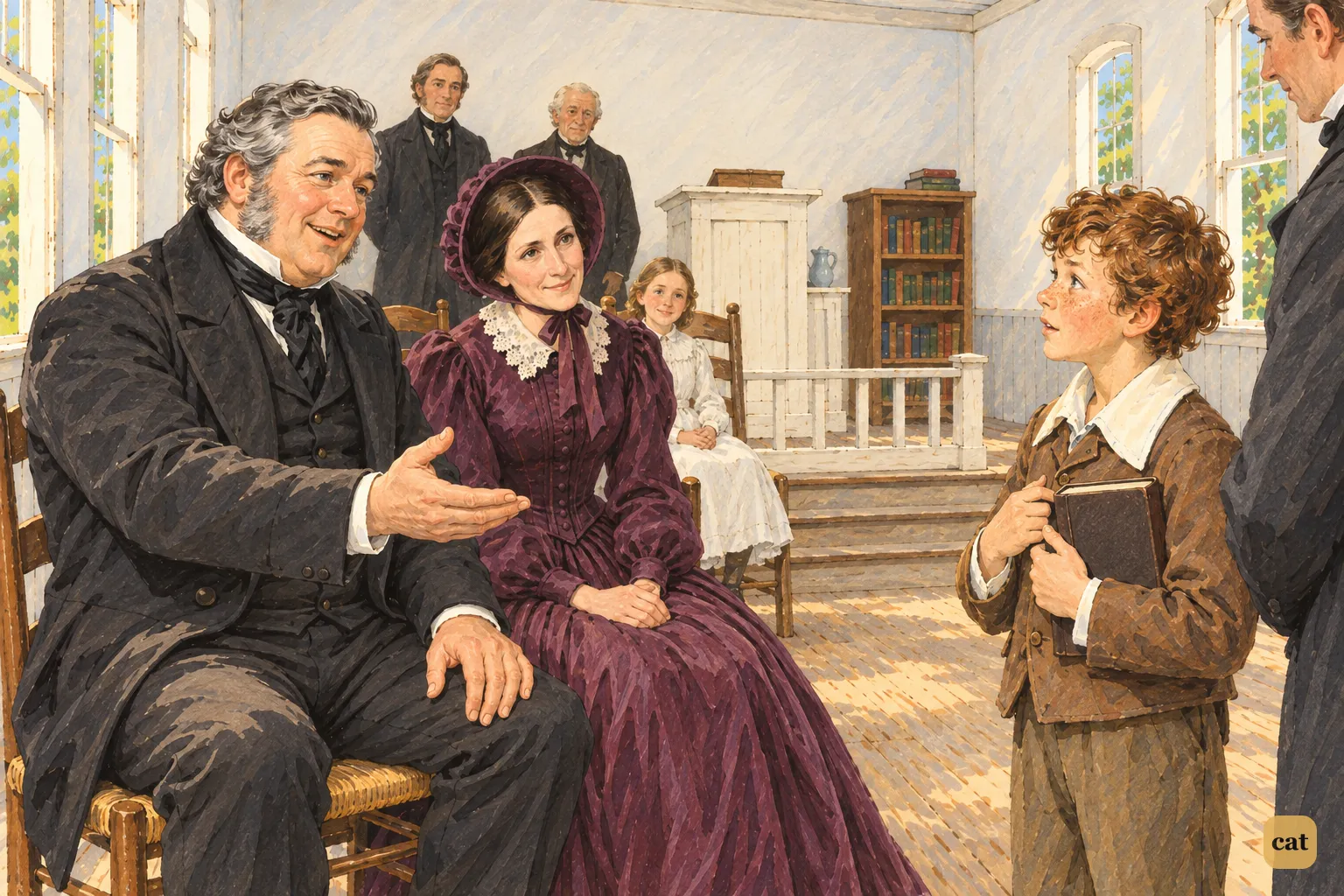
A good part of the whispering had been occasioned by an event which was more or less rare—the entrance of visitors: lawyer Thatcher, accompanied by a very feeble and aged man; a fine, portly, middle-aged gentleman with iron-gray hair; and a dignified lady who was doubtless the latter’s wife. The lady was leading a child. Tom had been restless and full of chafings and repinings; conscience-smitten, too—he could not meet Amy Lawrence’s eye, he could not brook her loving gaze. But when he saw this small newcomer his soul was all ablaze with bliss in a moment. The next moment he was “showing off” with all his might—cuffing boys, pulling hair, making faces—in a word, using every art that seemed likely to fascinate a girl and win her applause. His exaltation had but one alloy—the memory of his humiliation in this angel’s garden—and that record in sand was fast washing out, under the waves of happiness that were sweeping over it now.
Read from here → -
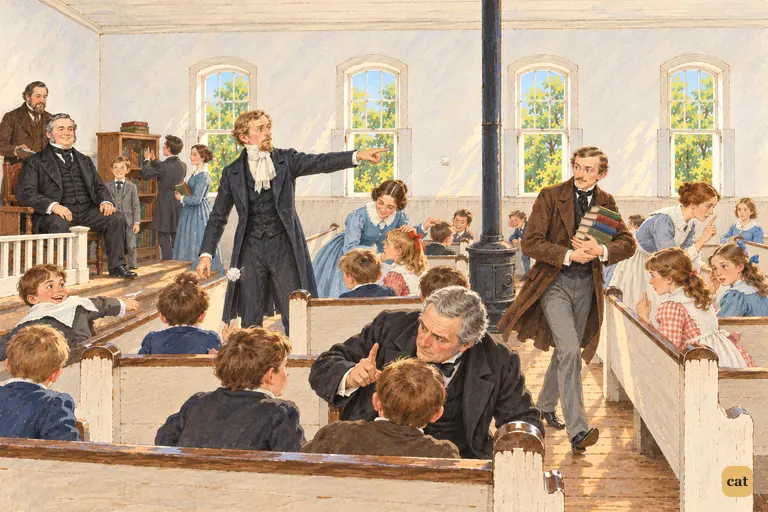
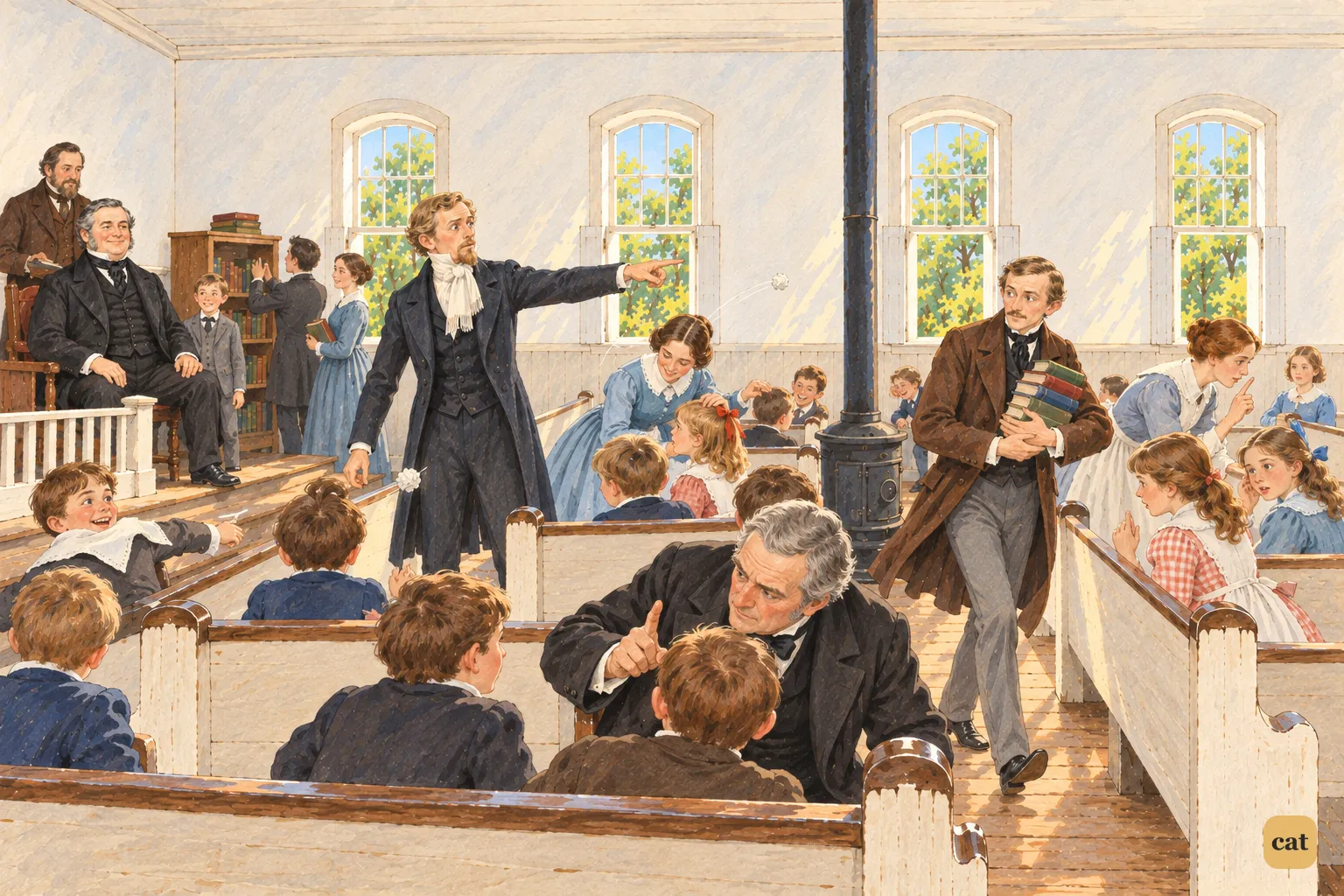
Everybody showing off
Mr. Walters fell to “showing off,” with all sorts of official bustlings and activities, giving orders, delivering judgments, discharging directions here, there, everywhere that he could find a target. The librarian “showed off”—running hither and thither with his arms full of books and making a deal of the splutter and fuss that insect authority delights in. The young lady teachers “showed off”—bending sweetly over pupils that were lately being boxed, lifting pretty warning fingers at bad little boys and patting good ones lovingly. The young gentlemen teachers “showed off” with small scoldings and other little displays of authority and fine attention to discipline—and most of the teachers, of both sexes, found business up at the library, by the pulpit; and it was business that frequently had to be done over again two or three times (with much seeming vexation). The little girls “showed off” in various ways, and the little boys “showed off” with such diligence that the air was thick with paper wads and the murmur of scufflings. And above it all the great man sat and beamed a majestic judicial smile upon all the house, and warmed himself in the sun of his own grandeur—for he was “showing off,” too.
Read from here → -
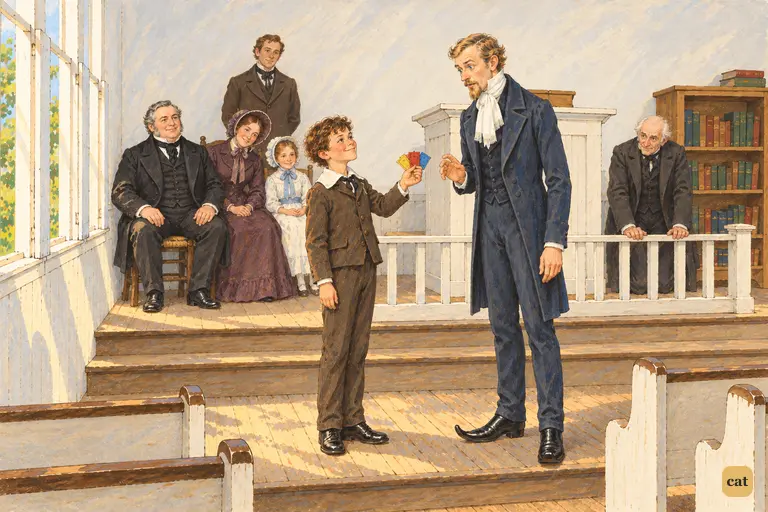
Thunderbolt from a clear sky
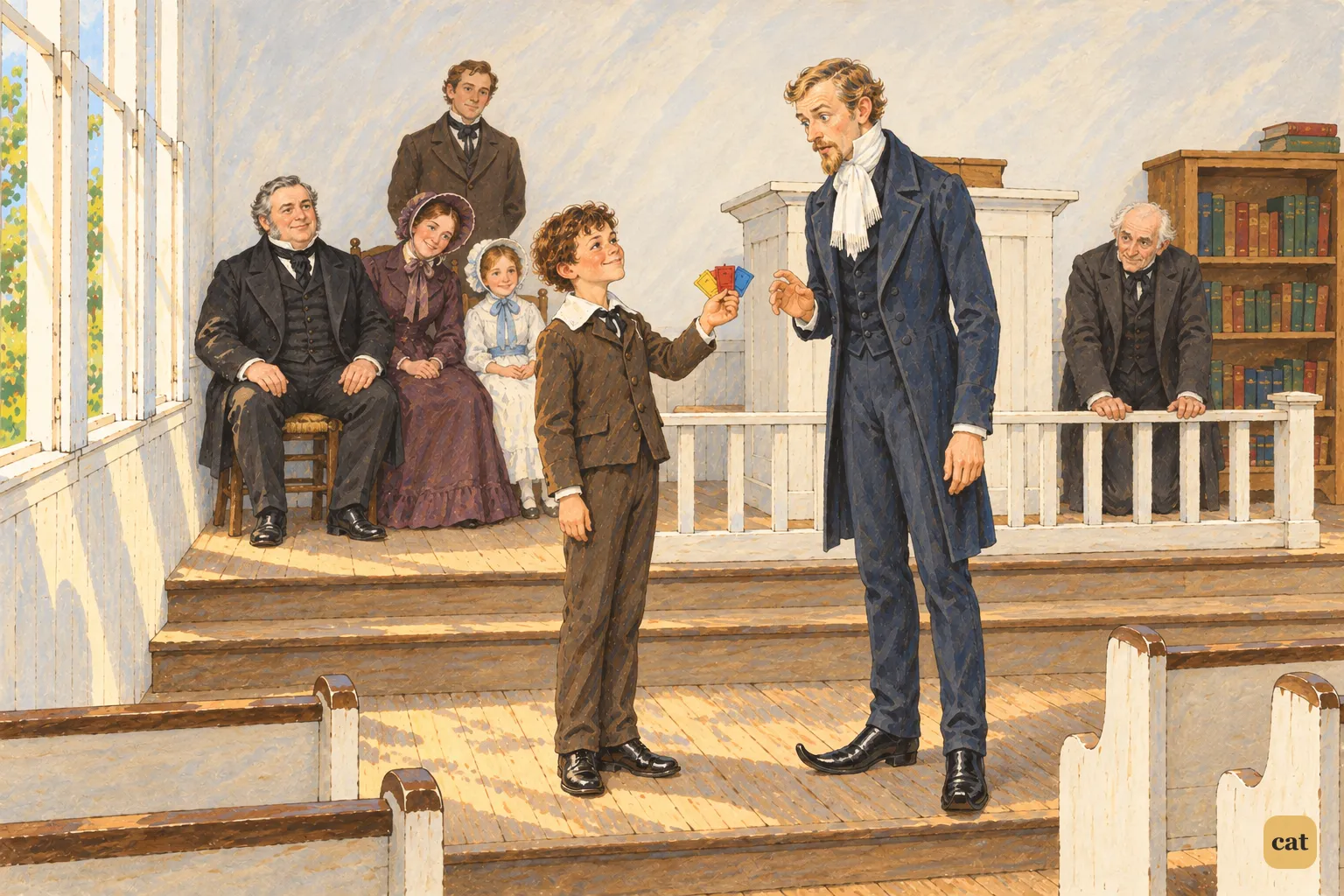
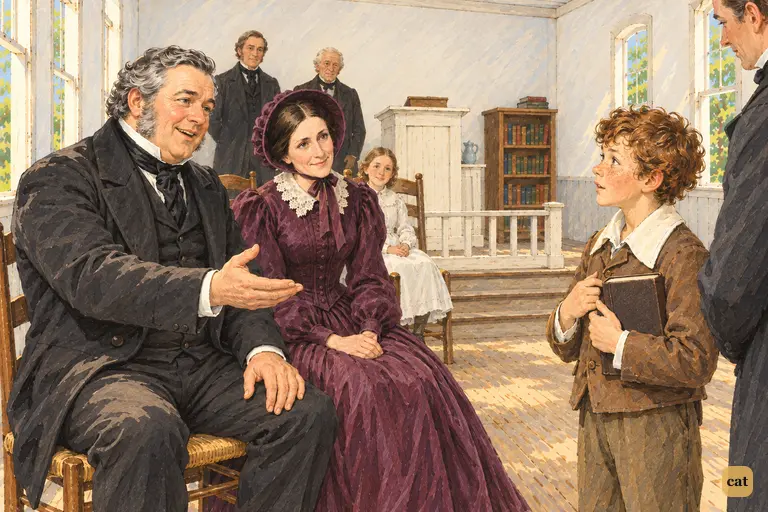
And now at this moment, when hope was dead, Tom Sawyer came forward with nine yellow tickets, nine red tickets, and ten blue ones, and demanded a Bible. This was a thunderbolt out of a clear sky. Walters was not expecting an application from this source for the next ten years. But there was no getting around it—here were the certified checks, and they were good for their face. Tom was therefore elevated to a place with the Judge and the other elect, and the great news was announced from headquarters. It was the most stunning surprise of the decade, and so profound was the sensation that it lifted the new hero up to the judicial one’s altitude, and the school had two marvels to gaze upon in place of one. The boys were all eaten up with envy—but those that suffered the bitterest pangs were those who perceived too late that they themselves had contributed to this hated splendor by trading tickets to Tom for the wealth he had amassed in selling whitewashing privileges. These despised themselves, as being the dupes of a wily fraud, a guileful snake in the grass.
Read from here → -
The first two disciples
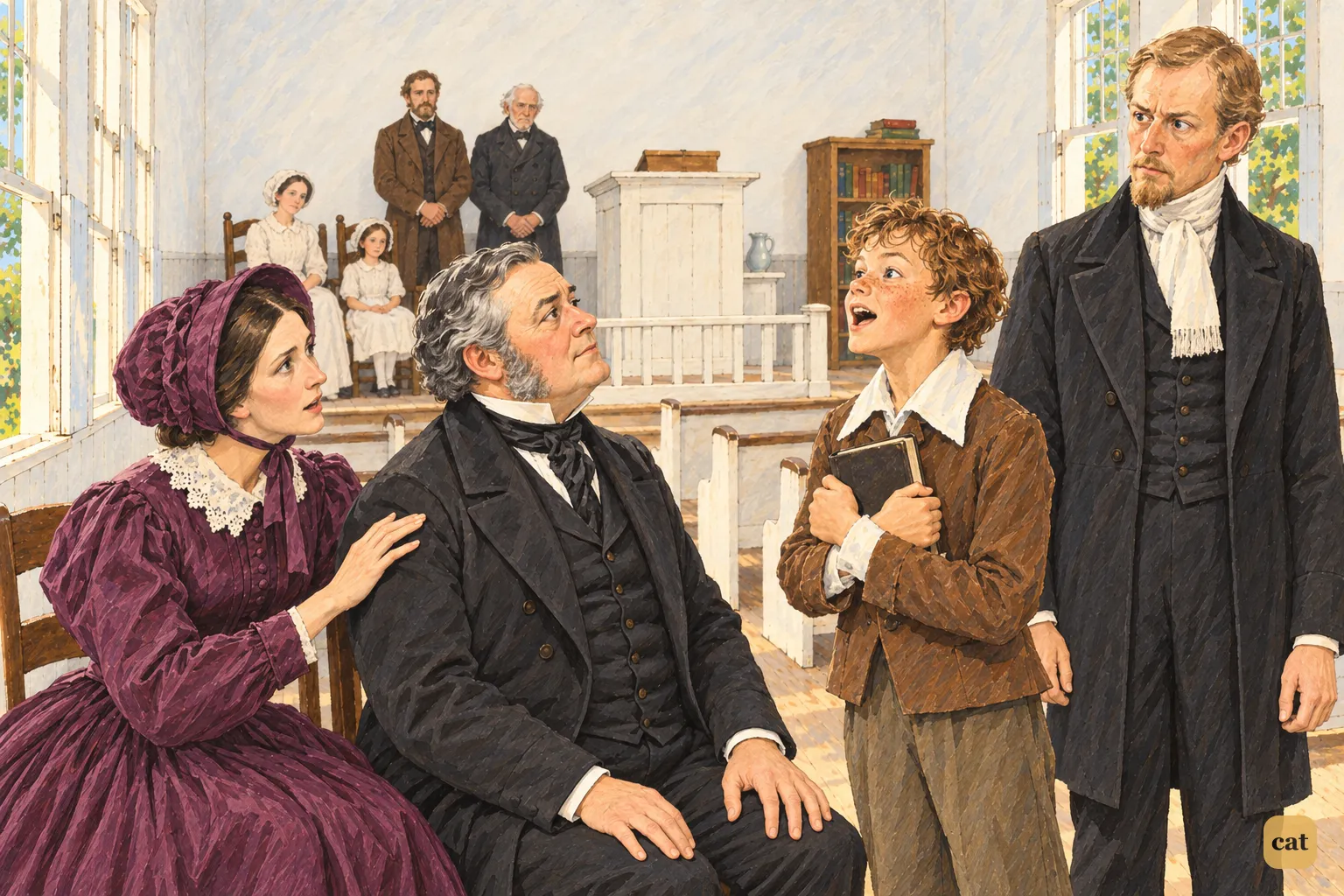
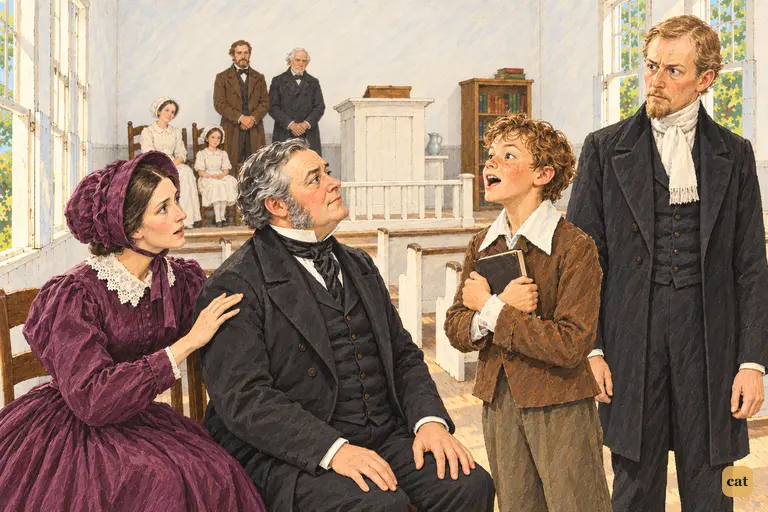
“That’s it! That’s a good boy. Fine boy. Fine, manly little fellow. Two thousand verses is a great many—very, very great many. And you never can be sorry for the trouble you took to learn them; for knowledge is worth more than anything there is in the world; it’s what makes great men and good men; you’ll be a great man and a good man yourself, some day, Thomas, and then you’ll look back and say, It’s all owing to the precious Sunday-school privileges of my boyhood—it’s all owing to my dear teachers that taught me to learn—it’s all owing to the good superintendent, who encouraged me, and watched over me, and gave me a beautiful Bible—a splendid elegant Bible—to keep and have it all for my own, always—it’s all owing to right bringing up! That is what you will say, Thomas—and you wouldn’t take any money for those two thousand verses—no indeed you wouldn’t. And now you wouldn’t mind telling me and this lady some of the things you’ve learned—no, I know you wouldn’t—for we are proud of little boys that learn. Now, no doubt you know the names of all the twelve disciples. Won’t you tell us the names of the first two that were appointed?”
Read from here → -
-
Chapter 4
Tom buys a Bible and fails the Judge's question
Next chapter: The Pinchbug and the Poodle in Church Read this chapter