 Author
-
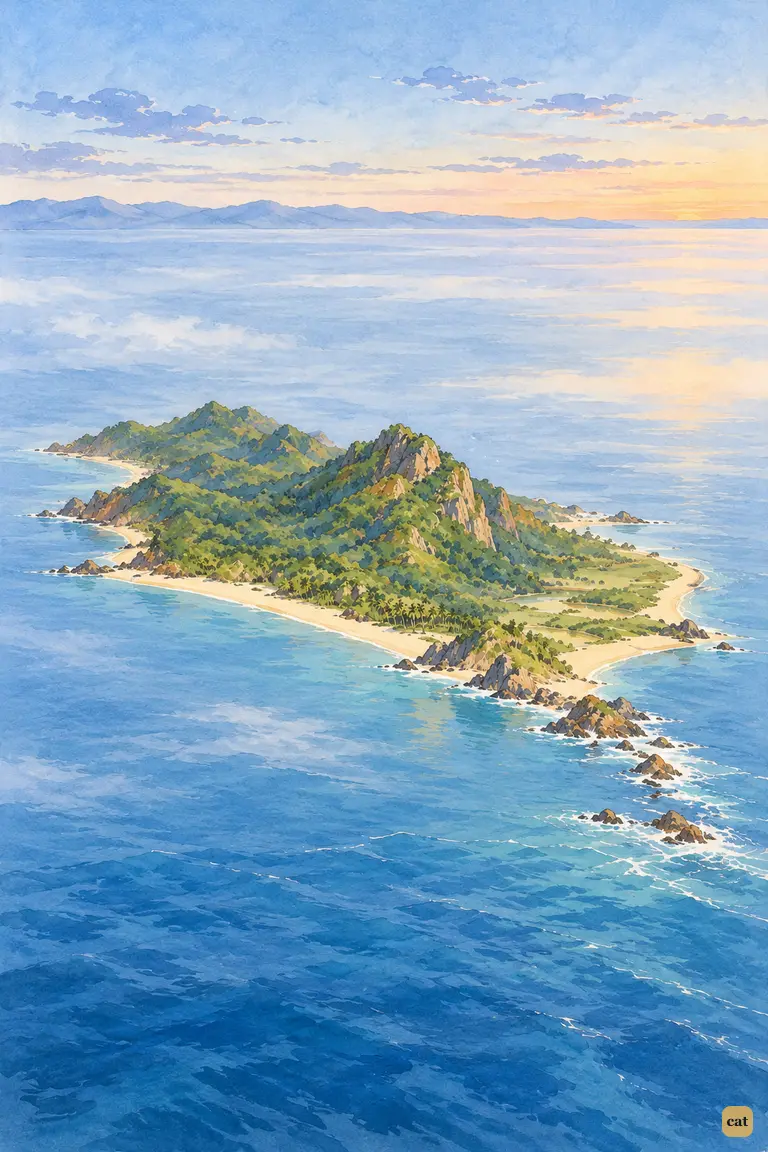
Island at December Dawn
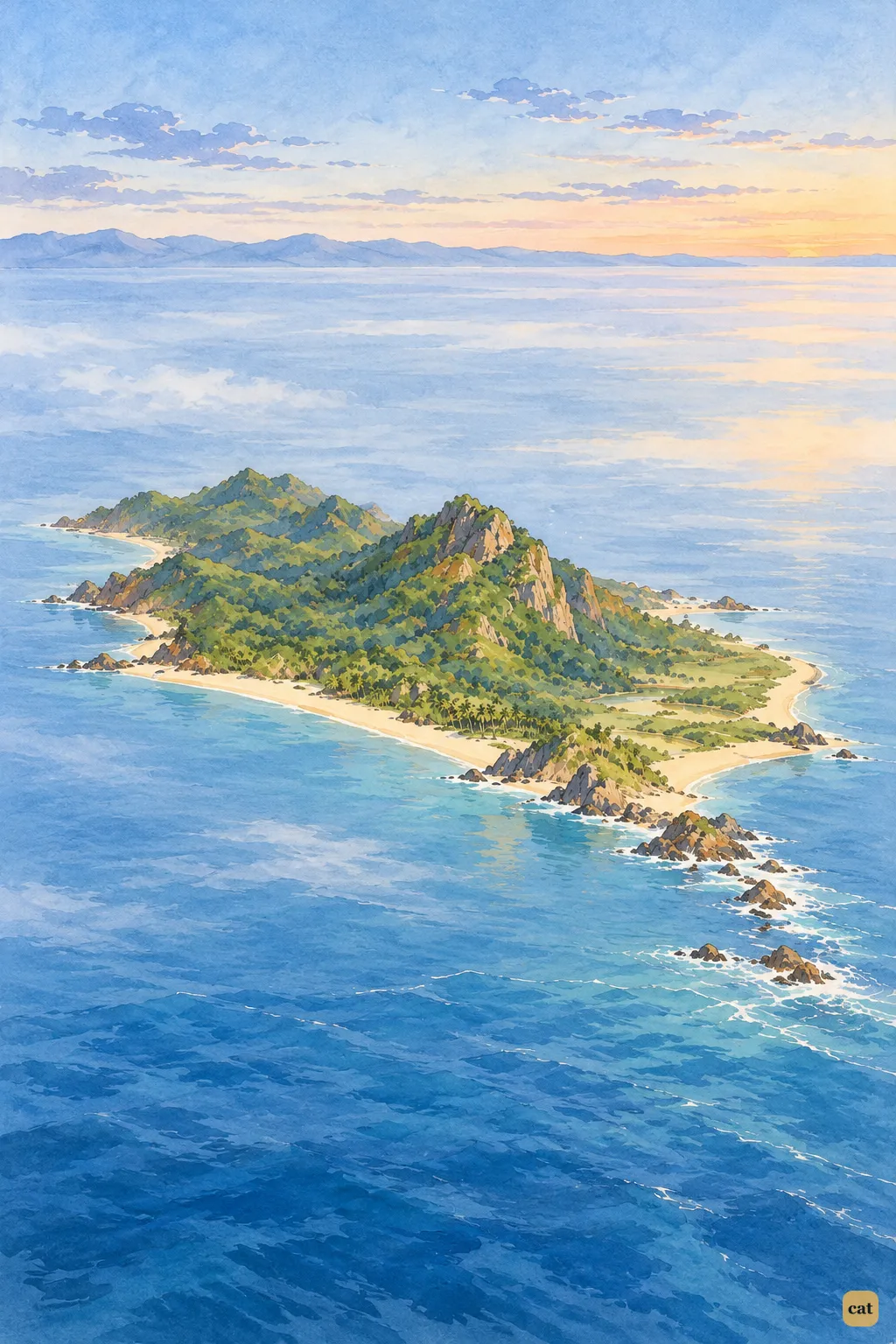
I was now in the twenty-third year of my residence in this island, and was so naturalised to the place and the manner of living, that, could I but have enjoyed the certainty that no savages would come to the place to disturb me, I could have been content to have capitulated for spending the rest of my time there, even to the last moment, till I had laid me down and died, like the old goat in the cave. I had also arrived to some little diversions and amusements, which made the time pass a great deal more pleasantly with me than it did before—first, I had taught my Poll, as I noted before, to speak; and he did it so familiarly, and talked so articulately and plain, that it was very pleasant to me; and he lived with me no less than six-and-twenty years. How long he might have lived afterwards I know not, though I know they have a notion in the Brazils that they live a hundred years. My dog was a pleasant and loving companion to me for no less than sixteen years of my time, and then died of mere old age. As for my cats, they multiplied, as I have observed, to that degree that I was obliged to shoot several of them at first, to keep them from devouring me and all I had; but at length, when the two old ones I brought with me were gone, and after some time continually driving them from me, and letting them have no provision with me, they all ran wild into the woods, except two or three favourites, which I kept tame, and whose young, when they had any, I always drowned; and these were part of my family. Besides these I always kept two or three household kids about me, whom I taught to feed out of my hand; and I had two more parrots, which talked pretty well, and would all call “Robin Crusoe,” but none like my first; nor, indeed, did I take the pains with any of them that I had done with him. I had also several tame sea-fowls, whose name I knew not, that I caught upon the shore, and cut their wings; and the little stakes which I had planted before my castle-wall being now grown up to a good thick grove, these fowls all lived among these low trees, and bred there, which was very agreeable to me; so that, as I said above, I began to be very well contented with the life I led, if I could have been secured from the dread of the savages. But it was otherwise directed; and it may not be amiss for all people who shall meet with my story to make this just observation from it: How frequently, in the course of our lives, the evil which in itself we seek most to shun, and which, when we are fallen into, is the most dreadful to us, is oftentimes the very means or door of our deliverance, by which alone we can be raised again from the affliction we are fallen into. I could give many examples of this in the course of my unaccountable life; but in nothing was it more particularly remarkable than in the circumstances of my last years of solitary residence in this island.
Read from here → -
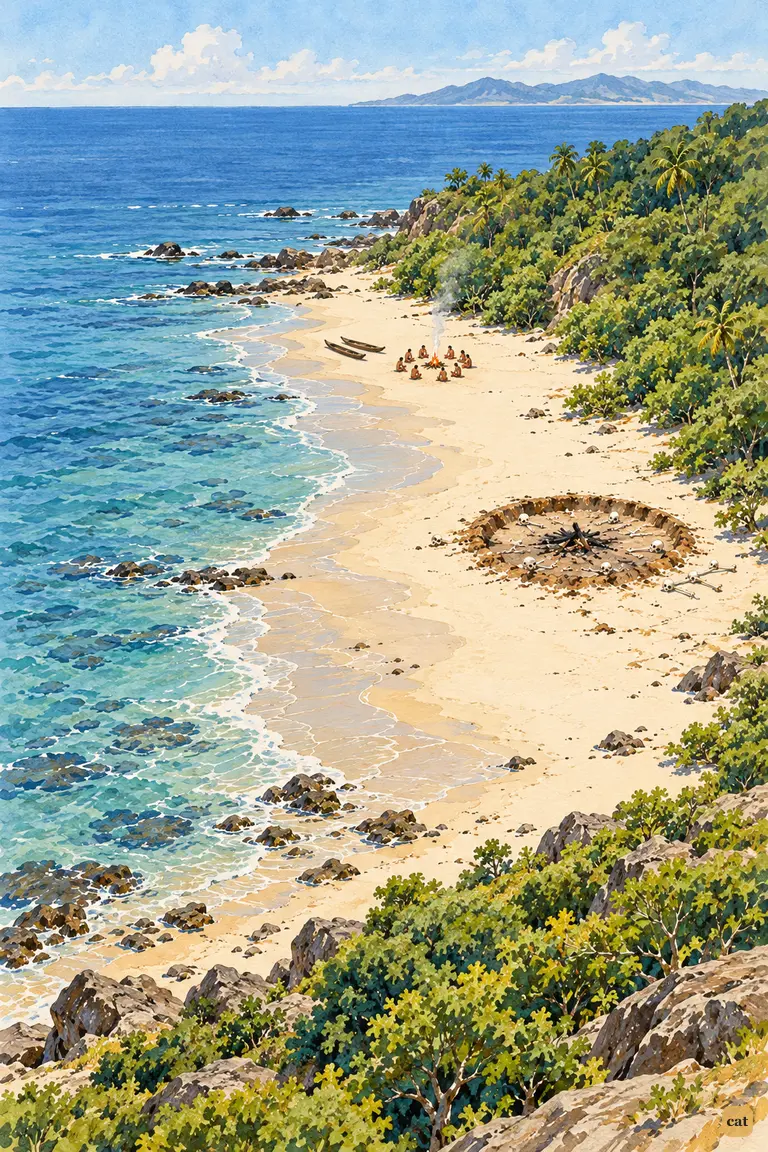
Nine Round the Fire
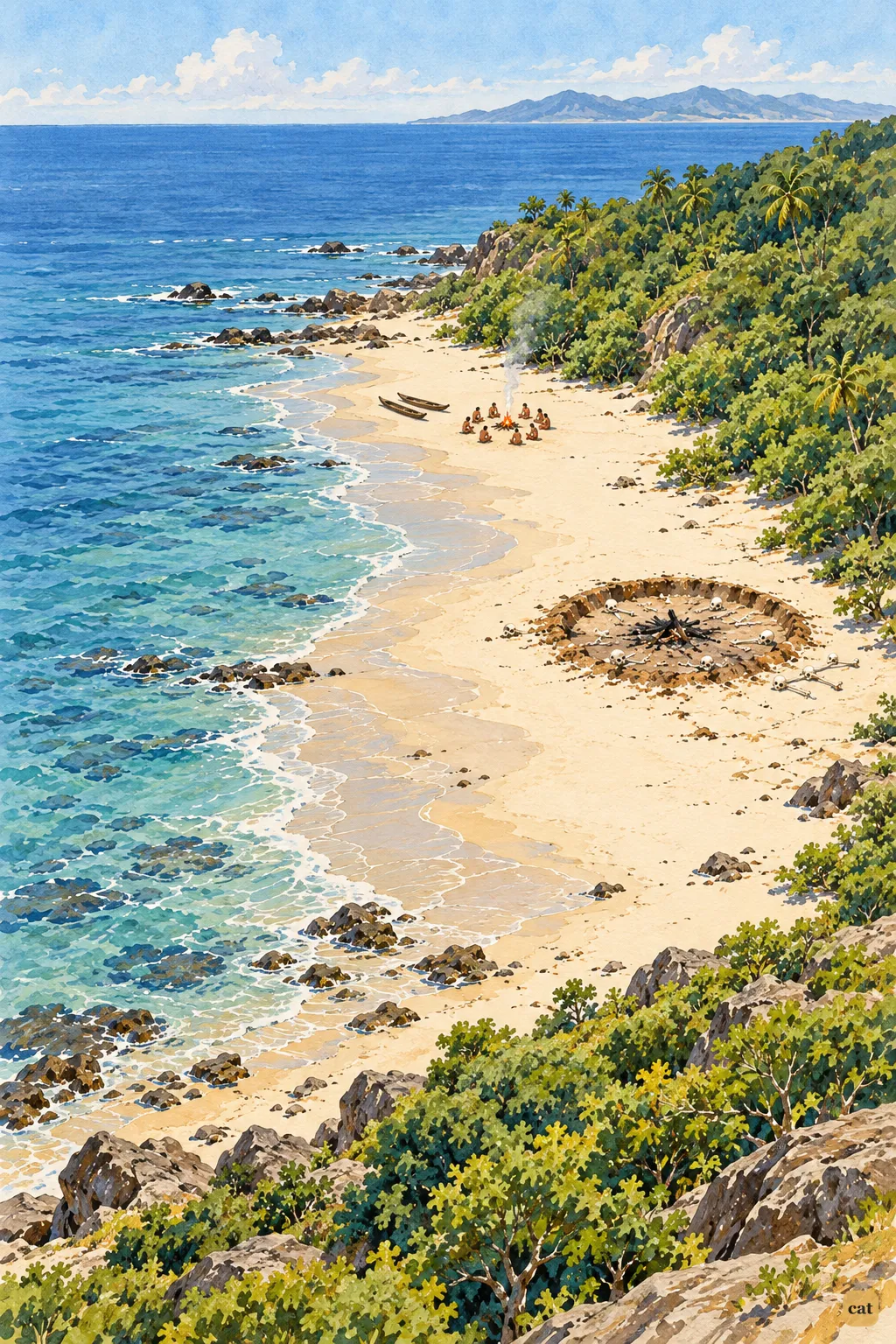
Then I prepared myself within, putting myself in a posture of defence. I loaded all my cannon, as I called them—that is to say, my muskets, which were mounted upon my new fortification—and all my pistols, and resolved to defend myself to the last gasp—not forgetting seriously to commend myself to the Divine protection, and earnestly to pray to God to deliver me out of the hands of the barbarians. I continued in this posture about two hours, and began to be impatient for intelligence abroad, for I had no spies to send out. After sitting a while longer, and musing what I should do in this case, I was not able to bear sitting in ignorance longer; so setting up my ladder to the side of the hill, where there was a flat place, as I observed before, and then pulling the ladder after me, I set it up again and mounted the top of the hill, and pulling out my perspective glass, which I had taken on purpose, I laid me down flat on my belly on the ground, and began to look for the place. I presently found there were no less than nine naked savages sitting round a small fire they had made, not to warm them, for they had no need of that, the weather being extremely hot, but, as I supposed, to dress some of their barbarous diet of human flesh which they had brought with them, whether alive or dead I could not tell.
Read from here → -
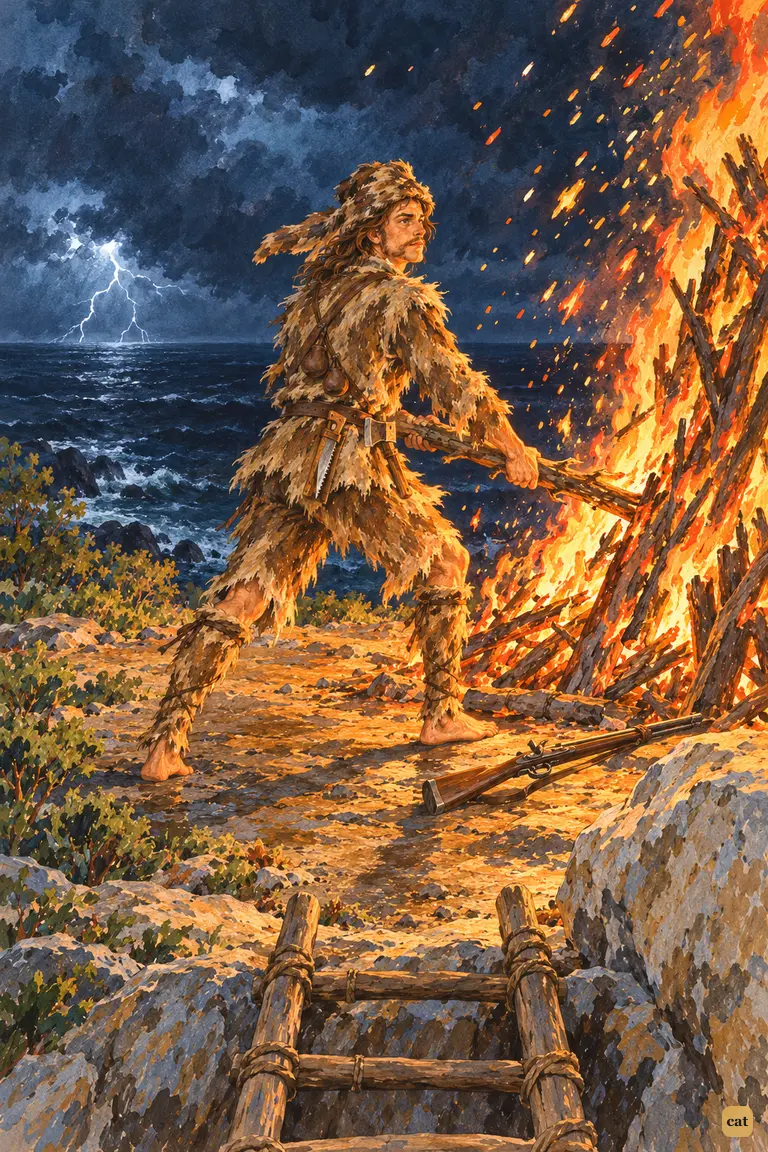
Beacon on the Hill
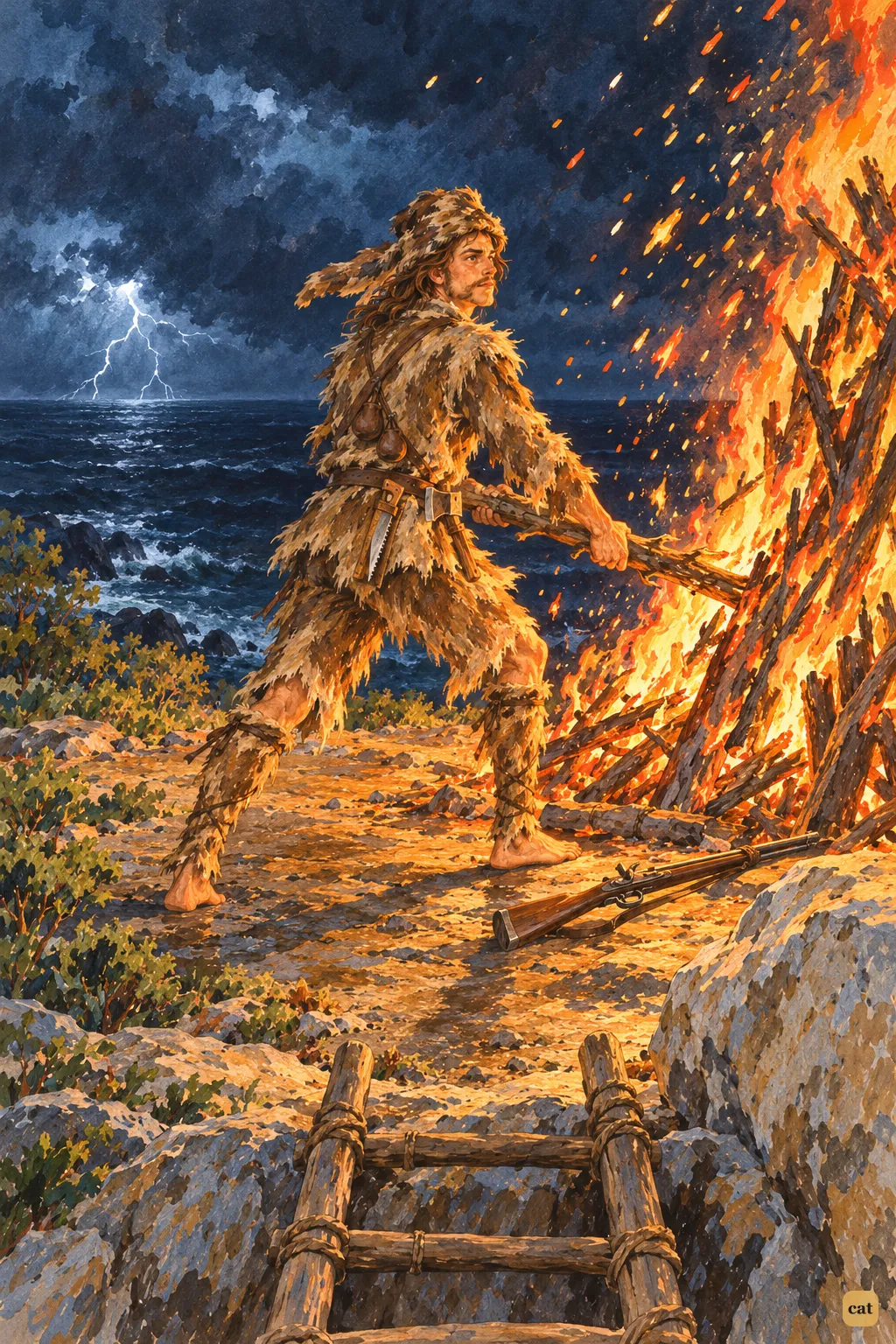
But to waive all this for a while. It was in the middle of May, on the sixteenth day, I think, as well as my poor wooden calendar would reckon, for I marked all upon the post still; I say, it was on the sixteenth of May that it blew a very great storm of wind all day, with a great deal of lightning and thunder, and a very foul night it was after it. I knew not what was the particular occasion of it, but as I was reading in the Bible, and taken up with very serious thoughts about my present condition, I was surprised with the noise of a gun, as I thought, fired at sea. This was, to be sure, a surprise quite of a different nature from any I had met with before; for the notions this put into my thoughts were quite of another kind. I started up in the greatest haste imaginable; and, in a trice, clapped my ladder to the middle place of the rock, and pulled it after me; and mounting it the second time, got to the top of the hill the very moment that a flash of fire bid me listen for a second gun, which, accordingly, in about half a minute I heard; and by the sound, knew that it was from that part of the sea where I was driven down the current in my boat. I immediately considered that this must be some ship in distress, and that they had some comrade, or some other ship in company, and fired these for signals of distress, and to obtain help. I had the presence of mind at that minute to think, that though I could not help them, it might be that they might help me; so I brought together all the dry wood I could get at hand, and making a good handsome pile, I set it on fire upon the hill. The wood was dry, and blazed freely; and, though the wind blew very hard, yet it burned fairly out; so that I was certain, if there was any such thing as a ship, they must needs see it. And no doubt they did; for as soon as ever my fire blazed up, I heard another gun, and after that several others, all from the same quarter. I plied my fire all night long, till daybreak: and when it was broad day, and the air cleared up, I saw something at a great distance at sea, full east of the island, whether a sail or a hull I could not distinguish—no, not with my glass: the distance was so great, and the weather still something hazy also; at least, it was so out at sea.
Read from here → -
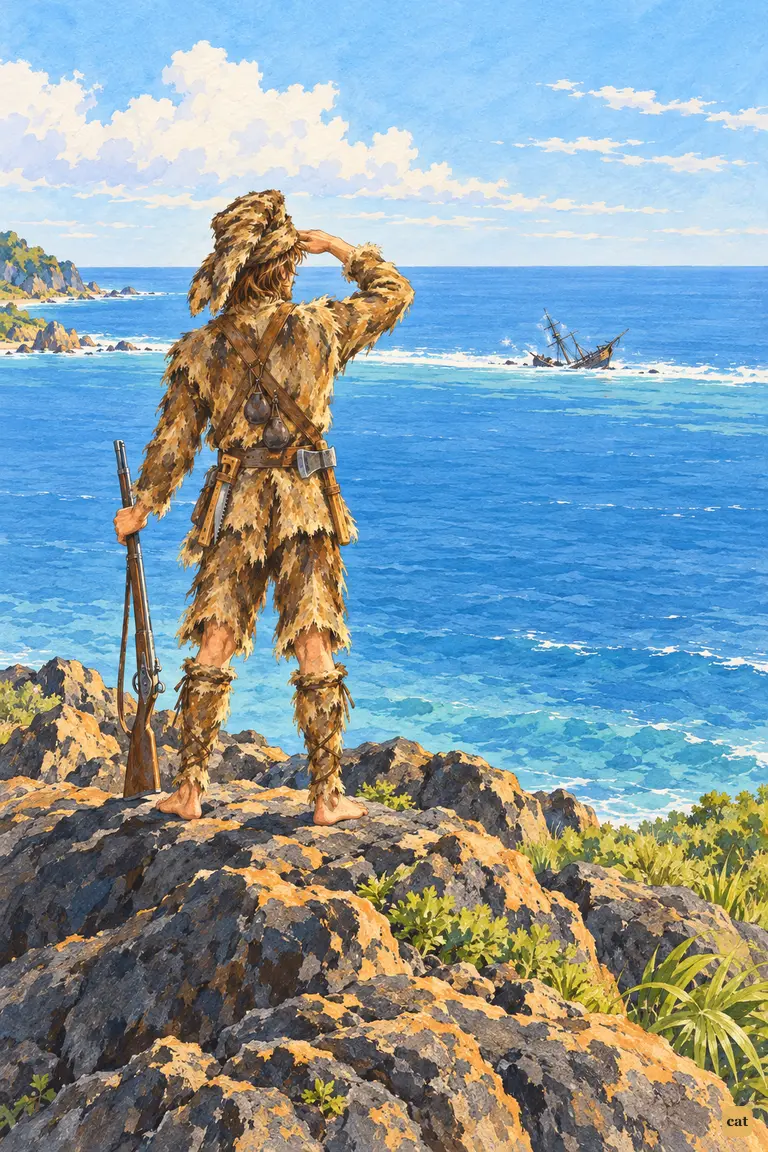
The Wreck on the Reef
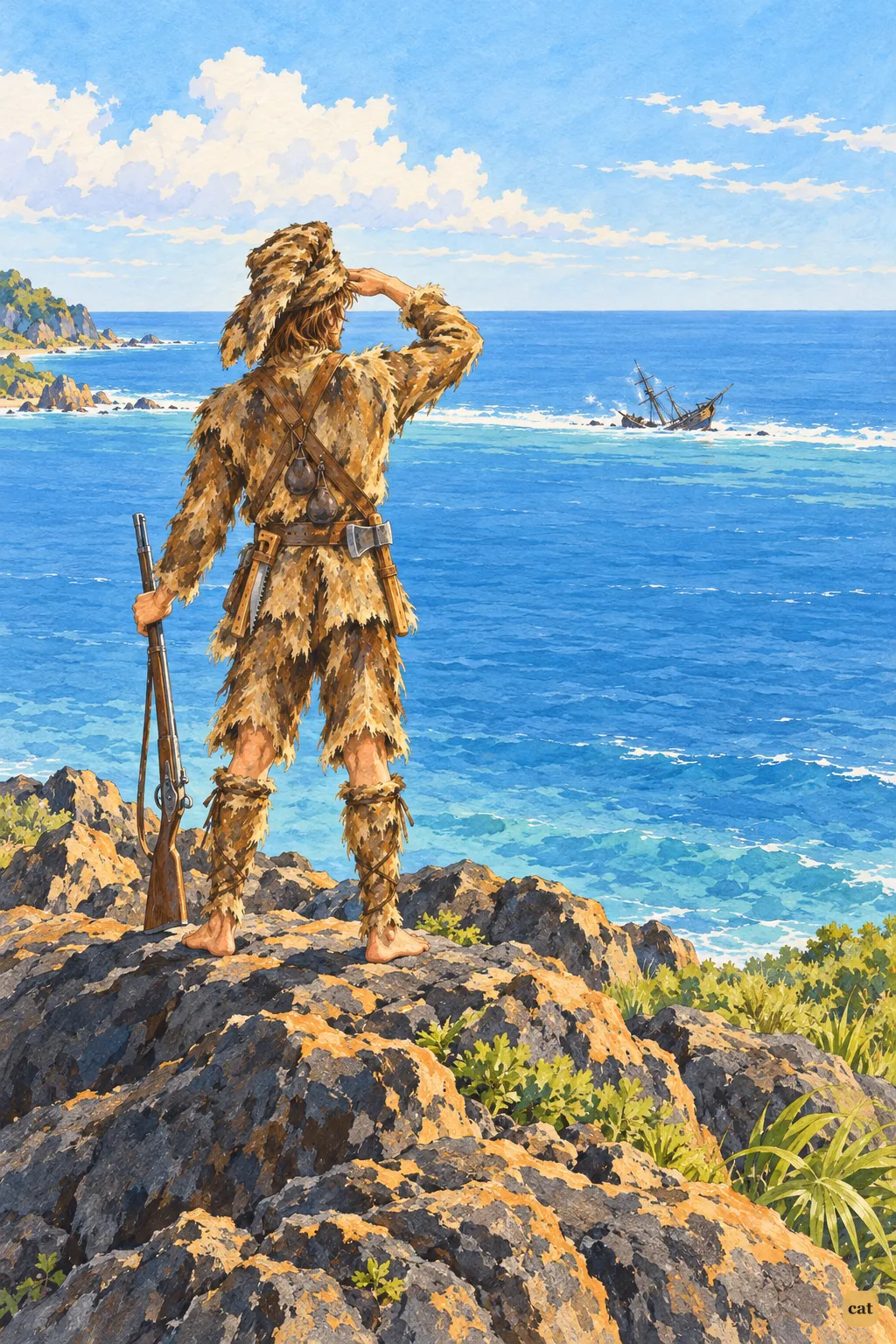
I looked frequently at it all that day, and soon perceived that it did not move; so I presently concluded that it was a ship at anchor; and being eager, you may be sure, to be satisfied, I took my gun in my hand, and ran towards the south side of the island to the rocks where I had formerly been carried away by the current; and getting up there, the weather by this time being perfectly clear, I could plainly see, to my great sorrow, the wreck of a ship, cast away in the night upon those concealed rocks which I found when I was out in my boat; and which rocks, as they checked the violence of the stream, and made a kind of counter-stream, or eddy, were the occasion of my recovering from the most desperate, hopeless condition that ever I had been in in all my life. Thus, what is one man’s safety is another man’s destruction; for it seems these men, whoever they were, being out of their knowledge, and the rocks being wholly under water, had been driven upon them in the night, the wind blowing hard at ENE. Had they seen the island, as I must necessarily suppose they did not, they must, as I thought, have endeavoured to have saved themselves on shore by the help of their boat; but their firing off guns for help, especially when they saw, as I imagined, my fire, filled me with many thoughts. First, I imagined that upon seeing my light they might have put themselves into their boat, and endeavoured to make the shore: but that the sea running very high, they might have been cast away. Other times I imagined that they might have lost their boat before, as might be the case many ways; particularly by the breaking of the sea upon their ship, which many times obliged men to stave, or take in pieces, their boat, and sometimes to throw it overboard with their own hands. Other times I imagined they had some other ship or ships in company, who, upon the signals of distress they made, had taken them up, and carried them off. Other times I fancied they were all gone off to sea in their boat, and being hurried away by the current that I had been formerly in, were carried out into the great ocean, where there was nothing but misery and perishing: and that, perhaps, they might by this time think of starving, and of being in a condition to eat one another.
Read from here → -
Oh That It Had Been But One
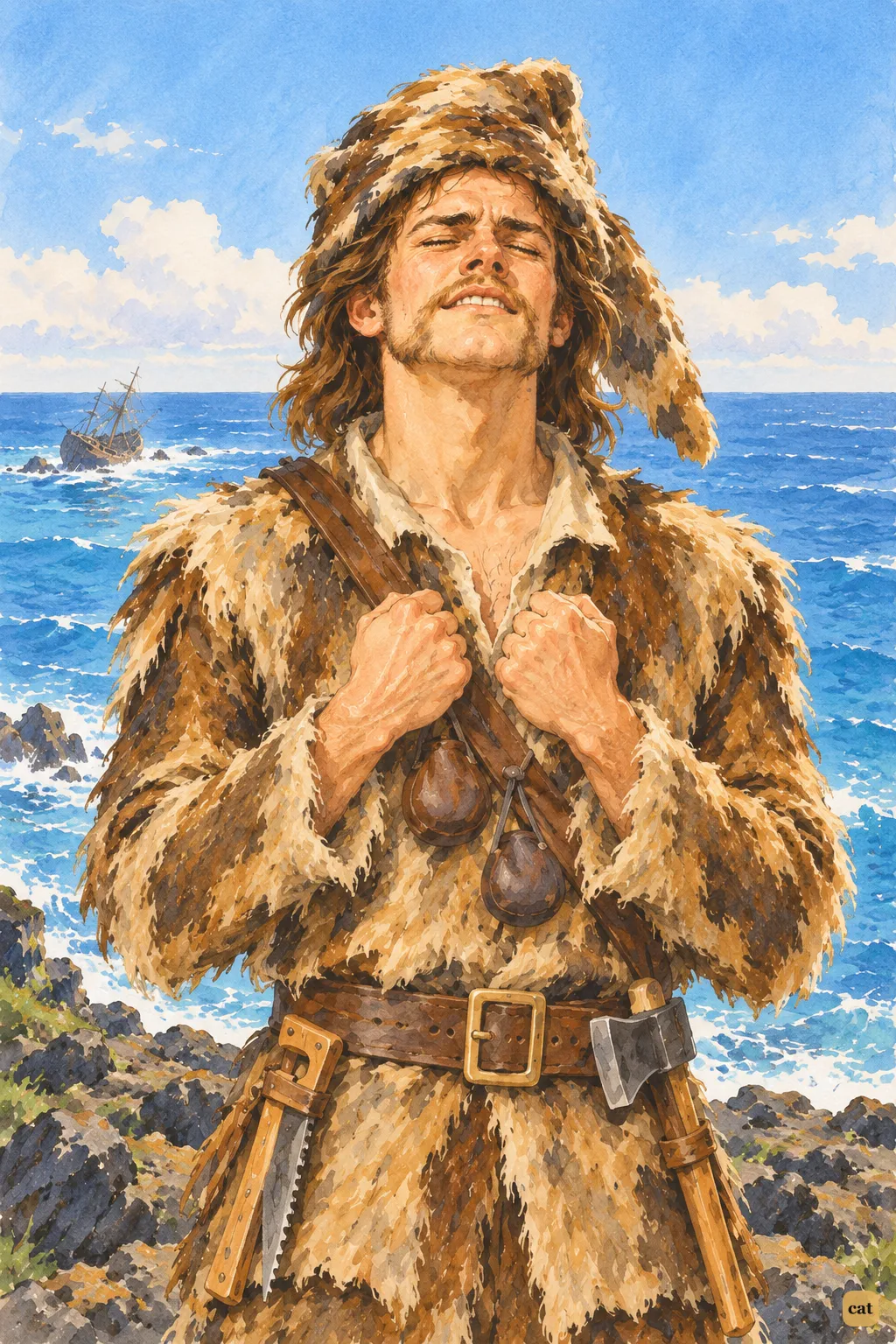
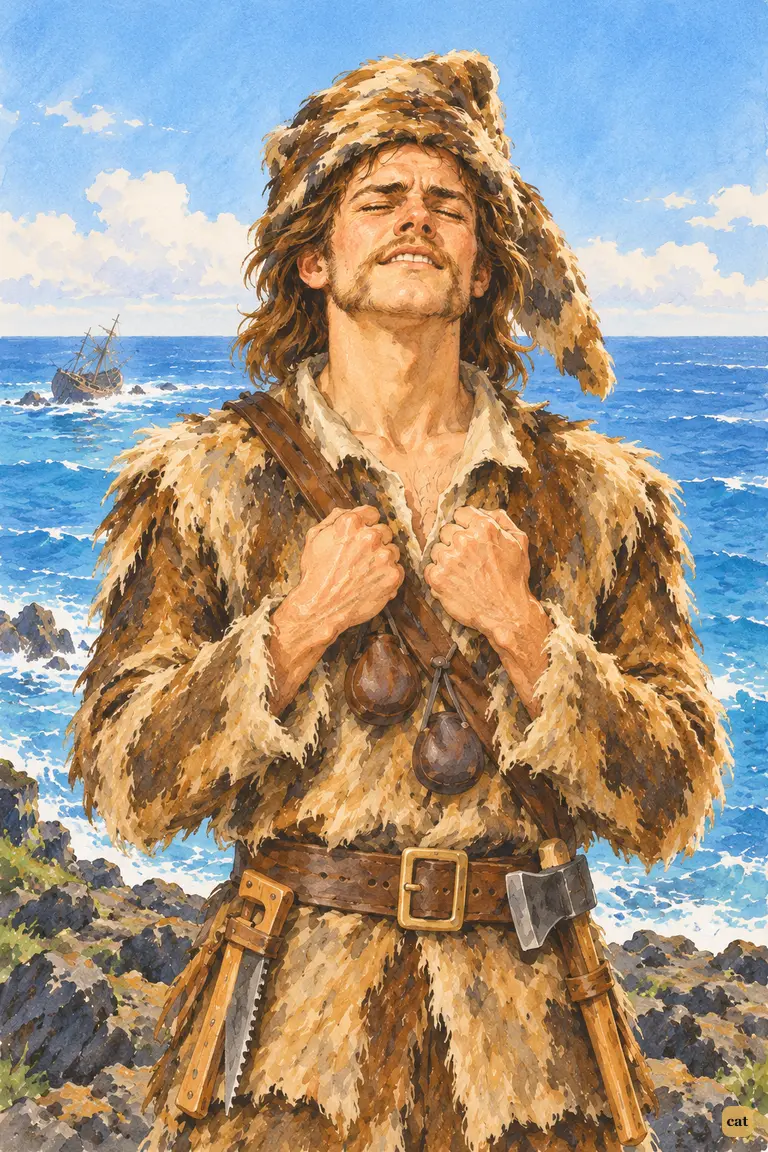
There are some secret springs in the affections which, when they are set a-going by some object in view, or, though not in view, yet rendered present to the mind by the power of imagination, that motion carries out the soul, by its impetuosity, to such violent, eager embracings of the object, that the absence of it is insupportable. Such were these earnest wishings that but one man had been saved. I believe I repeated the words, “Oh that it had been but one!” a thousand times; and my desires were so moved by it, that when I spoke the words my hands would clinch together, and my fingers would press the palms of my hands, so that if I had had any soft thing in my hand I should have crushed it involuntarily; and the teeth in my head would strike together, and set against one another so strong, that for some time I could not part them again. Let the naturalists explain these things, and the reason and manner of them. All I can do is to describe the fact, which was even surprising to me when I found it, though I knew not from whence it proceeded; it was doubtless the effect of ardent wishes, and of strong ideas formed in my mind, realising the comfort which the conversation of one of my fellow-Christians would have been to me. But it was not to be; either their fate or mine, or both, forbade it; for, till the last year of my being on this island, I never knew whether any were saved out of that ship or no; and had only the affliction, some days after, to see the corpse of a drowned boy come on shore at the end of the island which was next the shipwreck. He had no clothes on but a seaman’s waistcoat, a pair of open-kneed linen drawers, and a blue linen shirt; but nothing to direct me so much as to guess what nation he was of. He had nothing in his pockets but two pieces of eight and a tobacco pipe—the last was to me of ten times more value than the first.
Read from here → -
Spanish Hull Between Rocks
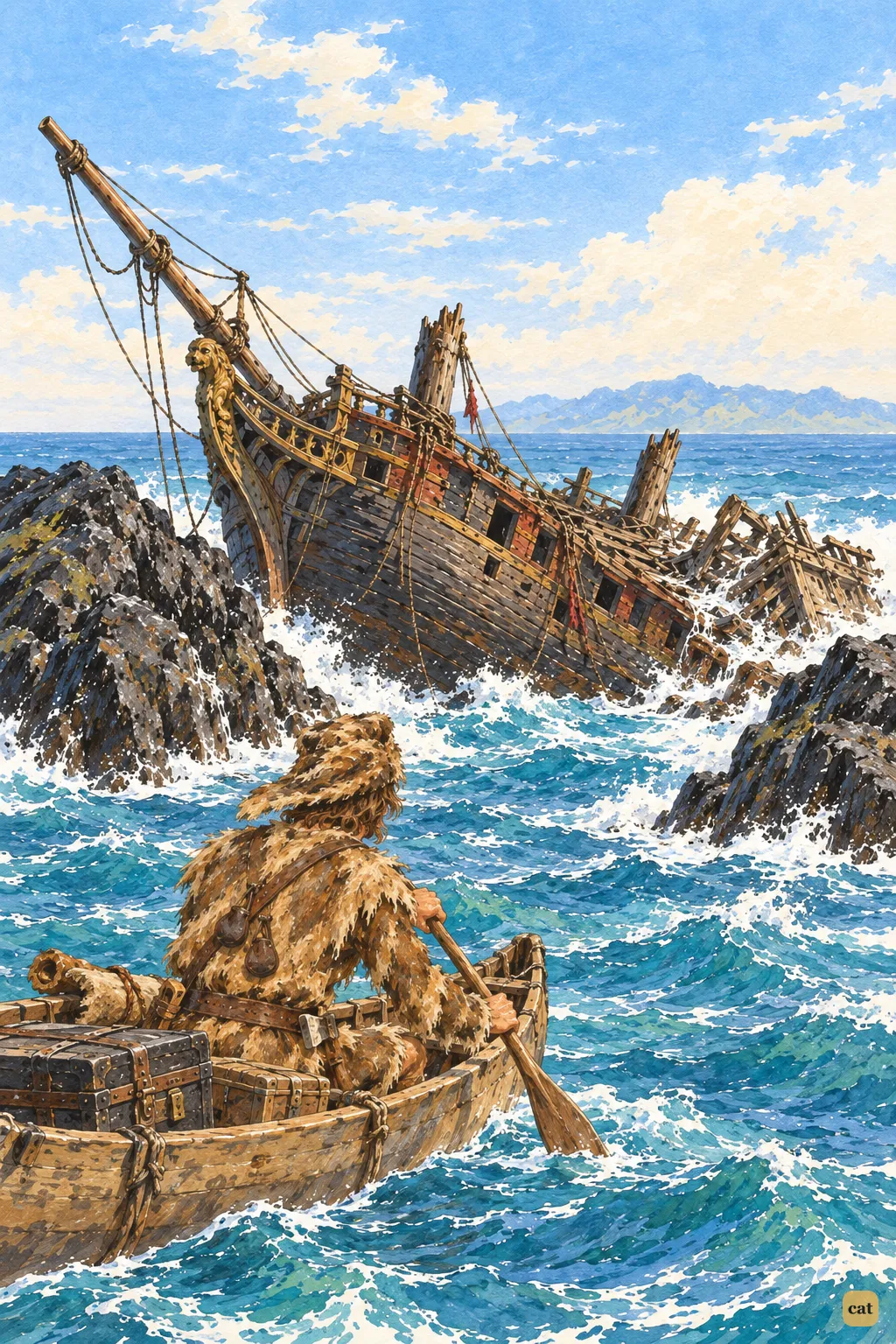
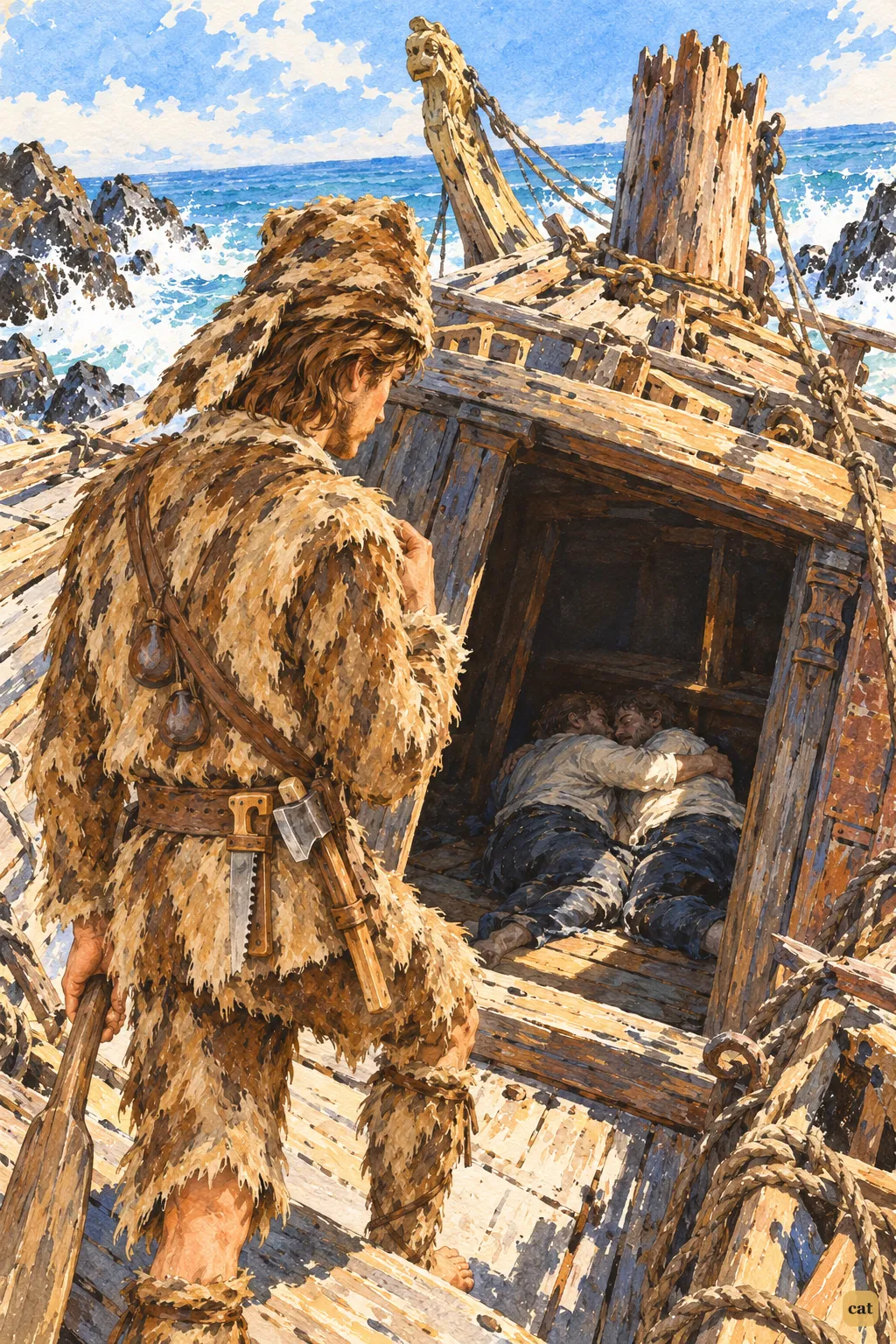
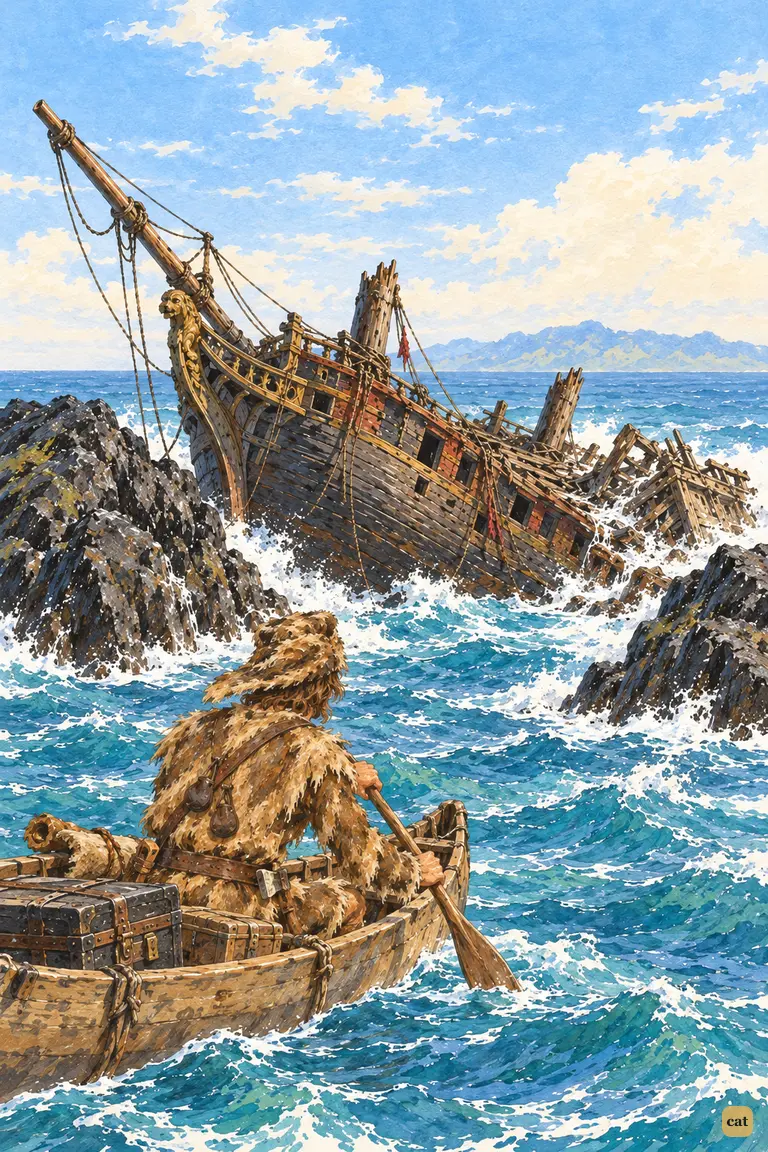
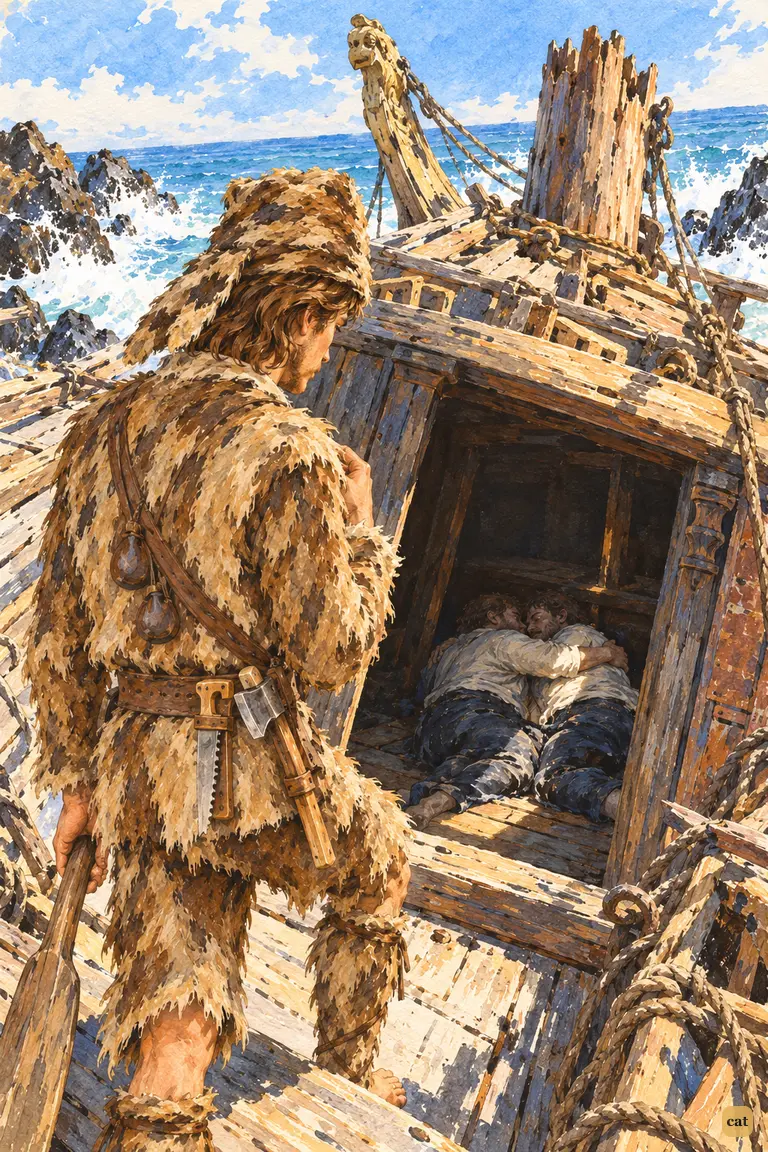
Encouraged by this observation, I resolved the next morning to set out with the first of the tide; and reposing myself for the night in my canoe, under the watch-coat I mentioned, I launched out. I first made a little out to sea, full north, till I began to feel the benefit of the current, which set eastward, and which carried me at a great rate; and yet did not so hurry me as the current on the south side had done before, so as to take from me all government of the boat; but having a strong steerage with my paddle, I went at a great rate directly for the wreck, and in less than two hours I came up to it. It was a dismal sight to look at; the ship, which by its building was Spanish, stuck fast, jammed in between two rocks. All the stern and quarter of her were beaten to pieces by the sea; and as her forecastle, which stuck in the rocks, had run on with great violence, her mainmast and foremast were brought by the board—that is to say, broken short off; but her bowsprit was sound, and the head and bow appeared firm. When I came close to her, a dog appeared upon her, who, seeing me coming, yelped and cried; and as soon as I called him, jumped into the sea to come to me. I took him into the boat, but found him almost dead with hunger and thirst. I gave him a cake of my bread, and he devoured it like a ravenous wolf that had been starving a fortnight in the snow; I then gave the poor creature some fresh water, with which, if I would have let him, he would have burst himself. After this I went on board; but the first sight I met with was two men drowned in the cook-room, or forecastle of the ship, with their arms fast about one another. I concluded, as is indeed probable, that when the ship struck, it being in a storm, the sea broke so high and so continually over her, that the men were not able to bear it, and were strangled with the constant rushing in of the water, as much as if they had been under water. Besides the dog, there was nothing left in the ship that had life; nor any goods, that I could see, but what were spoiled by the water. There were some casks of liquor, whether wine or brandy I knew not, which lay lower in the hold, and which, the water being ebbed out, I could see; but they were too big to meddle with. I saw several chests, which I believe belonged to some of the seamen; and I got two of them into the boat, without examining what was in them. Had the stern of the ship been fixed, and the forepart broken off, I am persuaded I might have made a good voyage; for by what I found in those two chests I had room to suppose the ship had a great deal of wealth on board; and, if I may guess from the course she steered, she must have been bound from Buenos Ayres, or the Rio de la Plata, in the south part of America, beyond the Brazils to the Havannah, in the Gulf of Mexico, and so perhaps to Spain. She had, no doubt, a great treasure in her, but of no use, at that time, to anybody; and what became of the crew I then knew not.
Read from here → -
Two Drowned in the Cook-room
Encouraged by this observation, I resolved the next morning to set out with the first of the tide; and reposing myself for the night in my canoe, under the watch-coat I mentioned, I launched out. I first made a little out to sea, full north, till I began to feel the benefit of the current, which set eastward, and which carried me at a great rate; and yet did not so hurry me as the current on the south side had done before, so as to take from me all government of the boat; but having a strong steerage with my paddle, I went at a great rate directly for the wreck, and in less than two hours I came up to it. It was a dismal sight to look at; the ship, which by its building was Spanish, stuck fast, jammed in between two rocks. All the stern and quarter of her were beaten to pieces by the sea; and as her forecastle, which stuck in the rocks, had run on with great violence, her mainmast and foremast were brought by the board—that is to say, broken short off; but her bowsprit was sound, and the head and bow appeared firm. When I came close to her, a dog appeared upon her, who, seeing me coming, yelped and cried; and as soon as I called him, jumped into the sea to come to me. I took him into the boat, but found him almost dead with hunger and thirst. I gave him a cake of my bread, and he devoured it like a ravenous wolf that had been starving a fortnight in the snow; I then gave the poor creature some fresh water, with which, if I would have let him, he would have burst himself. After this I went on board; but the first sight I met with was two men drowned in the cook-room, or forecastle of the ship, with their arms fast about one another. I concluded, as is indeed probable, that when the ship struck, it being in a storm, the sea broke so high and so continually over her, that the men were not able to bear it, and were strangled with the constant rushing in of the water, as much as if they had been under water. Besides the dog, there was nothing left in the ship that had life; nor any goods, that I could see, but what were spoiled by the water. There were some casks of liquor, whether wine or brandy I knew not, which lay lower in the hold, and which, the water being ebbed out, I could see; but they were too big to meddle with. I saw several chests, which I believe belonged to some of the seamen; and I got two of them into the boat, without examining what was in them. Had the stern of the ship been fixed, and the forepart broken off, I am persuaded I might have made a good voyage; for by what I found in those two chests I had room to suppose the ship had a great deal of wealth on board; and, if I may guess from the course she steered, she must have been bound from Buenos Ayres, or the Rio de la Plata, in the south part of America, beyond the Brazils to the Havannah, in the Gulf of Mexico, and so perhaps to Spain. She had, no doubt, a great treasure in her, but of no use, at that time, to anybody; and what became of the crew I then knew not.
Read from here → -
Dirt Under My Feet
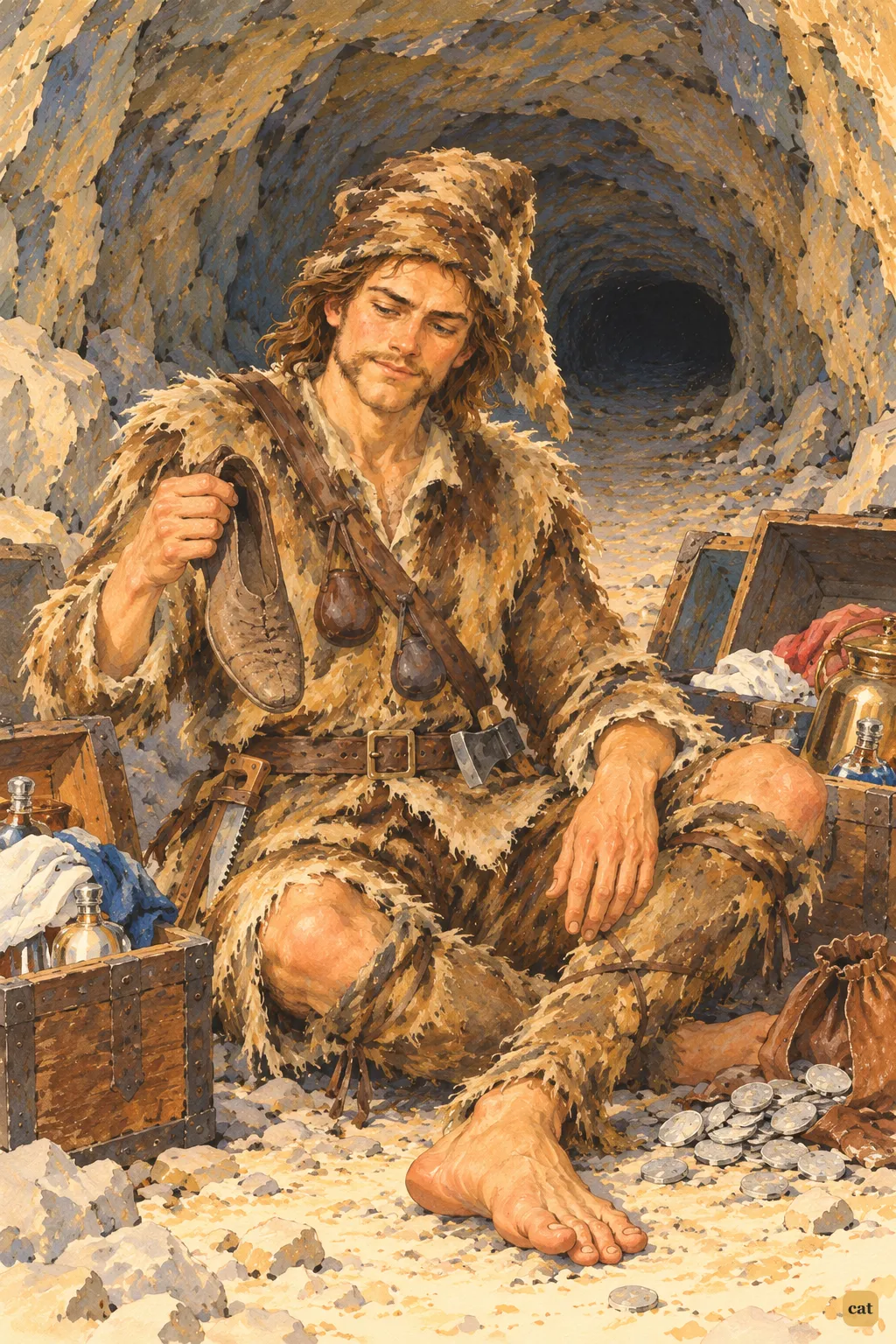
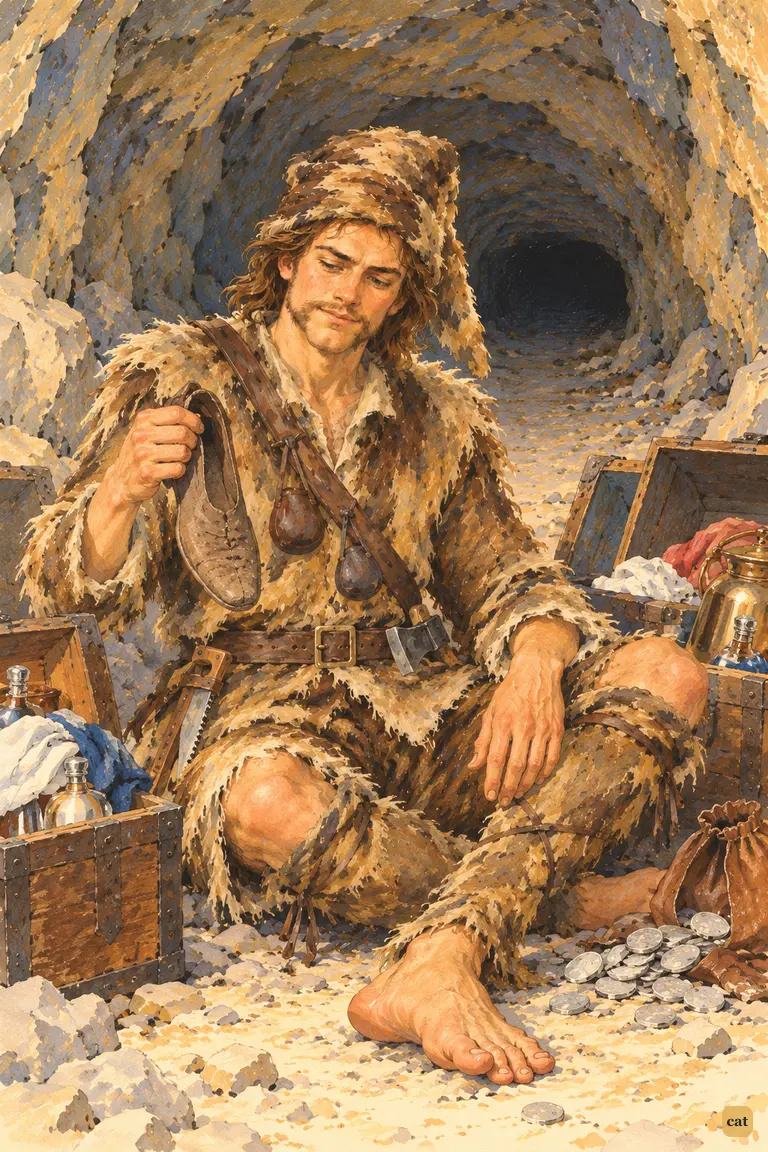
I found, besides these chests, a little cask full of liquor, of about twenty gallons, which I got into my boat with much difficulty. There were several muskets in the cabin, and a great powder-horn, with about four pounds of powder in it; as for the muskets, I had no occasion for them, so I left them, but took the powder-horn. I took a fire-shovel and tongs, which I wanted extremely, as also two little brass kettles, a copper pot to make chocolate, and a gridiron; and with this cargo, and the dog, I came away, the tide beginning to make home again—and the same evening, about an hour within night, I reached the island again, weary and fatigued to the last degree. I reposed that night in the boat and in the morning I resolved to harbour what I had got in my new cave, and not carry it home to my castle. After refreshing myself, I got all my cargo on shore, and began to examine the particulars. The cask of liquor I found to be a kind of rum, but not such as we had at the Brazils; and, in a word, not at all good; but when I came to open the chests, I found several things of great use to me—for example, I found in one a fine case of bottles, of an extraordinary kind, and filled with cordial waters, fine and very good; the bottles held about three pints each, and were tipped with silver. I found two pots of very good succades, or sweetmeats, so fastened also on the top that the salt-water had not hurt them; and two more of the same, which the water had spoiled. I found some very good shirts, which were very welcome to me; and about a dozen and a half of white linen handkerchiefs and coloured neckcloths; the former were also very welcome, being exceedingly refreshing to wipe my face in a hot day. Besides this, when I came to the till in the chest, I found there three great bags of pieces of eight, which held about eleven hundred pieces in all; and in one of them, wrapped up in a paper, six doubloons of gold, and some small bars or wedges of gold; I suppose they might all weigh near a pound. In the other chest were some clothes, but of little value; but, by the circumstances, it must have belonged to the gunner’s mate; though there was no powder in it, except two pounds of fine glazed powder, in three flasks, kept, I suppose, for charging their fowling-pieces on occasion. Upon the whole, I got very little by this voyage that was of any use to me; for, as to the money, I had no manner of occasion for it; it was to me as the dirt under my feet, and I would have given it all for three or four pair of English shoes and stockings, which were things I greatly wanted, but had had none on my feet for many years. I had, indeed, got two pair of shoes now, which I took off the feet of two drowned men whom I saw in the wreck, and I found two pair more in one of the chests, which were very welcome to me; but they were not like our English shoes, either for ease or service, being rather what we call pumps than shoes. I found in this seaman’s chest about fifty pieces of eight, in rials, but no gold: I supposed this belonged to a poorer man than the other, which seemed to belong to some officer. Well, however, I lugged this money home to my cave, and laid it up, as I had done that before which I had brought from our own ship; but it was a great pity, as I said, that the other part of this ship had not come to my share; for I am satisfied I might have loaded my canoe several times over with money; and, thought I, if I ever escape to England, it might lie here safe enough till I come again and fetch it.
Read from here → -
Chapter 16
Savages' fire and the Spanish wreck
Next chapter: Crusoe's dream comes true: Friday Read this chapter