 Author
-
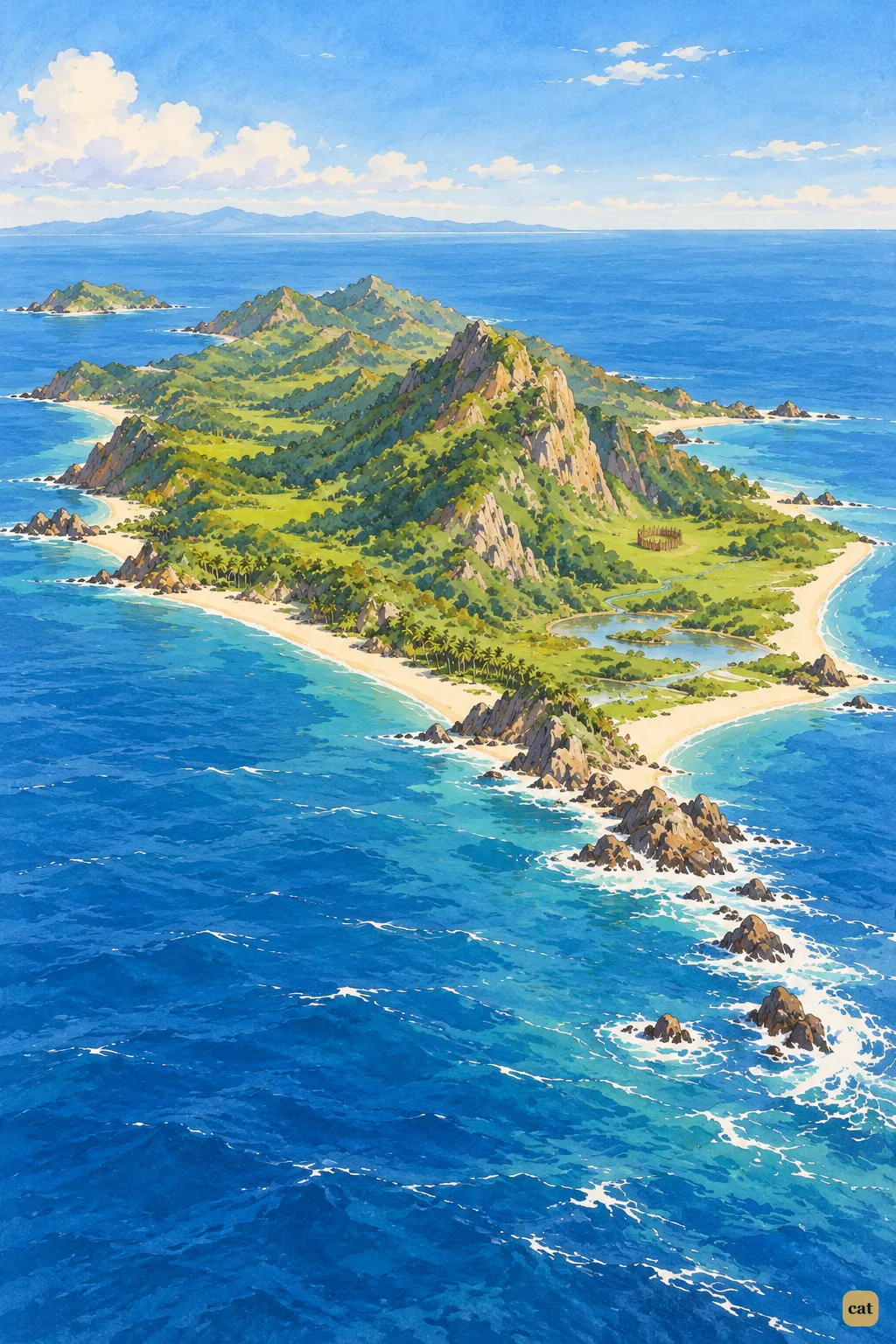
The island from above
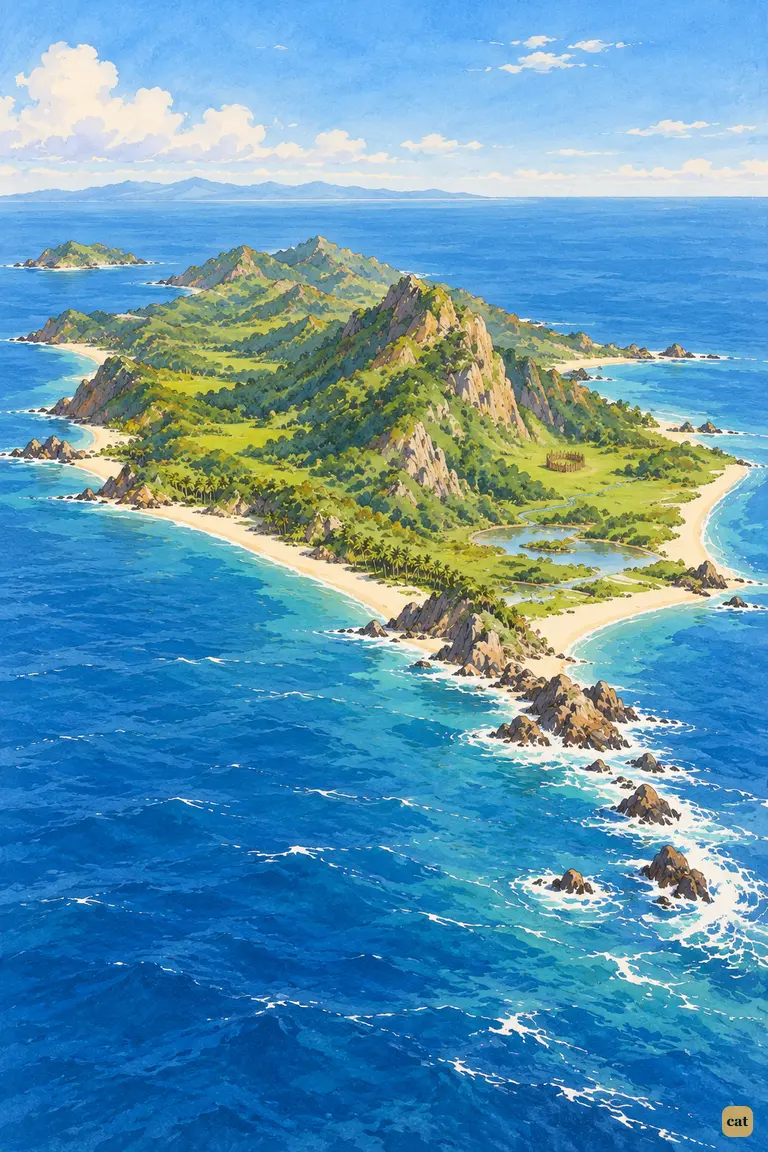
I had now been in this unhappy island above ten months. All possibility of deliverance from this condition seemed to be entirely taken from me; and I firmly believe that no human shape had ever set foot upon that place. Having now secured my habitation, as I thought, fully to my mind, I had a great desire to make a more perfect discovery of the island, and to see what other productions I might find, which I yet knew nothing of.
Read from here → -
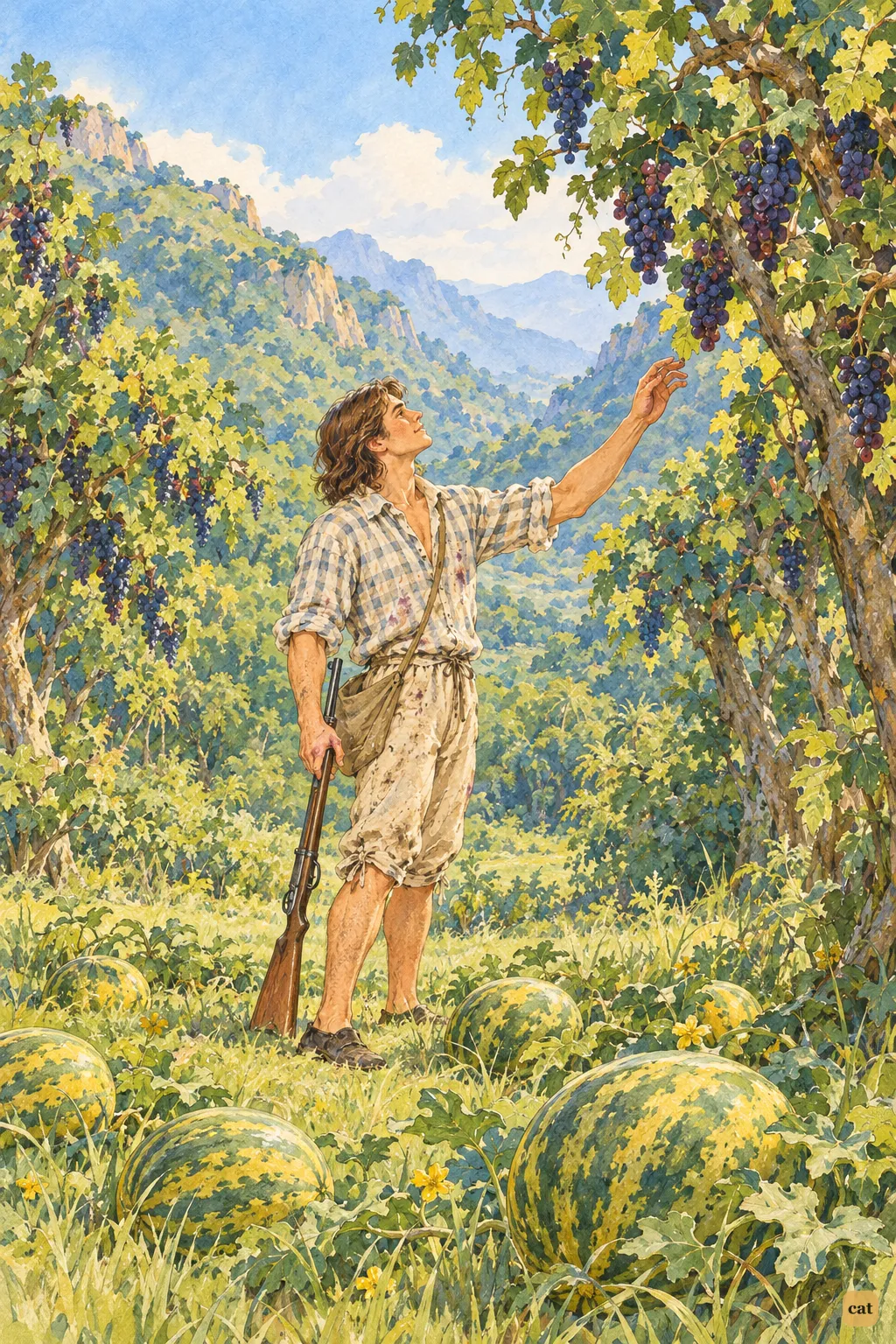
Melons and grapes
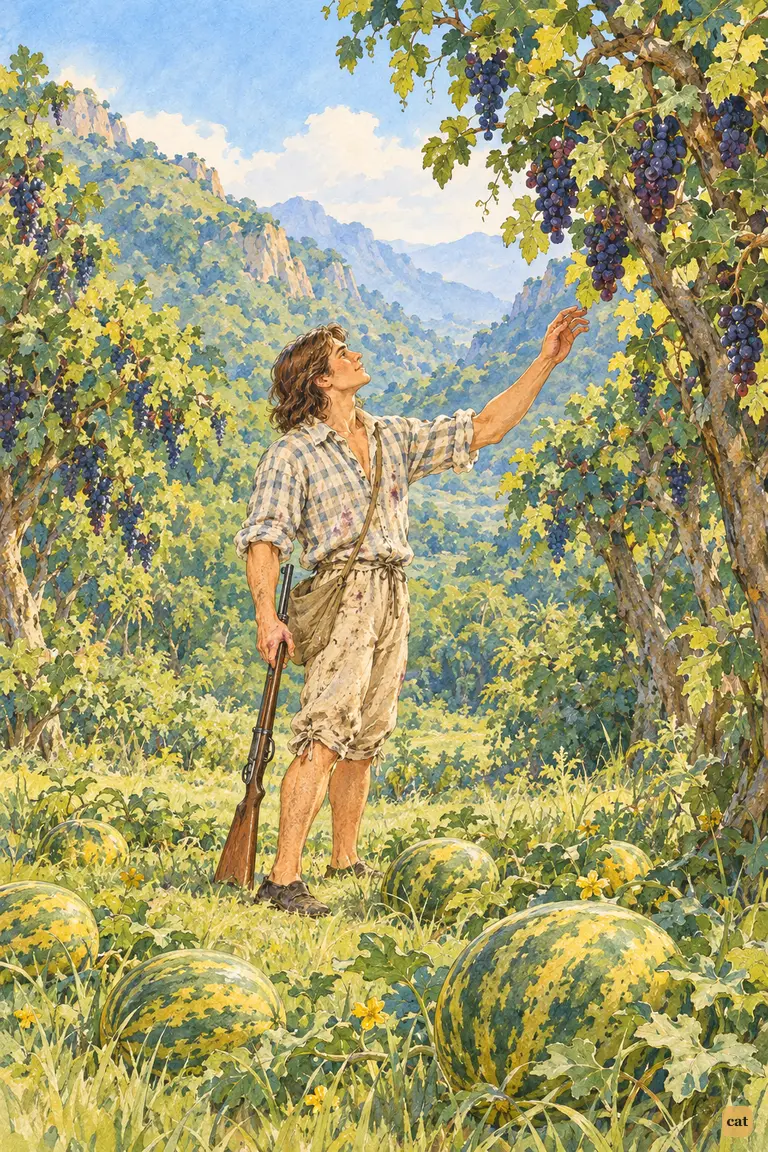
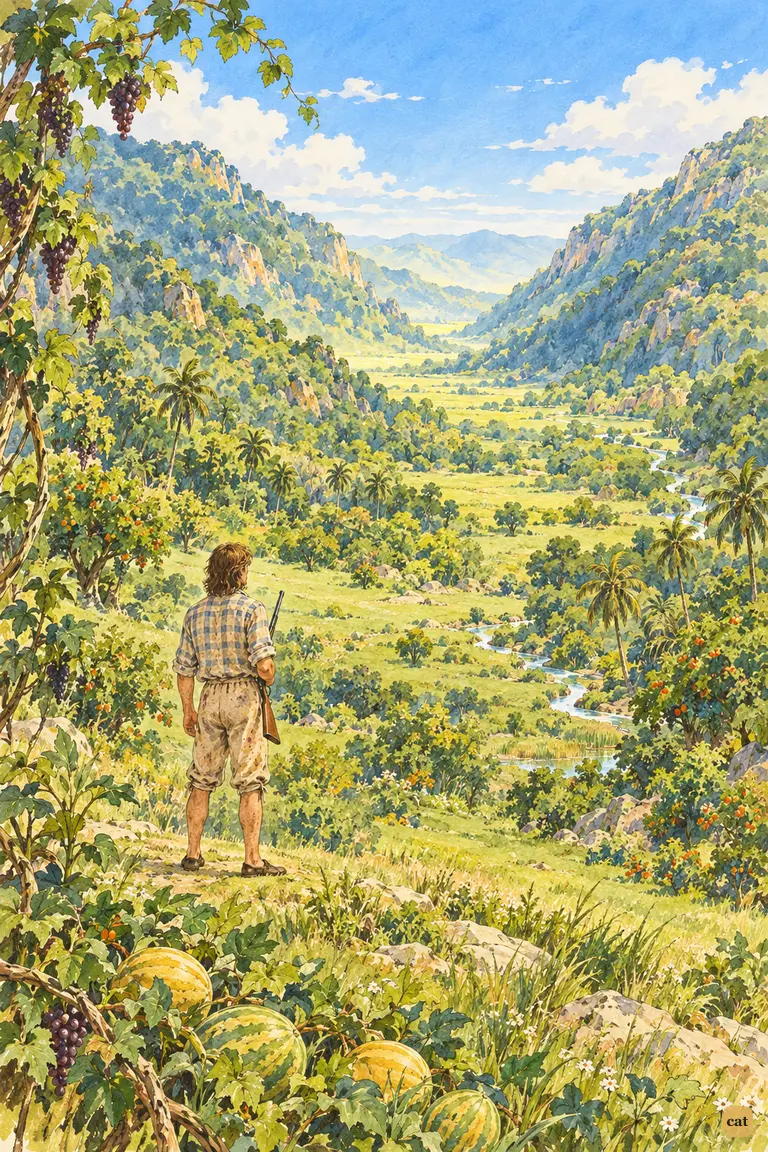
The next day, the sixteenth, I went up the same way again; and after going something further than I had gone the day before, I found the brook and the savannahs cease, and the country become more woody than before. In this part I found different fruits, and particularly I found melons upon the ground, in great abundance, and grapes upon the trees. The vines had spread, indeed, over the trees, and the clusters of grapes were just now in their prime, very ripe and rich. This was a surprising discovery, and I was exceeding glad of them; but I was warned by my experience to eat sparingly of them; remembering that when I was ashore in Barbary, the eating of grapes killed several of our Englishmen, who were slaves there, by throwing them into fluxes and fevers. But I found an excellent use for these grapes; and that was, to cure or dry them in the sun, and keep them as dried grapes or raisins are kept, which I thought would be, as indeed they were, wholesome and agreeable to eat when no grapes could be had.
Read from here → -
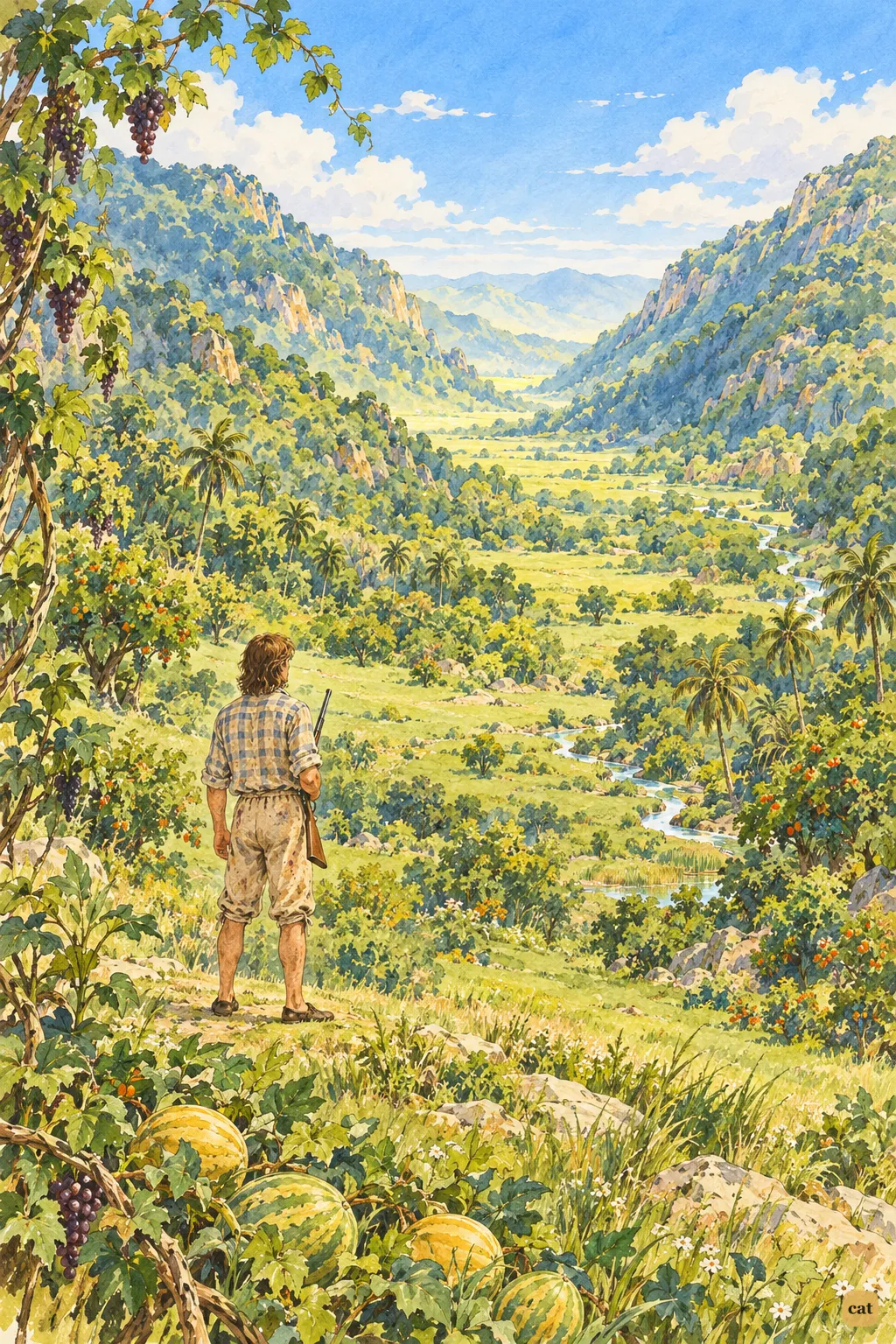
Lord of the garden
I spent all that evening there, and went not back to my habitation; which, by the way, was the first night, as I might say, I had lain from home. In the night, I took my first contrivance, and got up in a tree, where I slept well; and the next morning proceeded upon my discovery; travelling nearly four miles, as I might judge by the length of the valley, keeping still due north, with a ridge of hills on the south and north side of me. At the end of this march I came to an opening where the country seemed to descend to the west; and a little spring of fresh water, which issued out of the side of the hill by me, ran the other way, that is, due east; and the country appeared so fresh, so green, so flourishing, everything being in a constant verdure or flourish of spring that it looked like a planted garden. I descended a little on the side of that delicious vale, surveying it with a secret kind of pleasure, though mixed with my other afflicting thoughts, to think that this was all my own; that I was king and lord of all this country indefensibly, and had a right of possession; and if I could convey it, I might have it in inheritance as completely as any lord of a manor in England. I saw here abundance of cocoa trees, orange, and lemon, and citron trees; but all wild, and very few bearing any fruit, at least not then. However, the green limes that I gathered were not only pleasant to eat, but very wholesome; and I mixed their juice afterwards with water, which made it very wholesome, and very cool and refreshing. I found now I had business enough to gather and carry home; and I resolved to lay up a store as well of grapes as limes and lemons, to furnish myself for the wet season, which I knew was approaching. In order to do this, I gathered a great heap of grapes in one place, a lesser heap in another place, and a great parcel of limes and lemons in another place; and taking a few of each with me, I travelled homewards; resolving to come again, and bring a bag or sack, or what I could make, to carry the rest home. Accordingly, having spent three days in this journey, I came home (so I must now call my tent and my cave); but before I got thither the grapes were spoiled; the richness of the fruit and the weight of the juice having broken them and bruised them, they were good for little or nothing; as to the limes, they were good, but I could bring but a few.
Read from here → -
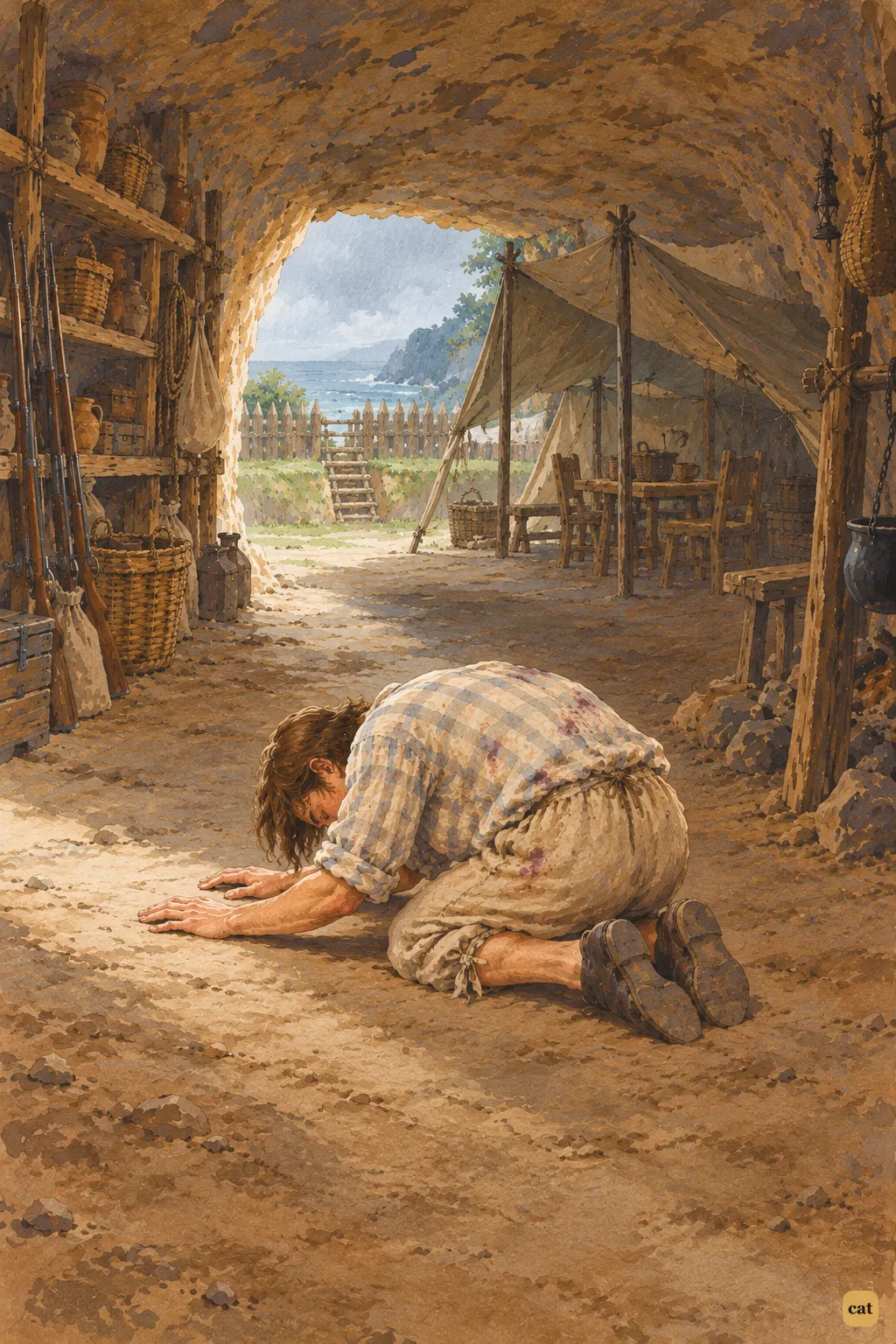
A solemn fast
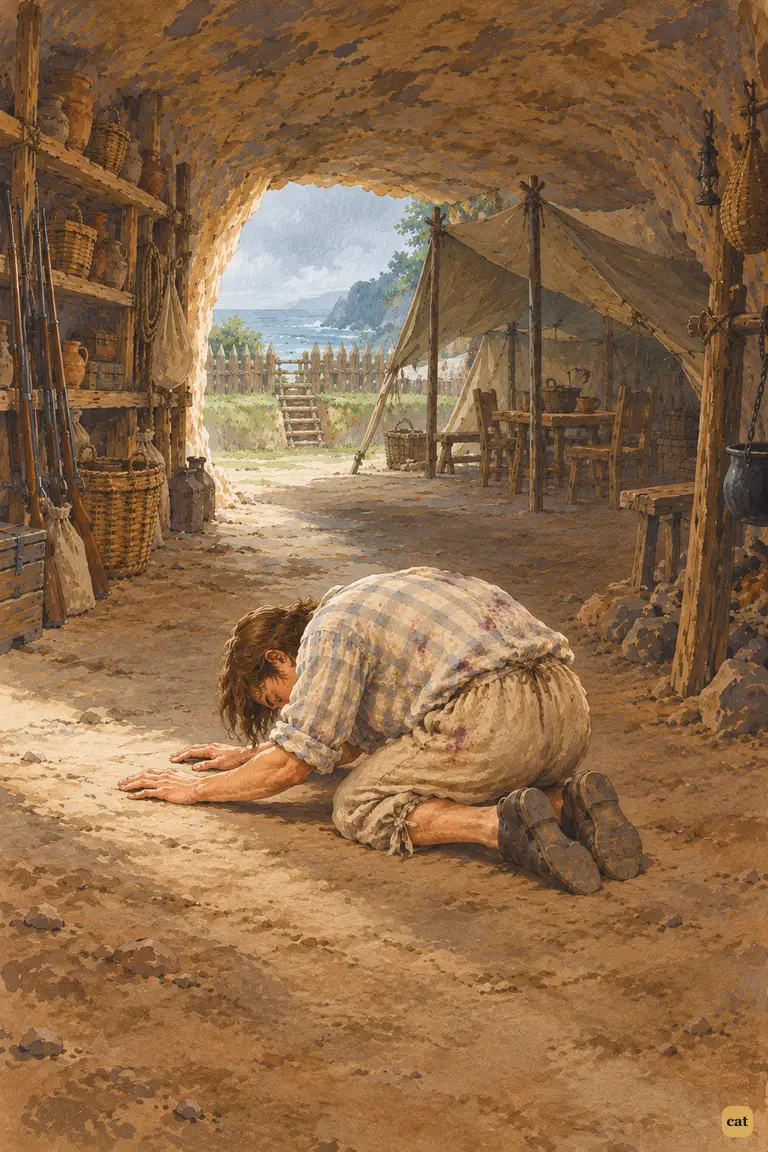
Sept. 30.—I was now come to the unhappy anniversary of my landing. I cast up the notches on my post, and found I had been on shore three hundred and sixty-five days. I kept this day as a solemn fast, setting it apart for religious exercise, prostrating myself on the ground with the most serious humiliation, confessing my sins to God, acknowledging His righteous judgments upon me, and praying to Him to have mercy on me through Jesus Christ; and not having tasted the least refreshment for twelve hours, even till the going down of the sun, I then ate a biscuit-cake and a bunch of grapes, and went to bed, finishing the day as I began it. I had all this time observed no Sabbath day; for as at first I had no sense of religion upon my mind, I had, after some time, omitted to distinguish the weeks, by making a longer notch than ordinary for the Sabbath day, and so did not really know what any of the days were; but now, having cast up the days as above, I found I had been there a year; so I divided it into weeks, and set apart every seventh day for a Sabbath; though I found at the end of my account I had lost a day or two in my reckoning. A little after this, my ink began to fail me, and so I contented myself to use it more sparingly, and to write down only the most remarkable events of my life, without continuing a daily memorandum of other things.
Read from here → -
Dry plot, green plot
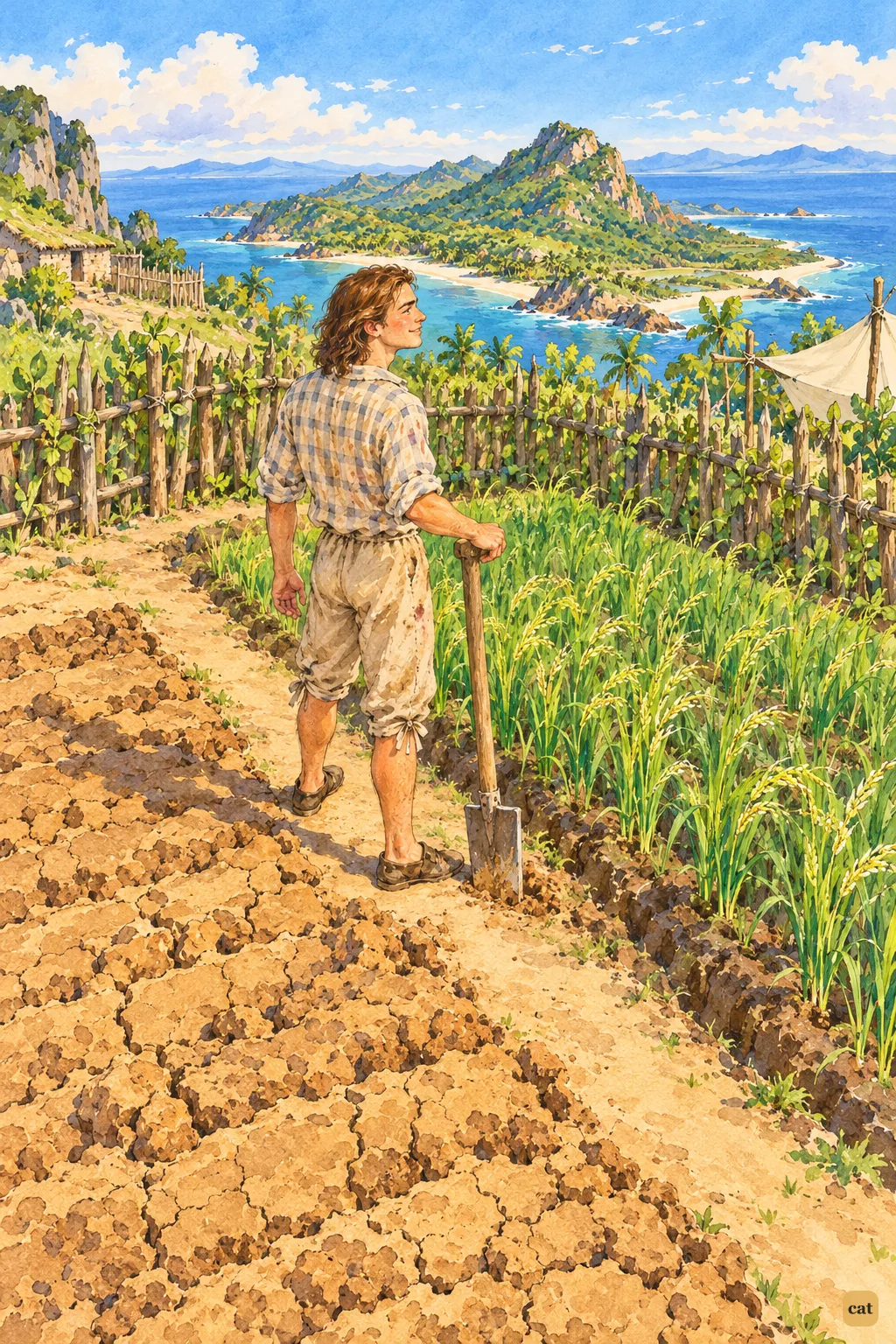
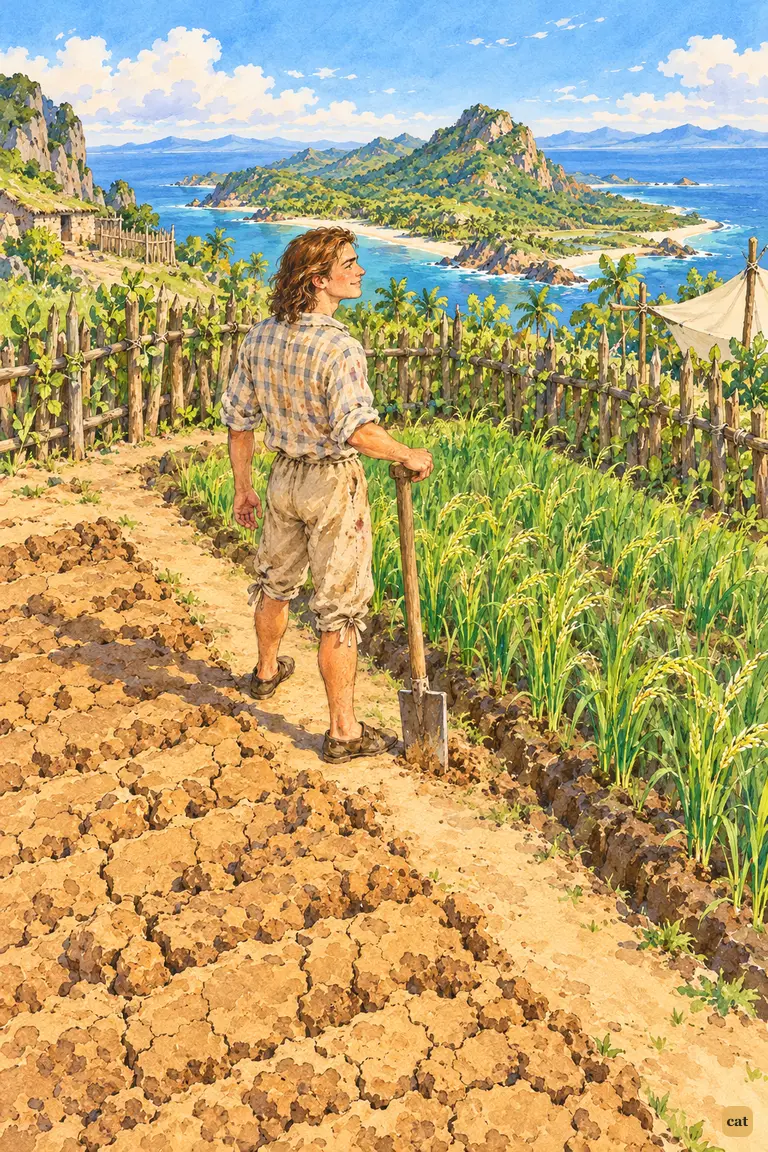
I have mentioned that I had saved the few ears of barley and rice, which I had so surprisingly found spring up, as I thought, of themselves, and I believe there were about thirty stalks of rice, and about twenty of barley; and now I thought it a proper time to sow it, after the rains, the sun being in its southern position, going from me. Accordingly, I dug up a piece of ground as well as I could with my wooden spade, and dividing it into two parts, I sowed my grain; but as I was sowing, it casually occurred to my thoughts that I would not sow it all at first, because I did not know when was the proper time for it, so I sowed about two-thirds of the seed, leaving about a handful of each. It was a great comfort to me afterwards that I did so, for not one grain of what I sowed this time came to anything: for the dry months following, the earth having had no rain after the seed was sown, it had no moisture to assist its growth, and never came up at all till the wet season had come again, and then it grew as if it had been but newly sown. Finding my first seed did not grow, which I easily imagined was by the drought, I sought for a moister piece of ground to make another trial in, and I dug up a piece of ground near my new bower, and sowed the rest of my seed in February, a little before the vernal equinox; and this having the rainy months of March and April to water it, sprung up very pleasantly, and yielded a very good crop; but having part of the seed left only, and not daring to sow all that I had, I had but a small quantity at last, my whole crop not amounting to above half a peck of each kind. But by this experiment I was made master of my business, and knew exactly when the proper season was to sow, and that I might expect two seed-times and two harvests every year.
Read from here → -
Shade of three years
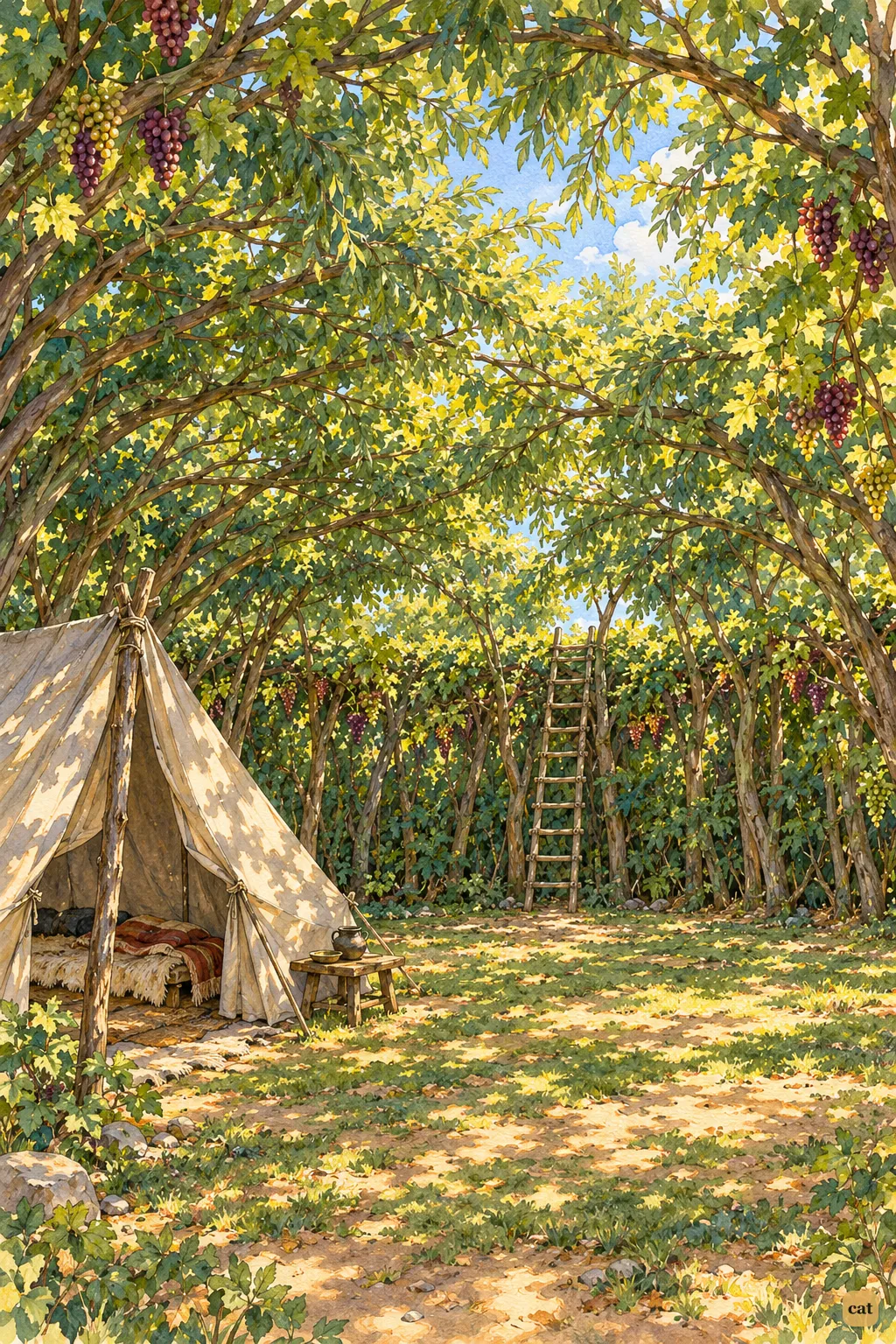
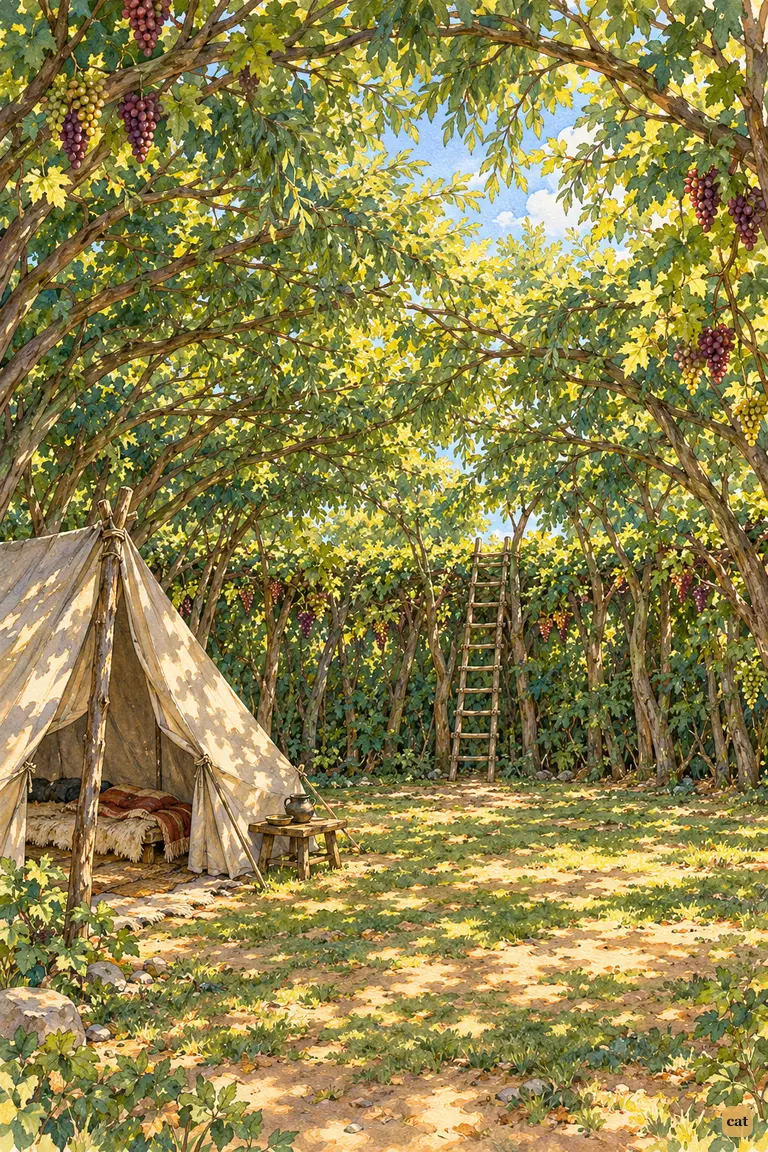
While this corn was growing I made a little discovery, which was of use to me afterwards. As soon as the rains were over, and the weather began to settle, which was about the month of November, I made a visit up the country to my bower, where, though I had not been some months, yet I found all things just as I left them. The circle or double hedge that I had made was not only firm and entire, but the stakes which I had cut out of some trees that grew thereabouts were all shot out and grown with long branches, as much as a willow-tree usually shoots the first year after lopping its head. I could not tell what tree to call it that these stakes were cut from. I was surprised, and yet very well pleased, to see the young trees grow; and I pruned them, and led them up to grow as much alike as I could; and it is scarce credible how beautiful a figure they grew into in three years; so that though the hedge made a circle of about twenty-five yards in diameter, yet the trees, for such I might now call them, soon covered it, and it was a complete shade, sufficient to lodge under all the dry season. This made me resolve to cut some more stakes, and make me a hedge like this, in a semi-circle round my wall (I mean that of my first dwelling), which I did; and placing the trees or stakes in a double row, at about eight yards distance from my first fence, they grew presently, and were at first a fine cover to my habitation, and afterwards served for a defence also, as I shall observe in its order.
Read from here → -
Chapter 10
Exploring the island, learning the seasons
Next chapter: Crusoe's journey across the island and his third year Read this chapter