-
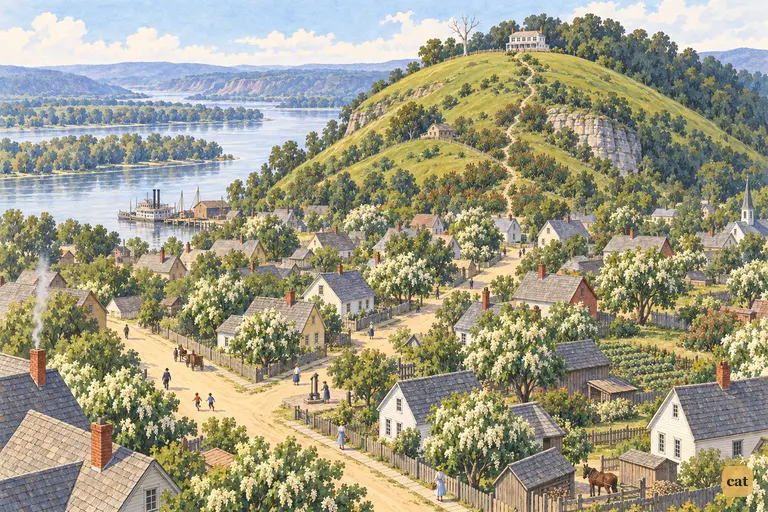
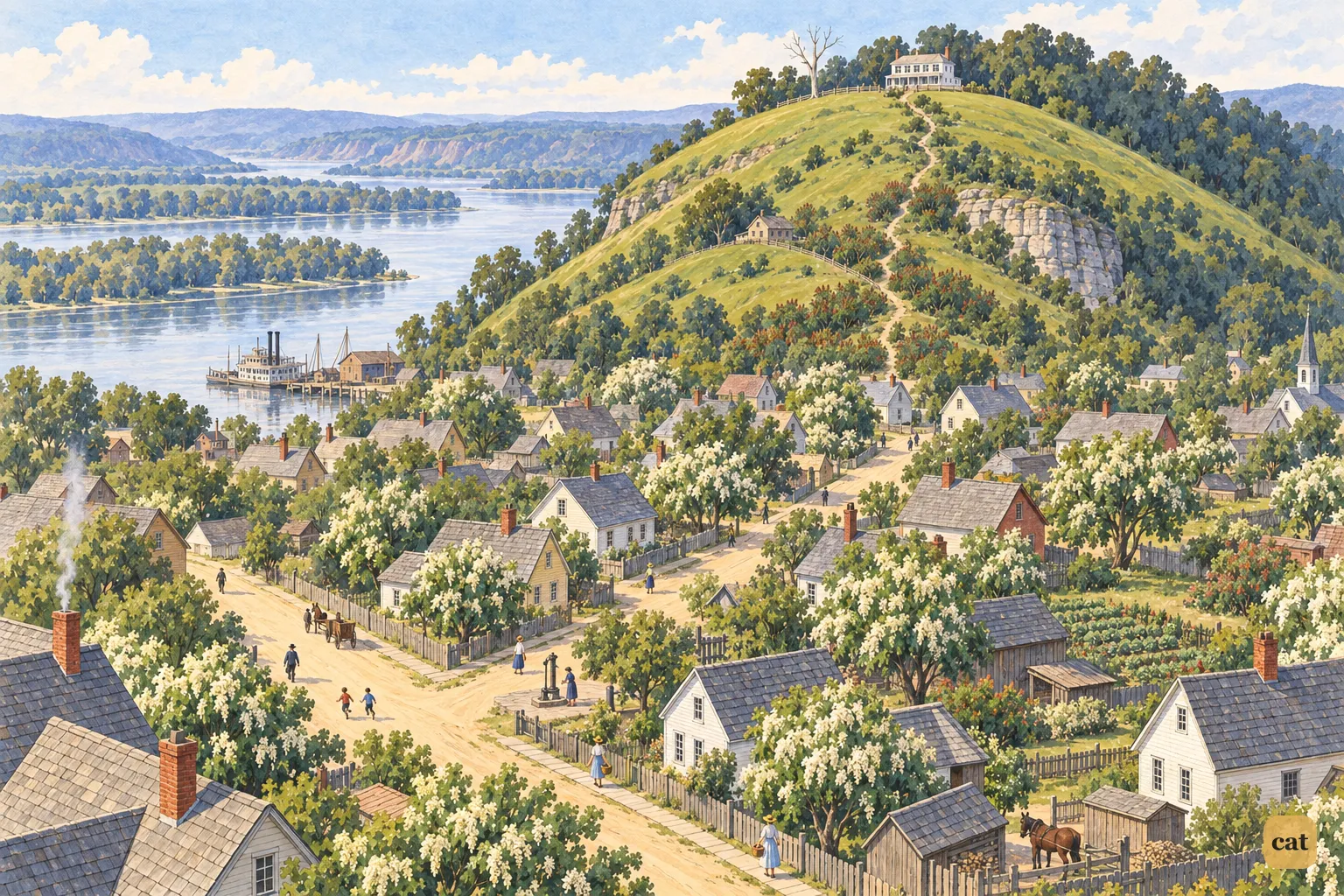
Hill above the village
Saturday morning was come, and all the summer world was bright and fresh, and brimming with life. There was a song in every heart; and if the heart was young the music issued at the lips. There was cheer in every face and a spring in every step. The locust-trees were in bloom and the fragrance of the blossoms filled the air. Cardiff Hill, beyond the village and above it, was green with vegetation and it lay just far enough away to seem a Delectable Land, dreamy, reposeful, and inviting.
Read from here → -
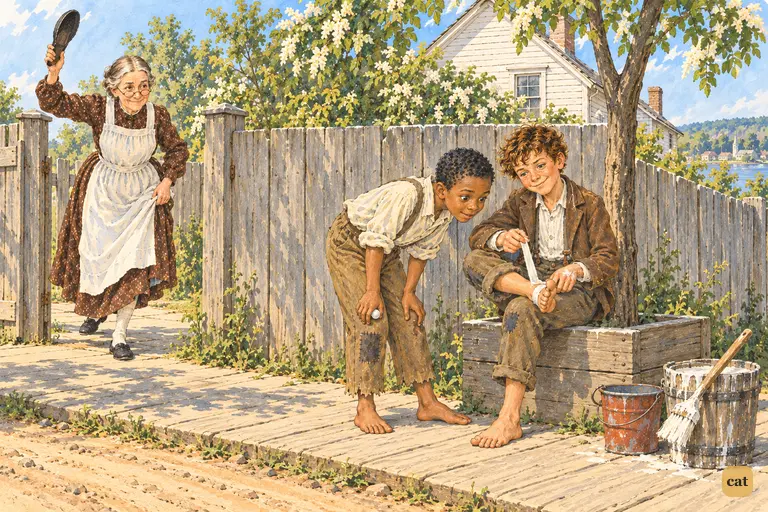
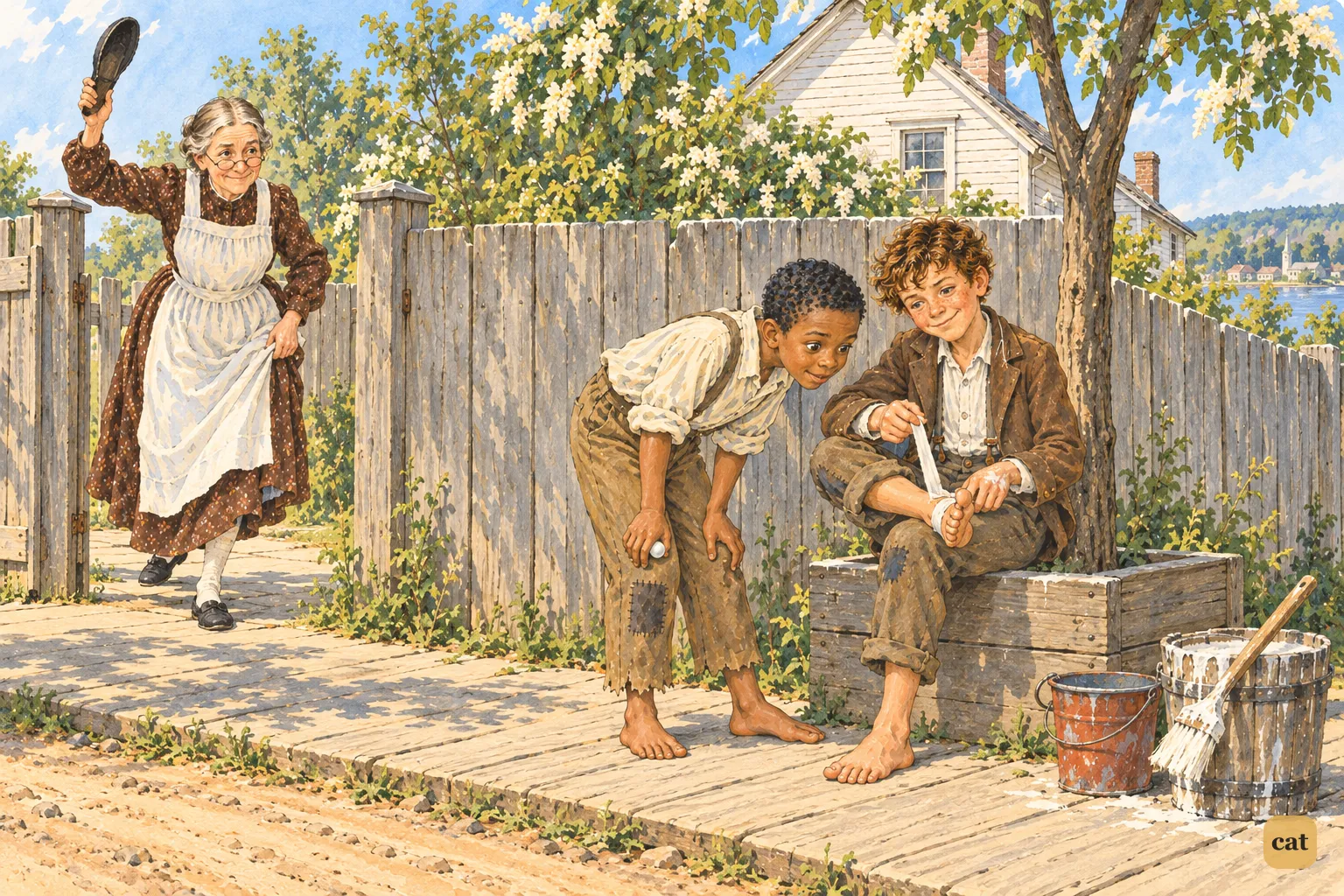
The slipper descends
Jim was only human—this attraction was too much for him. He put down his pail, took the white alley, and bent over the toe with absorbing interest while the bandage was being unwound. In another moment he was flying down the street with his pail and a tingling rear, Tom was whitewashing with vigor, and Aunt Polly was retiring from the field with a slipper in her hand and triumph in her eye.
Read from here → -
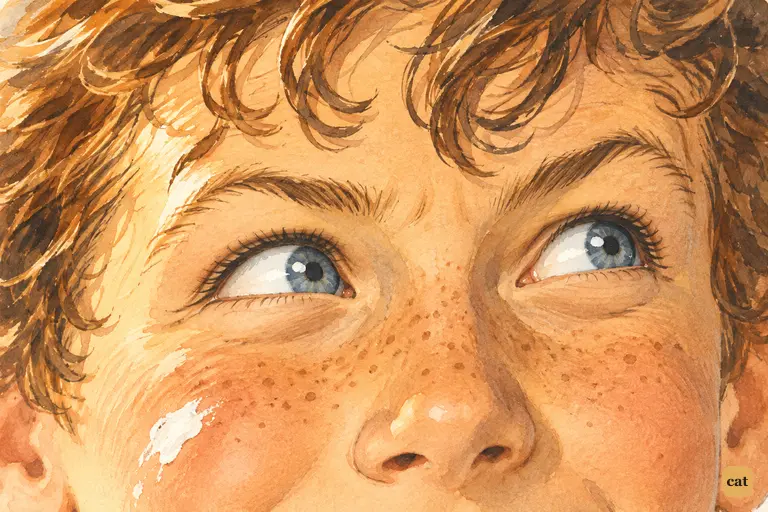
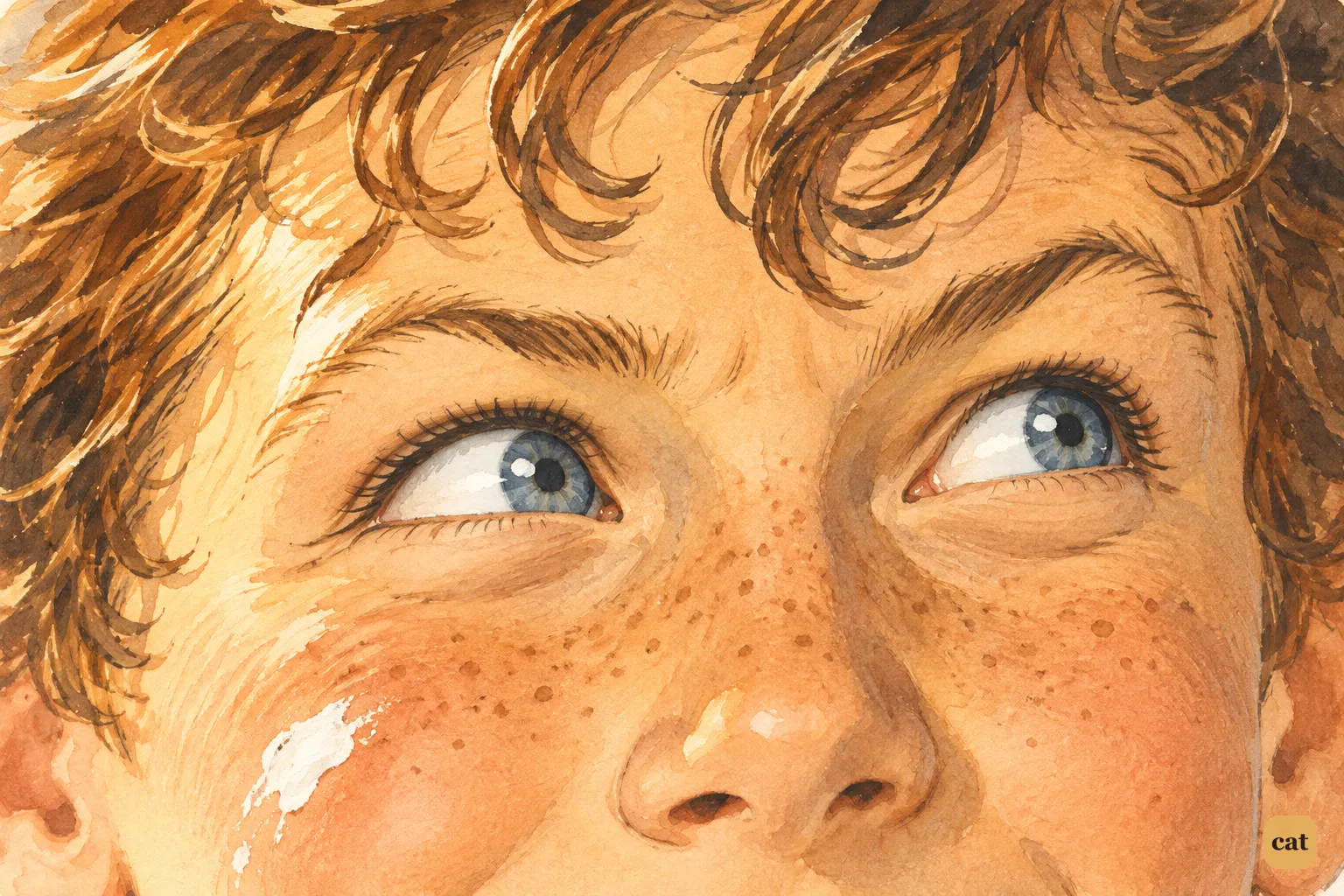
The inspiration bursts
But Tom’s energy did not last. He began to think of the fun he had planned for this day, and his sorrows multiplied. Soon the free boys would come tripping along on all sorts of delicious expeditions, and they would make a world of fun of him for having to work—the very thought of it burnt him like fire. He got out his worldly wealth and examined it—bits of toys, marbles, and trash; enough to buy an exchange of work, maybe, but not half enough to buy so much as half an hour of pure freedom. So he returned his straitened means to his pocket, and gave up the idea of trying to buy the boys. At this dark and hopeless moment an inspiration burst upon him! Nothing less than a great, magnificent inspiration.
Read from here → -
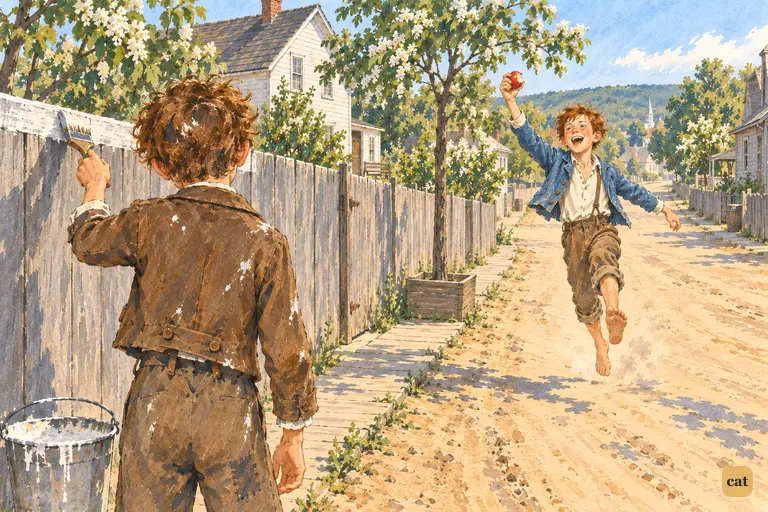
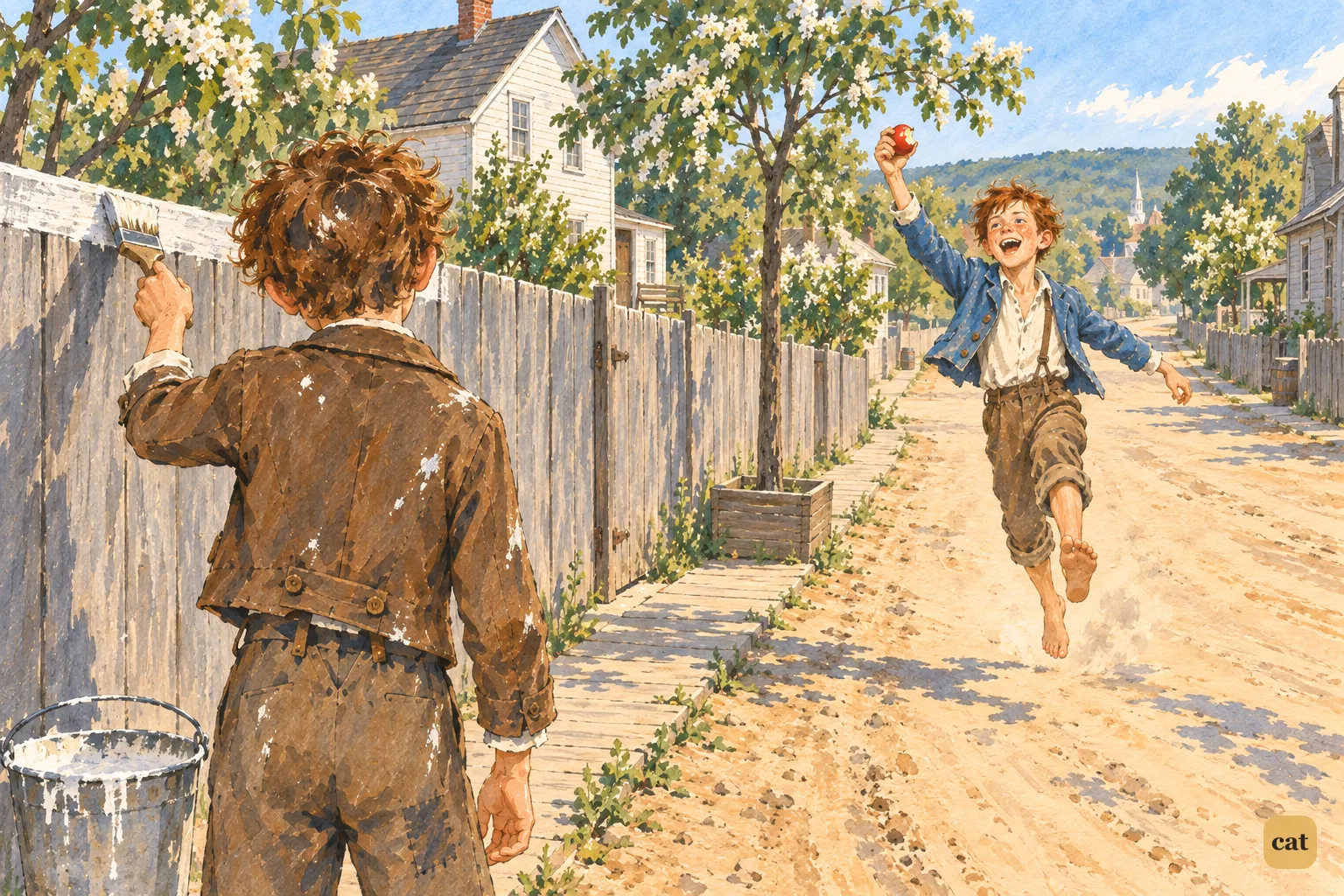
Ben hoves in sight
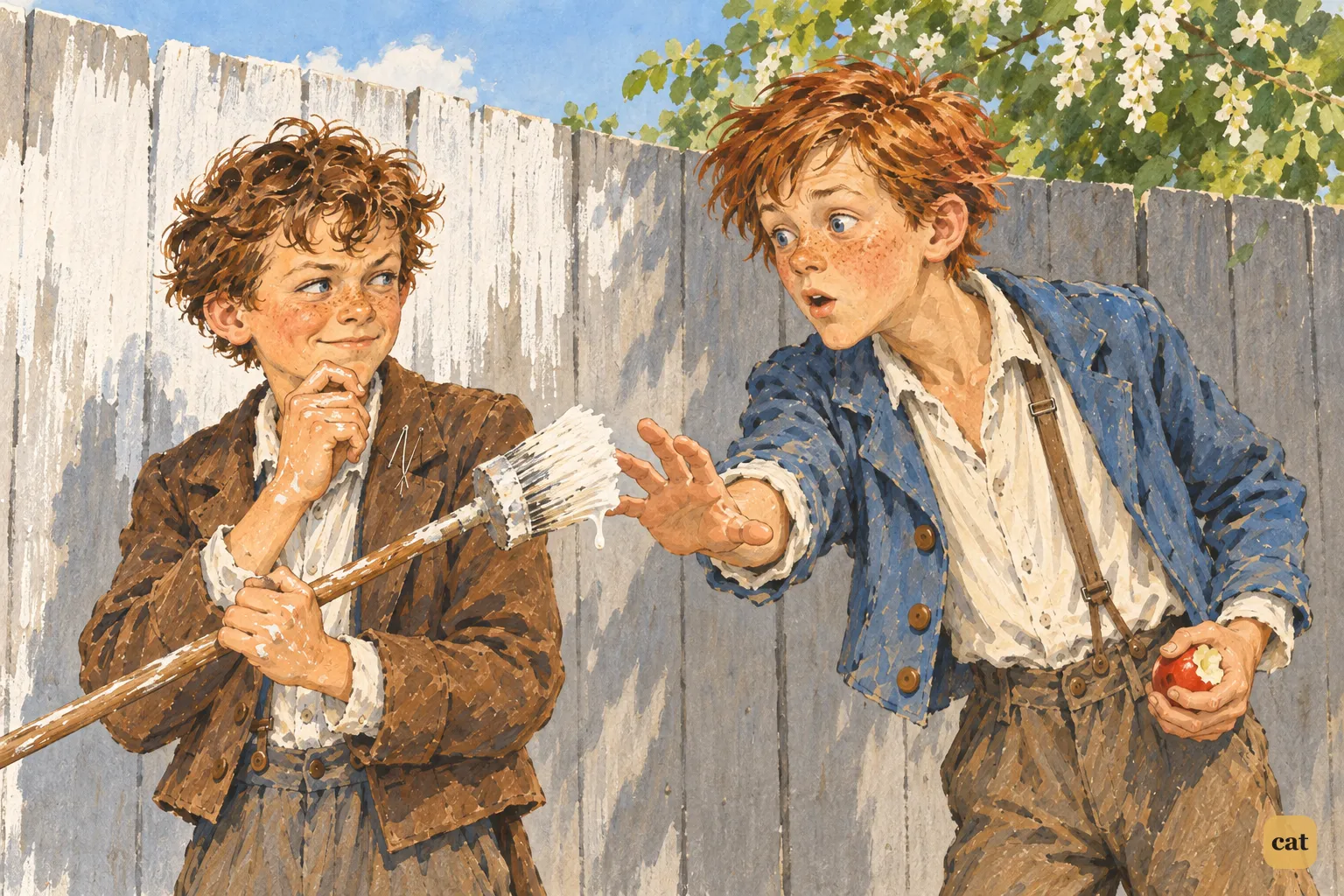
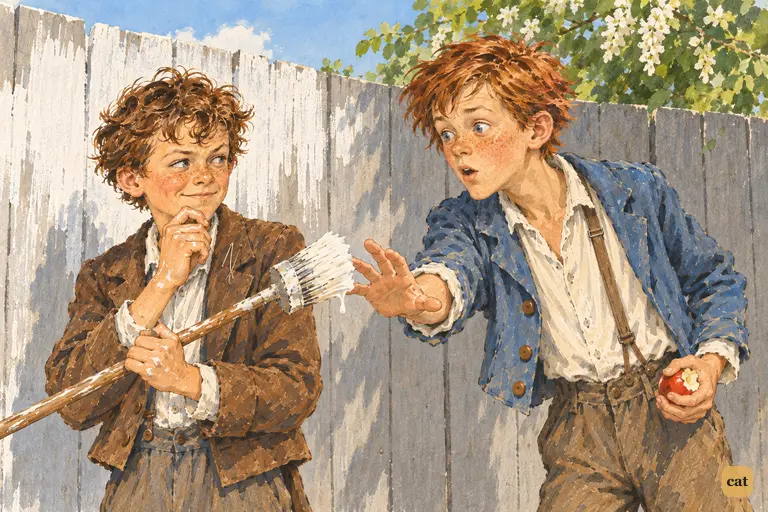
He took up his brush and went tranquilly to work. Ben Rogers hove in sight presently—the very boy, of all boys, whose ridicule he had been dreading. Ben’s gait was the hop-skip-and-jump—proof enough that his heart was light and his anticipations high. He was eating an apple, and giving a long, melodious whoop, at intervals, followed by a deep-toned ding-dong-dong, ding-dong-dong, for he was personating a steamboat. As he drew near, he slackened speed, took the middle of the street, leaned far over to starboard and rounded to ponderously and with laborious pomp and circumstance—for he was personating the Big Missouri, and considered himself to be drawing nine feet of water. He was boat and captain and engine-bells combined, so he had to imagine himself standing on his own hurricane-deck giving the orders and executing them:
Read from here → -
-
Rolling in wealth
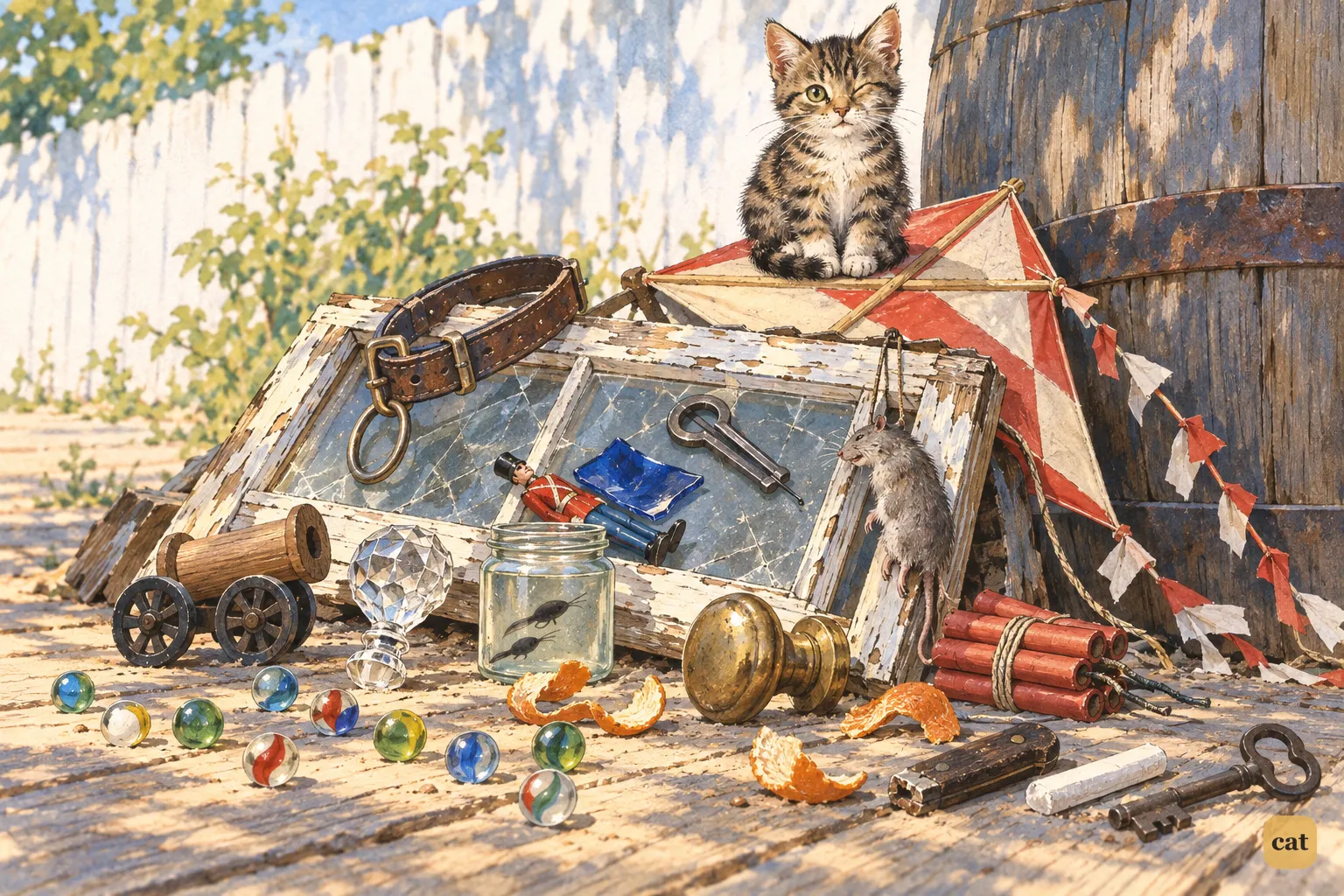
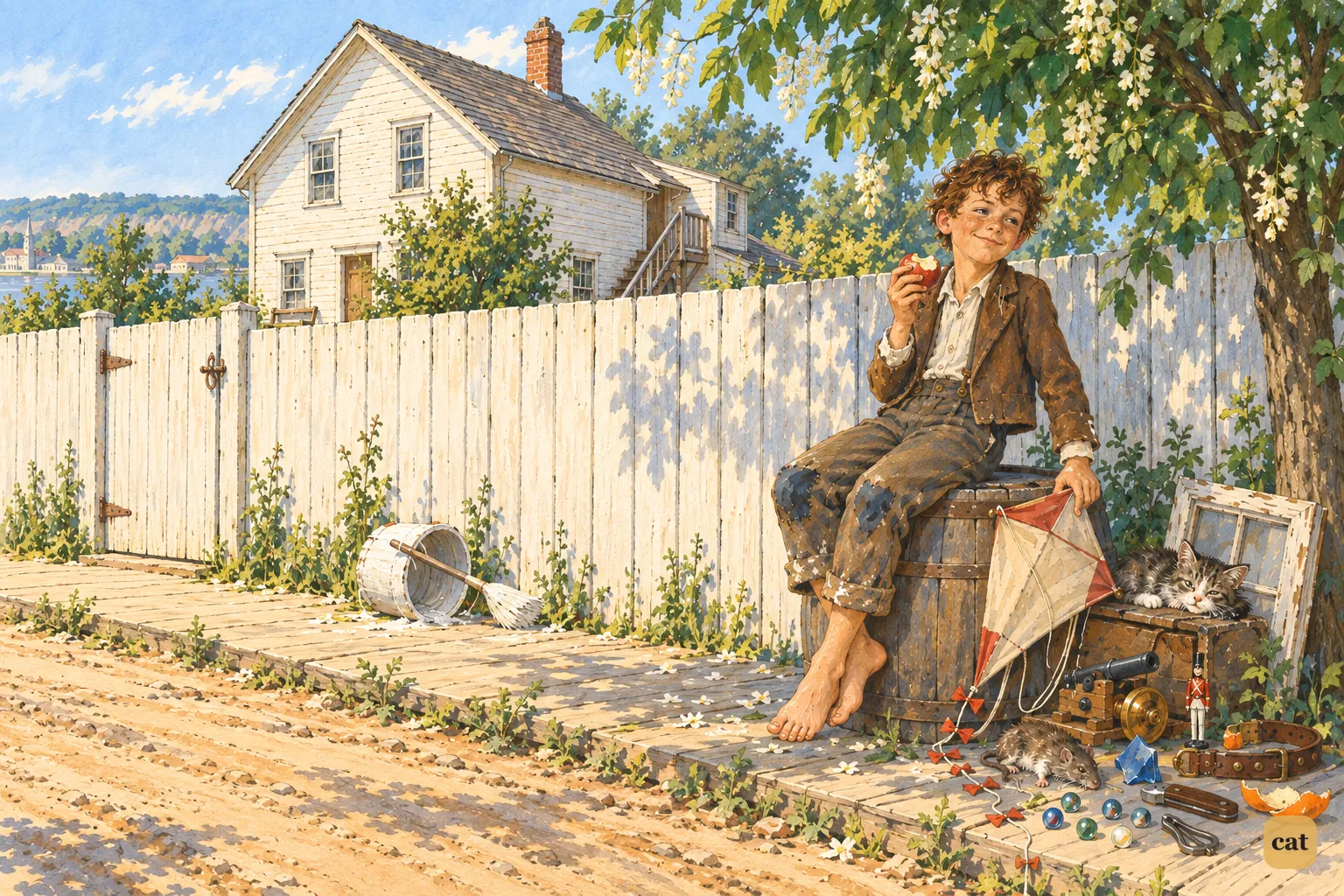
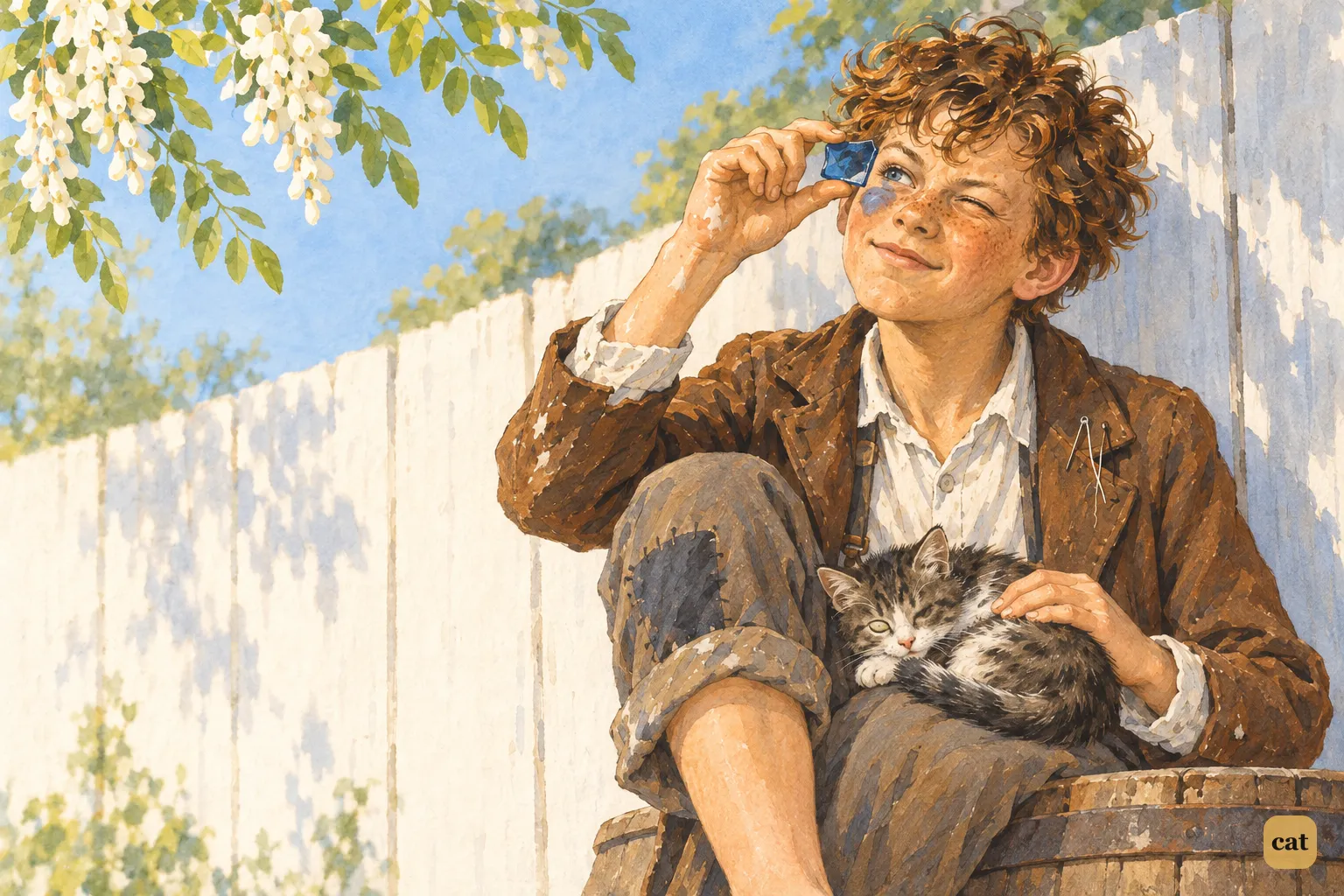
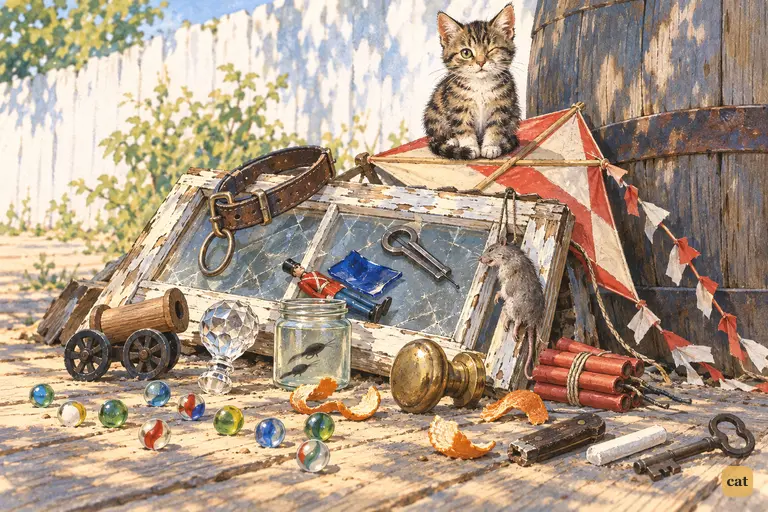
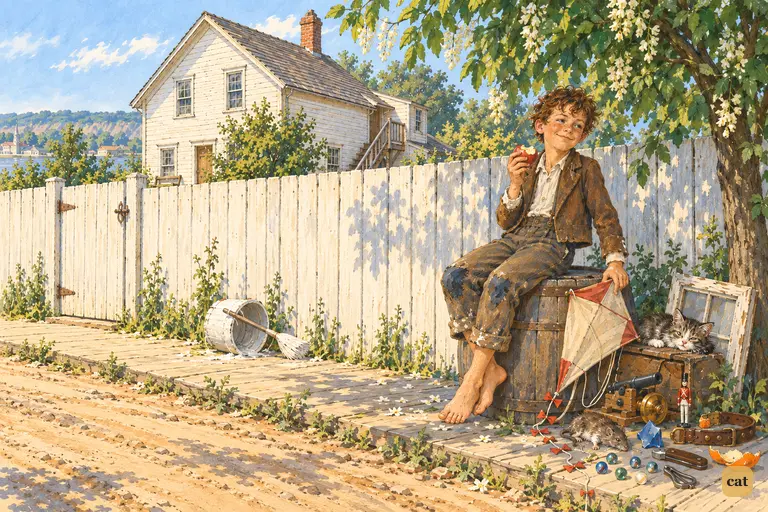
Tom gave up the brush with reluctance in his face, but alacrity in his heart. And while the late steamer Big Missouri worked and sweated in the sun, the retired artist sat on a barrel in the shade close by, dangled his legs, munched his apple, and planned the slaughter of more innocents. There was no lack of material; boys happened along every little while; they came to jeer, but remained to whitewash. By the time Ben was fagged out, Tom had traded the next chance to Billy Fisher for a kite, in good repair; and when he played out, Johnny Miller bought in for a dead rat and a string to swing it with—and so on, and so on, hour after hour. And when the middle of the afternoon came, from being a poor poverty-stricken boy in the morning, Tom was literally rolling in wealth. He had besides the things before mentioned, twelve marbles, part of a jews-harp, a piece of blue bottle-glass to look through, a spool cannon, a key that wouldn’t unlock anything, a fragment of chalk, a glass stopper of a decanter, a tin soldier, a couple of tadpoles, six fire-crackers, a kitten with only one eye, a brass door-knob, a dog-collar—but no dog—the handle of a knife, four pieces of orange-peel, and a dilapidated old window sash.
Read from here → -
Three coats of white
He had had a nice, good, idle time all the while—plenty of company—and the fence had three coats of whitewash on it! If he hadn’t run out of whitewash he would have bankrupted every boy in the village.
Read from here → -
Not such a hollow world
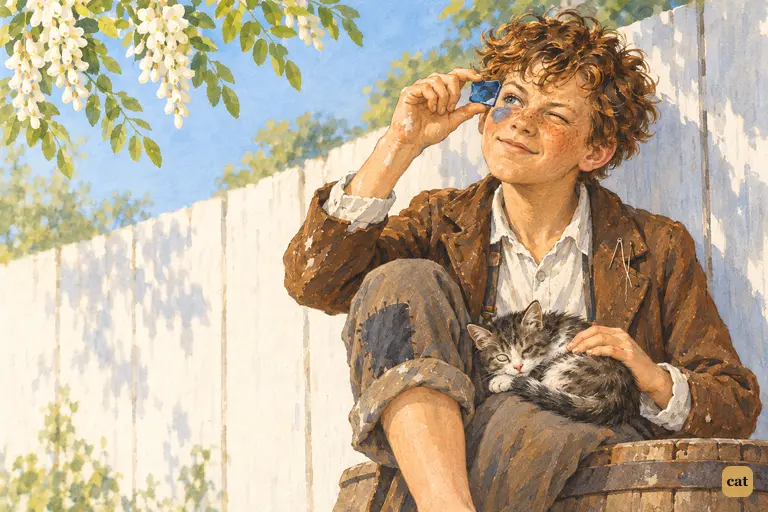
Tom said to himself that it was not such a hollow world, after all. He had discovered a great law of human action, without knowing it—namely, that in order to make a man or a boy covet a thing, it is only necessary to make the thing difficult to attain. If he had been a great and wise philosopher, like the writer of this book, he would now have comprehended that Work consists of whatever a body is obliged to do, and that Play consists of whatever a body is not obliged to do. And this would help him to understand why constructing artificial flowers or performing on a tread-mill is work, while rolling ten-pins or climbing Mont Blanc is only amusement. There are wealthy gentlemen in England who drive four-horse passenger-coaches twenty or thirty miles on a daily line, in the summer, because the privilege costs them considerable money; but if they were offered wages for the service, that would turn it into work and then they would resign.
Read from here → -
Chapter 2
The Fence Whitewashed by Other Hands
Next chapter: The Fence Repaid and the New Girl's Pansy Read this chapter