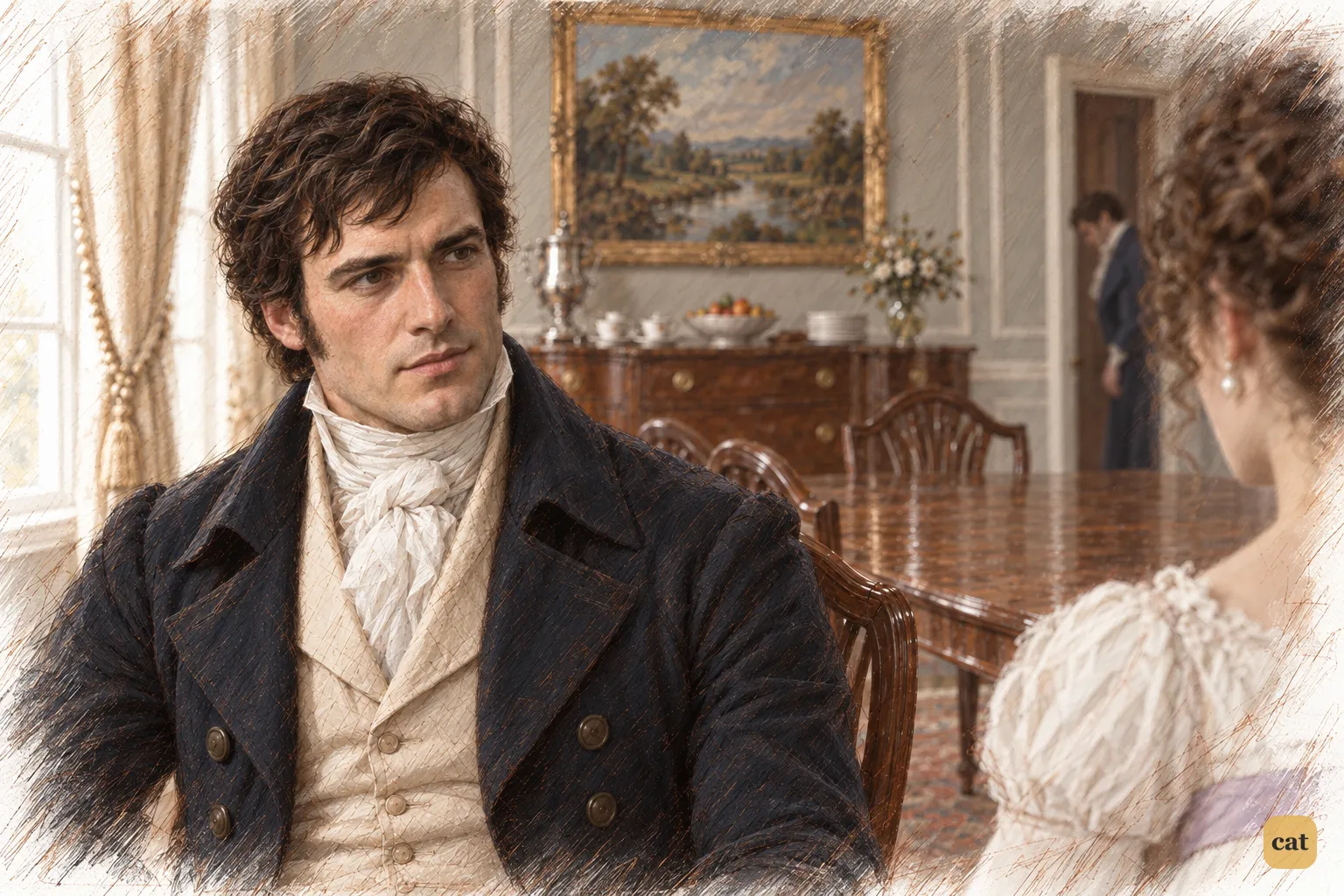
-

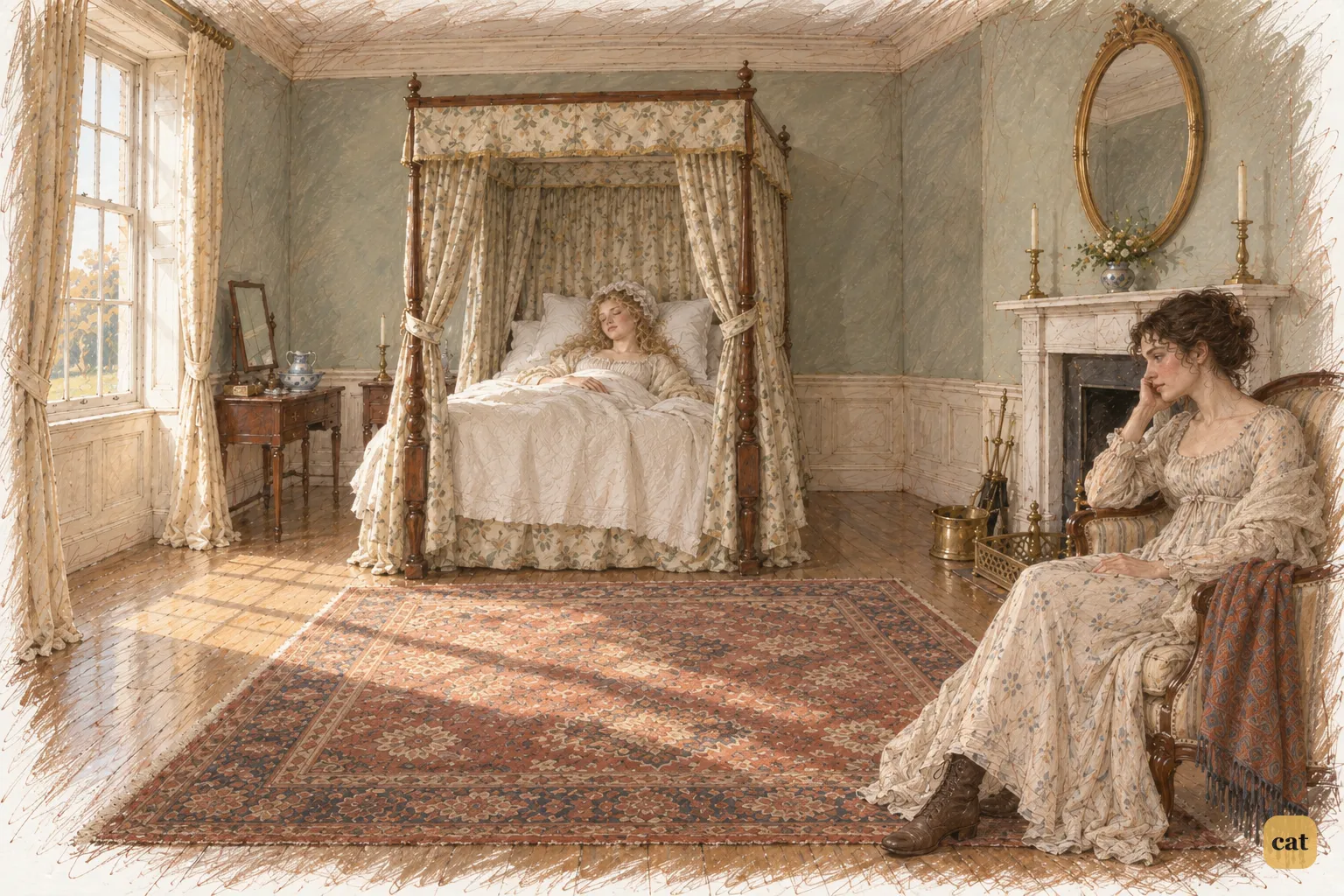
Netherfield at early morning
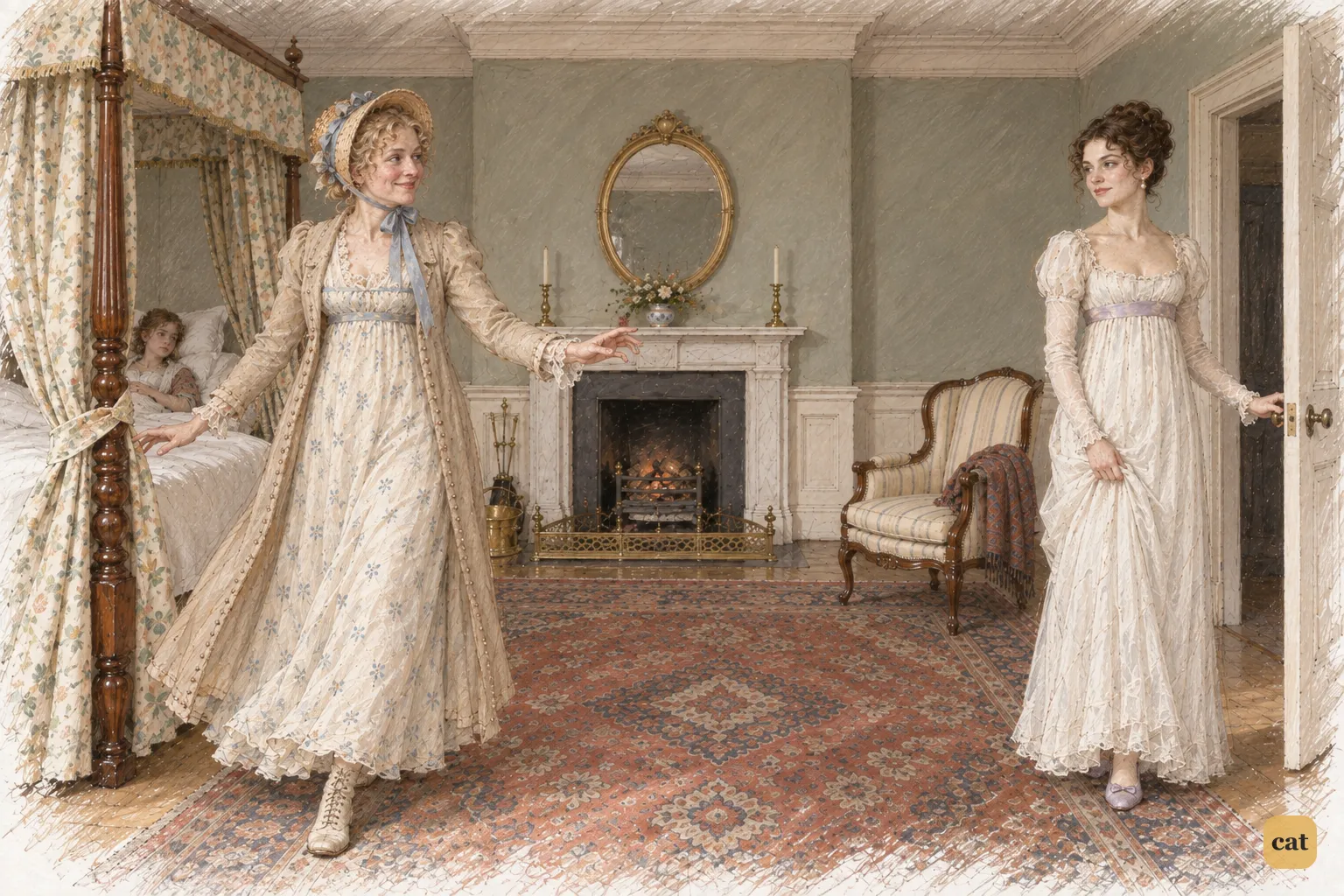
Elizabeth passed the chief of the night in her sister's room, and in the morning had the pleasure of being able to send a tolerable answer to the enquiries which she very early received from Mr. Bingley by a housemaid, and some time afterwards from the two elegant ladies who waited on his sisters. In spite of this amendment, however, she requested to have a note sent to Longbourn, desiring her mother to visit Jane, and form her own judgment of her situation. The note was immediately dispatched, and its contents as quickly complied with. Mrs. Bennet, accompanied by her two youngest girls, reached Netherfield soon after the family breakfast.
Read from here → -
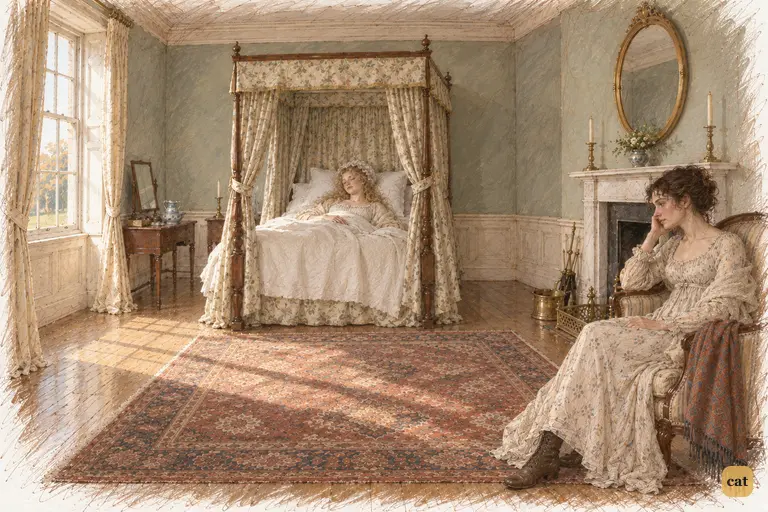
The night's watch over
Elizabeth passed the chief of the night in her sister's room, and in the morning had the pleasure of being able to send a tolerable answer to the enquiries which she very early received from Mr. Bingley by a housemaid, and some time afterwards from the two elegant ladies who waited on his sisters. In spite of this amendment, however, she requested to have a note sent to Longbourn, desiring her mother to visit Jane, and form her own judgment of her situation. The note was immediately dispatched, and its contents as quickly complied with. Mrs. Bennet, accompanied by her two youngest girls, reached Netherfield soon after the family breakfast.
Read from here → -
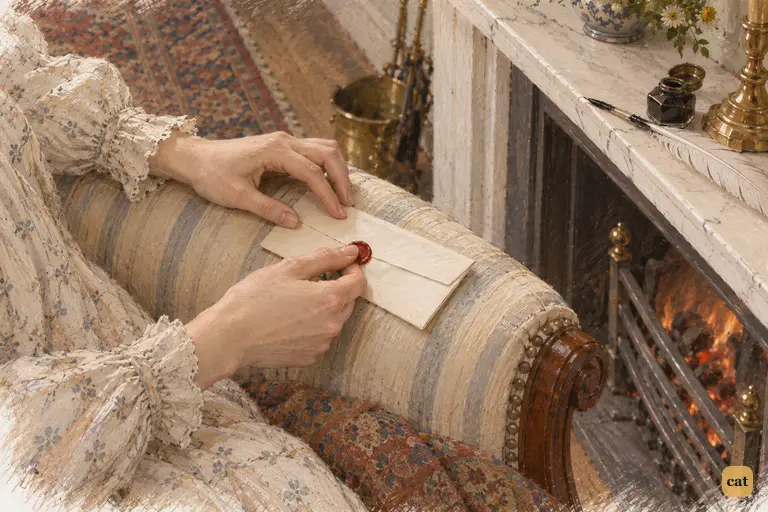
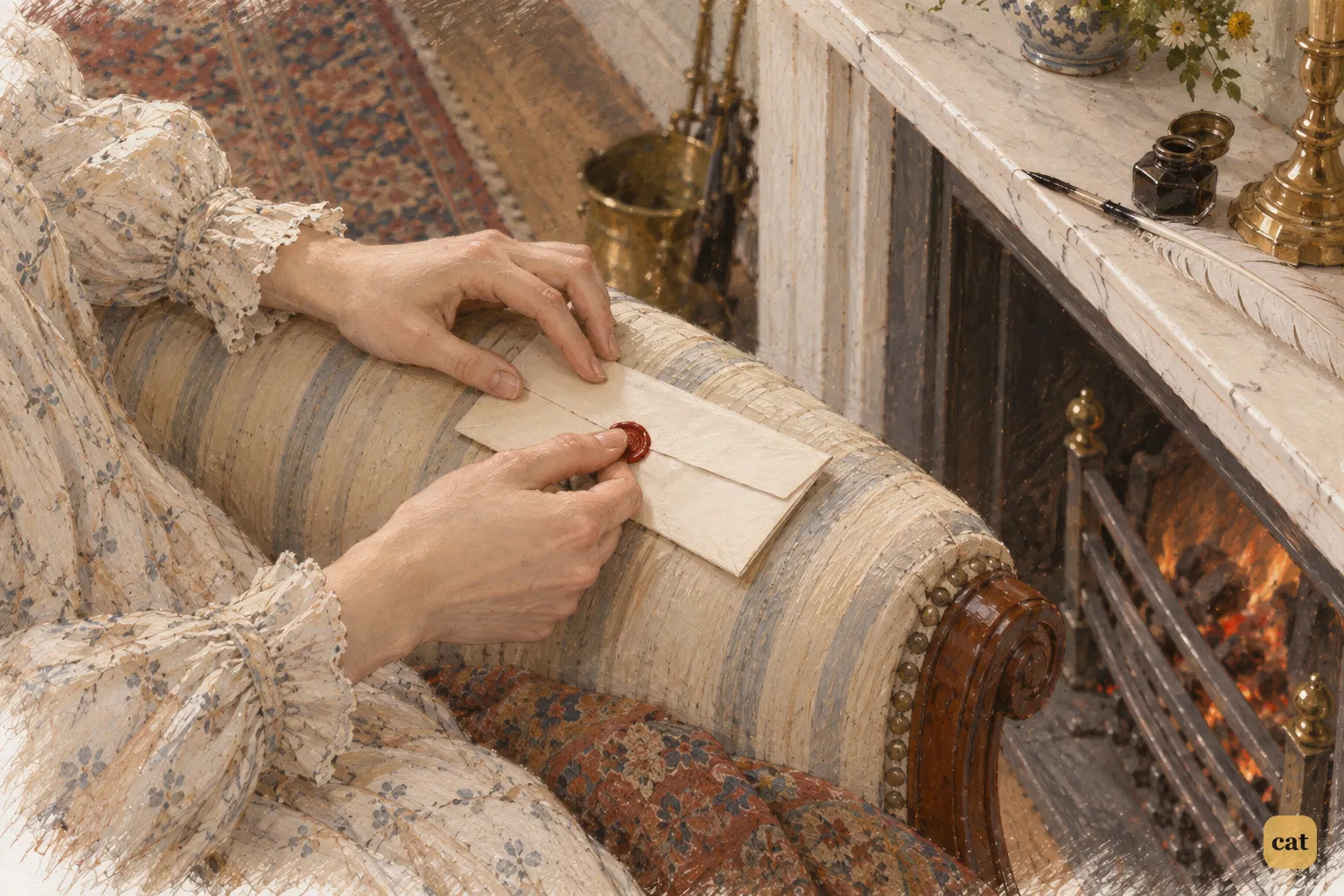
The note for Longbourn
Elizabeth passed the chief of the night in her sister's room, and in the morning had the pleasure of being able to send a tolerable answer to the enquiries which she very early received from Mr. Bingley by a housemaid, and some time afterwards from the two elegant ladies who waited on his sisters. In spite of this amendment, however, she requested to have a note sent to Longbourn, desiring her mother to visit Jane, and form her own judgment of her situation. The note was immediately dispatched, and its contents as quickly complied with. Mrs. Bennet, accompanied by her two youngest girls, reached Netherfield soon after the family breakfast.
Read from here → -
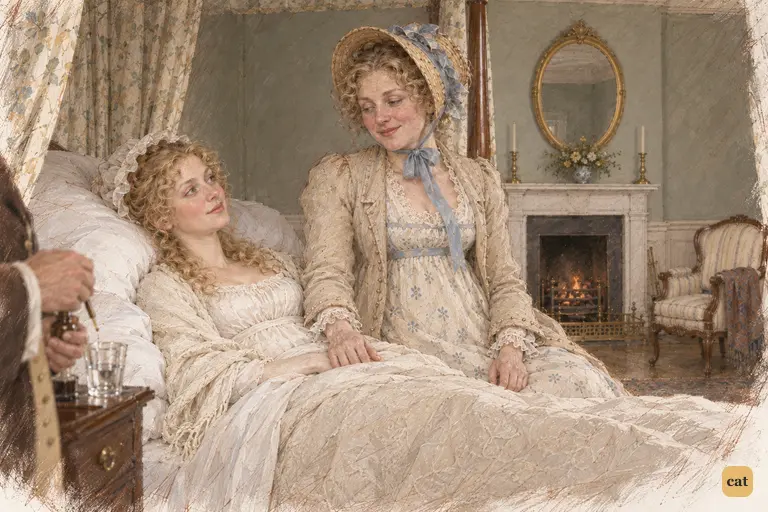
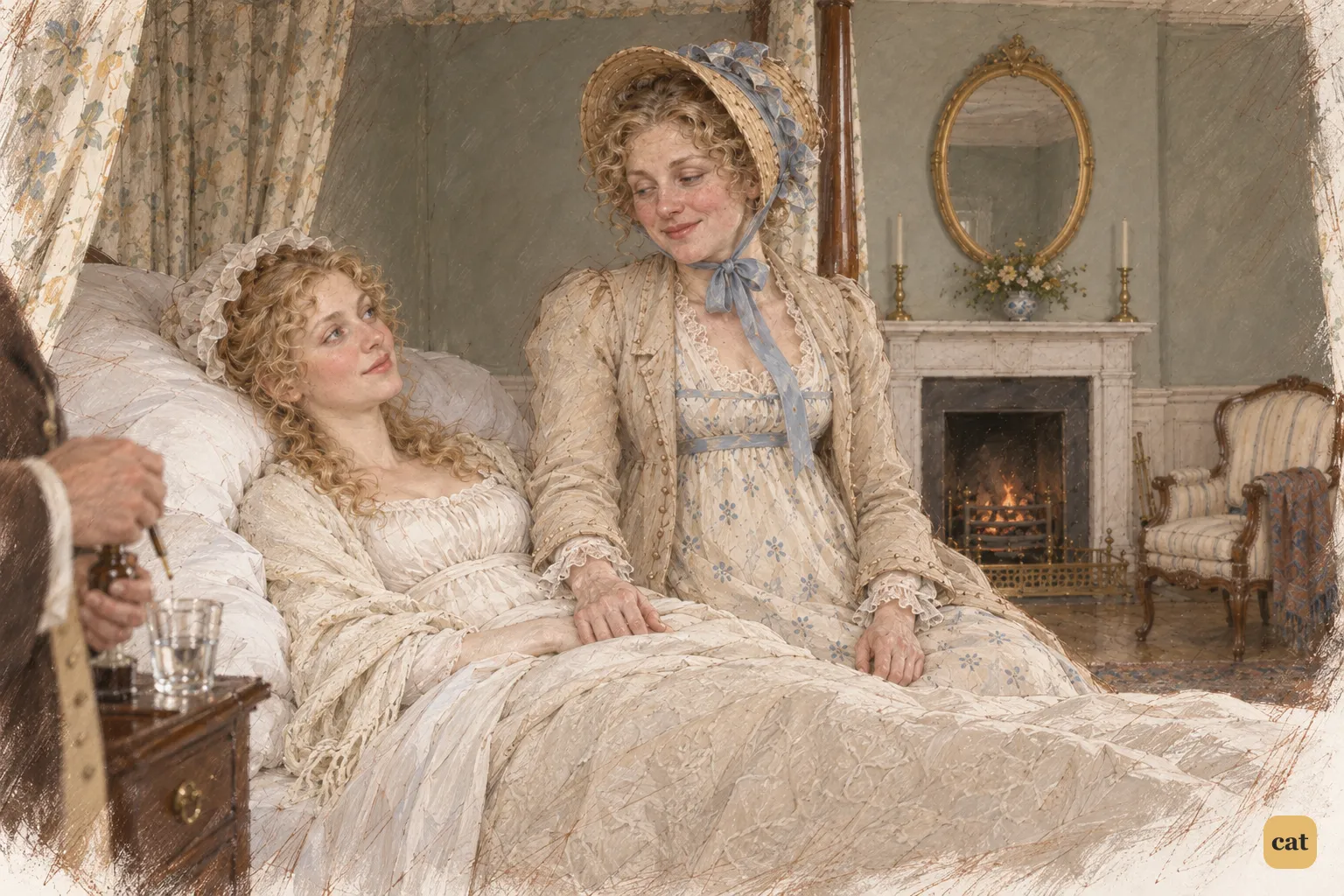
A mother's quiet satisfaction
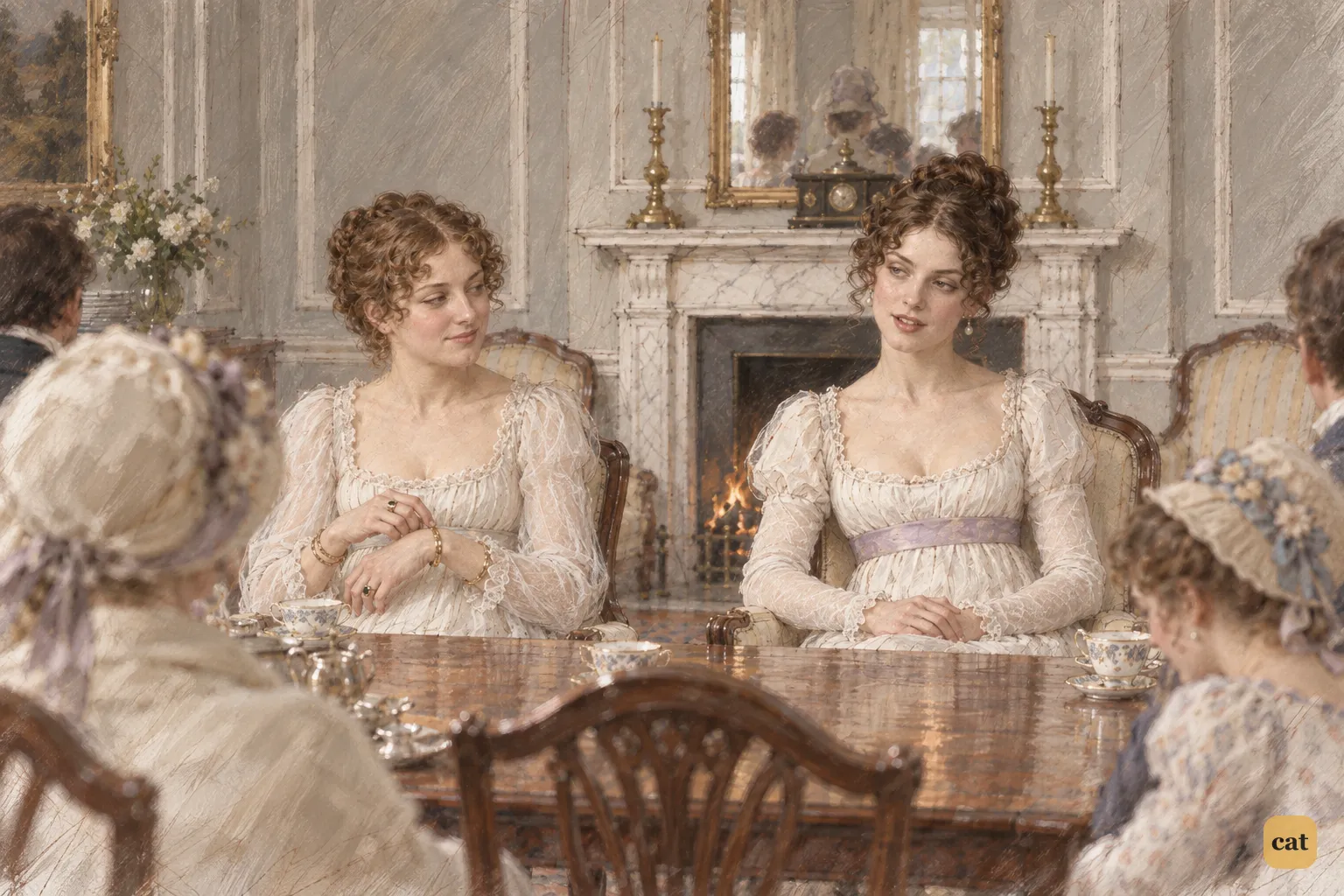
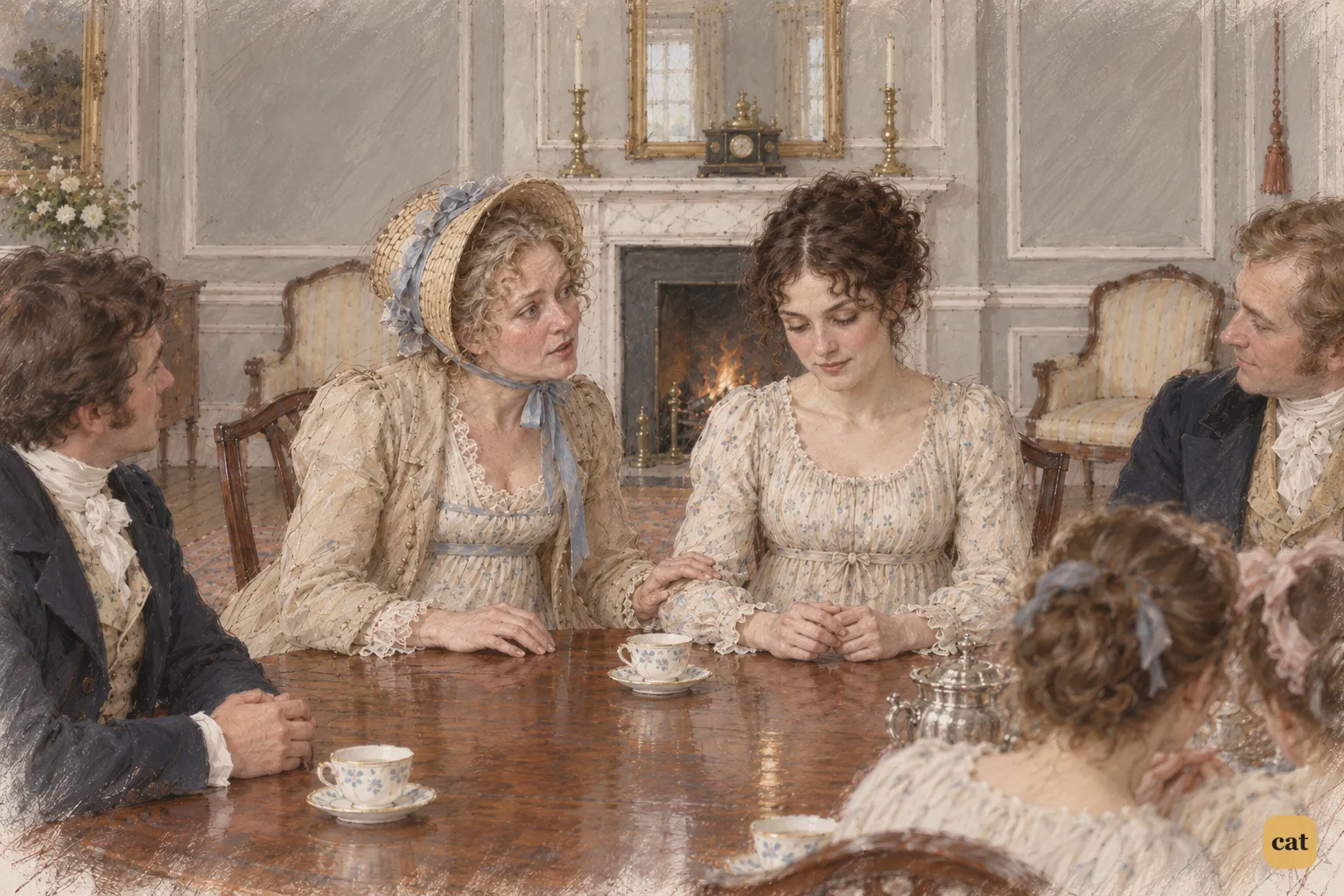
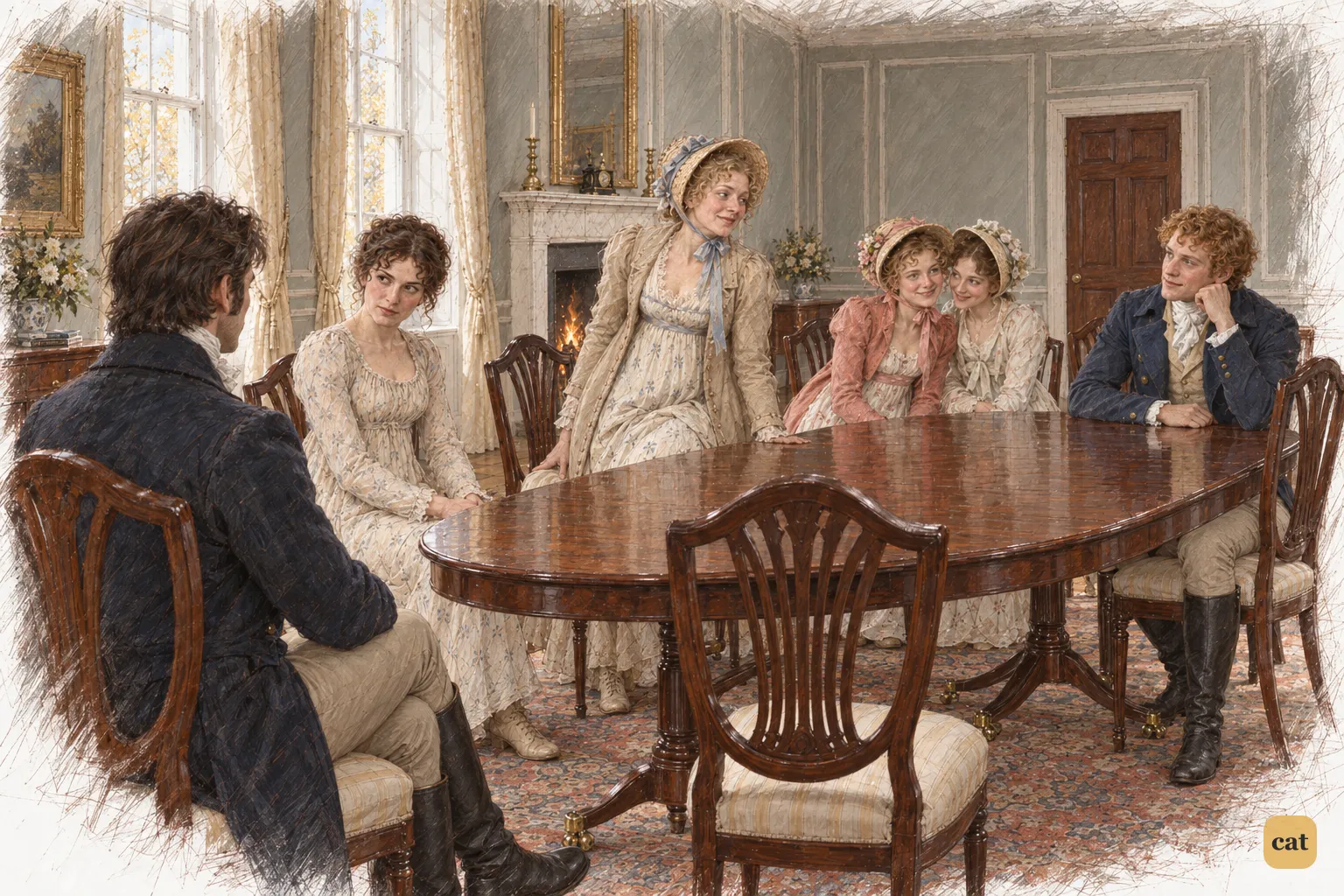
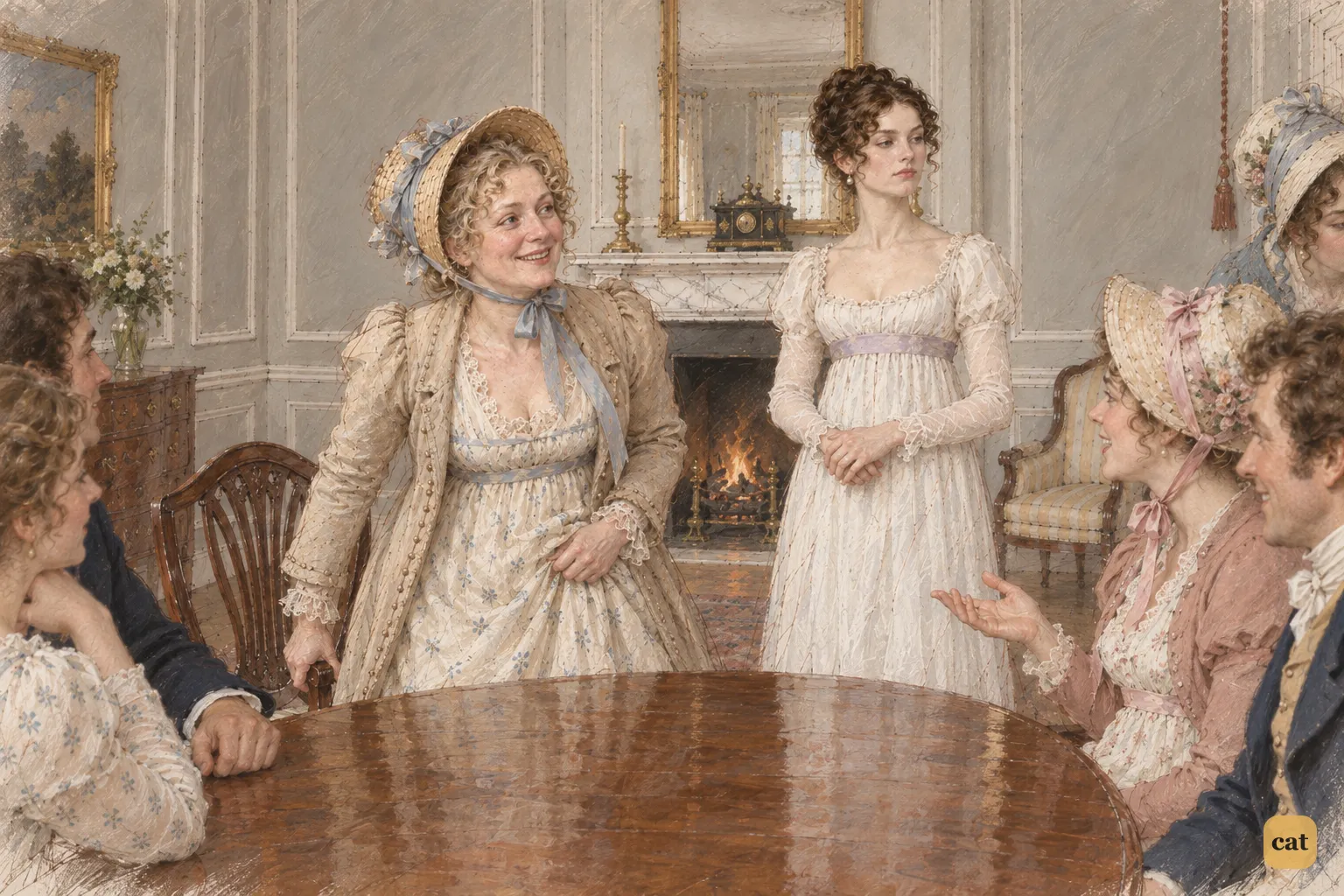
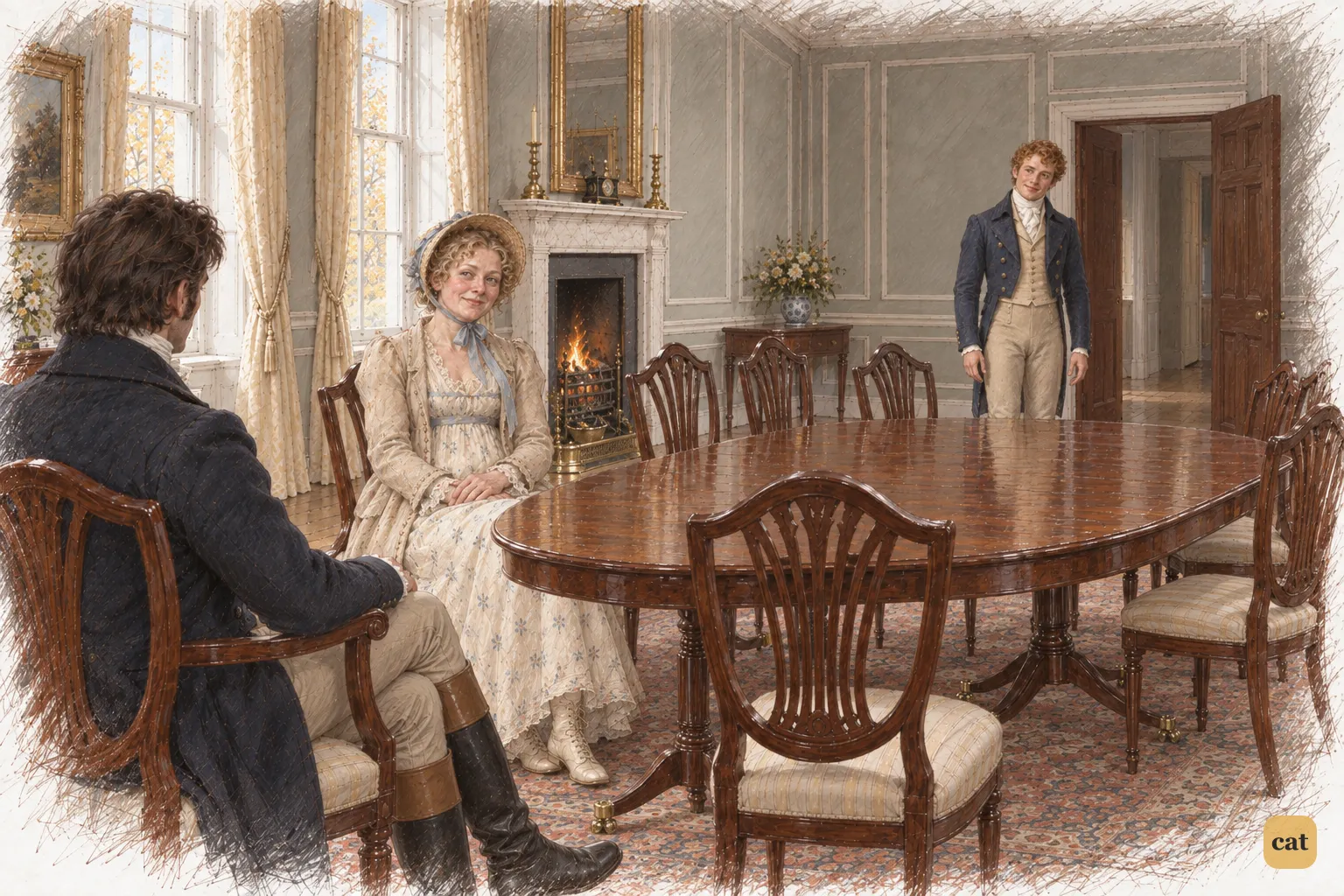
Had she found Jane in any apparent danger, Mrs. Bennet would have been very miserable; but being satisfied on seeing her that her illness was not alarming, she had no wish of her recovering immediately, as her restoration to health would probably remove her from Netherfield. She would not listen therefore to her daughter's proposal of being carried home; neither did the apothecary, who arrived about the same time, think it at all advisable. After sitting a little while with Jane, on Miss Bingley's appearance and invitation, the mother and three daughters all attended her into the breakfast parlour. Bingley met them with hopes that Mrs. Bennet had not found Miss Bennet worse than she expected.
Read from here → -
Not to be moved
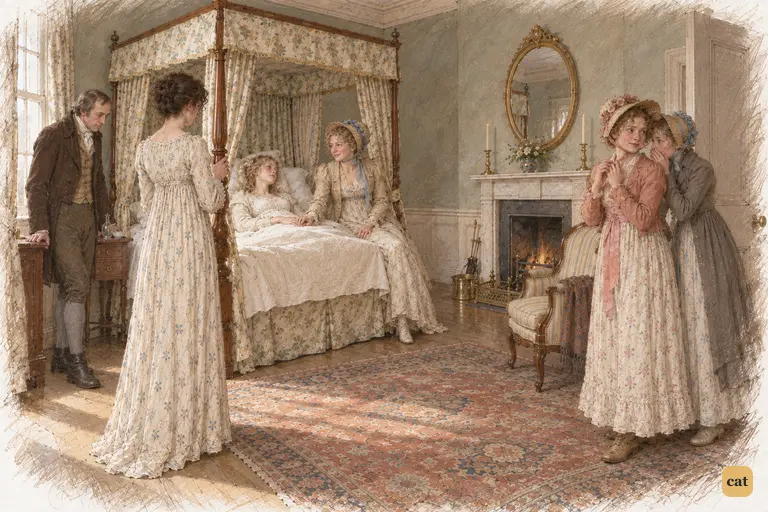
Had she found Jane in any apparent danger, Mrs. Bennet would have been very miserable; but being satisfied on seeing her that her illness was not alarming, she had no wish of her recovering immediately, as her restoration to health would probably remove her from Netherfield. She would not listen therefore to her daughter's proposal of being carried home; neither did the apothecary, who arrived about the same time, think it at all advisable. After sitting a little while with Jane, on Miss Bingley's appearance and invitation, the mother and three daughters all attended her into the breakfast parlour. Bingley met them with hopes that Mrs. Bennet had not found Miss Bennet worse than she expected.
Read from here → -
Miss Bingley at the door
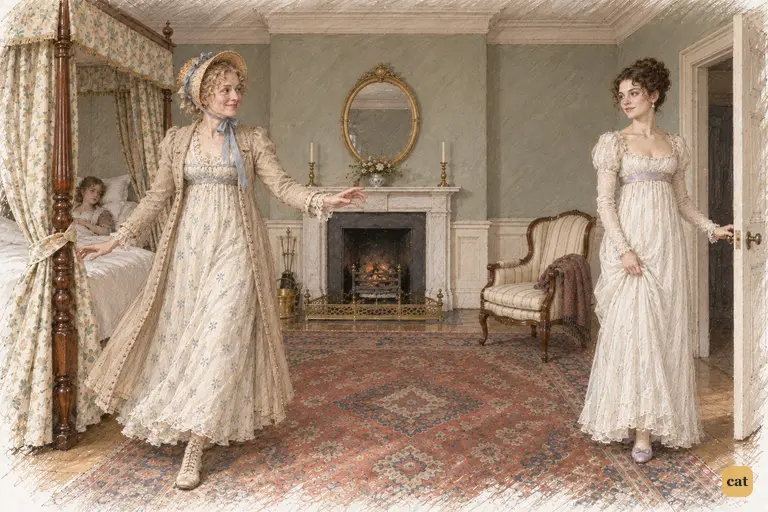
Had she found Jane in any apparent danger, Mrs. Bennet would have been very miserable; but being satisfied on seeing her that her illness was not alarming, she had no wish of her recovering immediately, as her restoration to health would probably remove her from Netherfield. She would not listen therefore to her daughter's proposal of being carried home; neither did the apothecary, who arrived about the same time, think it at all advisable. After sitting a little while with Jane, on Miss Bingley's appearance and invitation, the mother and three daughters all attended her into the breakfast parlour. Bingley met them with hopes that Mrs. Bennet had not found Miss Bennet worse than she expected.
Read from here → -
Cold civility
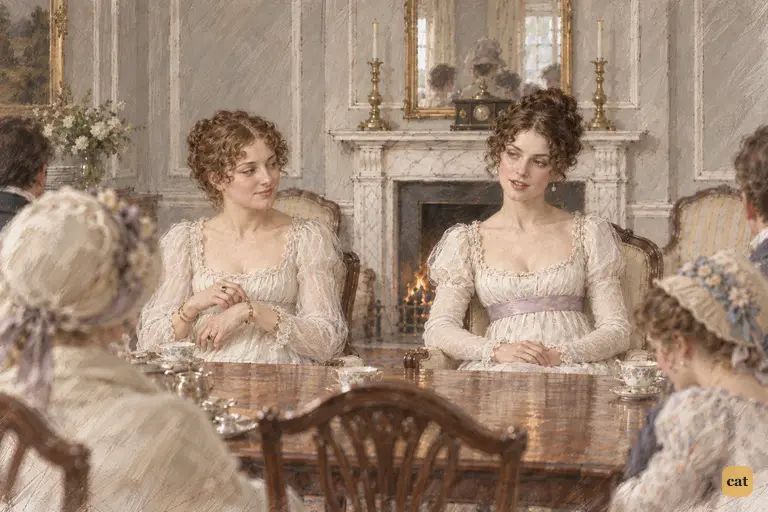
"You may depend upon it, Madam," said Miss Bingley, with cold civility, "that Miss Bennet shall receive every possible attention while she remains with us."
Read from here → -
A charming prospect
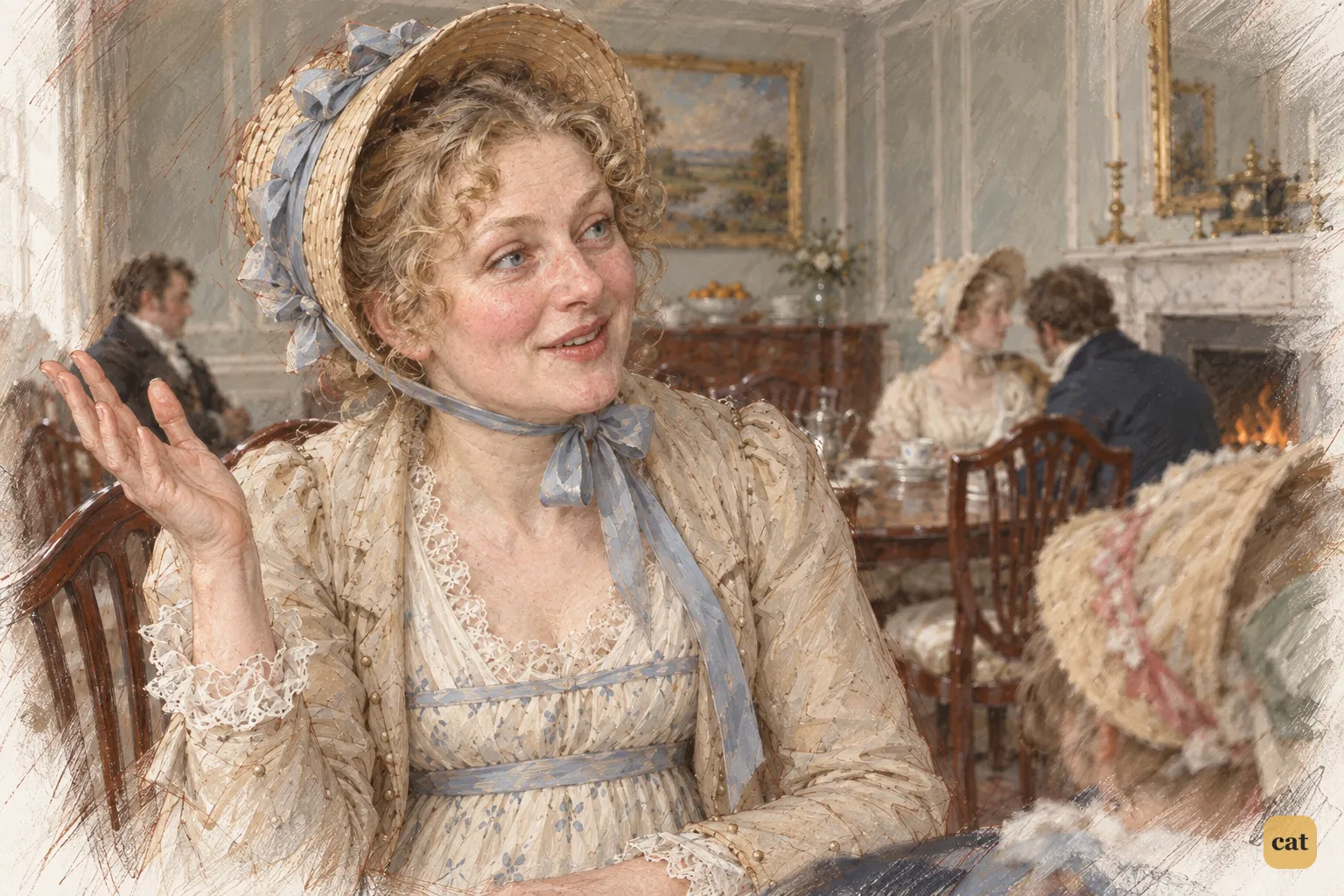
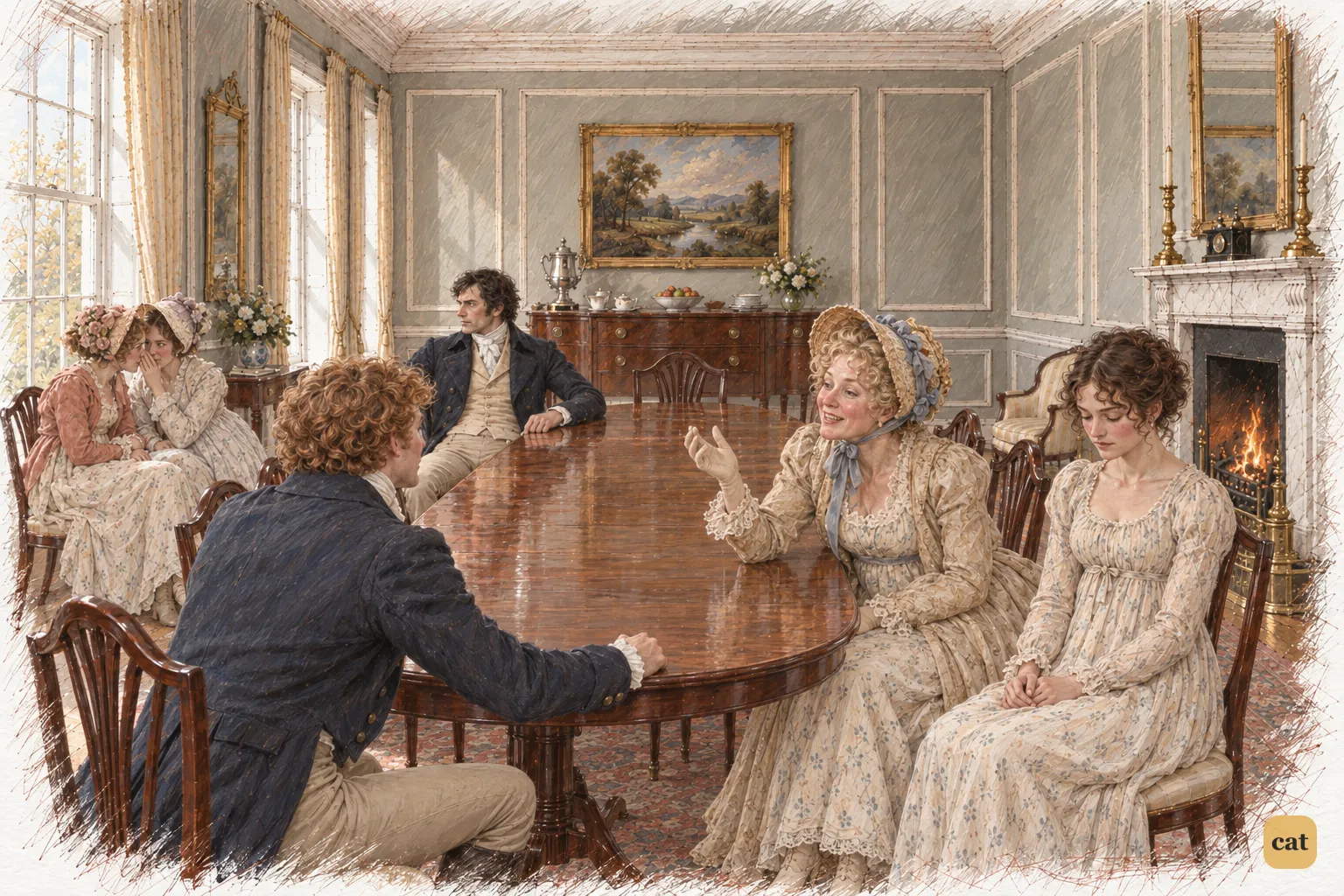
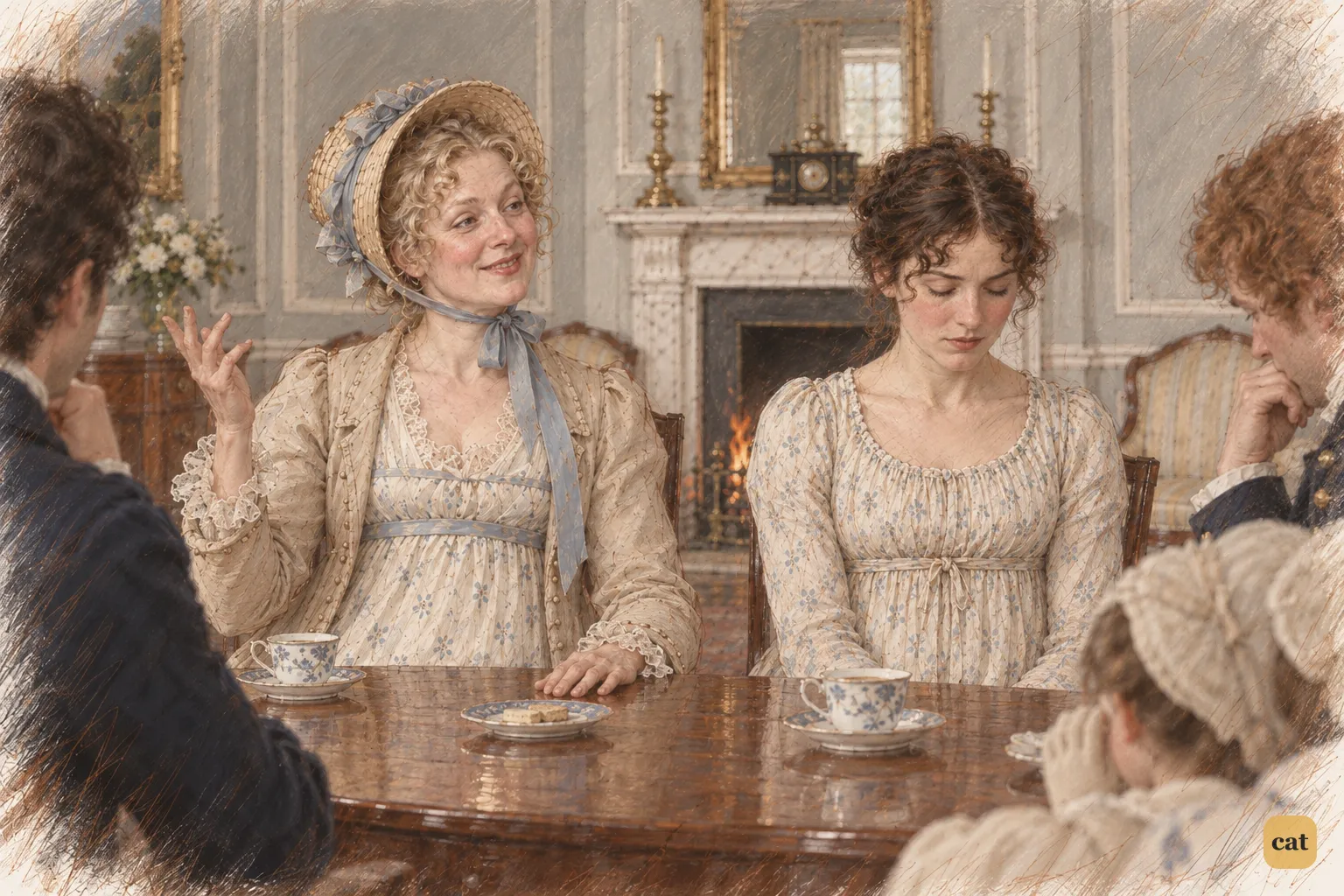
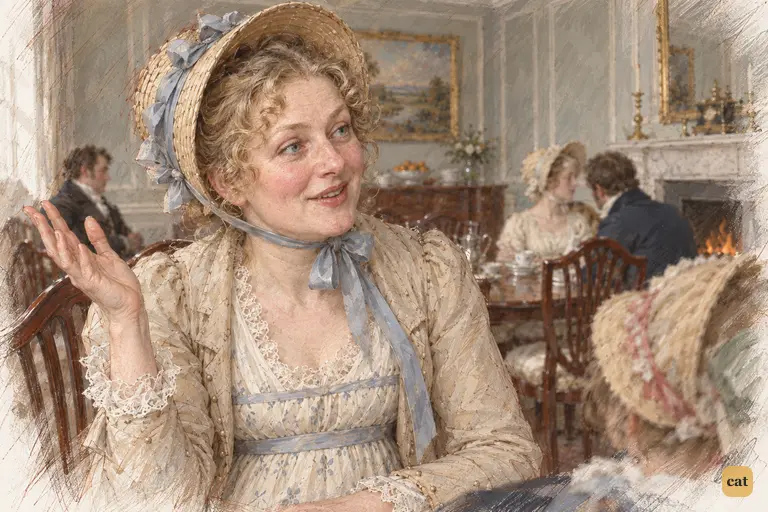
"I am sure," she added, "if it was not for such good friends I do not know what would become of her, for she is very ill indeed, and suffers a vast deal, though with the greatest patience in the world, which is always the way with her, for she has, without exception, the sweetest temper I ever met with. I often tell my other girls they are nothing to her. You have a sweet room here, Mr. Bingley, and a charming prospect over that gravel walk. I do not know a place in the country that is equal to Netherfield. You will not think of quitting it in a hurry I hope, though you have but a short lease."
Read from here → -

Quite fixed here
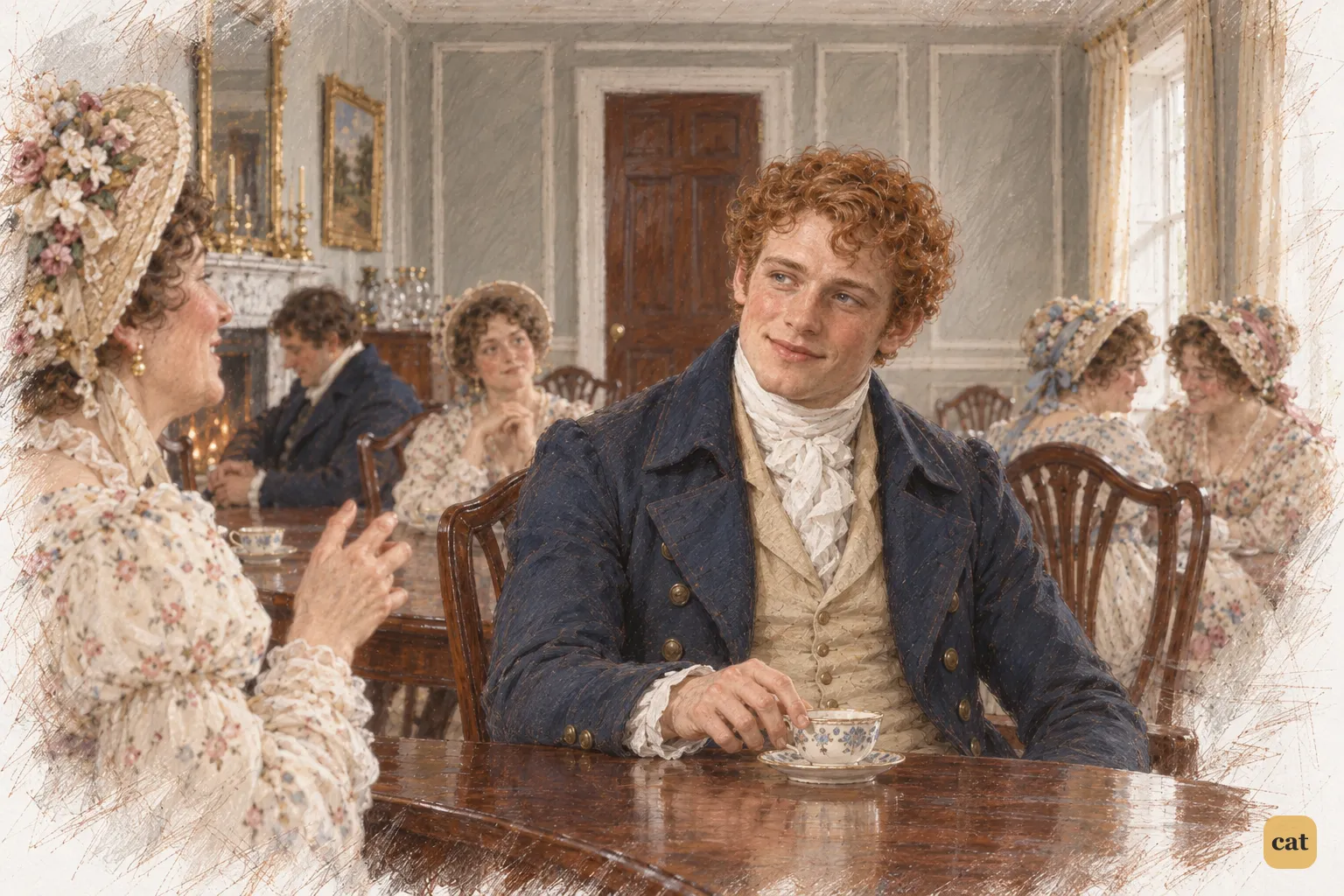
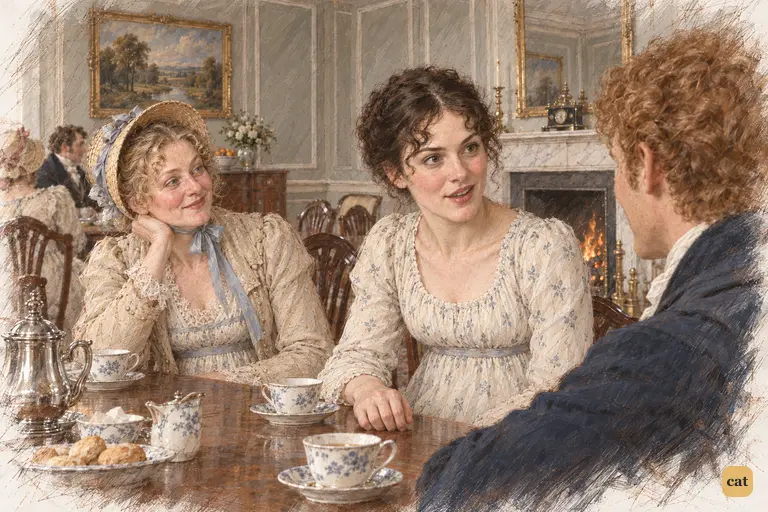
"Whatever I do is done in a hurry," replied he; "and therefore if I should resolve to quit Netherfield, I should probably be off in five minutes. At present, however, I consider myself as quite fixed here."
Read from here → -
-
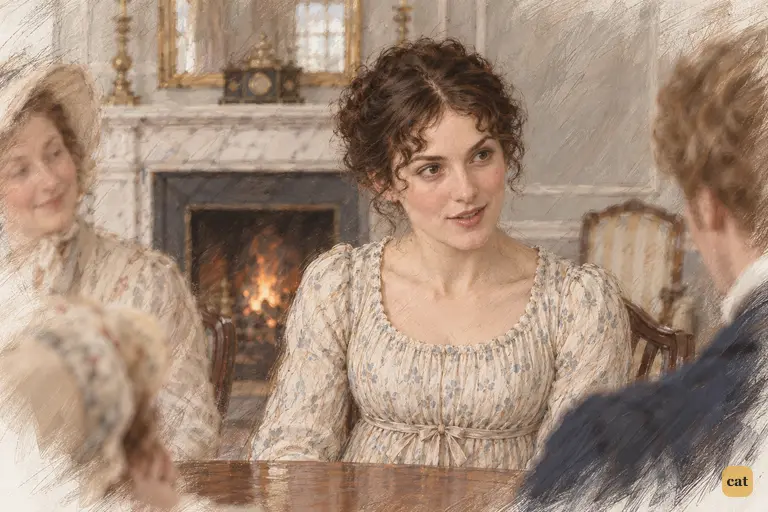
Deep, intricate characters
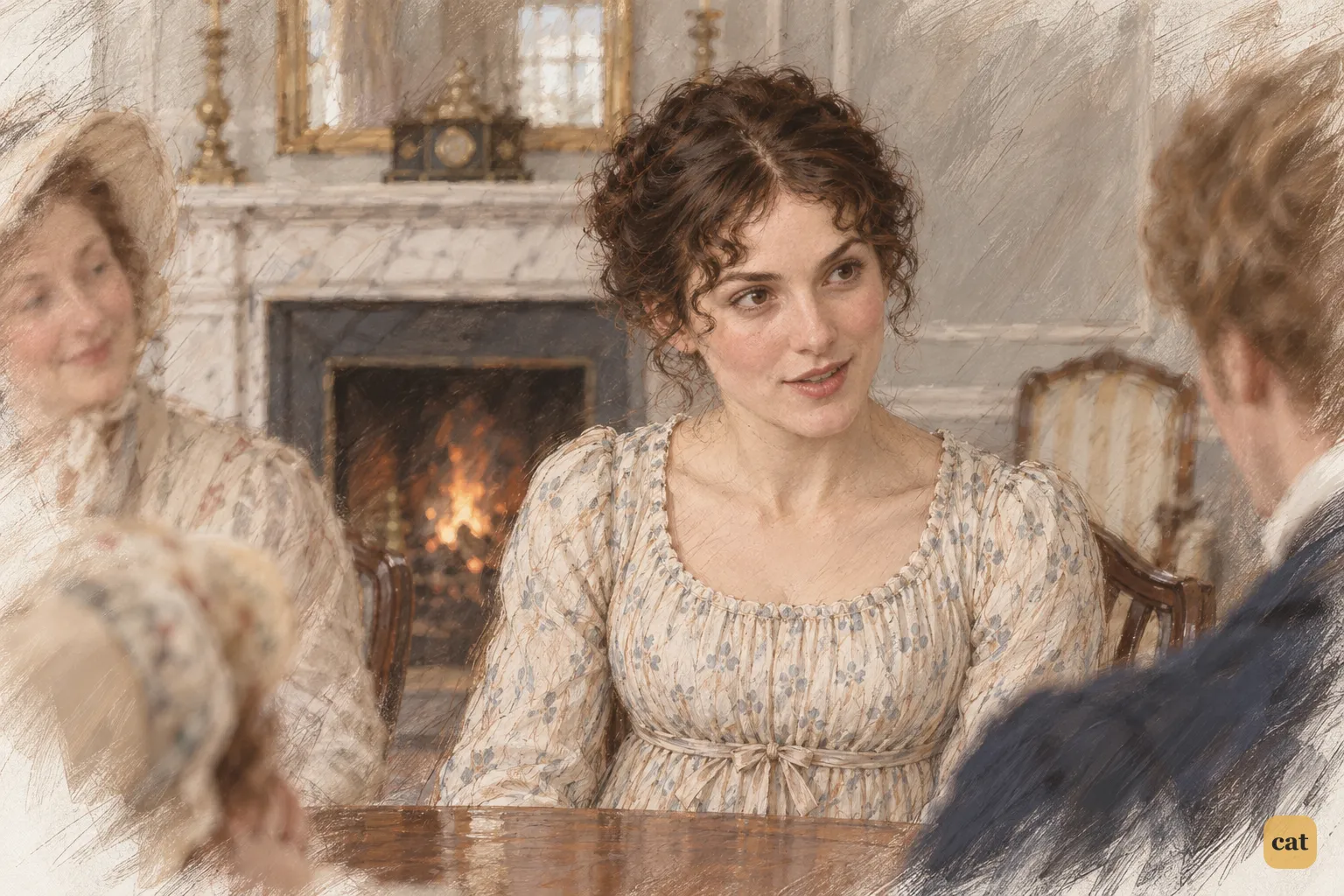
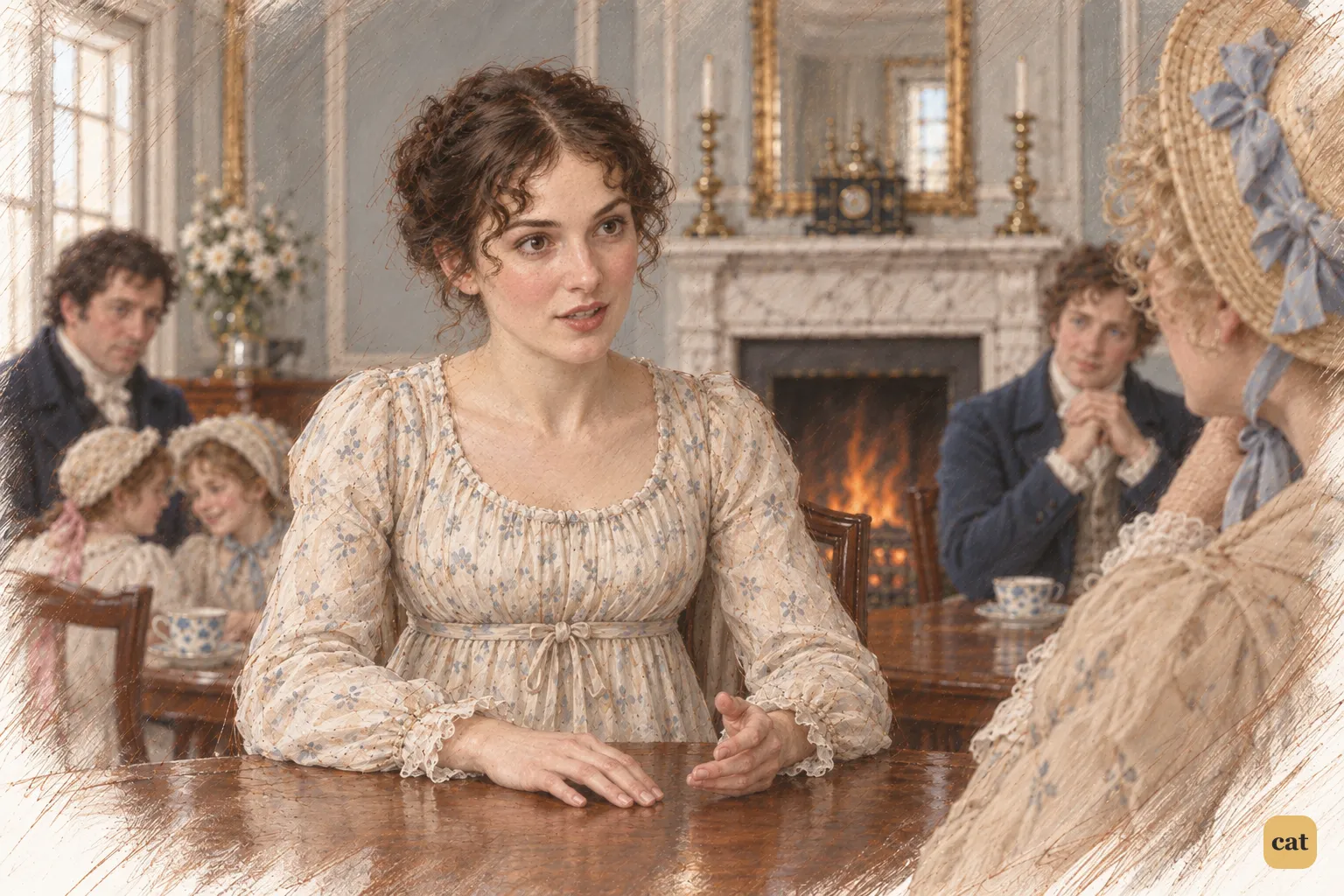
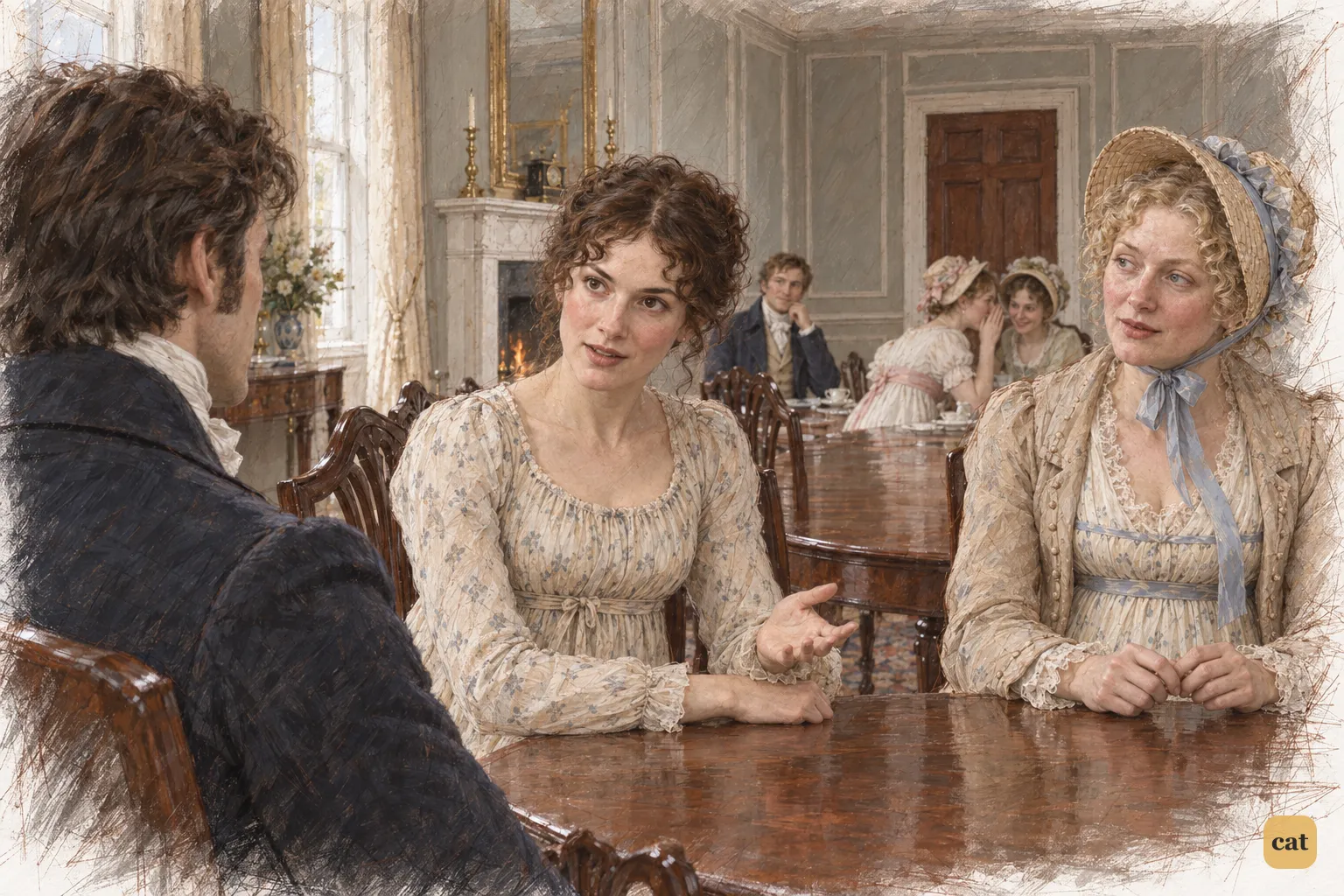
"That is as it happens. It does not necessarily follow that a deep, intricate character is more or less estimable than such a one as yours."
Read from here → -
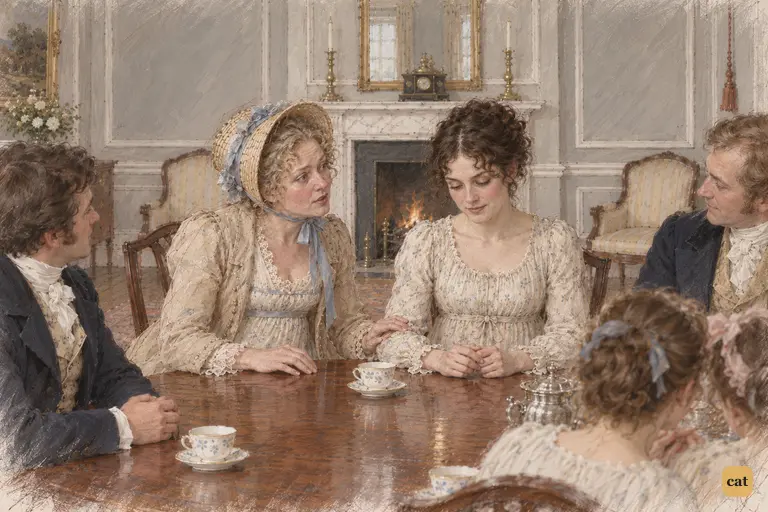
Remember where you are
"Lizzy," cried her mother, "remember where you are, and do not run on in the wild manner that you are suffered to do at home."
Read from here → -
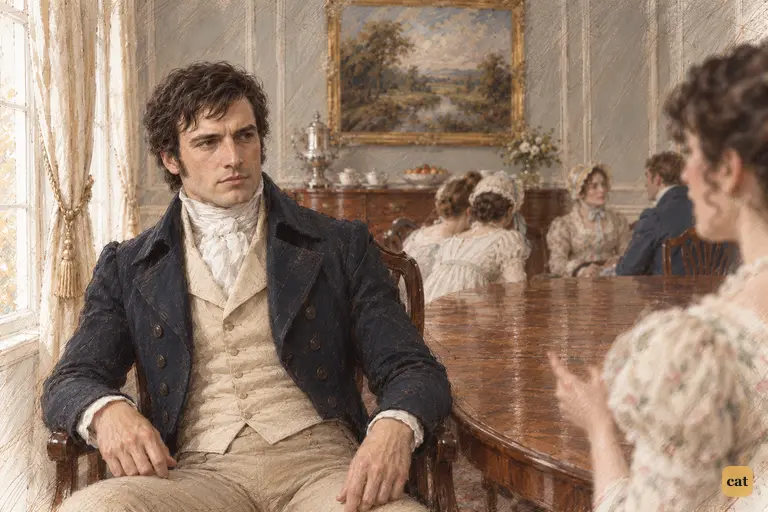
The intricate one listens
"Yes; but intricate characters are the most amusing. They have at least that advantage."
Read from here → -
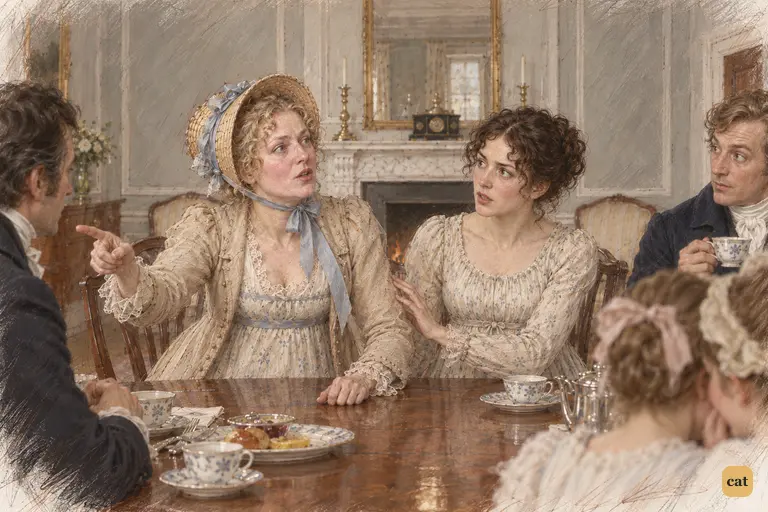
Quite as much in the country
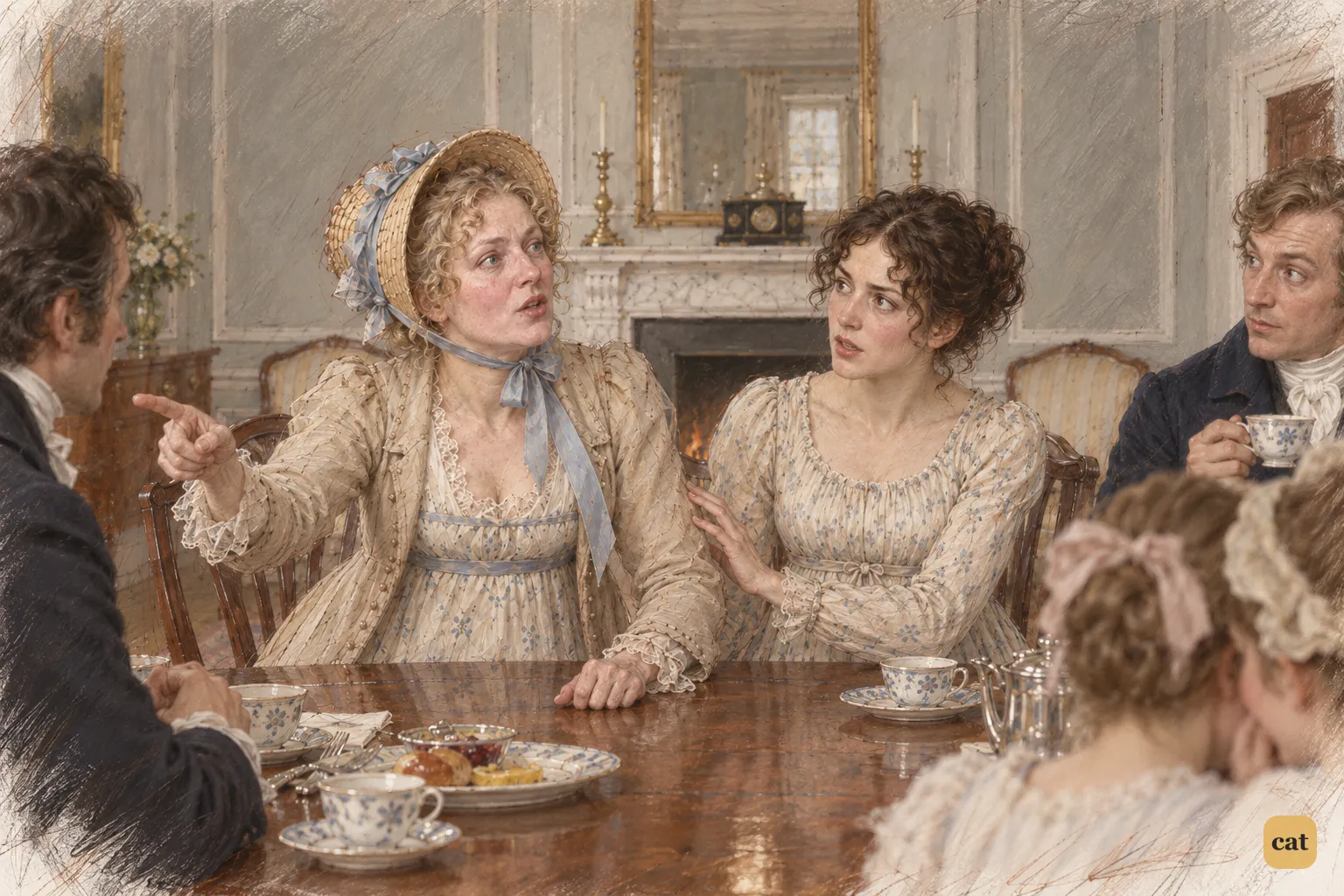
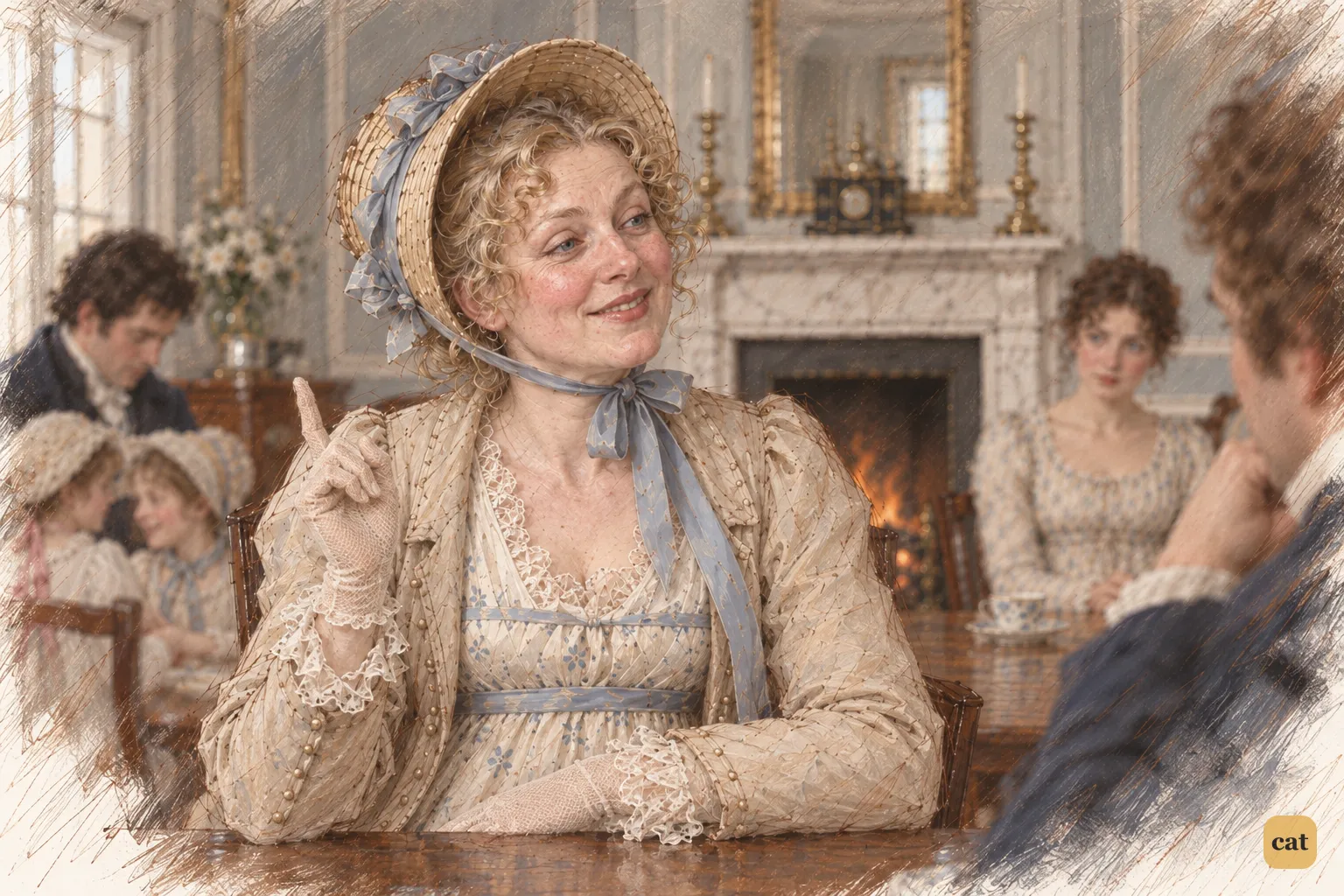
"Yes, indeed," cried Mrs. Bennet, offended by his manner of mentioning a country neighbourhood. "I assure you there is quite as much of that going on in the country as in town."
Read from here → -
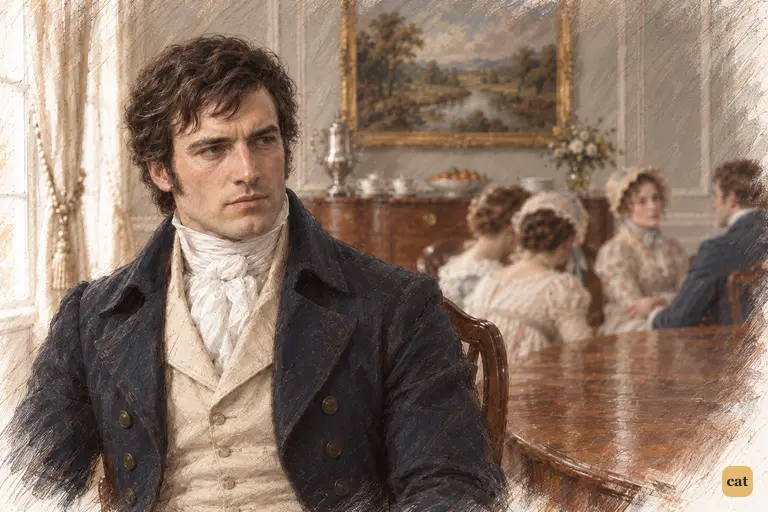
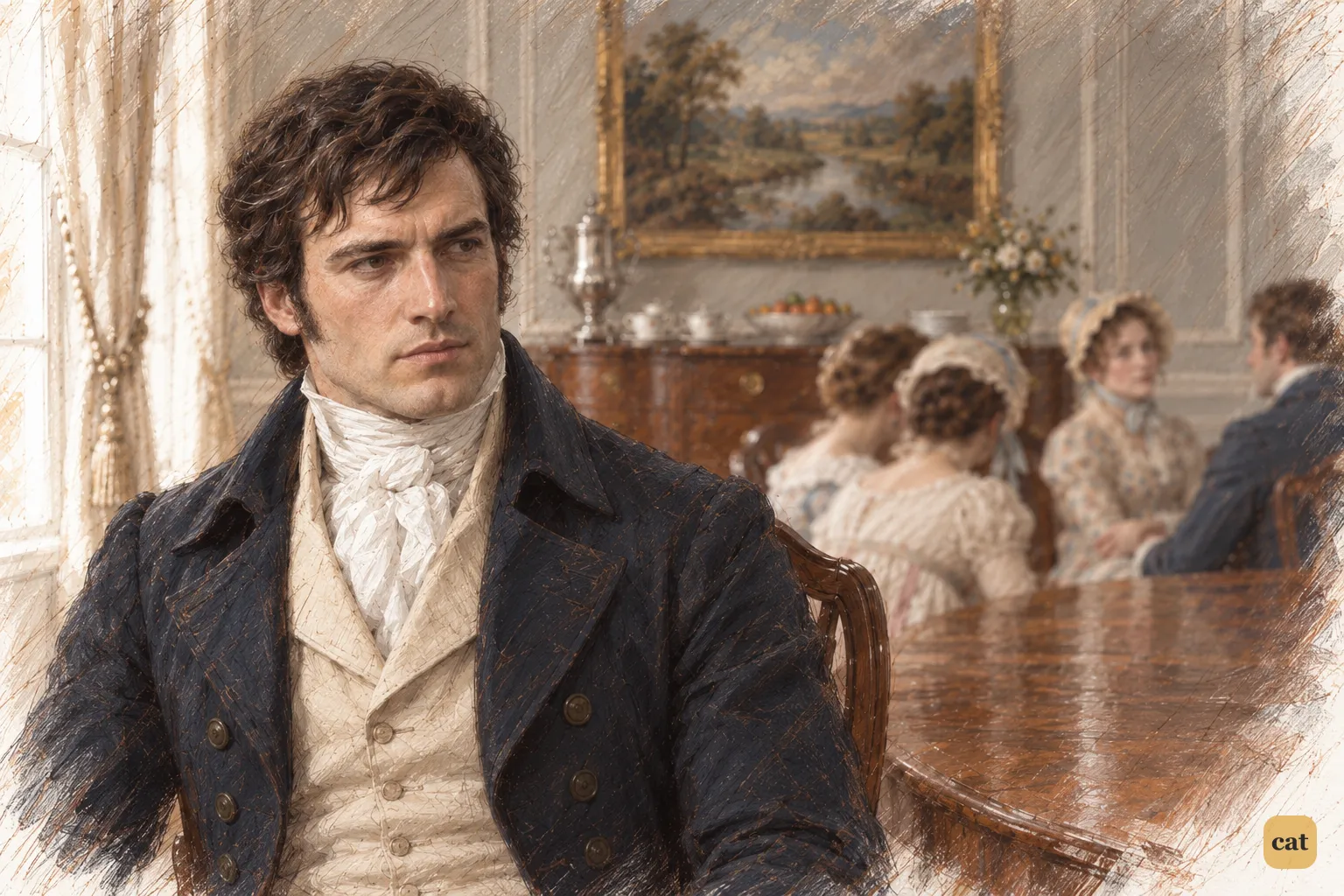
Darcy turns away
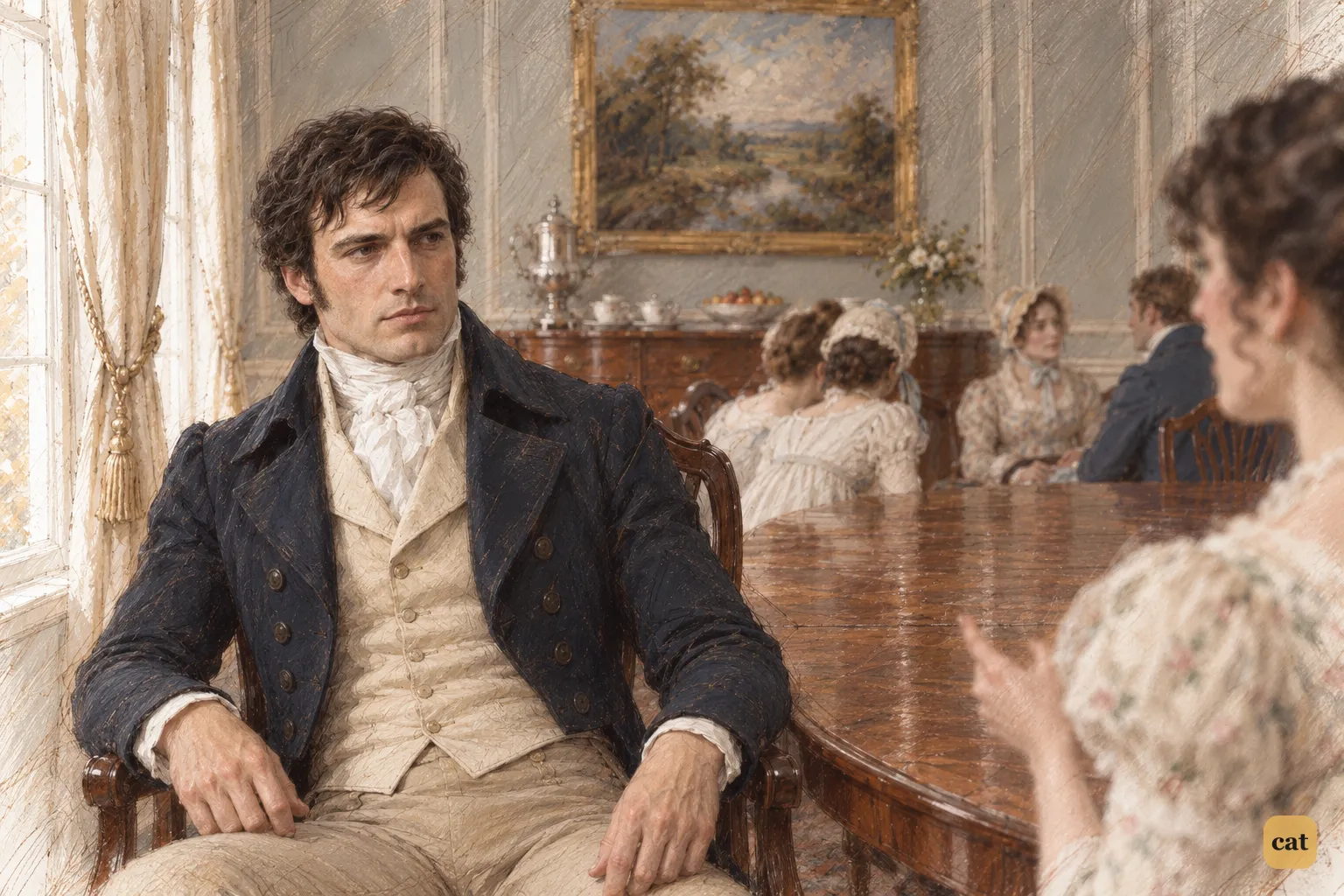
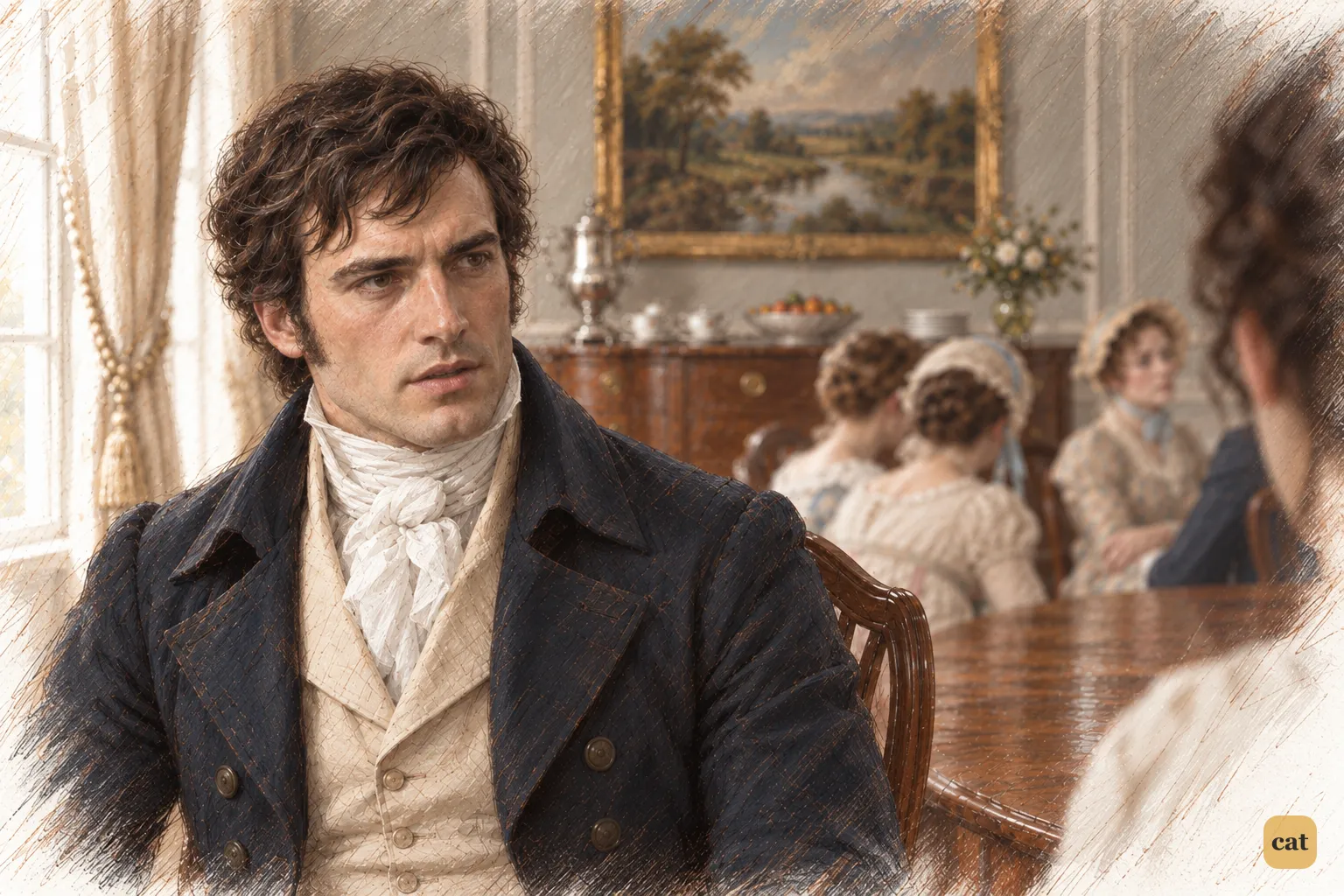
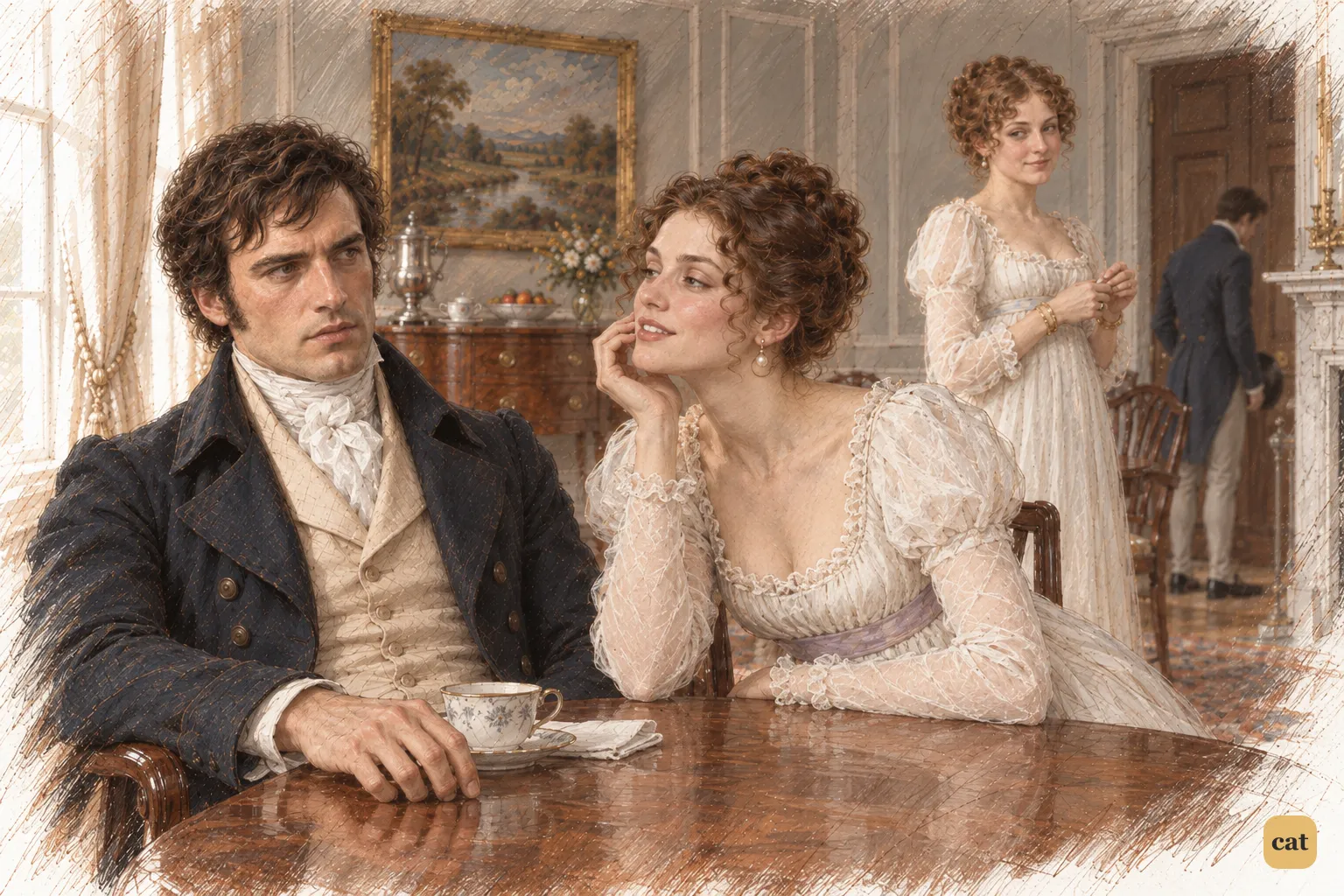
Every body was surprised; and Darcy, after looking at her for a moment, turned silently away. Mrs. Bennet, who fancied she had gained a complete victory over him, continued her triumph.
Read from here → -

Equally happy in either
"When I am in the country," he replied, "I never wish to leave it; and when I am in town it is pretty much the same. They have each their advantages, and I can be equally happy in either."
Read from here → -
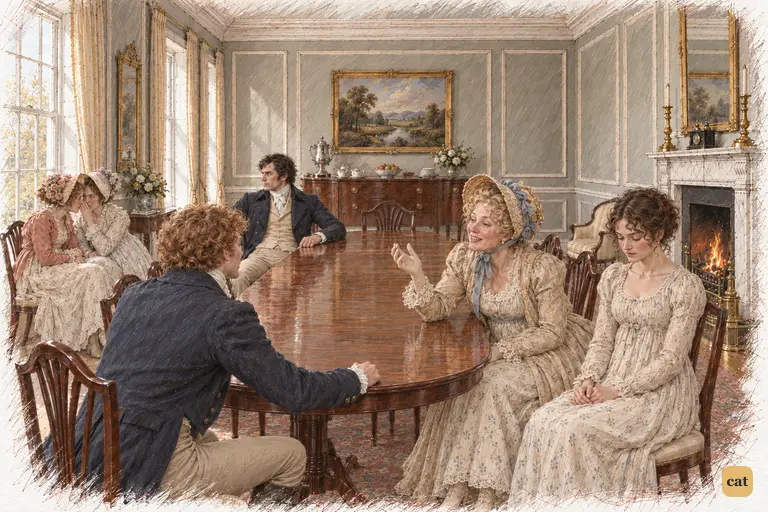
That gentleman
"Aye—that is because you have the right disposition. But that gentleman," looking at Darcy, "seemed to think the country was nothing at all."
Read from here → -
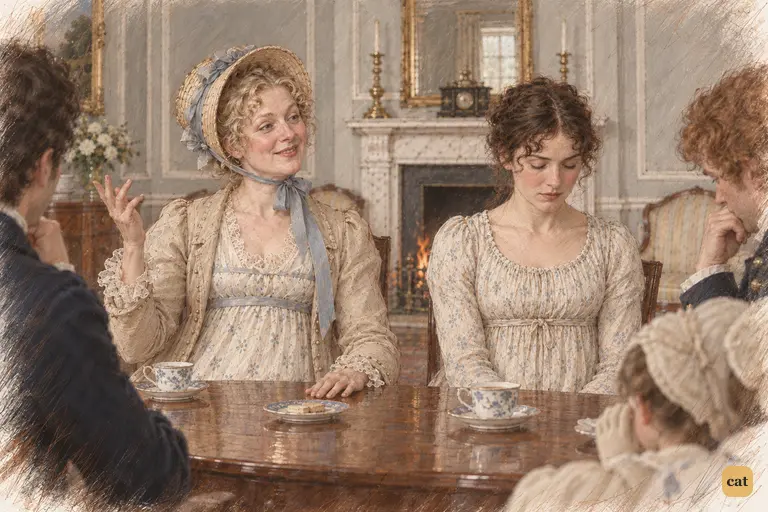
Four and twenty families
"Certainly, my dear, nobody said there were; but as to not meeting with many people in this neighbourhood, I believe there are few neighbourhoods larger. I know we dine with four and twenty families."
Read from here → -

A very expressive smile
Nothing but concern for Elizabeth could enable Bingley to keep his countenance. His sister was less delicate, and directed her eye towards Mr. Darcy with a very expressive smile. Elizabeth, for the sake of saying something that might turn her mother's thoughts, now asked her if Charlotte Lucas had been at Longbourn since her coming away.
Read from here → -
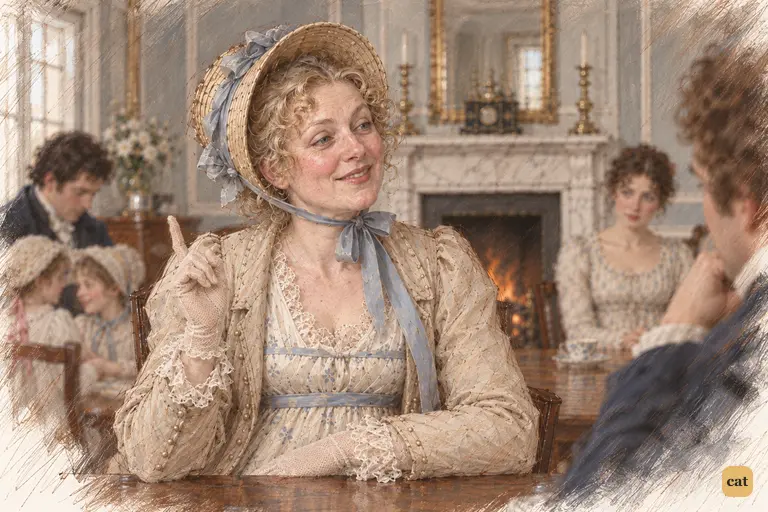
Not handsome, the Lucases
"No, she would go home. I fancy she was wanted about the mince pies. For my part, Mr. Bingley, I always keep servants that can do their own work; my daughters are brought up differently. But every body is to judge for themselves, and the Lucases are very good sort of girls, I assure you. It is a pity they are not handsome! Not that I think Charlotte so very plain—but then she is our particular friend."
Read from here → -
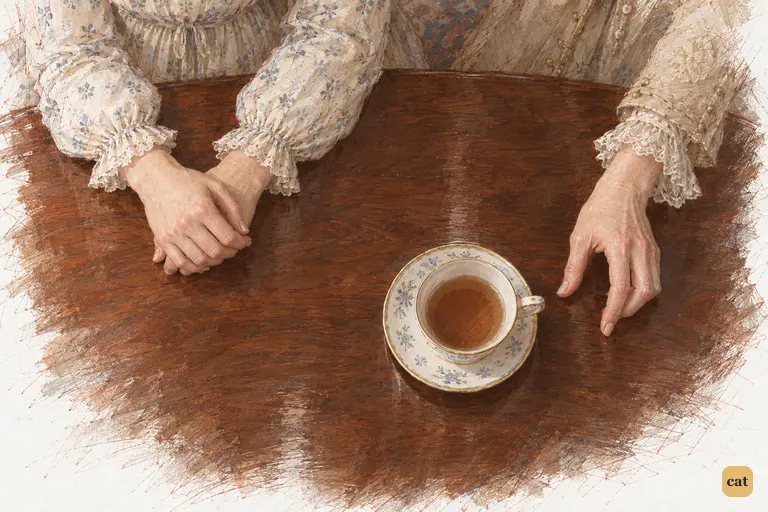
The mince pies
"No, she would go home. I fancy she was wanted about the mince pies. For my part, Mr. Bingley, I always keep servants that can do their own work; my daughters are brought up differently. But every body is to judge for themselves, and the Lucases are very good sort of girls, I assure you. It is a pity they are not handsome! Not that I think Charlotte so very plain—but then she is our particular friend."
Read from here → -
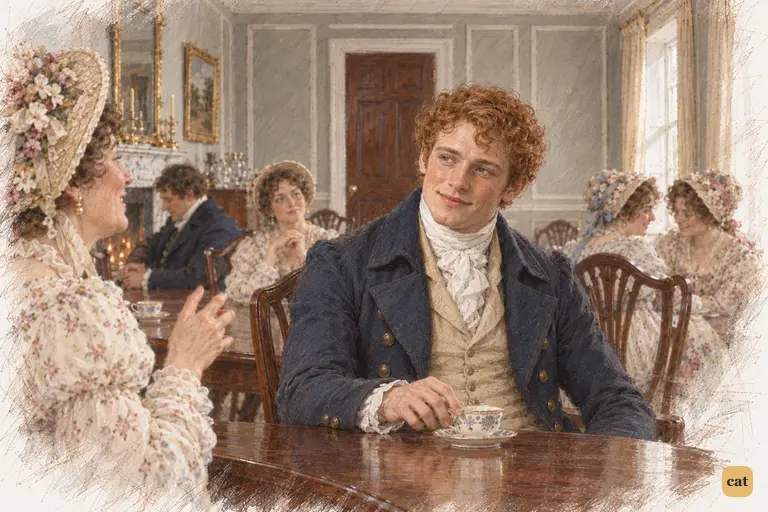
Jane's poet
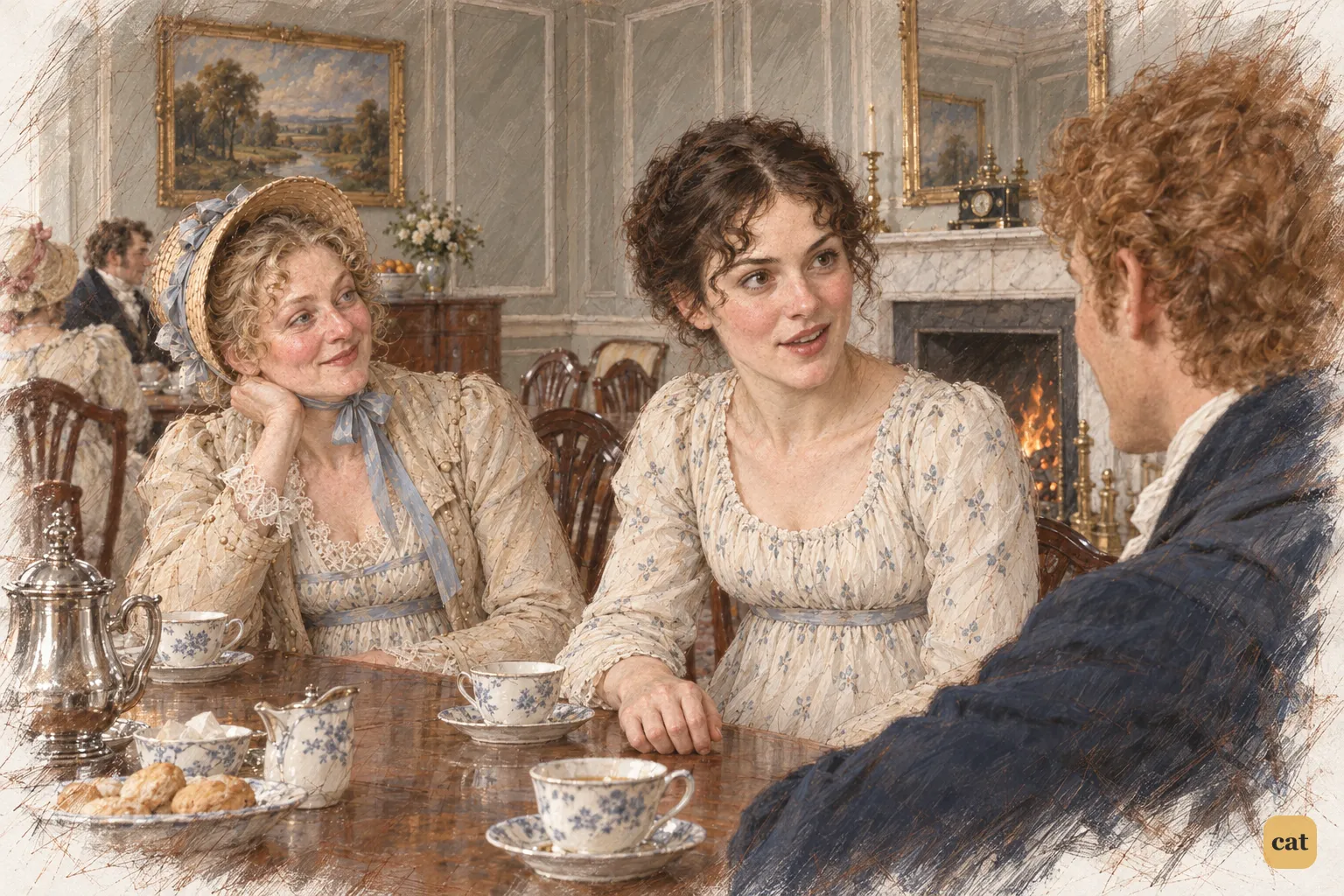
"Oh! dear, yes;—but you must own she is very plain. Lady Lucas herself has often said so, and envied me Jane's beauty. I do not like to boast of my own child, but to be sure, Jane—one does not often see any body better looking. It is what every body says. I do not trust my own partiality. When she was only fifteen, there was a gentleman at my brother Gardiner's in town, so much in love with her, that my sister-in-law was sure he would make her an offer before we came away. But however he did not. Perhaps he thought her too young. However, he wrote some verses on her, and very pretty they were."
Read from here → -
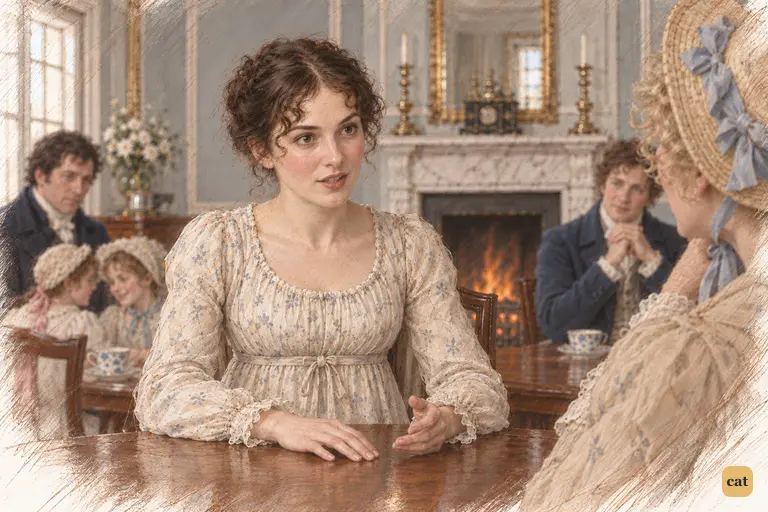
Poetry drives love away
"And so ended his affection," said Elizabeth impatiently. "There has been many a one, I fancy, overcome in the same way. I wonder who first discovered the efficacy of poetry in driving away love!"
Read from here → -
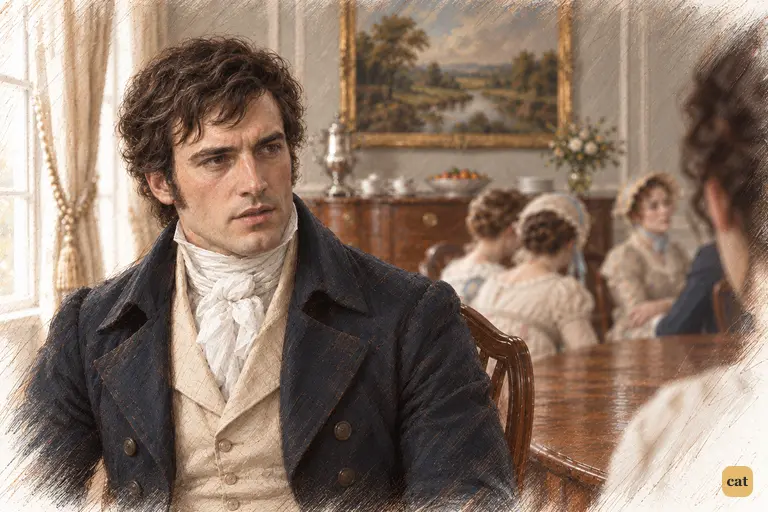
The food of love
"I have been used to consider poetry as the food of love," said Darcy.
Read from here → -
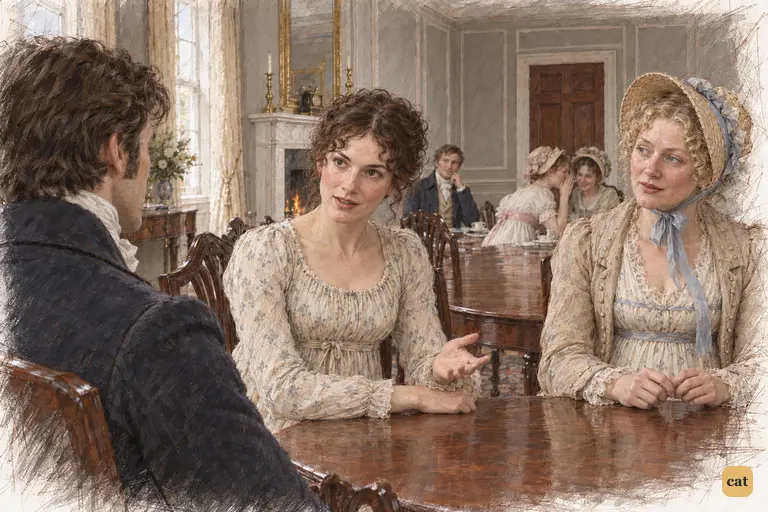
One good sonnet
"Of a fine, stout, healthy love it may. Every thing nourishes what is strong already. But if it be only a slight, thin sort of inclination, I am convinced that one good sonnet will starve it entirely away."
Read from here → -
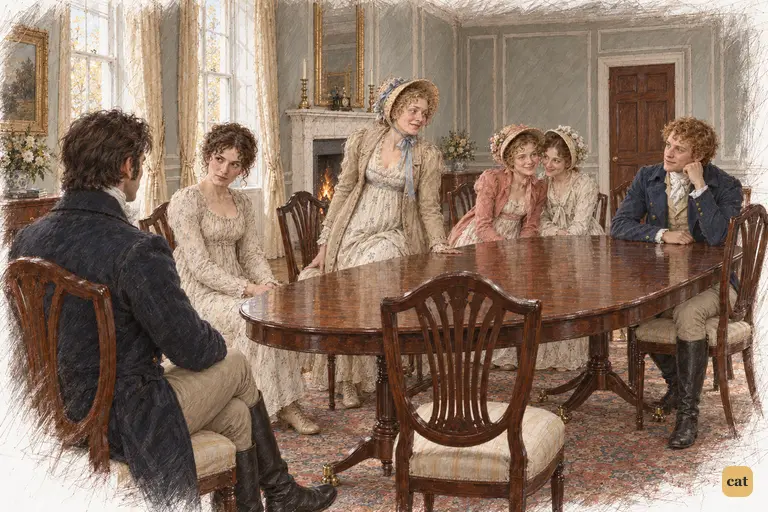
The general pause
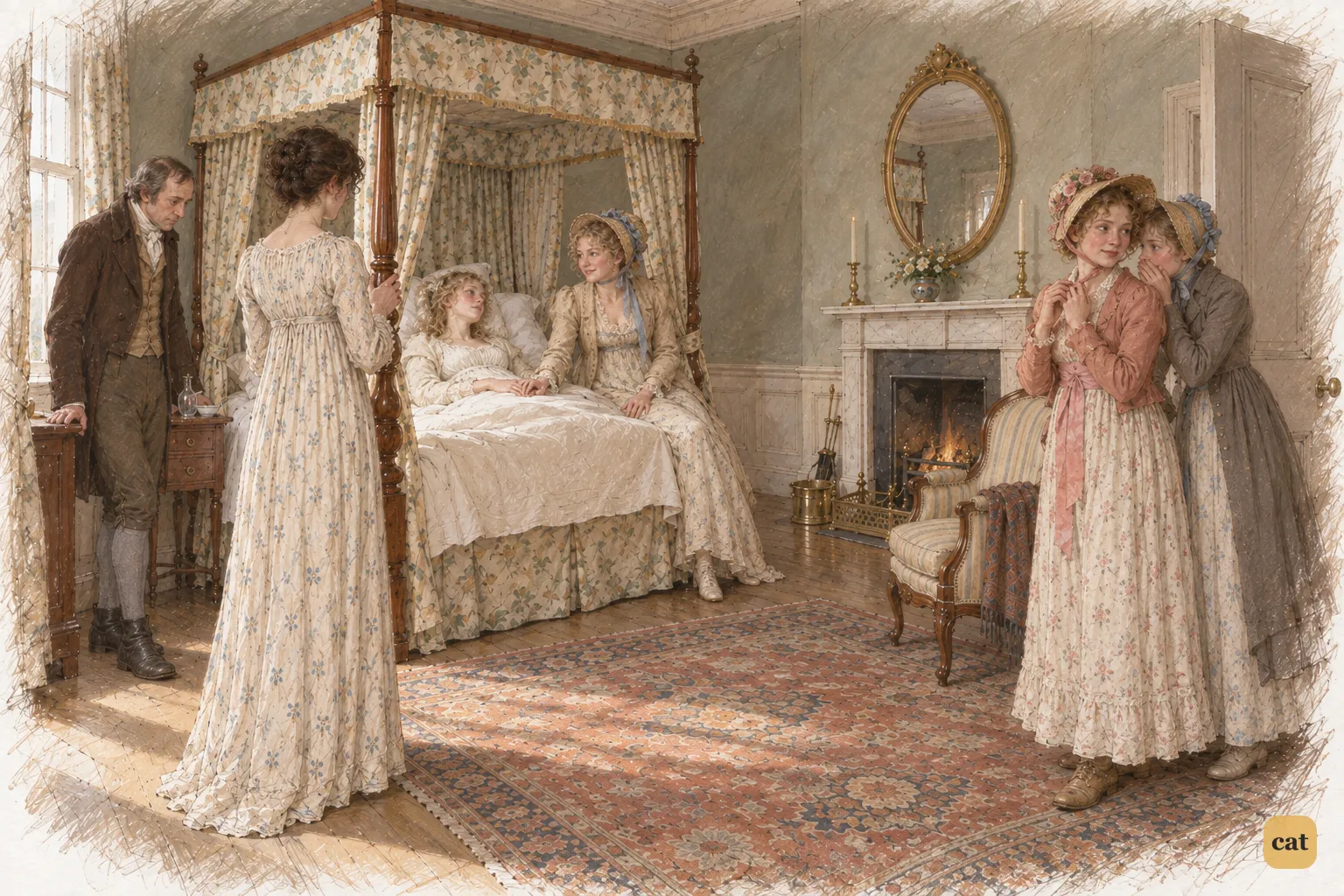
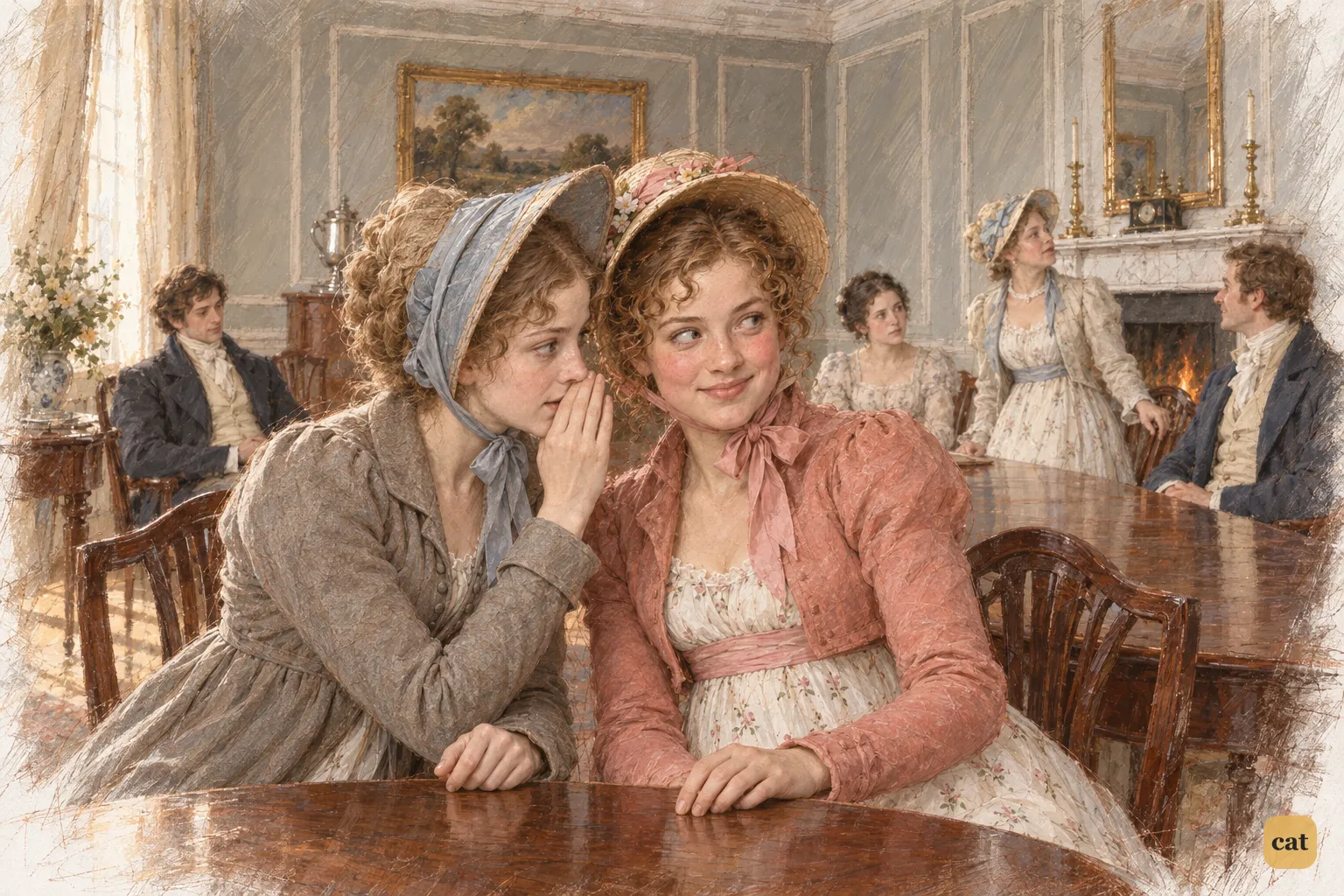
Darcy only smiled; and the general pause which ensued made Elizabeth tremble lest her mother should be exposing herself again. She longed to speak, but could think of nothing to say; and after a short silence Mrs. Bennet began repeating her thanks to Mr. Bingley for his kindness to Jane, with an apology for troubling him also with Lizzy. Mr. Bingley was unaffectedly civil in his answer, and forced his younger sister to be civil also, and say what the occasion required. She performed her part indeed without much graciousness, but Mrs. Bennet was satisfied, and soon afterwards ordered her carriage. Upon this signal, the youngest of her daughters put herself forward. The two girls had been whispering to each other during the whole visit, and the result of it was, that the youngest should tax Mr. Bingley with having promised on his first coming into the country to give a ball at Netherfield.
Read from here → -
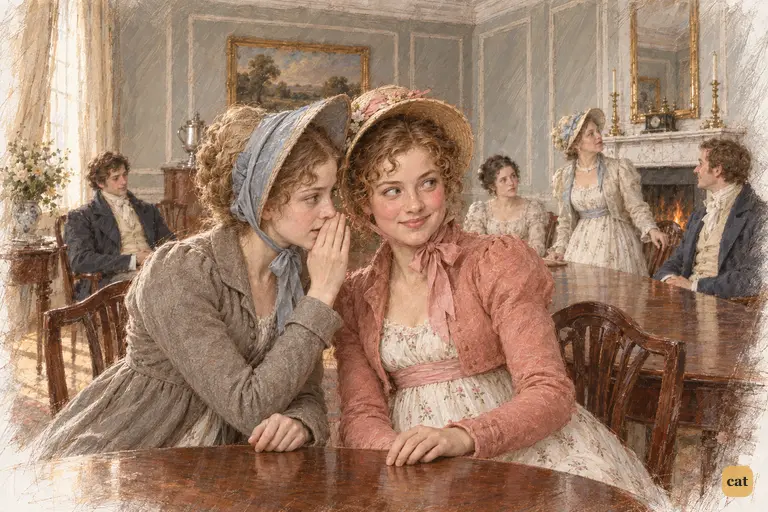
The whispered plot
Darcy only smiled; and the general pause which ensued made Elizabeth tremble lest her mother should be exposing herself again. She longed to speak, but could think of nothing to say; and after a short silence Mrs. Bennet began repeating her thanks to Mr. Bingley for his kindness to Jane, with an apology for troubling him also with Lizzy. Mr. Bingley was unaffectedly civil in his answer, and forced his younger sister to be civil also, and say what the occasion required. She performed her part indeed without much graciousness, but Mrs. Bennet was satisfied, and soon afterwards ordered her carriage. Upon this signal, the youngest of her daughters put herself forward. The two girls had been whispering to each other during the whole visit, and the result of it was, that the youngest should tax Mr. Bingley with having promised on his first coming into the country to give a ball at Netherfield.
Read from here → -
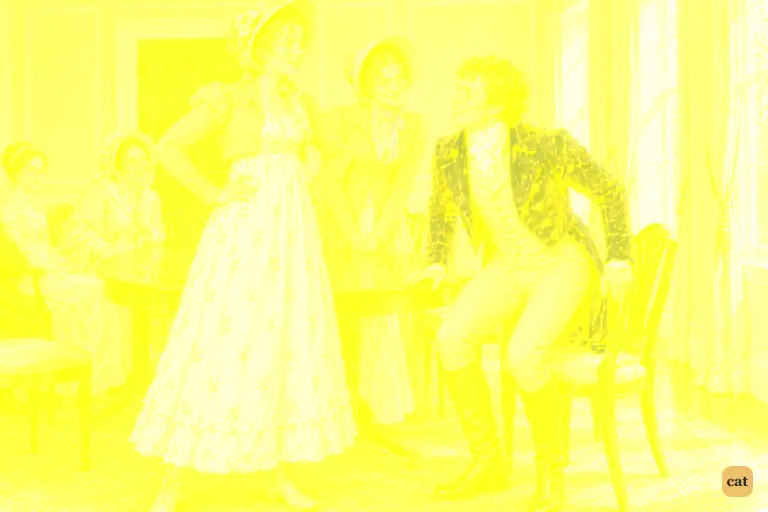
Lydia's sudden attack
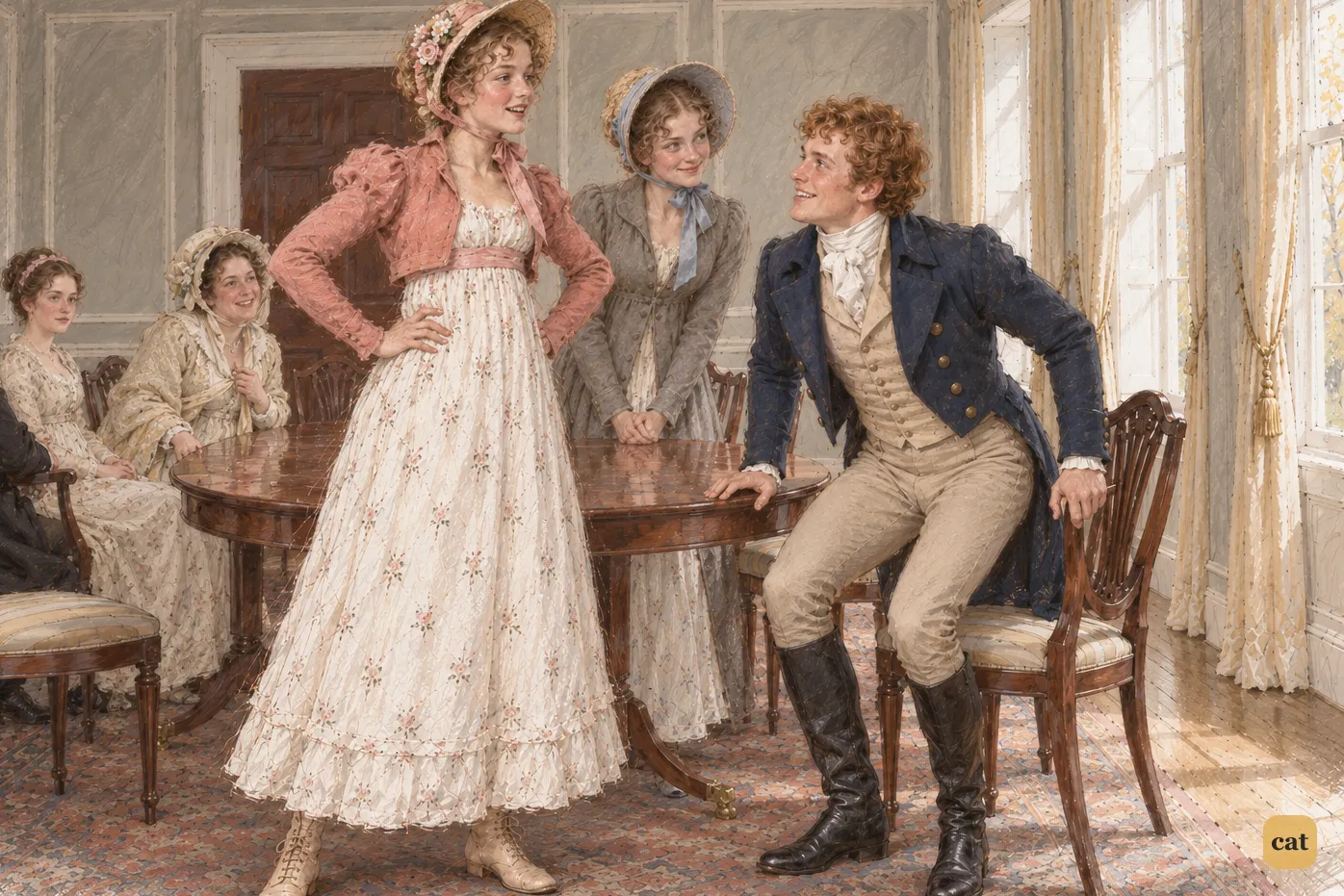
Lydia was a stout, well-grown girl of fifteen, with a fine complexion and good-humoured countenance; a favourite with her mother, whose affection had brought her into public at an early age. She had high animal spirits, and a sort of natural self-consequence, which the attentions of the officers, to whom her uncle's good dinners and her own easy manners recommended her, had increased into assurance. She was very equal therefore to address Mr. Bingley on the subject of the ball, and abruptly reminded him of his promise; adding, that it would be the most shameful thing in the world if he did not keep it. His answer to this sudden attack was delightful to their mother's ear.
Read from here → -

Name the very day
"I am perfectly ready, I assure you, to keep my engagement; and when your sister is recovered, you shall if you please name the very day of the ball. But you would not wish to be dancing while she is ill."
Read from here → -
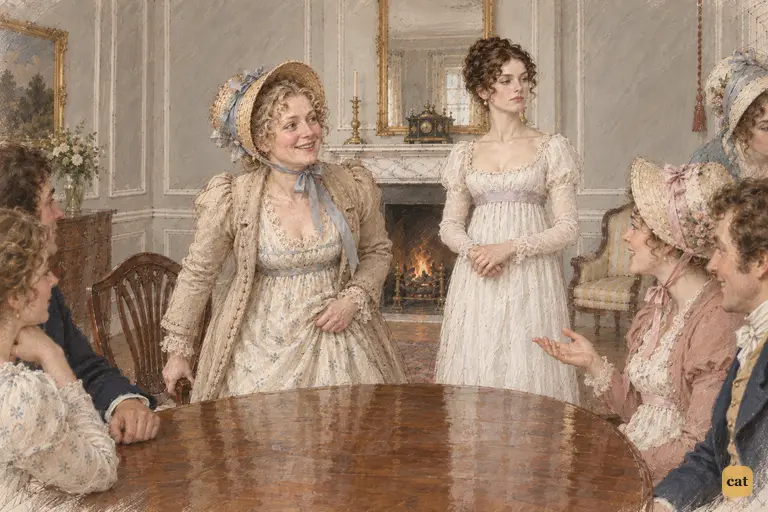
Delightful to her ear
Lydia declared herself satisfied. "Oh! yes—it would be much better to wait till Jane was well, and by that time most likely Captain Carter would be at Meryton again. And when you have given your ball," she added, "I shall insist on their giving one also. I shall tell Colonel Forster it will be quite a shame if he does not."
Read from here → -
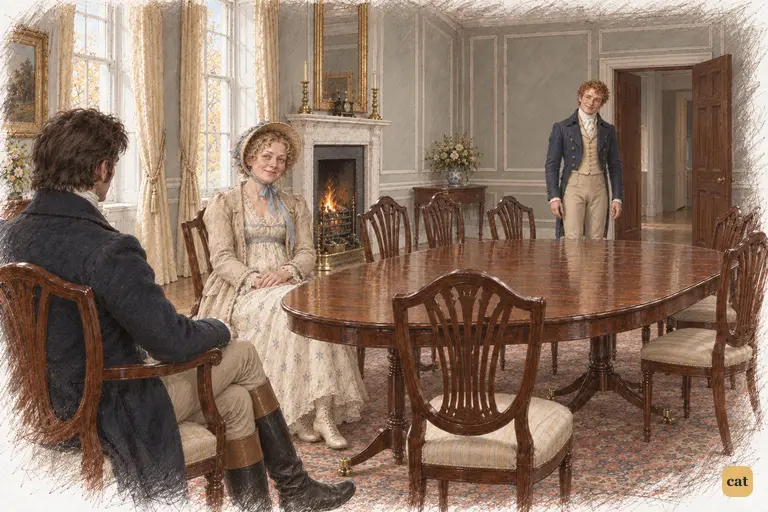
The Longbourn party departs
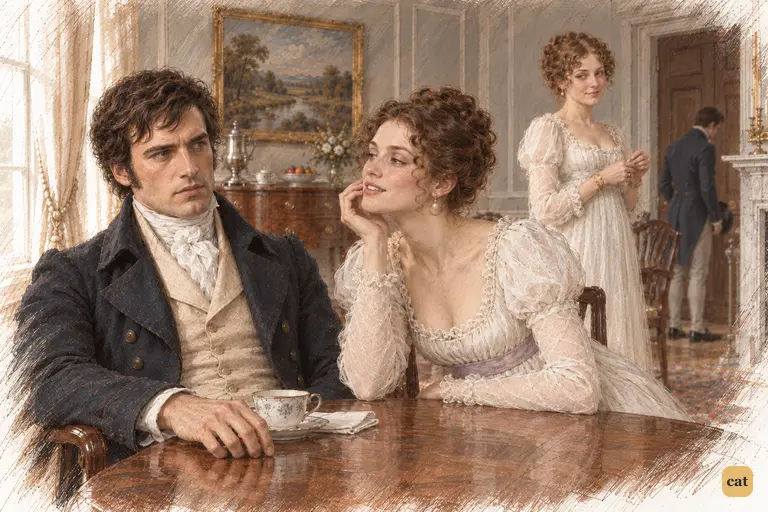
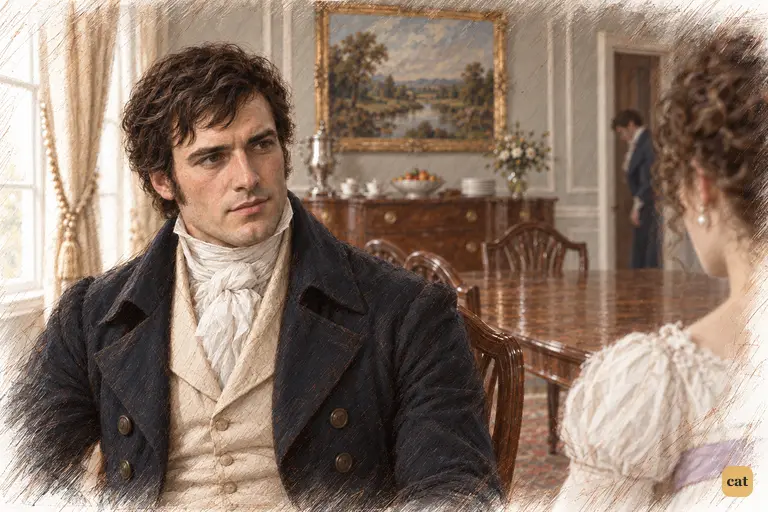
Mrs. Bennet and her daughters then departed, and Elizabeth returned instantly to Jane, leaving her own and her relations' behaviour to the remarks of the two ladies and Mr. Darcy; the latter of whom, however, could not be prevailed on to join in their censure of her, in spite of all Miss Bingley's witticisms on fine eyes.
Read from here → -
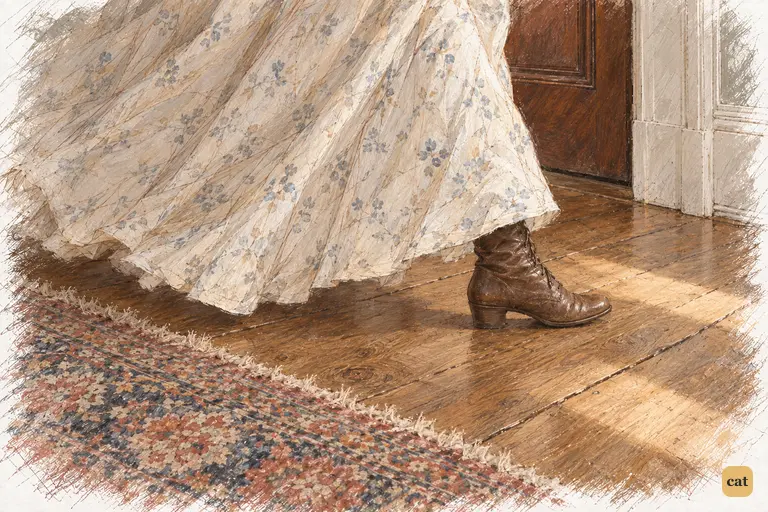
Hem at the threshold
Mrs. Bennet and her daughters then departed, and Elizabeth returned instantly to Jane, leaving her own and her relations' behaviour to the remarks of the two ladies and Mr. Darcy; the latter of whom, however, could not be prevailed on to join in their censure of her, in spite of all Miss Bingley's witticisms on fine eyes.
Read from here → -
Witticisms on fine eyes
Mrs. Bennet and her daughters then departed, and Elizabeth returned instantly to Jane, leaving her own and her relations' behaviour to the remarks of the two ladies and Mr. Darcy; the latter of whom, however, could not be prevailed on to join in their censure of her, in spite of all Miss Bingley's witticisms on fine eyes.
Read from here → -
He will not join
Mrs. Bennet and her daughters then departed, and Elizabeth returned instantly to Jane, leaving her own and her relations' behaviour to the remarks of the two ladies and Mr. Darcy; the latter of whom, however, could not be prevailed on to join in their censure of her, in spite of all Miss Bingley's witticisms on fine eyes.
Read from here → -

Wheel marks on the gravel
Mrs. Bennet and her daughters then departed, and Elizabeth returned instantly to Jane, leaving her own and her relations' behaviour to the remarks of the two ladies and Mr. Darcy; the latter of whom, however, could not be prevailed on to join in their censure of her, in spite of all Miss Bingley's witticisms on fine eyes.
Read from here → -
Chapter 9
Mrs. Bennet at Netherfield
Next chapter: The letter, the reel, the shrubbery Read this chapter