-
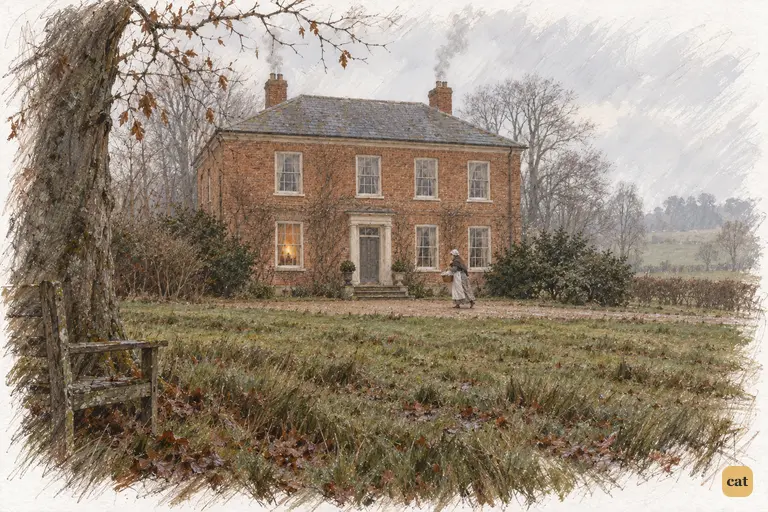
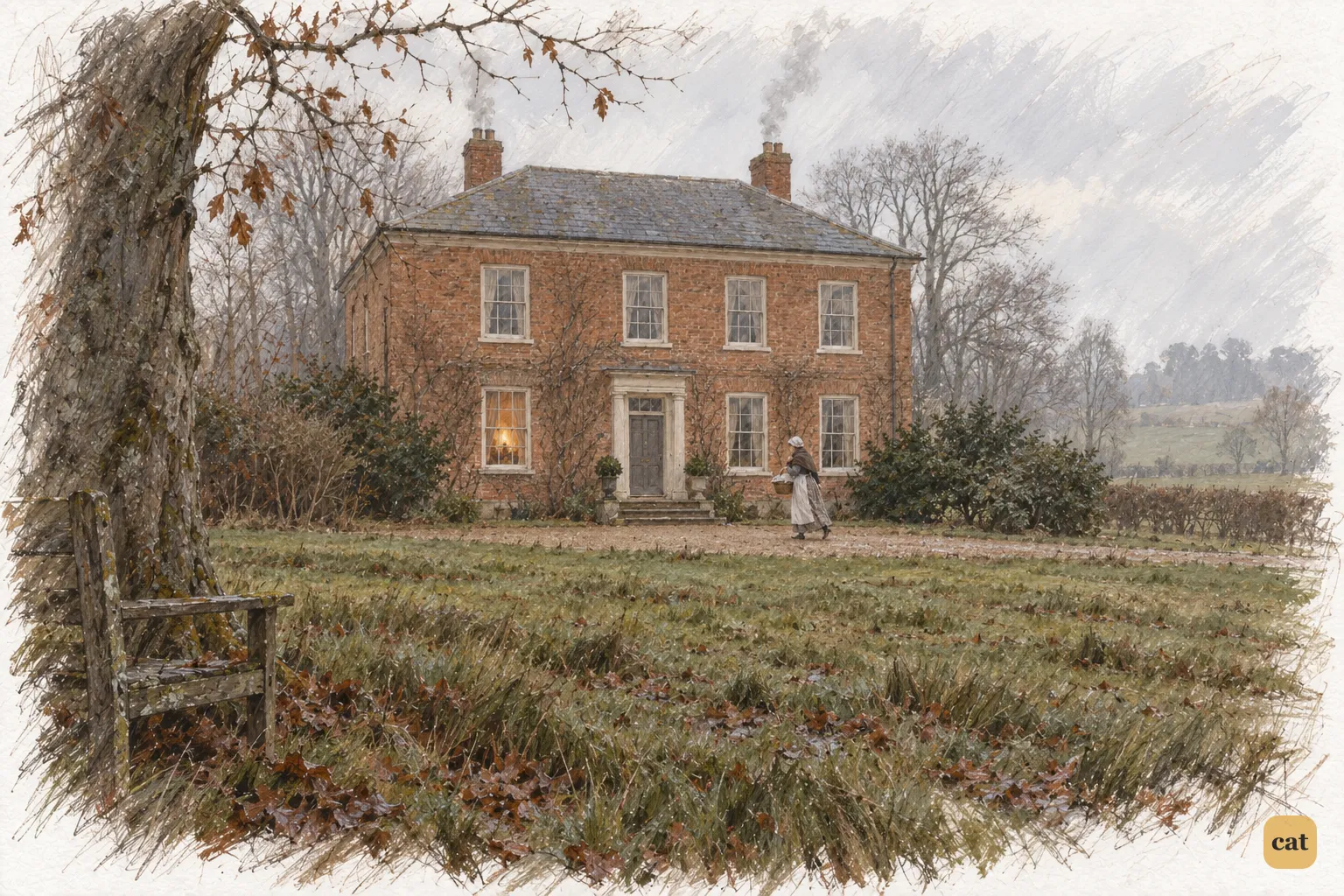
Longbourn on a November morning
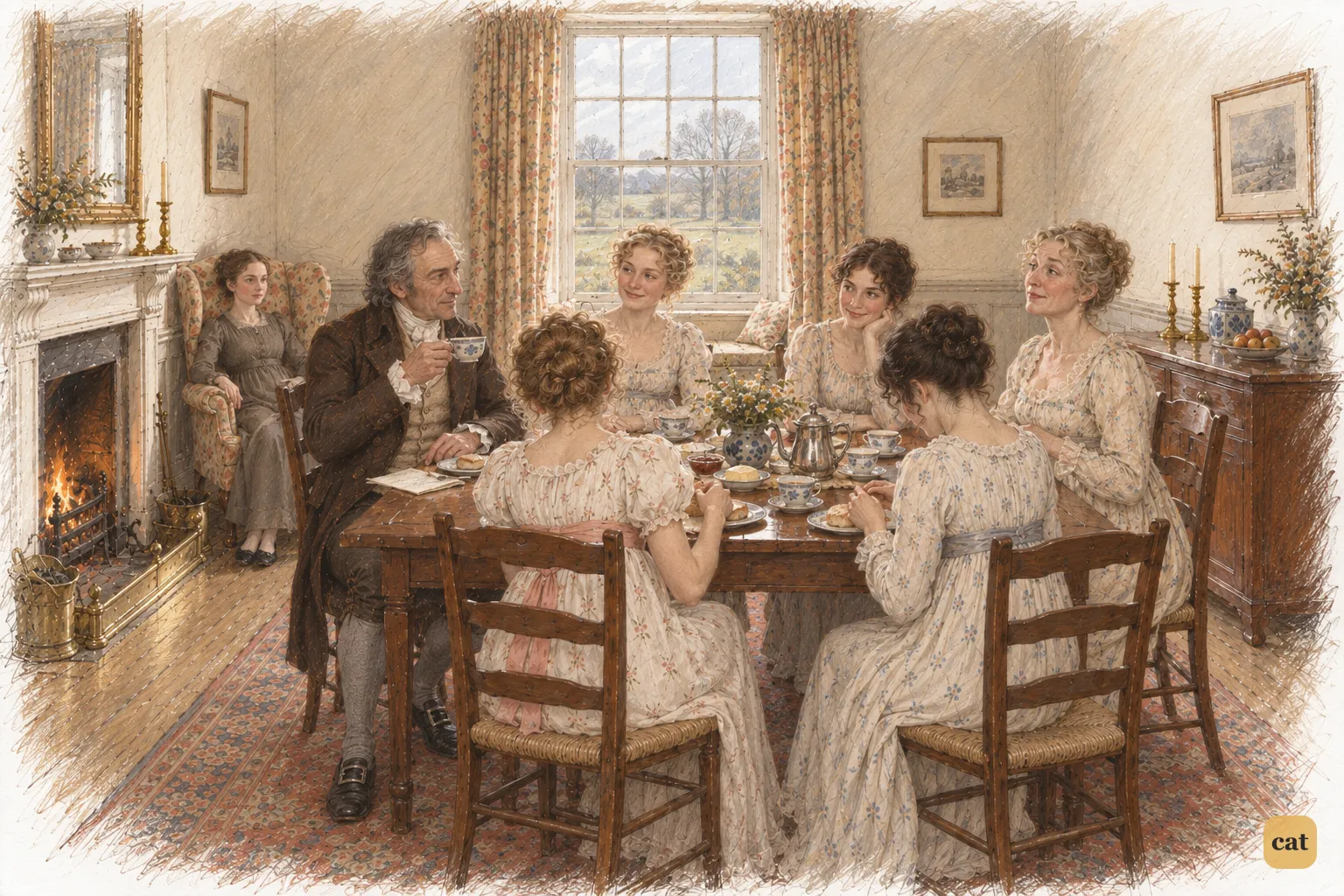
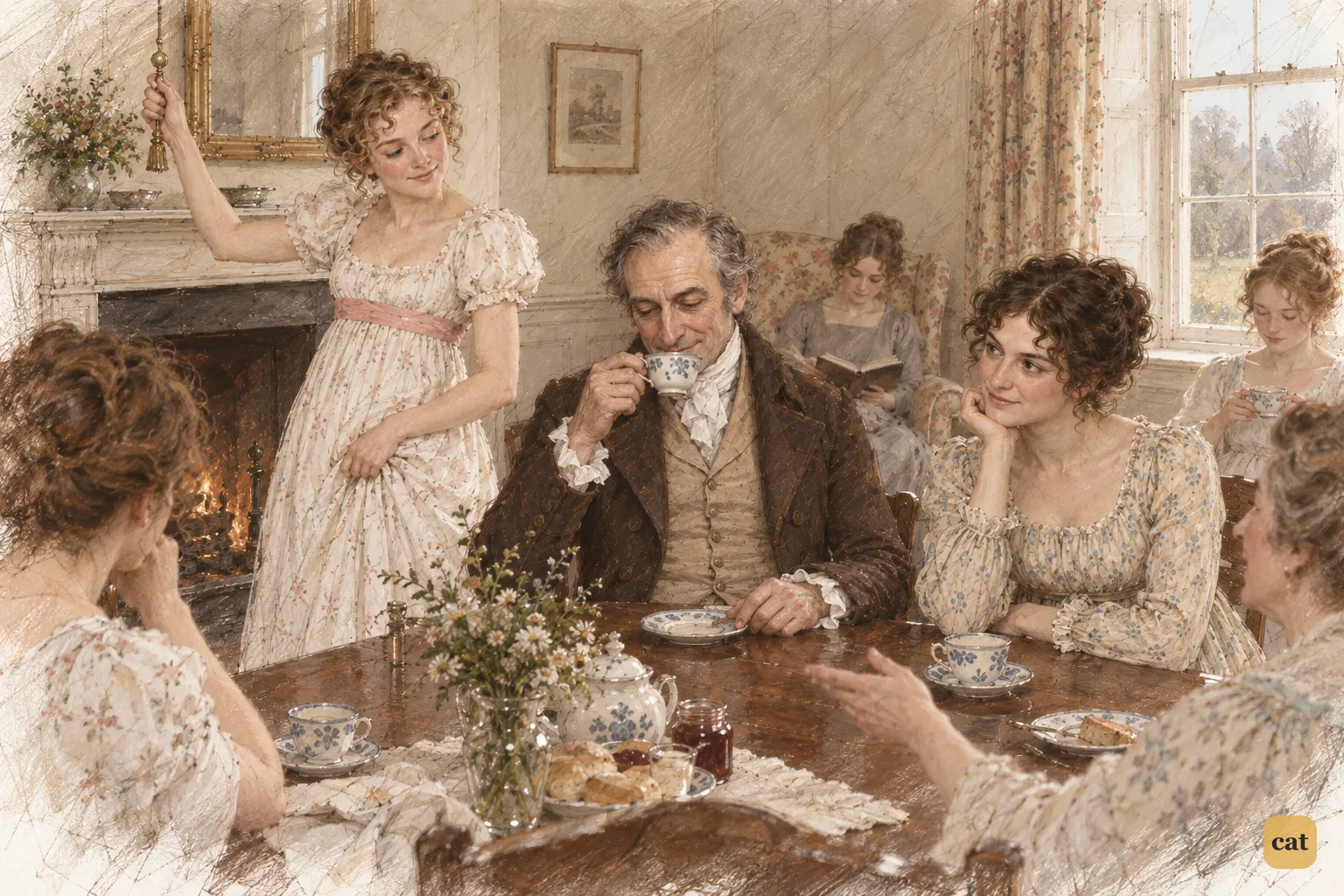
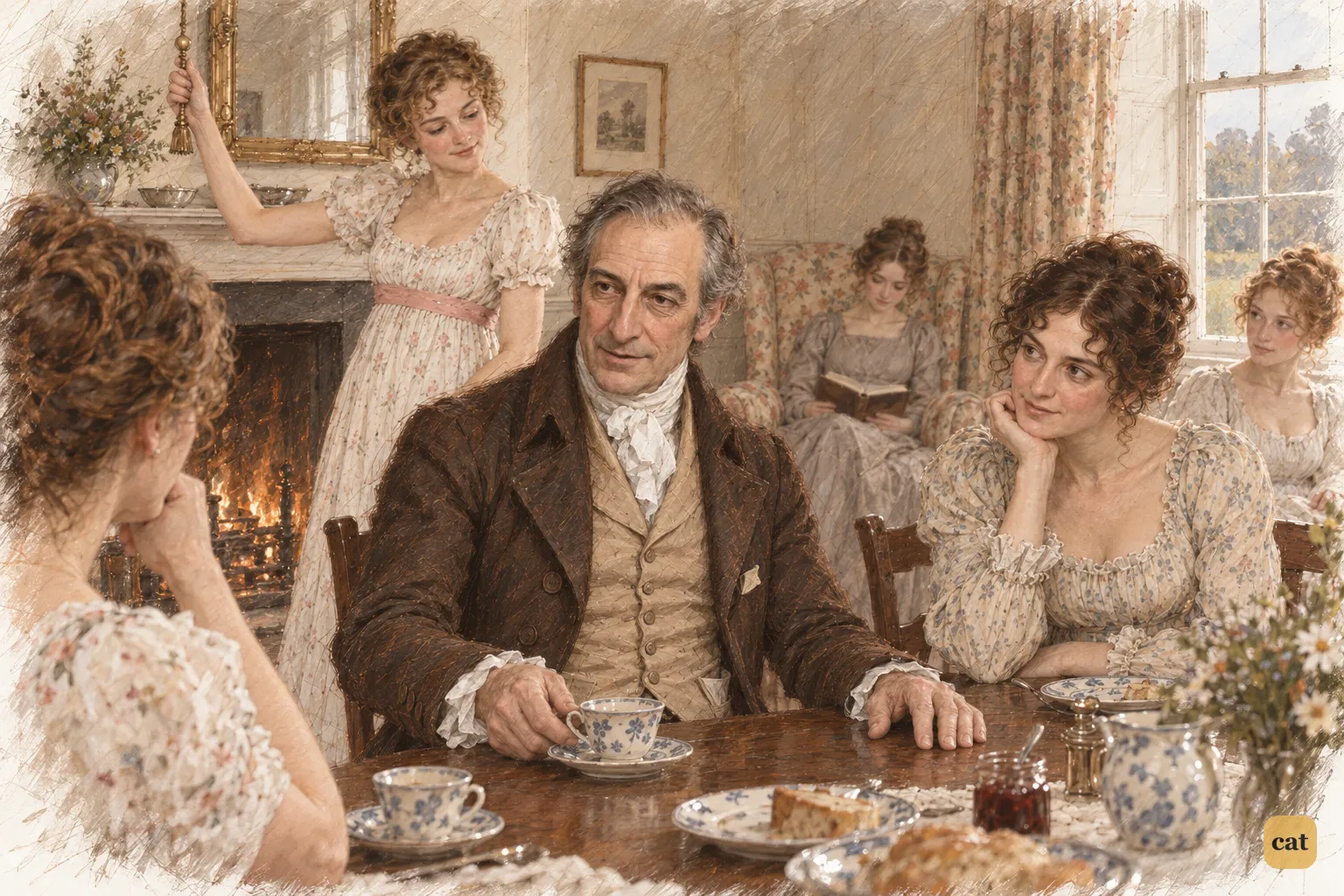
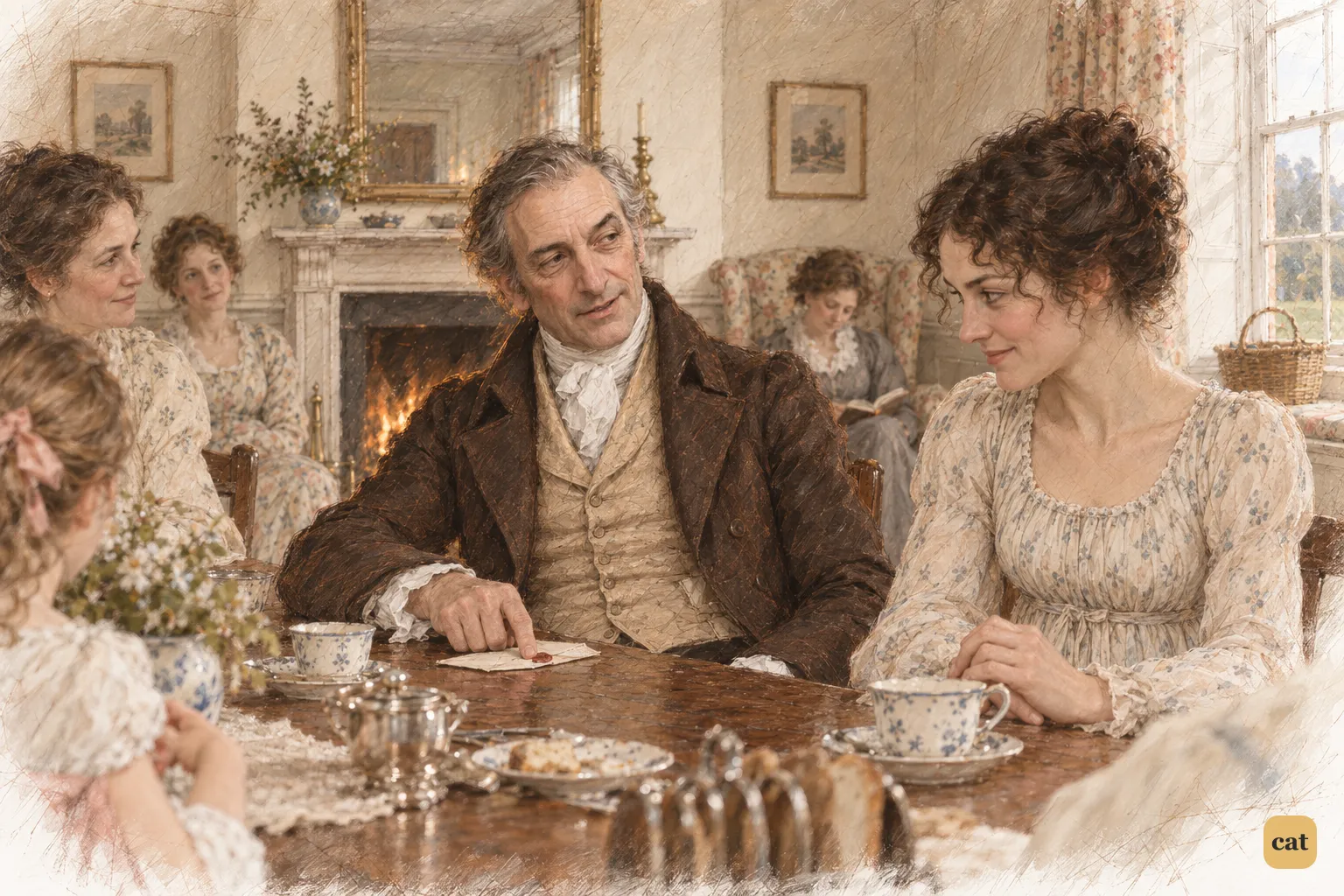
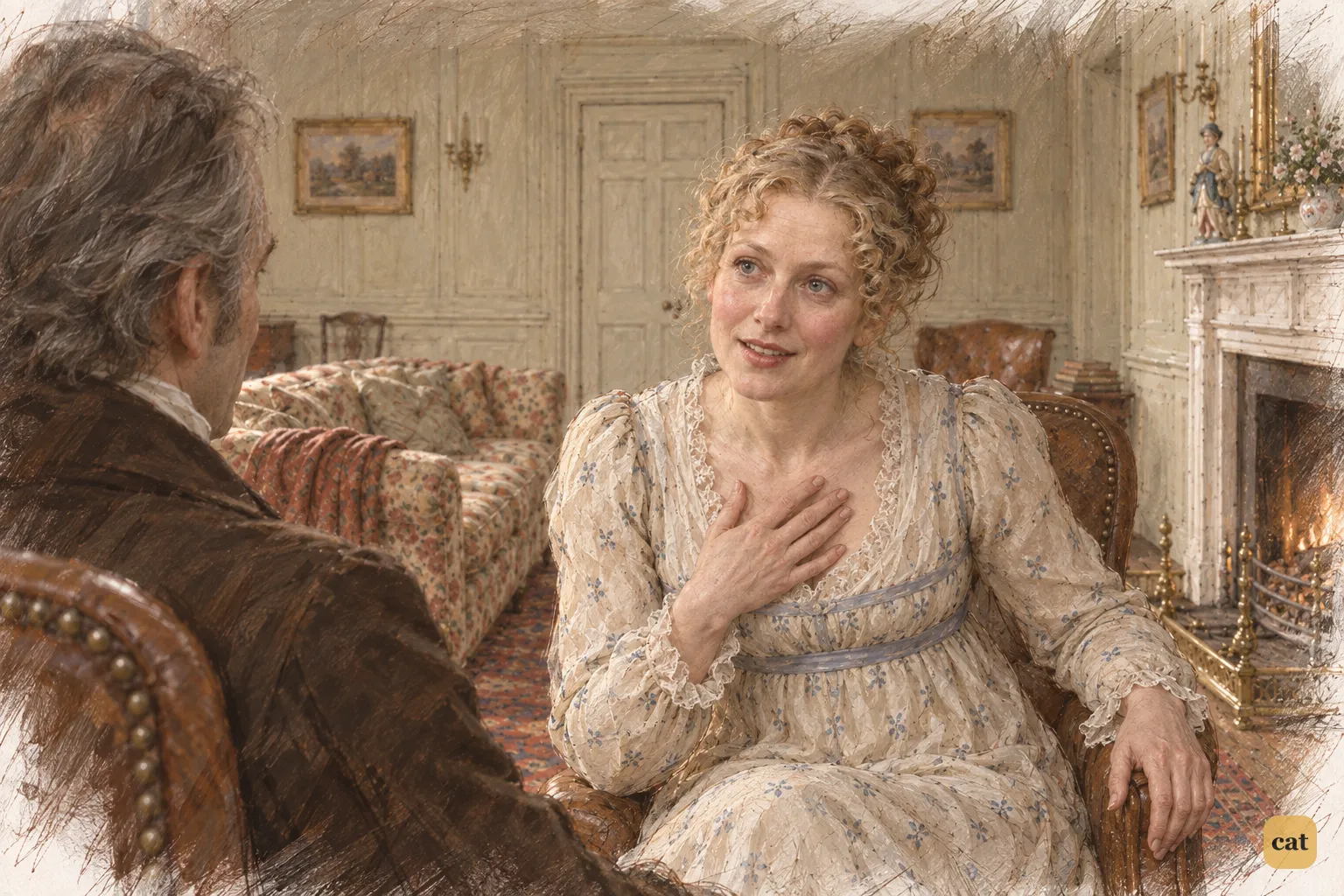
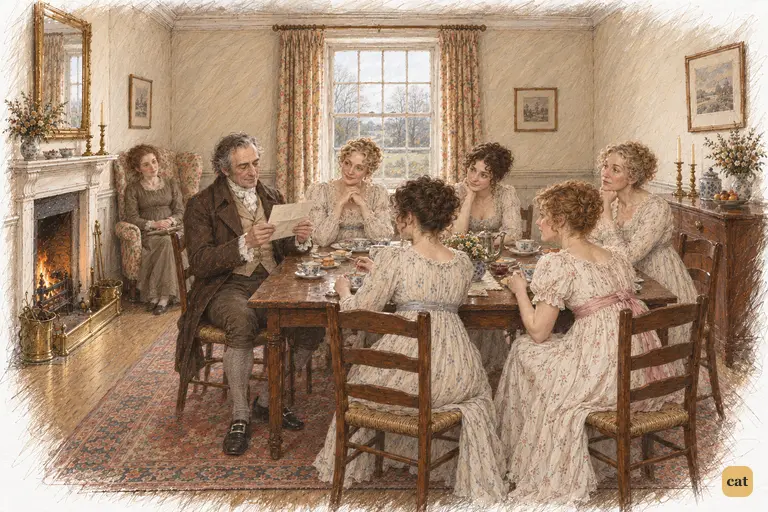
"I hope, my dear," said Mr. Bennet to his wife, as they were at breakfast the next morning, "that you have ordered a good dinner to-day, because I have reason to expect an addition to our family party."
Read from here → -
An announcement at breakfast
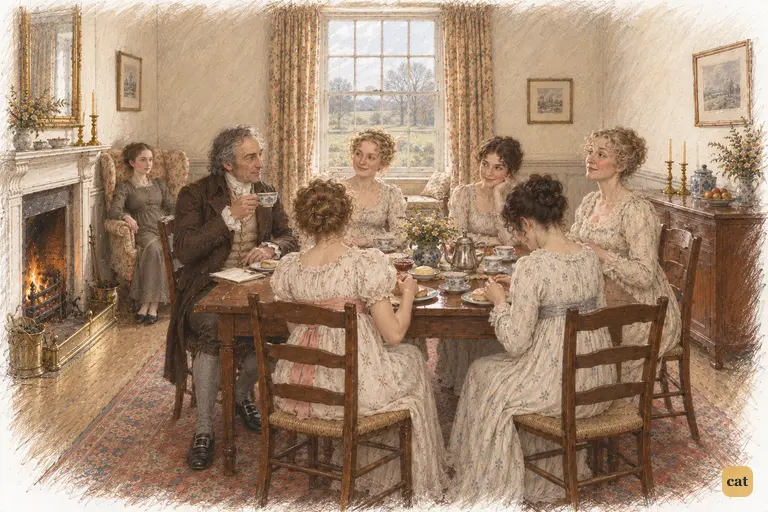
"I hope, my dear," said Mr. Bennet to his wife, as they were at breakfast the next morning, "that you have ordered a good dinner to-day, because I have reason to expect an addition to our family party."
Read from here → -
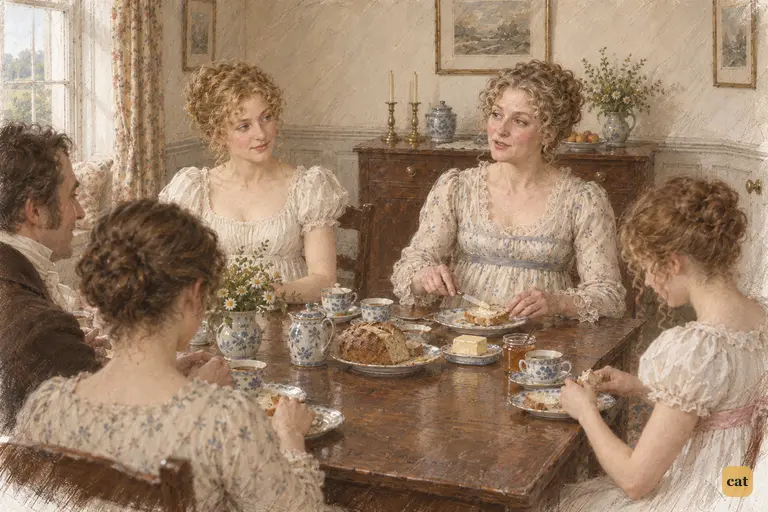
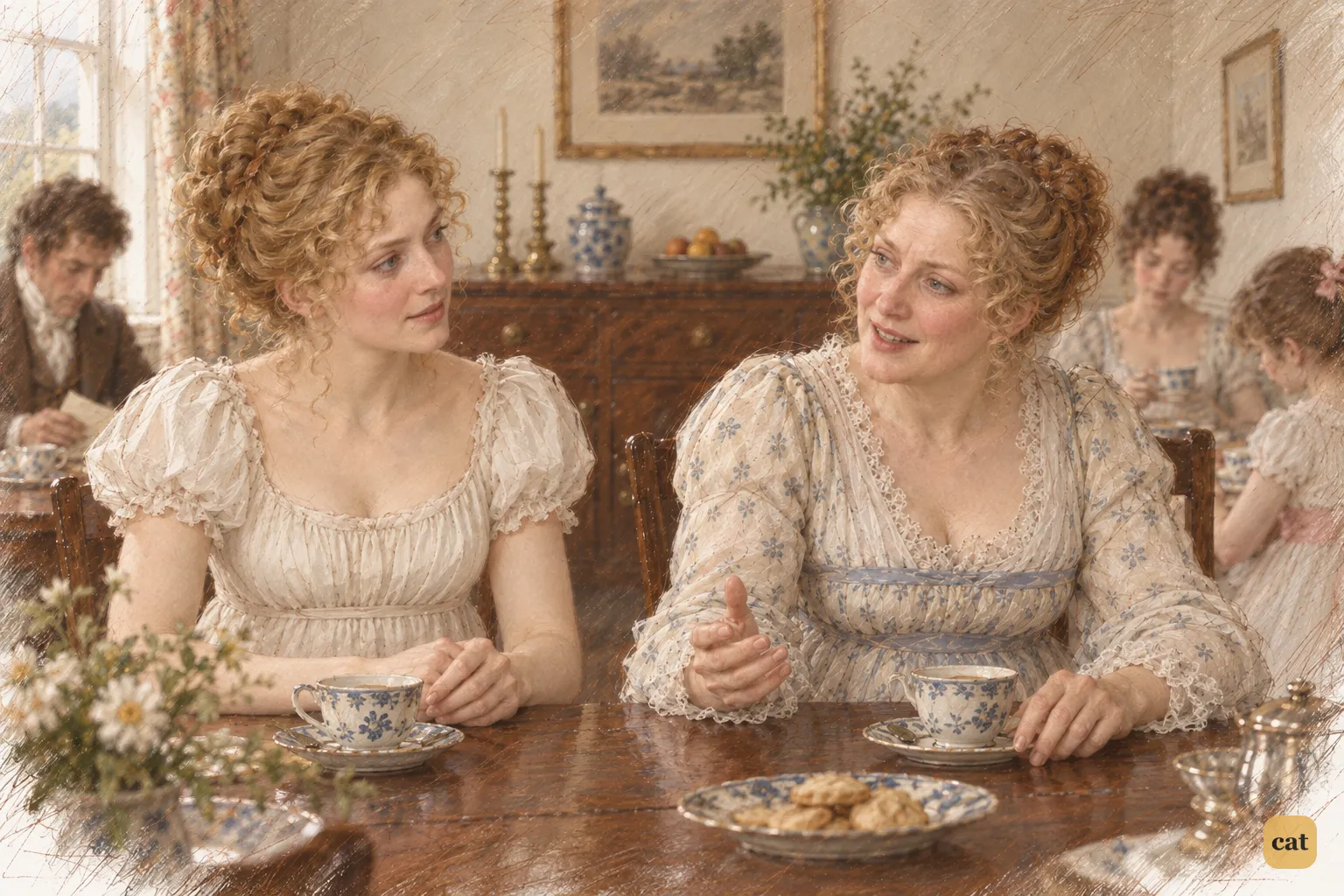
Mrs. Bennet guesses Charlotte
"Who do you mean, my dear? I know of nobody that is coming I am sure, unless Charlotte Lucas should happen to call in, and I hope my dinners are good enough for her. I do not believe she often sees such at home."
Read from here → -
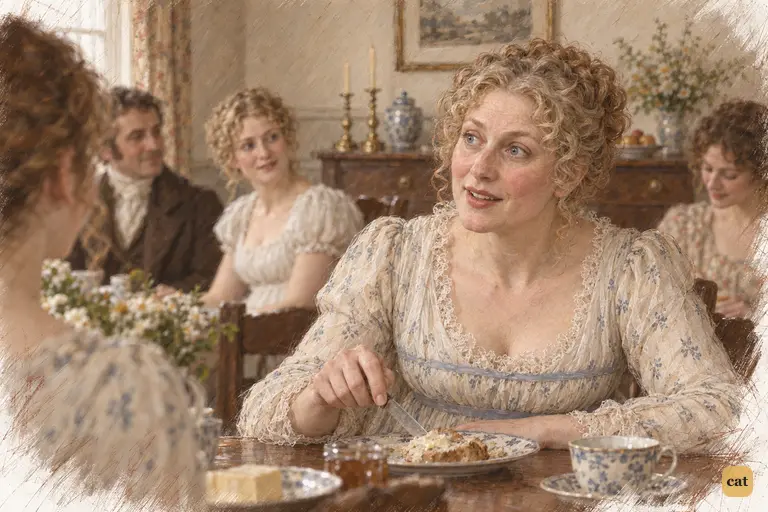
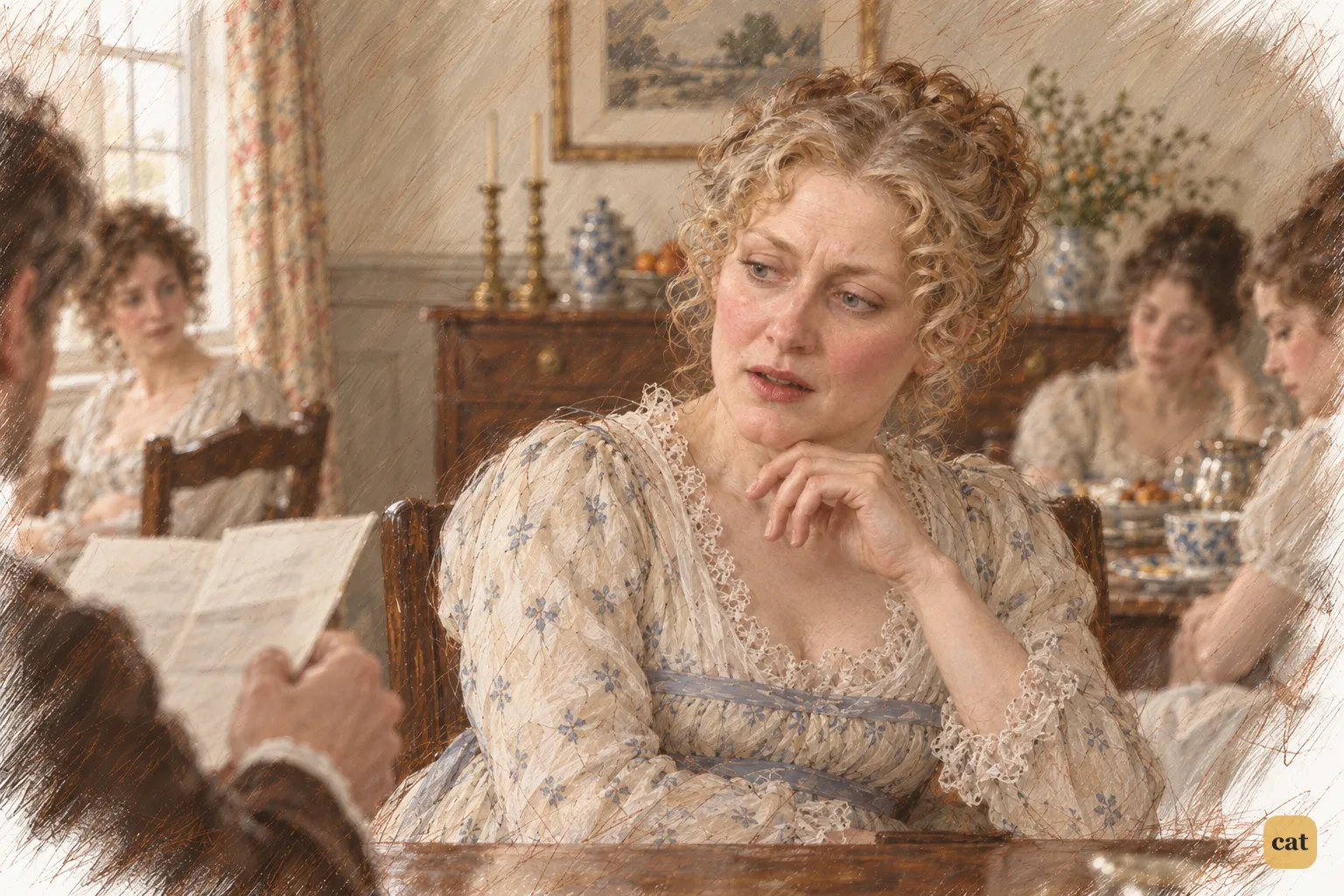
Her eyes sparkle
"The person of whom I speak, is a gentleman and a stranger." Mrs. Bennet's eyes sparkled.—"A gentleman and a stranger! It is Mr. Bingley I am sure. Why Jane—you never dropt a word of this; you sly thing! Well, I am sure I shall be extremely glad to see Mr. Bingley.—But—good lord! how unlucky! there is not a bit of fish to be got to-day. Lydia, my love, ring the bell. I must speak to Hill, this moment."
Read from here → -
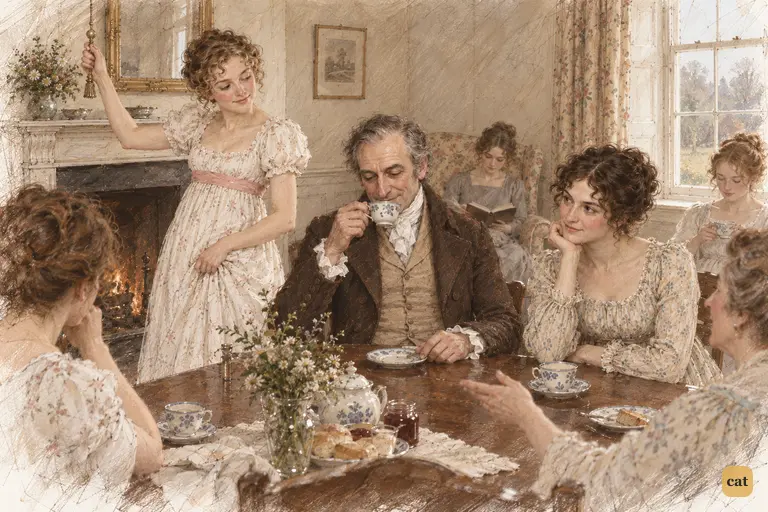
Ring for Hill
"The person of whom I speak, is a gentleman and a stranger." Mrs. Bennet's eyes sparkled.—"A gentleman and a stranger! It is Mr. Bingley I am sure. Why Jane—you never dropt a word of this; you sly thing! Well, I am sure I shall be extremely glad to see Mr. Bingley.—But—good lord! how unlucky! there is not a bit of fish to be got to-day. Lydia, my love, ring the bell. I must speak to Hill, this moment."
Read from here → -
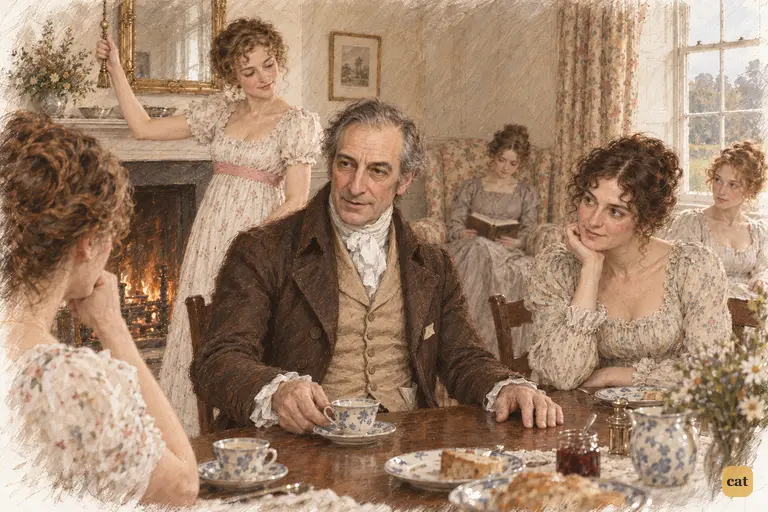
It is not Mr. Bingley
"It is not Mr. Bingley," said her husband; "it is a person whom I never saw in the whole course of my life."
Read from here → -
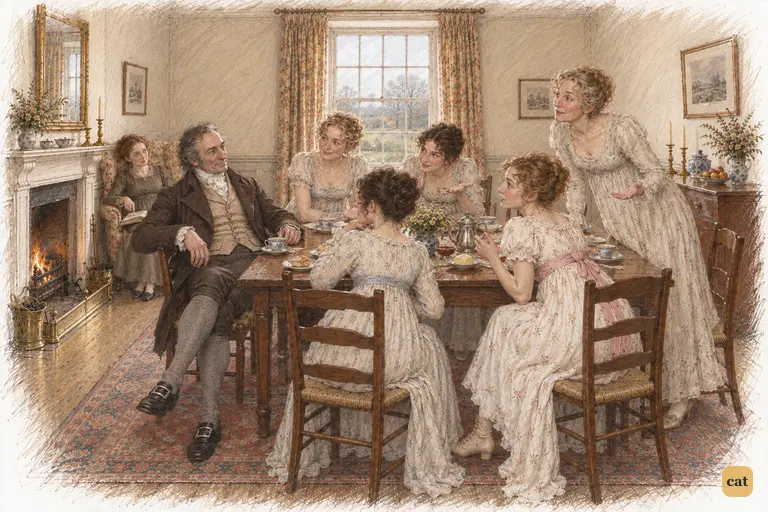
Six questioners at once
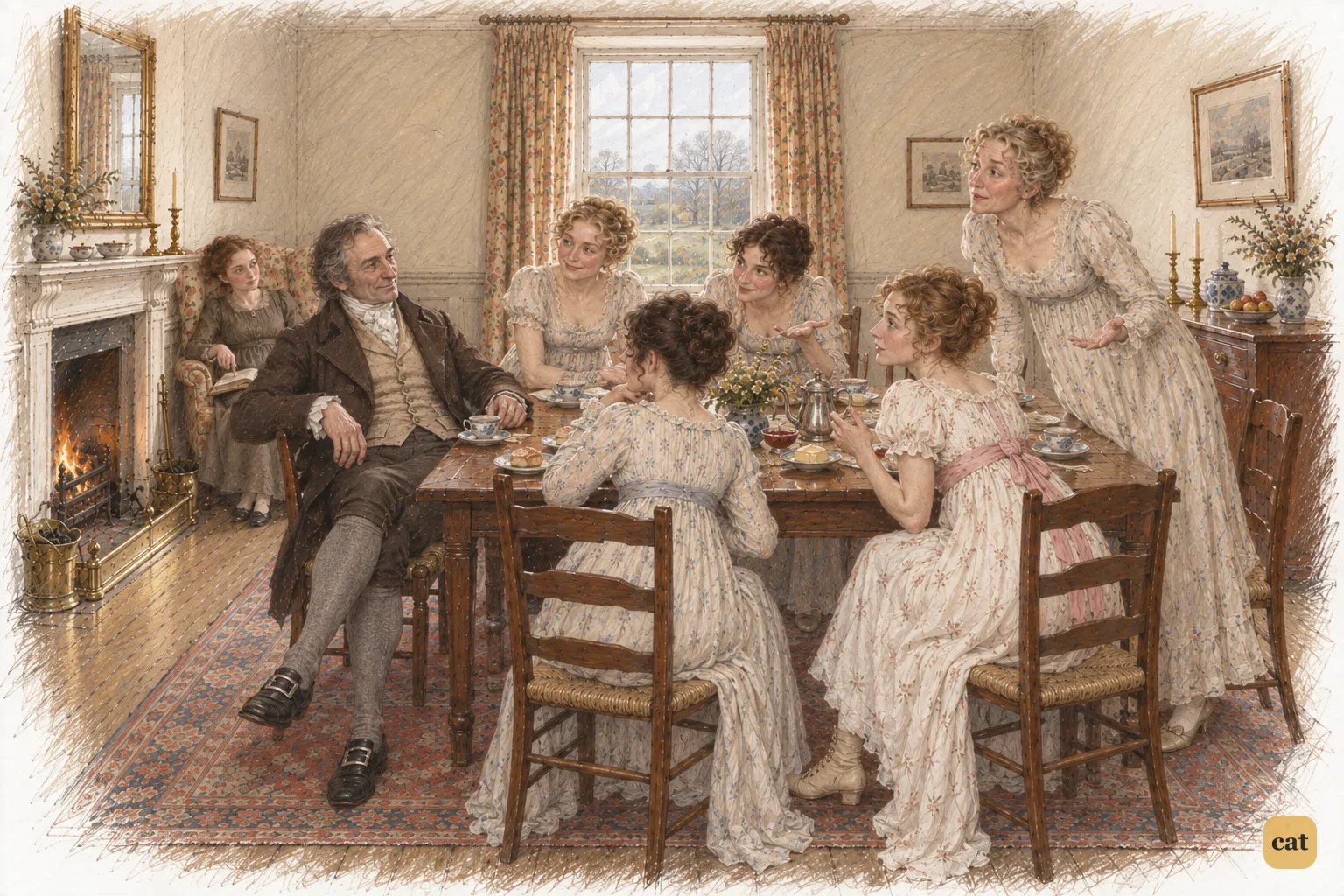
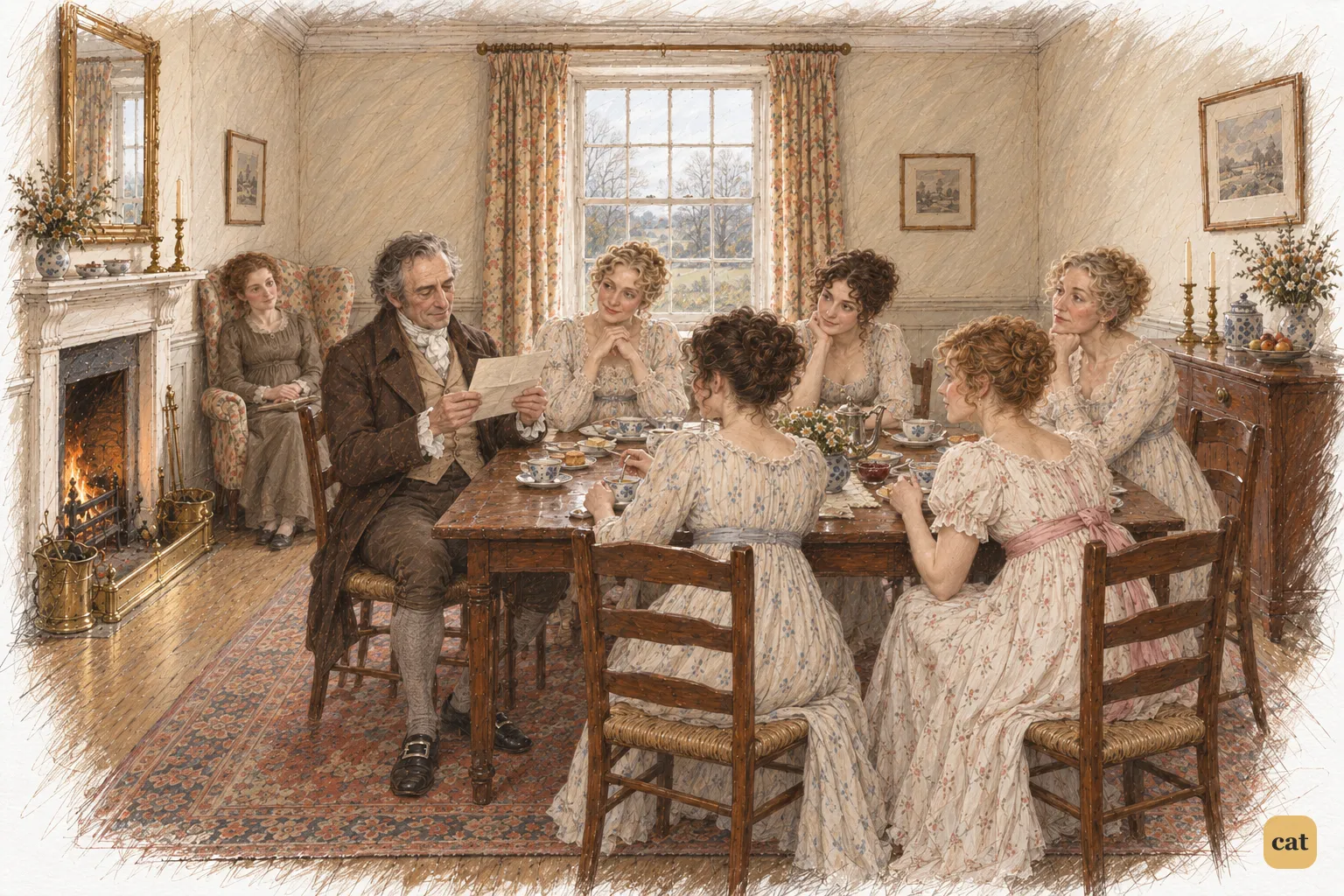
This roused a general astonishment; and he had the pleasure of being eagerly questioned by his wife and five daughters at once.
Read from here → -
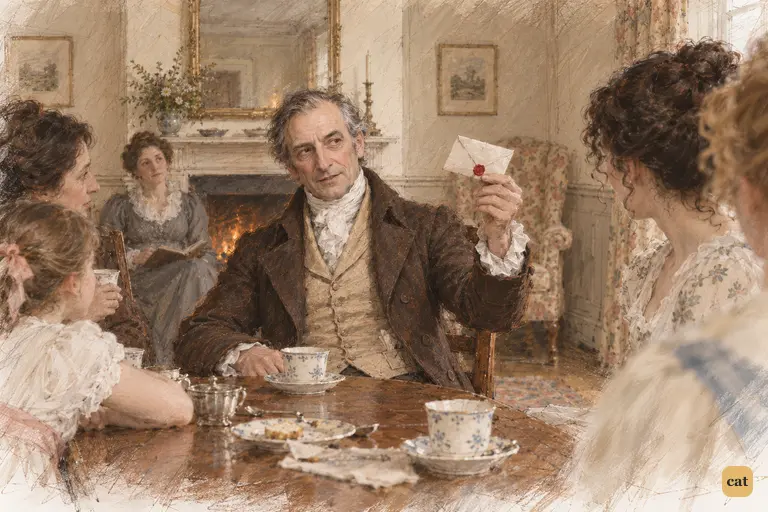
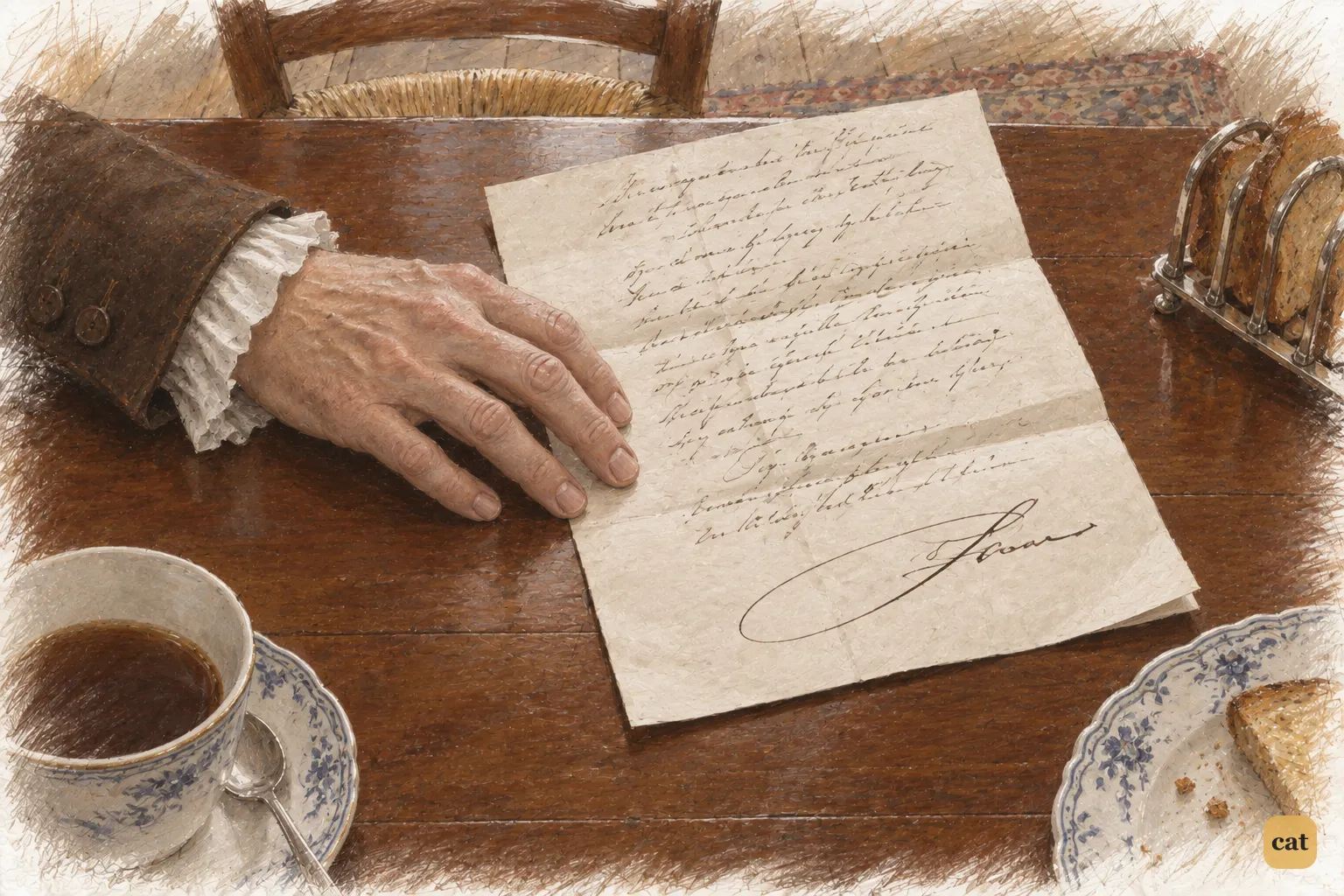
The letter produced
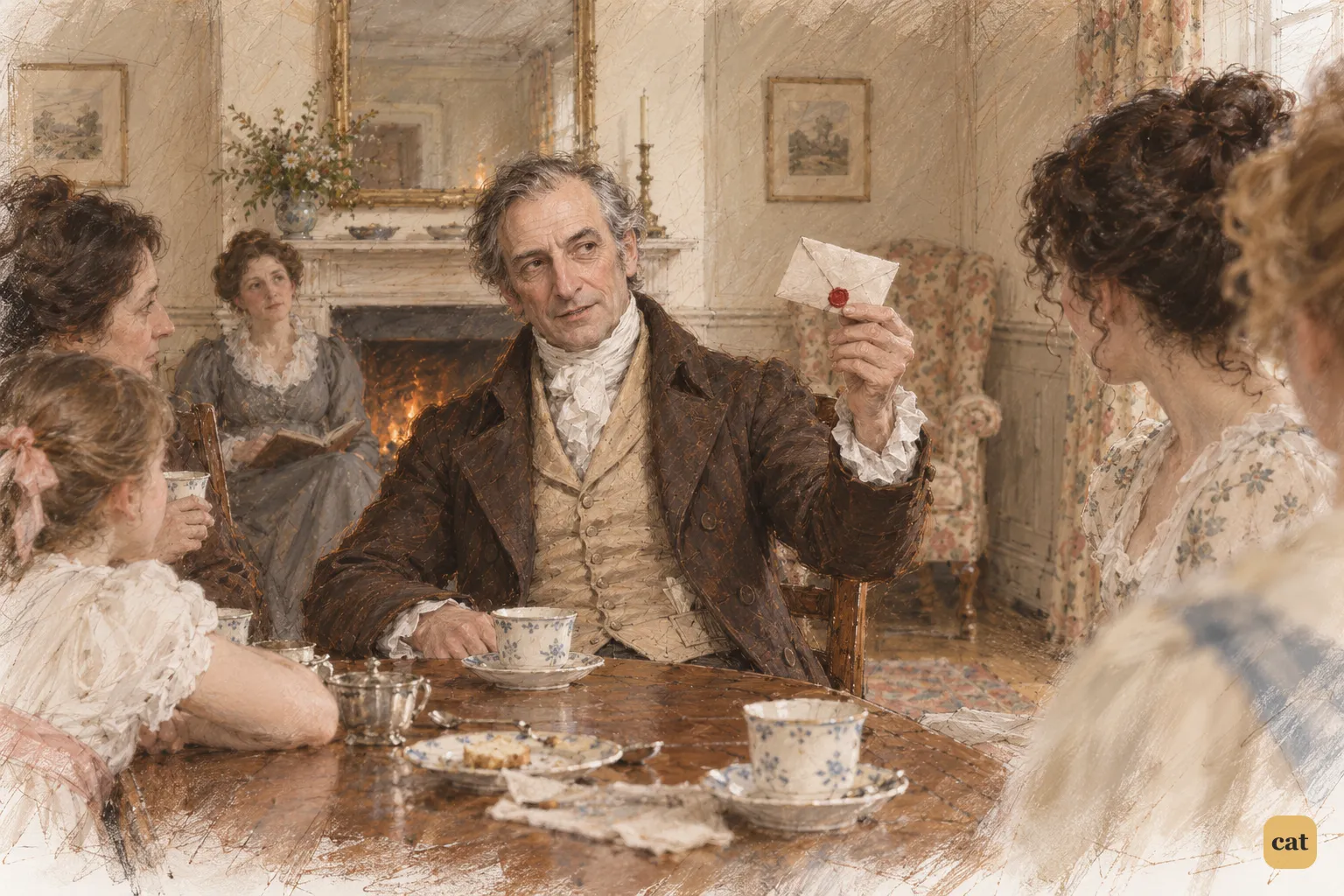
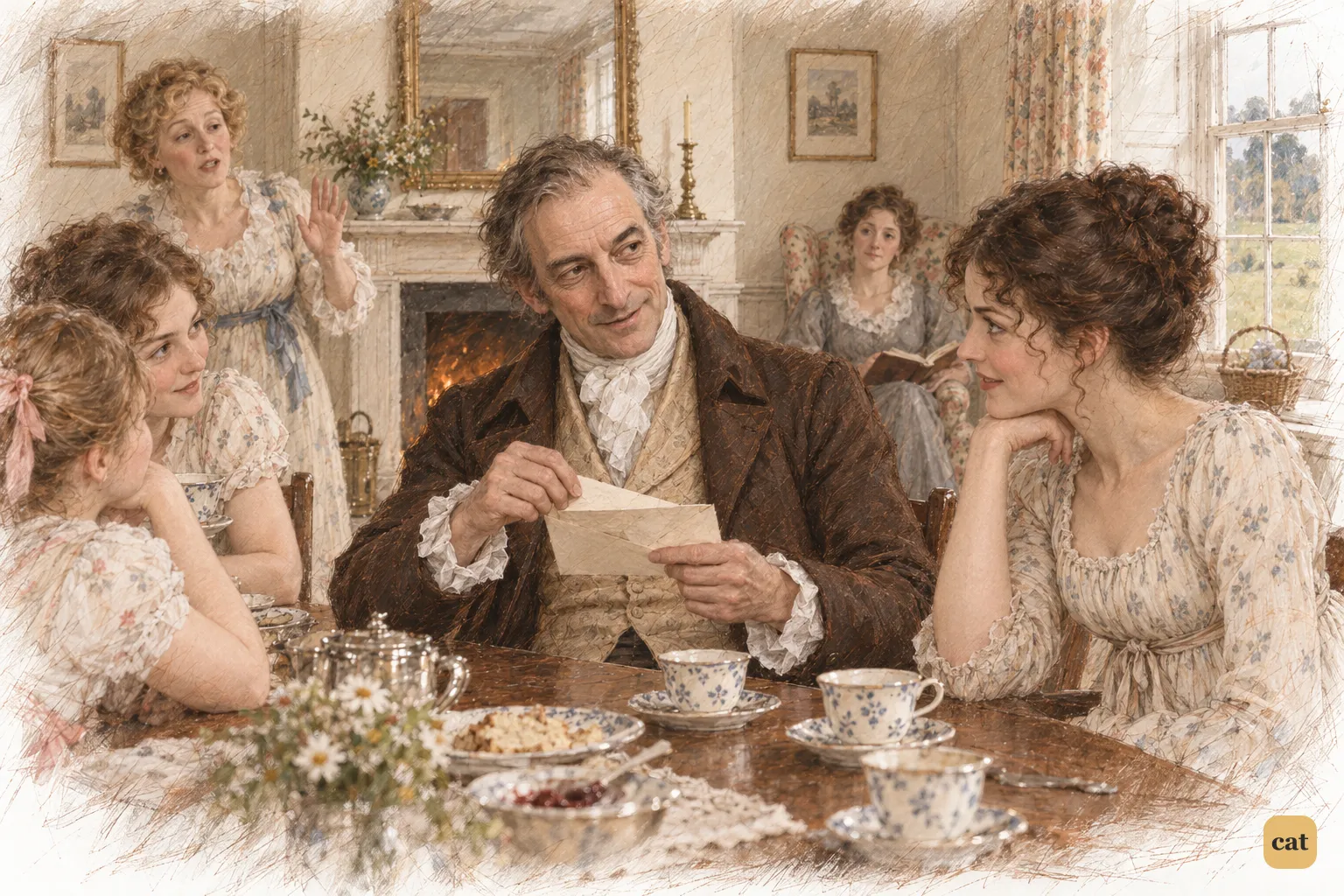
After amusing himself some time with their curiosity, he thus explained. "About a month ago I received this letter, and about a fortnight ago I answered it, for I thought it a case of some delicacy, and requiring early attention. It is from my cousin, Mr. Collins, who, when I am dead, may turn you all out of this house as soon as he pleases."
Read from here → -
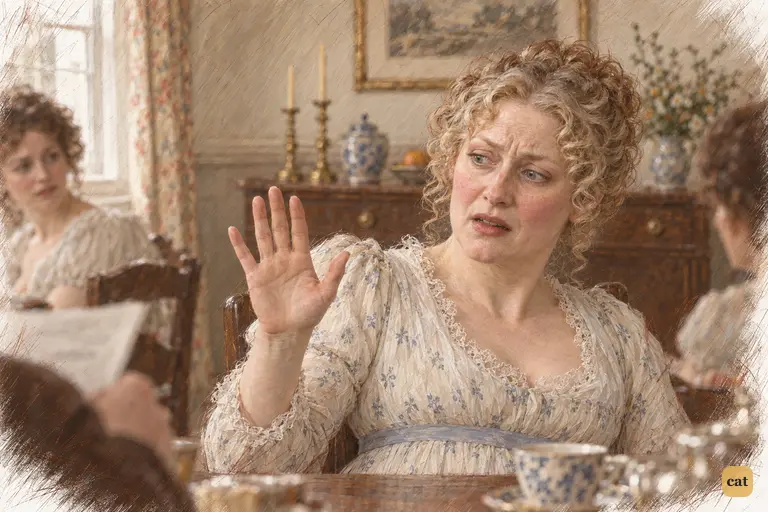
That odious man
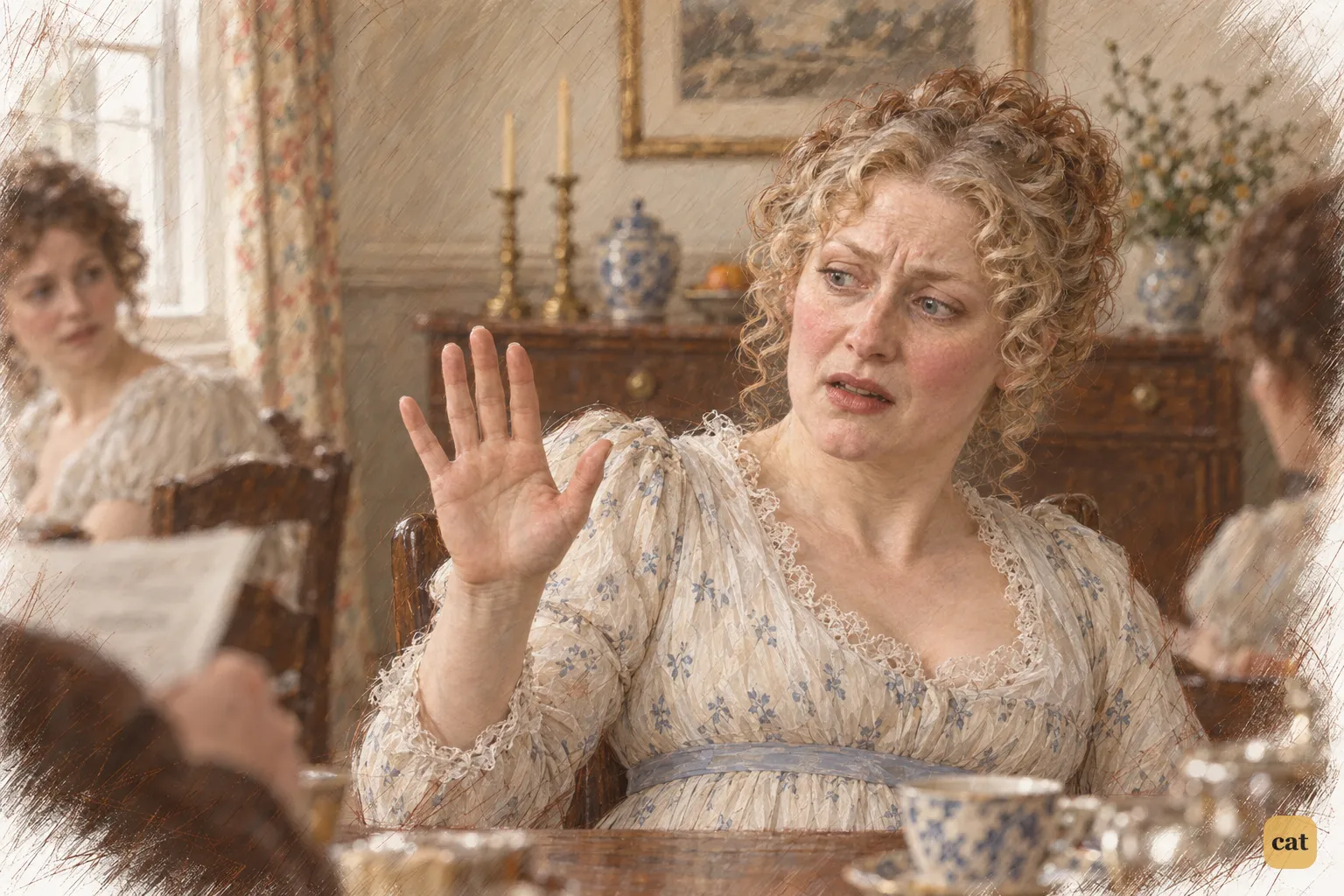
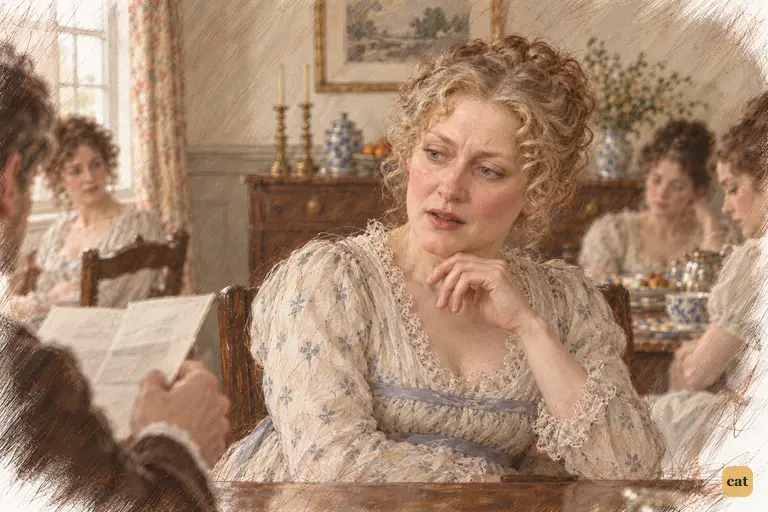
"Oh! my dear," cried his wife, "I cannot bear to hear that mentioned. Pray do not talk of that odious man. I do think it is the hardest thing in the world, that your estate should be entailed away from your own children; and I am sure if I had been you, I should have tried long ago to do something or other about it."
Read from here → -
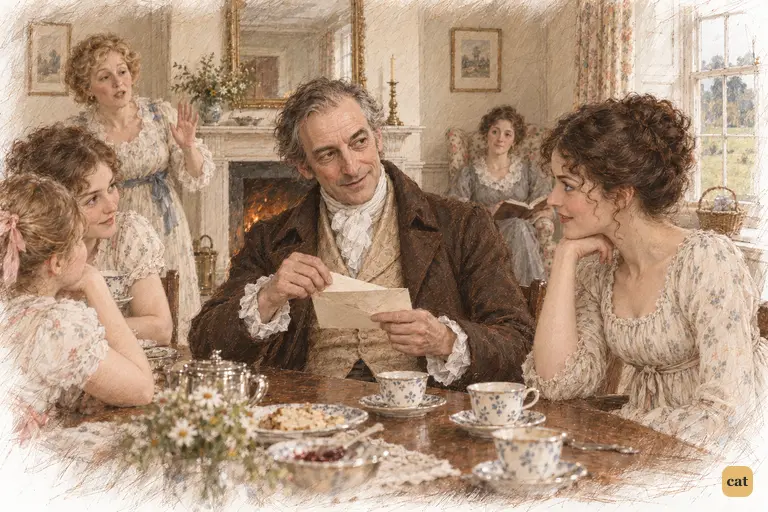
Listen to his letter
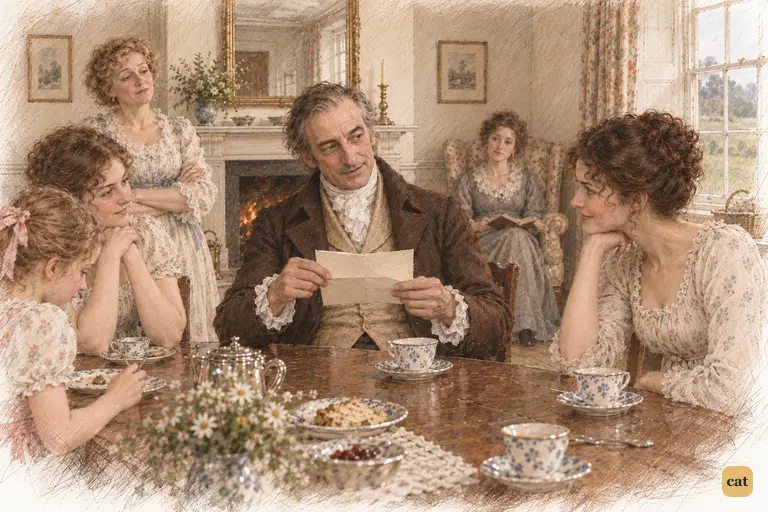
"It certainly is a most iniquitous affair," said Mr. Bennet, "and nothing can clear Mr. Collins from the guilt of inheriting Longbourn. But if you will listen to his letter, you may perhaps be a little softened by his manner of expressing himself."
Read from here → -
-
The olive branch
The disagreement subsisting between yourself and my late honoured
Read from here →
father, always gave me much uneasiness, and since I have had the
misfortune to lose him, I have frequently wished to heal the
breach; but for some time I was kept back by my own doubts, fearing
lest it might seem disrespectful to his memory for me to be on good
terms with any one, with whom it had always pleased him to be at
variance.—"There, Mrs. Bennet."—My mind however is now made up on
the subject, for having received ordination at Easter, I have been
so fortunate as to be distinguished by the patronage of the Right
Honourable Lady Catherine de Bourgh, widow of Sir Lewis de Bourgh,
whose bounty and beneficence has preferred me to the valuable
rectory of this parish, where it shall be my earnest endeavour to
demean myself with grateful respect towards her Ladyship, and be
ever ready to perform those rites and ceremonies which are
instituted by the Church of England. As a clergyman, moreover, I
feel it my duty to promote and establish the blessing of peace in
all families within the reach of my influence; and on these grounds
I flatter myself that my present overtures of good-will are highly
commendable, and that the circumstance of my being next in the
entail of Longbourn estate, will be kindly overlooked on your side,
and not lead you to reject the offered olive branch. I cannot be
otherwise than concerned at being the means of injuring your
amiable daughters, and beg leave to apologise for it, as well as to
assure you of my readiness to make them every possible amends,—but
of this hereafter. If you should have no objection to receive me
into your house, I propose myself the satisfaction of waiting on
you and your family, Monday, November 18th, by four o'clock, and
shall probably trespass on your hospitality till the Saturday
se'night following, which I can do without any inconvenience, as
Lady Catherine is far from objecting to my occasional absence on a
Sunday, provided that some other clergyman is engaged to do the
duty of the day. I remain, dear sir, with respectful compliments to
your lady and daughters, your well-wisher and friend, -
Every possible amends
The disagreement subsisting between yourself and my late honoured
Read from here →
father, always gave me much uneasiness, and since I have had the
misfortune to lose him, I have frequently wished to heal the
breach; but for some time I was kept back by my own doubts, fearing
lest it might seem disrespectful to his memory for me to be on good
terms with any one, with whom it had always pleased him to be at
variance.—"There, Mrs. Bennet."—My mind however is now made up on
the subject, for having received ordination at Easter, I have been
so fortunate as to be distinguished by the patronage of the Right
Honourable Lady Catherine de Bourgh, widow of Sir Lewis de Bourgh,
whose bounty and beneficence has preferred me to the valuable
rectory of this parish, where it shall be my earnest endeavour to
demean myself with grateful respect towards her Ladyship, and be
ever ready to perform those rites and ceremonies which are
instituted by the Church of England. As a clergyman, moreover, I
feel it my duty to promote and establish the blessing of peace in
all families within the reach of my influence; and on these grounds
I flatter myself that my present overtures of good-will are highly
commendable, and that the circumstance of my being next in the
entail of Longbourn estate, will be kindly overlooked on your side,
and not lead you to reject the offered olive branch. I cannot be
otherwise than concerned at being the means of injuring your
amiable daughters, and beg leave to apologise for it, as well as to
assure you of my readiness to make them every possible amends,—but
of this hereafter. If you should have no objection to receive me
into your house, I propose myself the satisfaction of waiting on
you and your family, Monday, November 18th, by four o'clock, and
shall probably trespass on your hospitality till the Saturday
se'night following, which I can do without any inconvenience, as
Lady Catherine is far from objecting to my occasional absence on a
Sunday, provided that some other clergyman is engaged to do the
duty of the day. I remain, dear sir, with respectful compliments to
your lady and daughters, your well-wisher and friend, -
-
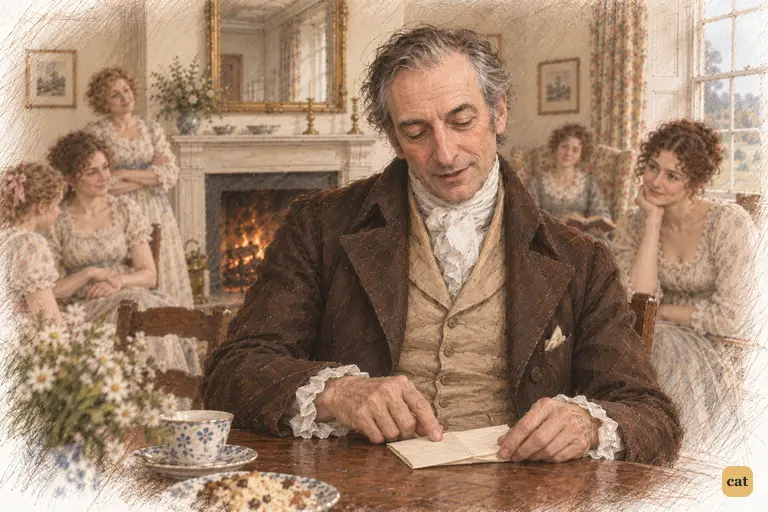
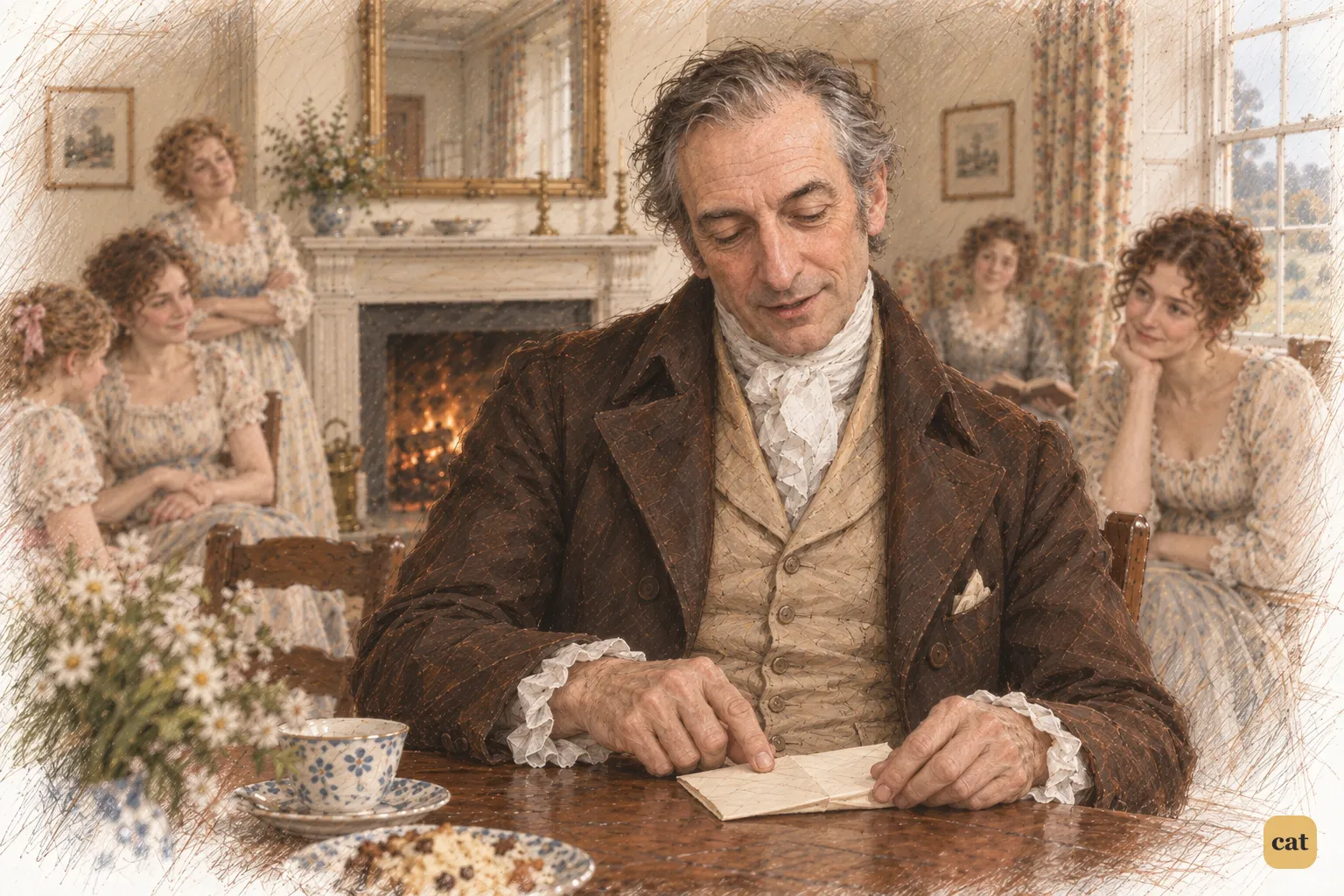
Folding the letter
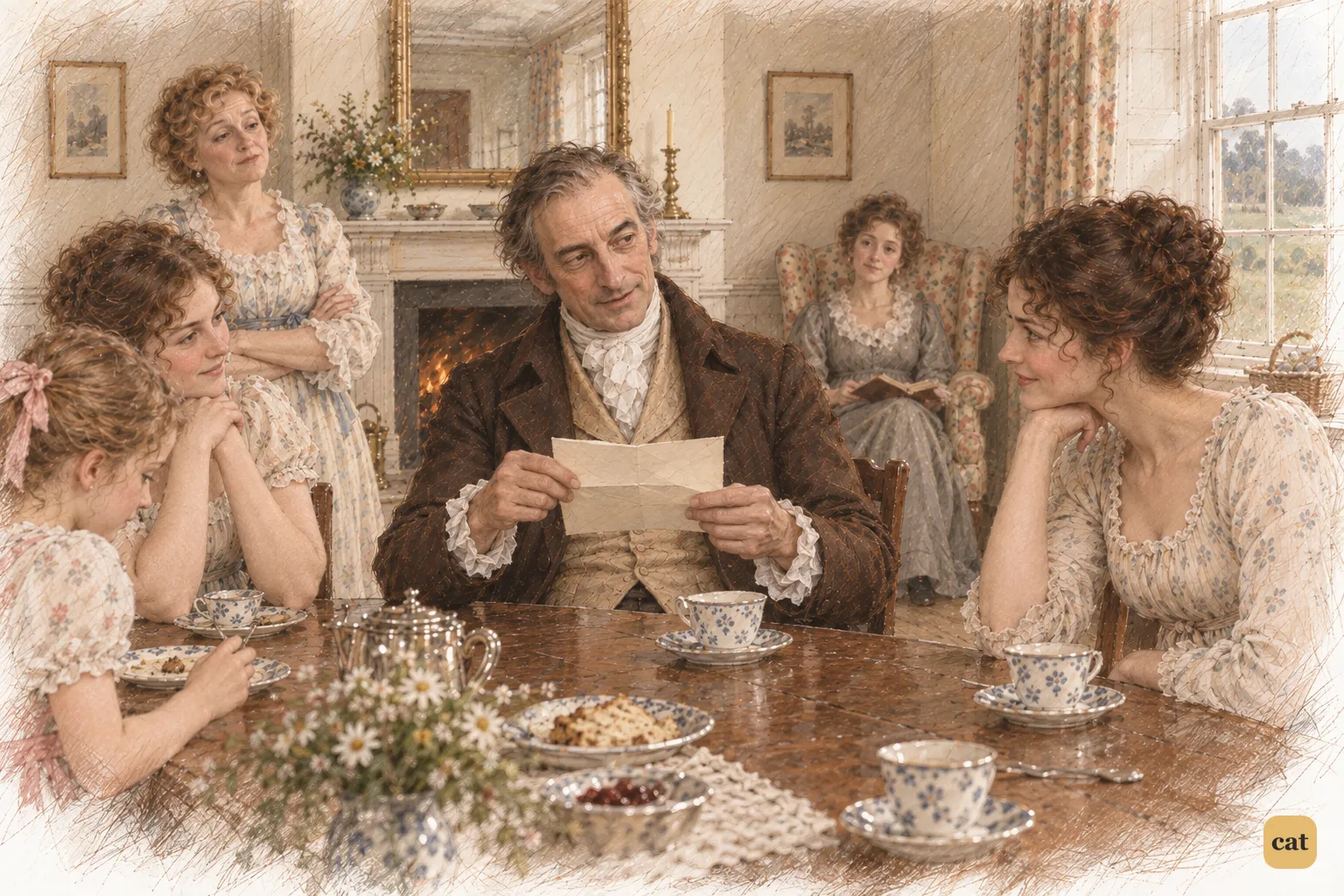
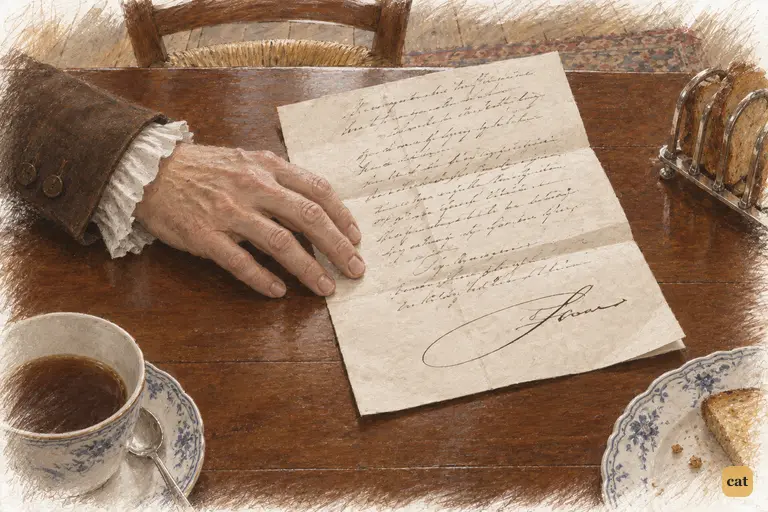
"At four o'clock, therefore, we may expect this peace-making gentleman," said Mr. Bennet, as he folded up the letter. "He seems to be a most conscientious and polite young man, upon my word; and I doubt not will prove a valuable acquaintance, especially if Lady Catherine should be so indulgent as to let him come to us again."
Read from here → -
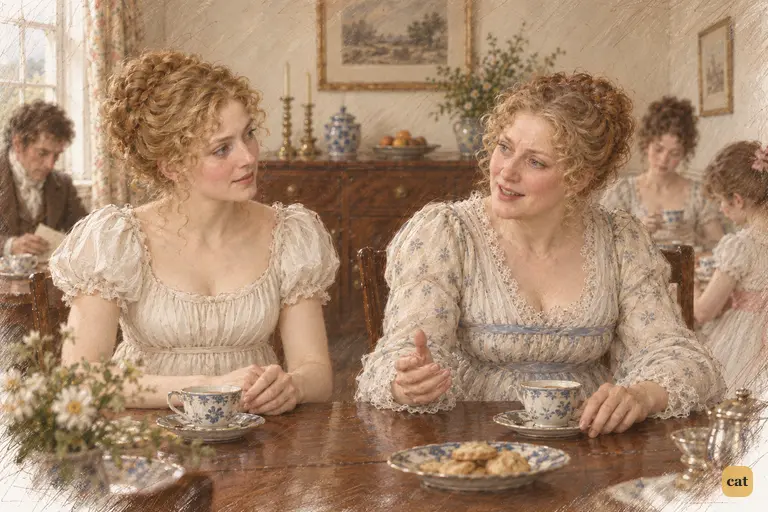
Some sense about the girls
"There is some sense in what he says about the girls however; and if he is disposed to make them any amends, I shall not be the person to discourage him."
Read from here → -

He must be an oddity
"He must be an oddity, I think," said she. "I cannot make him out.—There is something very pompous in his style.—And what can he mean by apologizing for being next in the entail?—We cannot suppose he would help it, if he could.—Can he be a sensible man, sir?"
Read from here → -
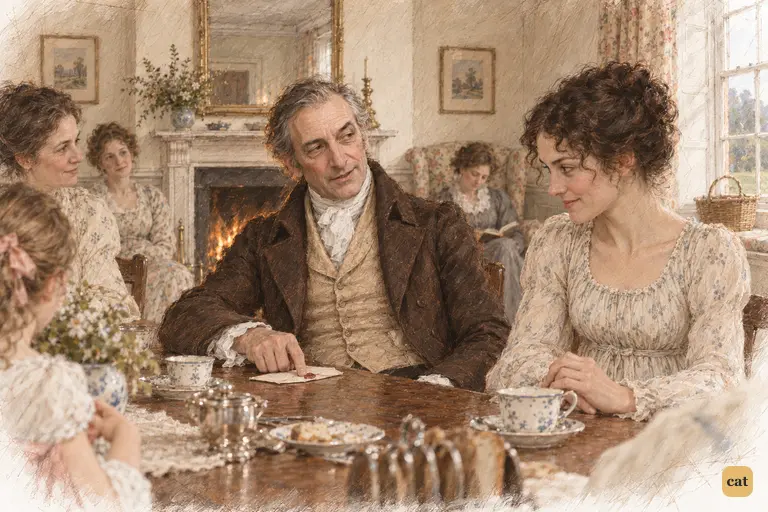
Impatient to see him
"No, my dear; I think not. I have great hopes of finding him quite the reverse. There is a mixture of servility and self-importance in his letter, which promises well. I am impatient to see him."
Read from here → -
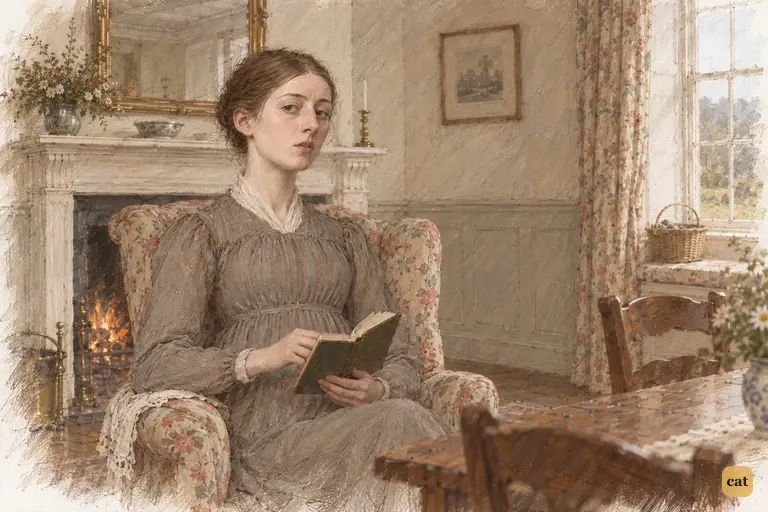
Mary on composition
"In point of composition," said Mary, "his letter does not seem defective. The idea of the olive branch perhaps is not wholly new, yet I think it is well expressed."
Read from here → -
Punctual at four
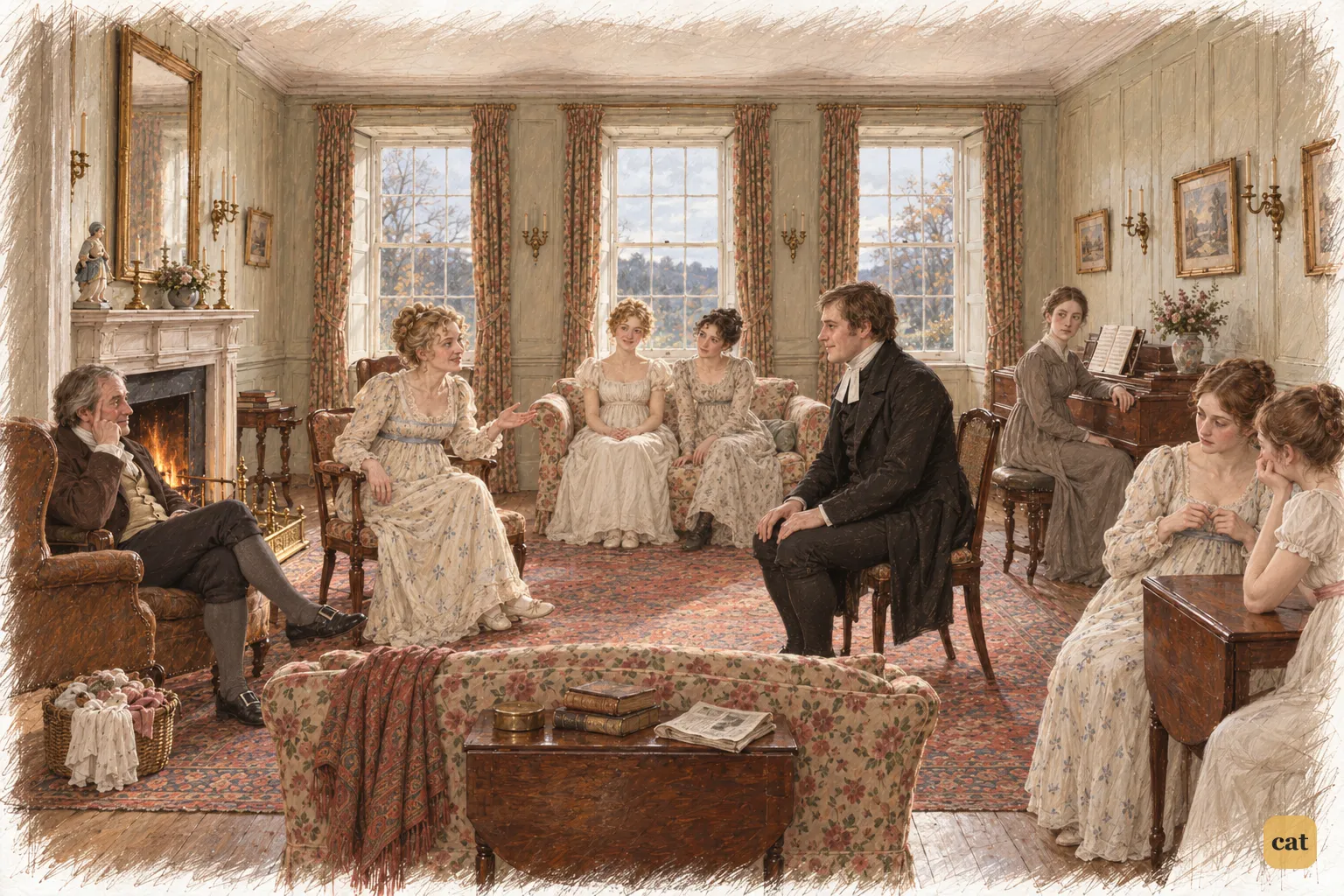
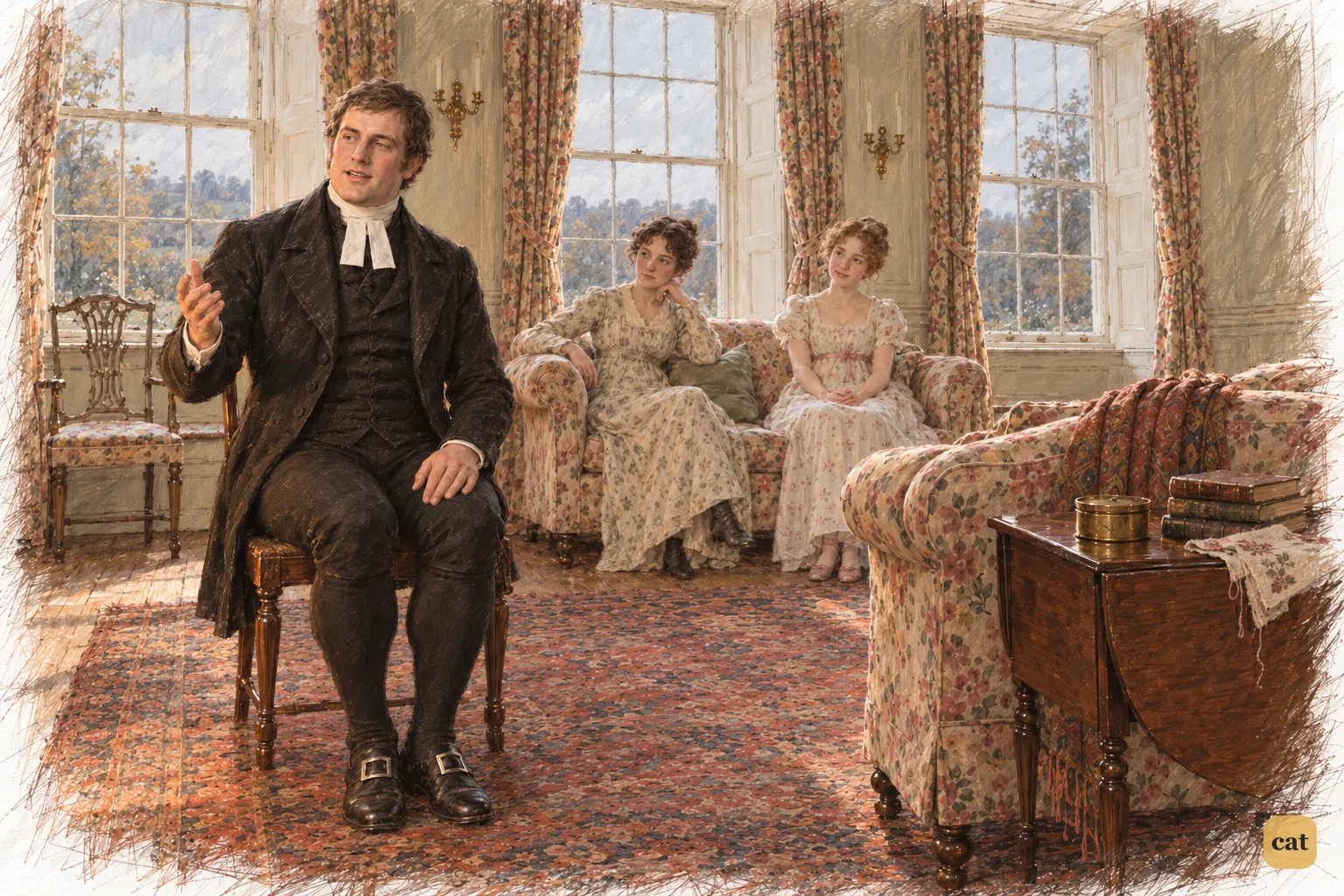
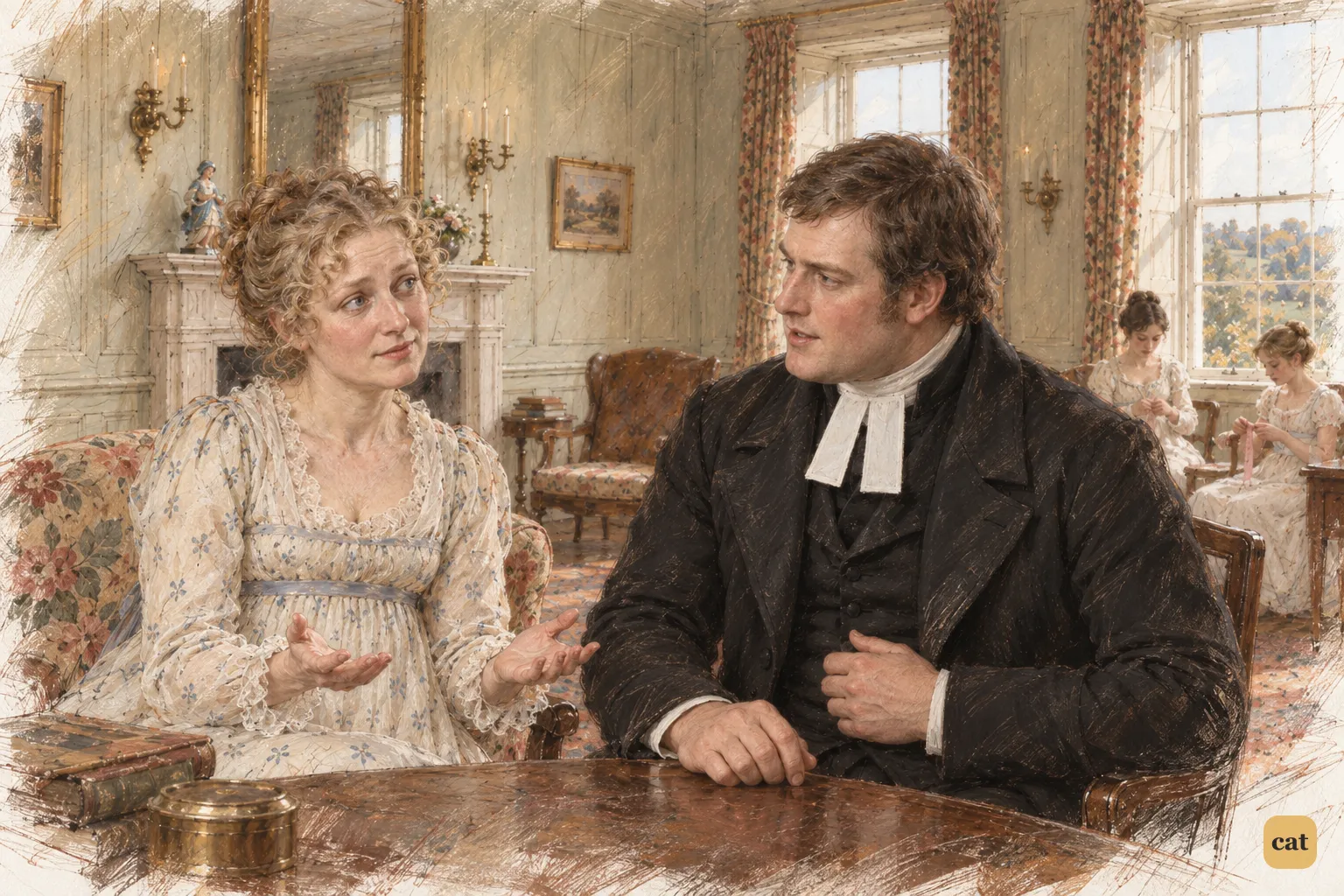
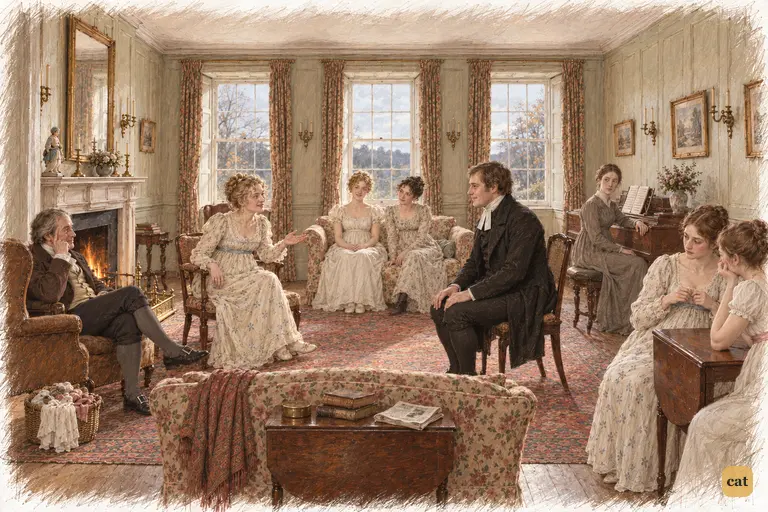
Mr. Collins was punctual to his time, and was received with great politeness by the whole family. Mr. Bennet indeed said little; but the ladies were ready enough to talk, and Mr. Collins seemed neither in need of encouragement, nor inclined to be silent himself. He was a tall, heavy looking young man of five and twenty. His air was grave and stately, and his manners were very formal. He had not been long seated before he complimented Mrs. Bennet on having so fine a family of daughters, said he had heard much of their beauty, but that, in this instance, fame had fallen short of the truth; and added, that he did not doubt her seeing them all in due time well disposed of in marriage. This gallantry was not much to the taste of some of his hearers, but Mrs. Bennet, who quarrelled with no compliments, answered most readily,
Read from here → -
A tall, heavy young man
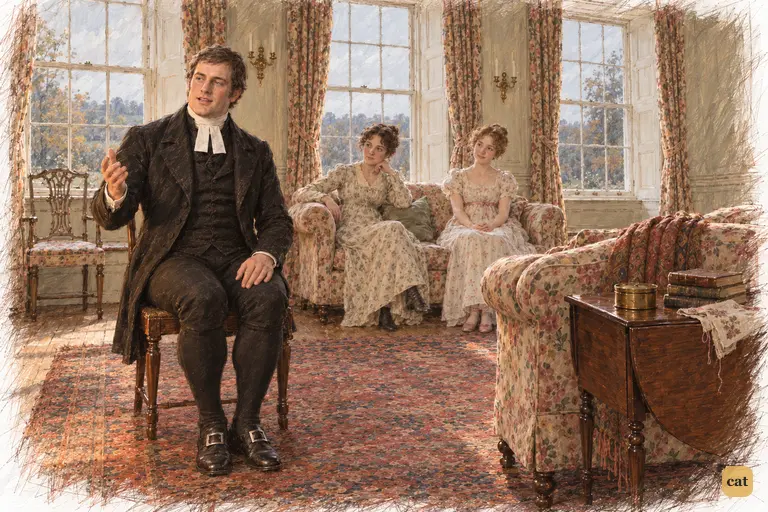
Mr. Collins was punctual to his time, and was received with great politeness by the whole family. Mr. Bennet indeed said little; but the ladies were ready enough to talk, and Mr. Collins seemed neither in need of encouragement, nor inclined to be silent himself. He was a tall, heavy looking young man of five and twenty. His air was grave and stately, and his manners were very formal. He had not been long seated before he complimented Mrs. Bennet on having so fine a family of daughters, said he had heard much of their beauty, but that, in this instance, fame had fallen short of the truth; and added, that he did not doubt her seeing them all in due time well disposed of in marriage. This gallantry was not much to the taste of some of his hearers, but Mrs. Bennet, who quarrelled with no compliments, answered most readily,
Read from here → -
Destitute enough
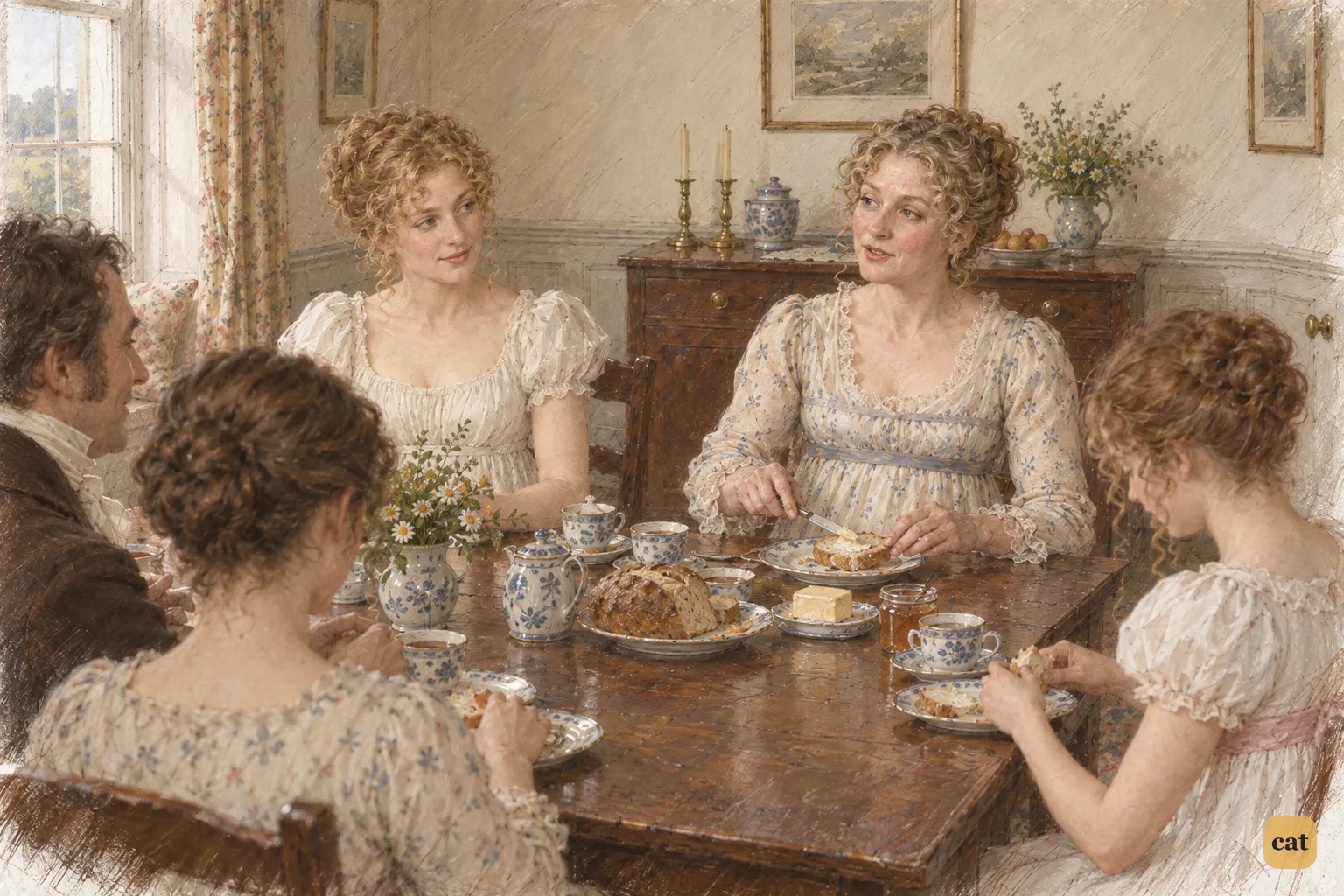
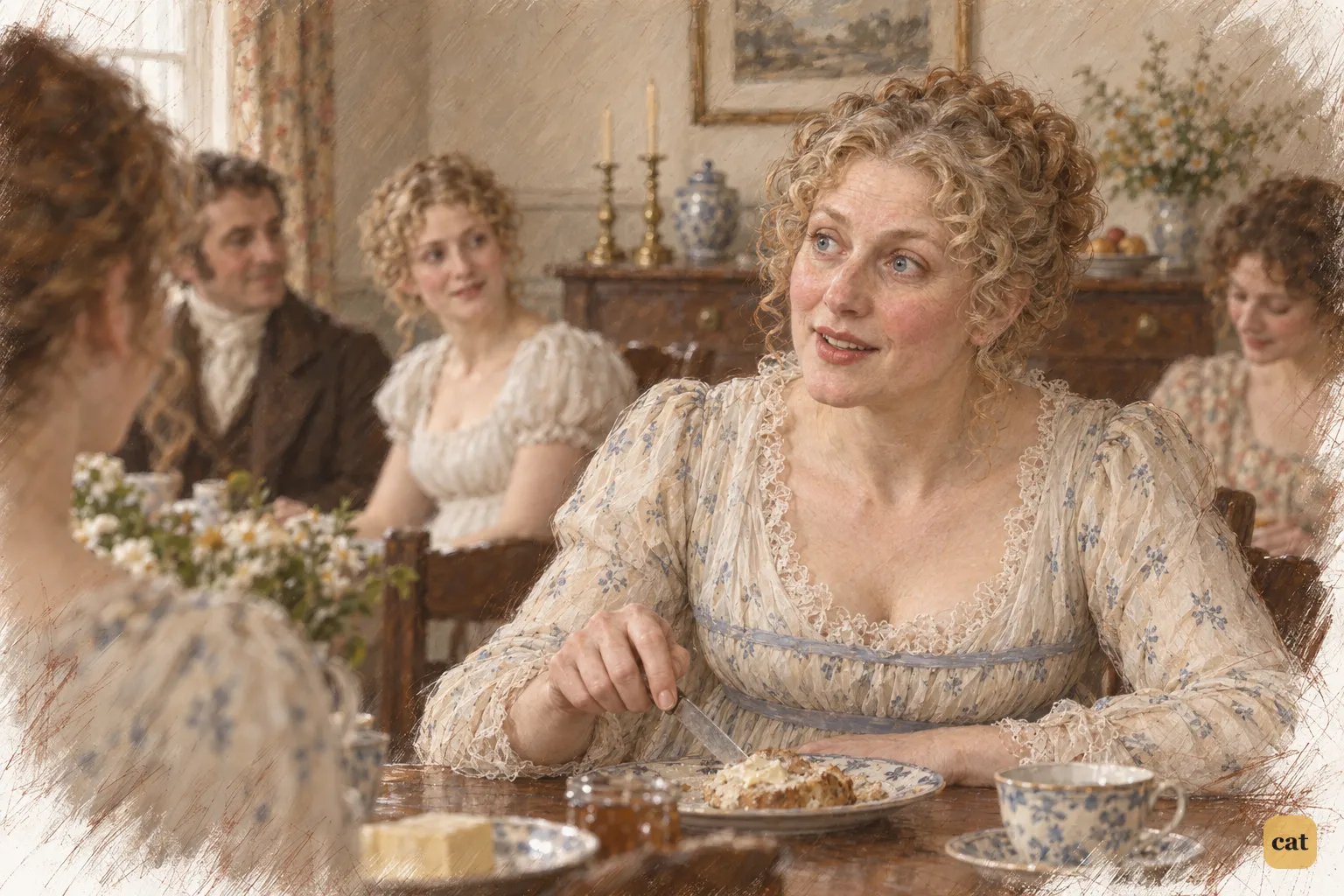
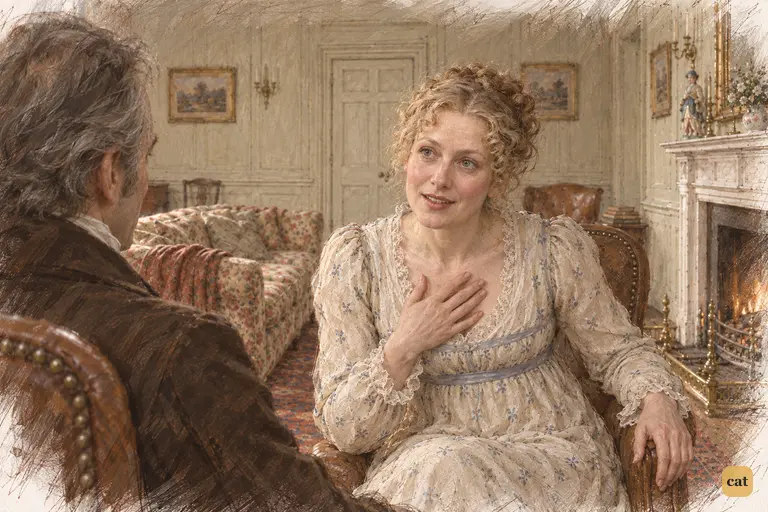
"You are very kind, sir, I am sure; and I wish with all my heart it may prove so; for else they will be destitute enough. Things are settled so oddly."
Read from here → -
-

Prepared to admire them
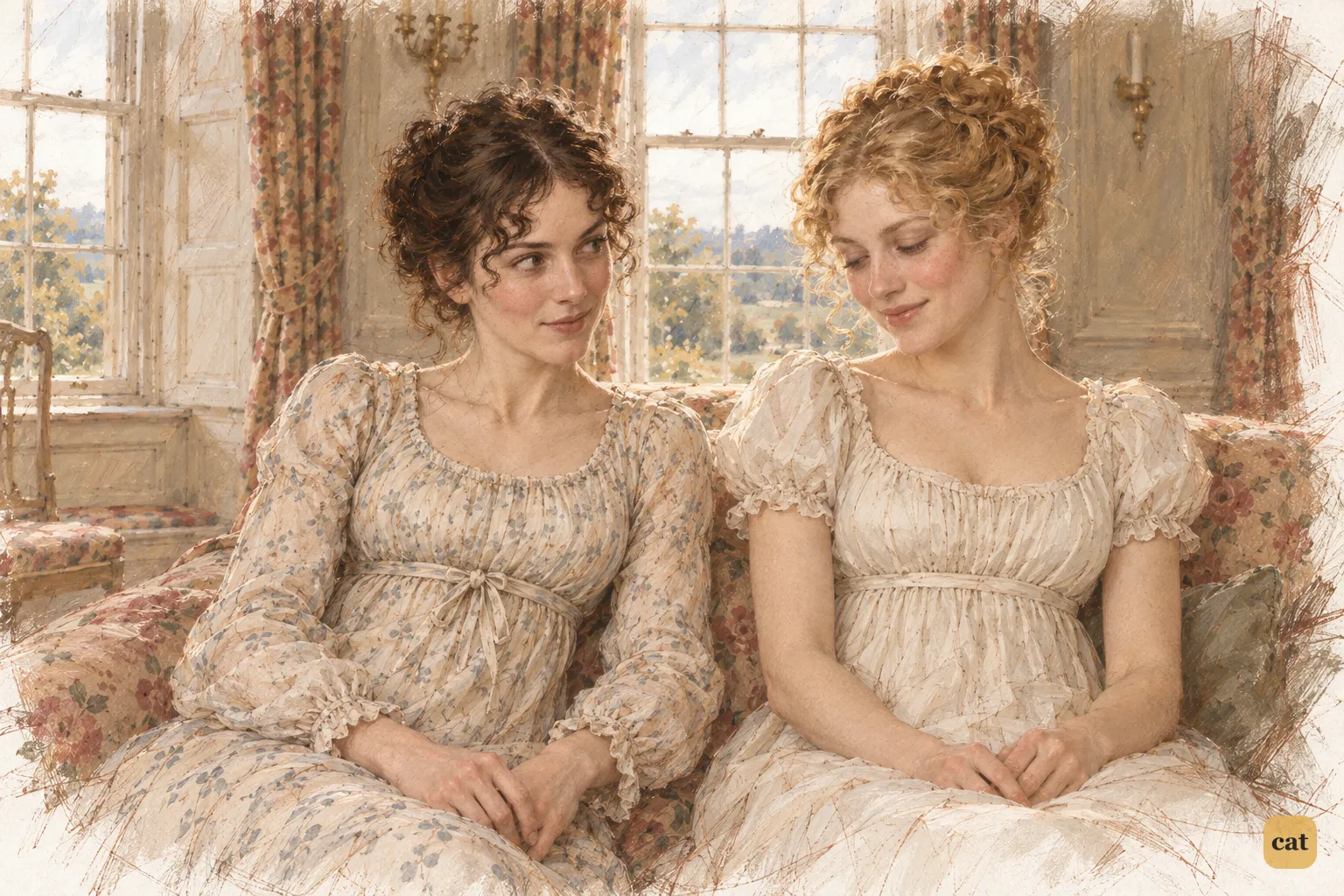
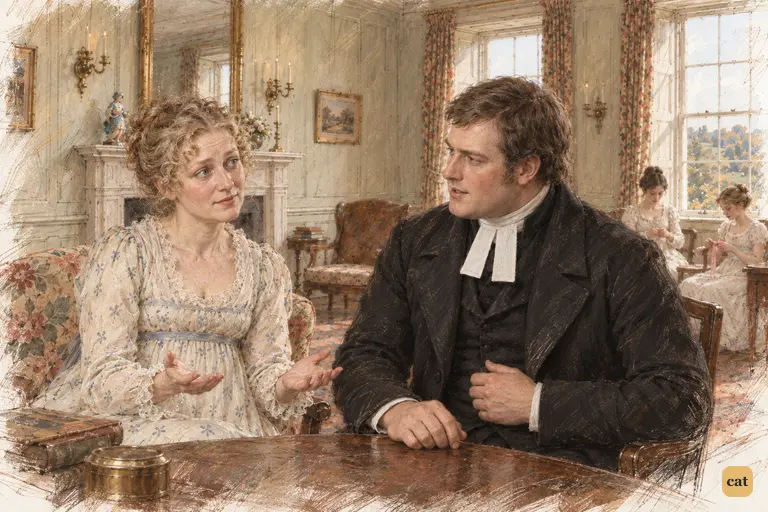
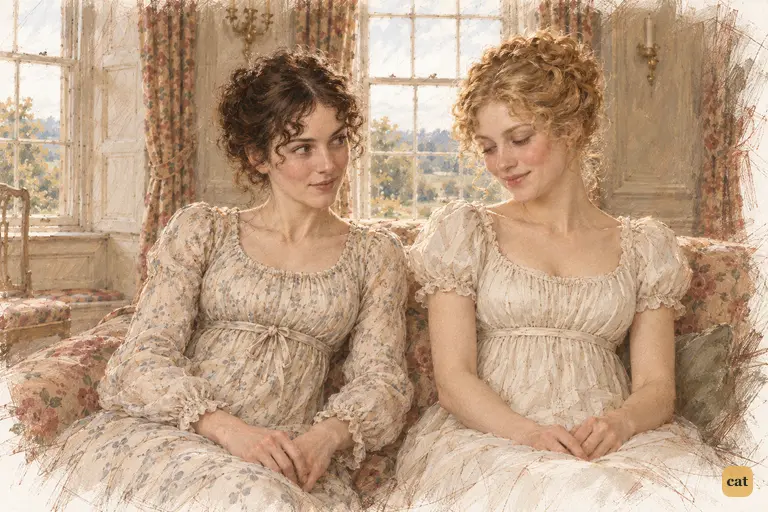
"I am very sensible, madam, of the hardship to my fair cousins,—and could say much on the subject, but that I am cautious of appearing forward and precipitate. But I can assure the young ladies that I come prepared to admire them. At present I will not say more, but perhaps when we are better acquainted——"
Read from here → -
Sisters exchange a look
"I am very sensible, madam, of the hardship to my fair cousins,—and could say much on the subject, but that I am cautious of appearing forward and precipitate. But I can assure the young ladies that I come prepared to admire them. At present I will not say more, but perhaps when we are better acquainted——"
Read from here → -
His own future property
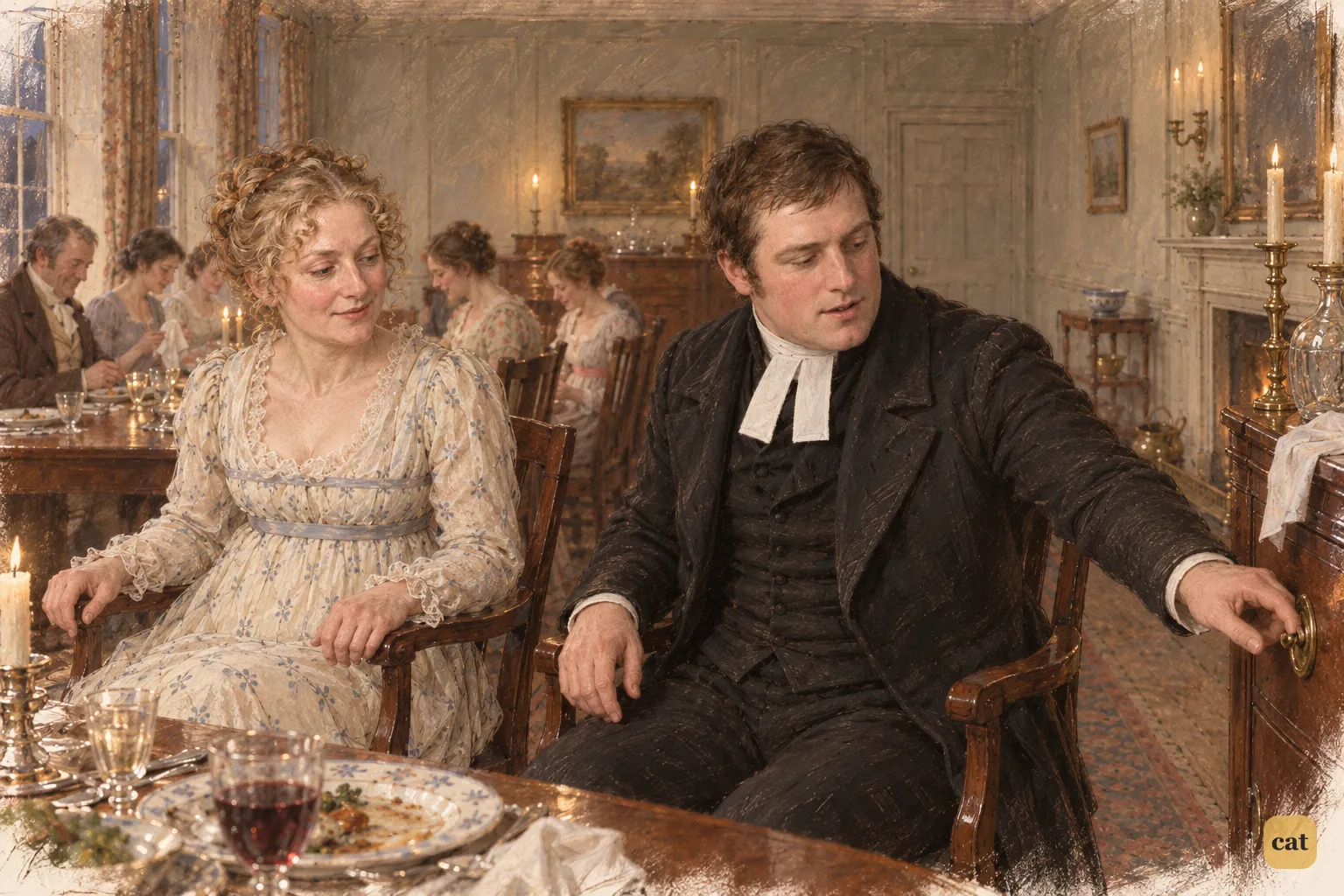
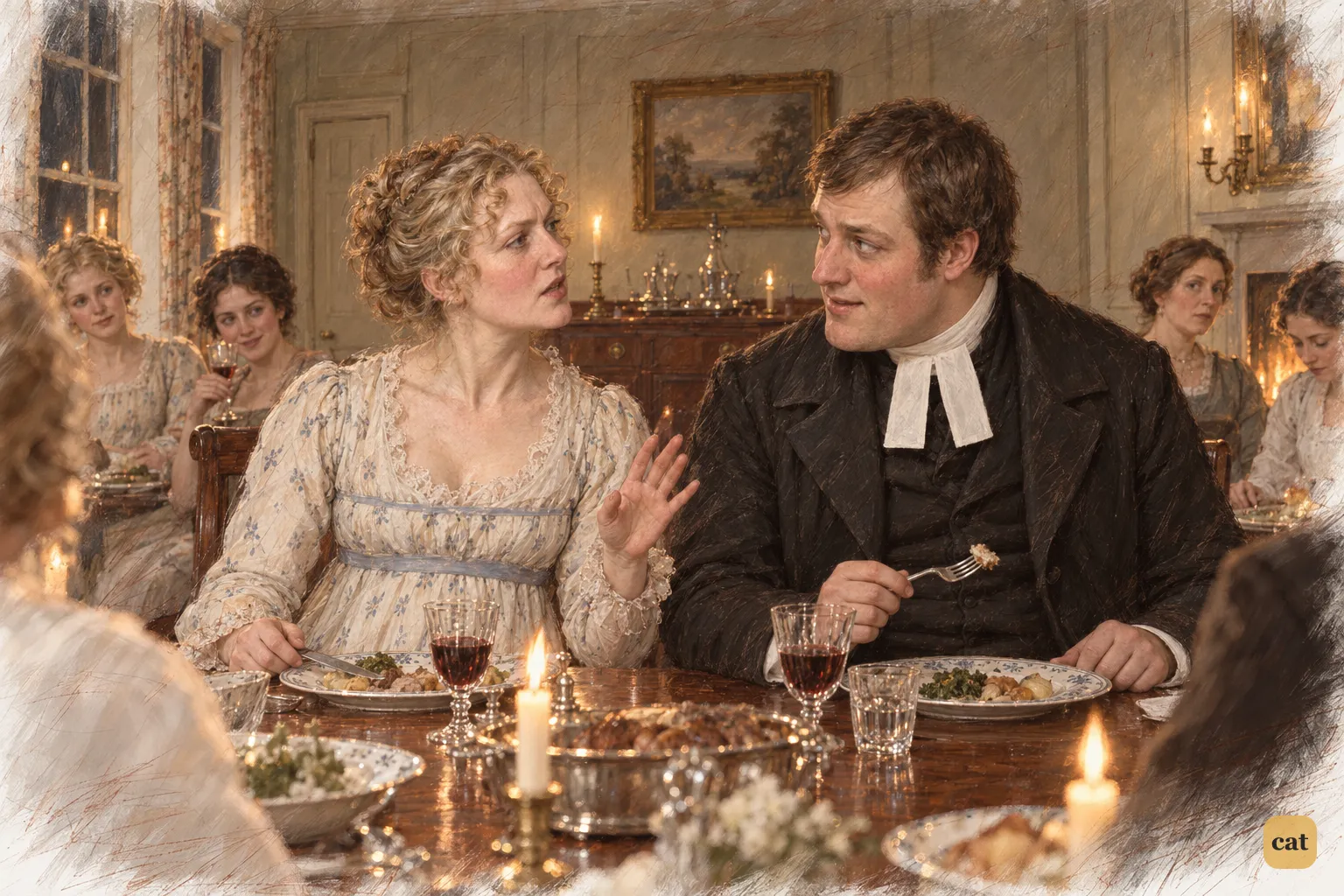
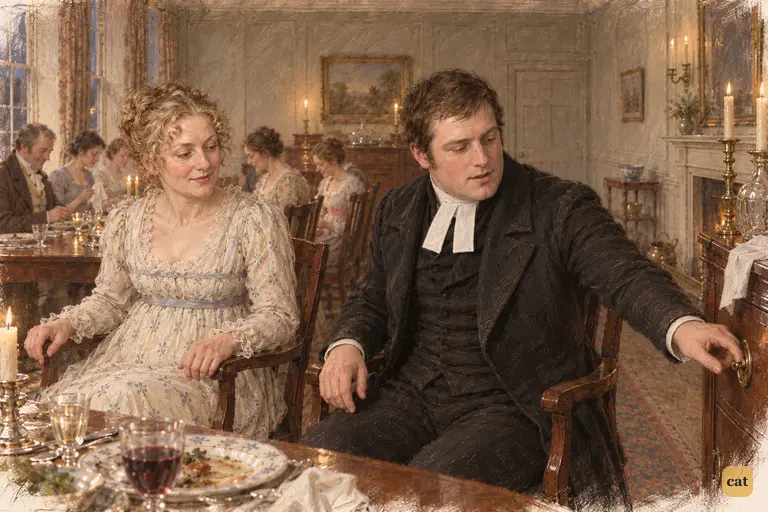
He was interrupted by a summons to dinner; and the girls smiled on each other. They were not the only objects of Mr. Collins's admiration. The hall, the dining-room, and all its furniture were examined and praised; and his commendation of every thing would have touched Mrs. Bennet's heart, but for the mortifying supposition of his viewing it all as his own future property. The dinner too in its turn was highly admired; and he begged to know to which of his fair cousins, the excellence of its cookery was owing. But here he was set right by Mrs. Bennet, who assured him with some asperity that they were very well able to keep a good cook, and that her daughters had nothing to do in the kitchen. He begged pardon for having displeased her. In a softened tone she declared herself not at all offended; but he continued to apologise for about a quarter of an hour.
Read from here → -

Which cousin cooked it
He was interrupted by a summons to dinner; and the girls smiled on each other. They were not the only objects of Mr. Collins's admiration. The hall, the dining-room, and all its furniture were examined and praised; and his commendation of every thing would have touched Mrs. Bennet's heart, but for the mortifying supposition of his viewing it all as his own future property. The dinner too in its turn was highly admired; and he begged to know to which of his fair cousins, the excellence of its cookery was owing. But here he was set right by Mrs. Bennet, who assured him with some asperity that they were very well able to keep a good cook, and that her daughters had nothing to do in the kitchen. He begged pardon for having displeased her. In a softened tone she declared herself not at all offended; but he continued to apologise for about a quarter of an hour.
Read from here → -
Set right with asperity
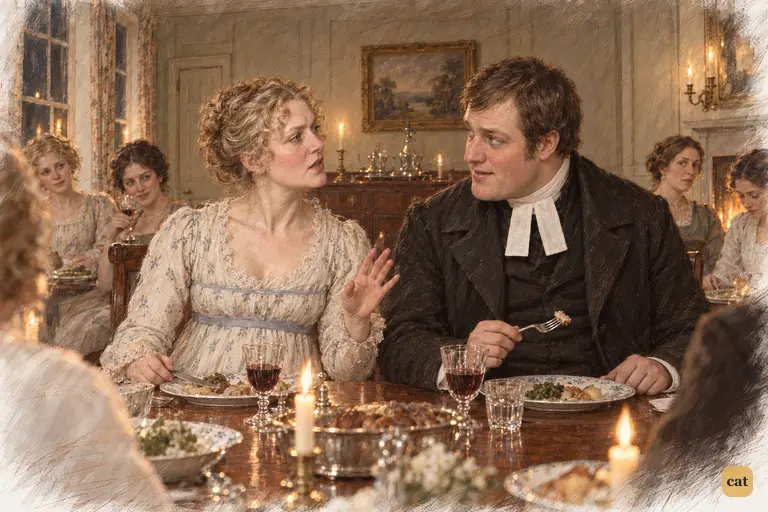
He was interrupted by a summons to dinner; and the girls smiled on each other. They were not the only objects of Mr. Collins's admiration. The hall, the dining-room, and all its furniture were examined and praised; and his commendation of every thing would have touched Mrs. Bennet's heart, but for the mortifying supposition of his viewing it all as his own future property. The dinner too in its turn was highly admired; and he begged to know to which of his fair cousins, the excellence of its cookery was owing. But here he was set right by Mrs. Bennet, who assured him with some asperity that they were very well able to keep a good cook, and that her daughters had nothing to do in the kitchen. He begged pardon for having displeased her. In a softened tone she declared herself not at all offended; but he continued to apologise for about a quarter of an hour.
Read from here → -
Candles burnt low
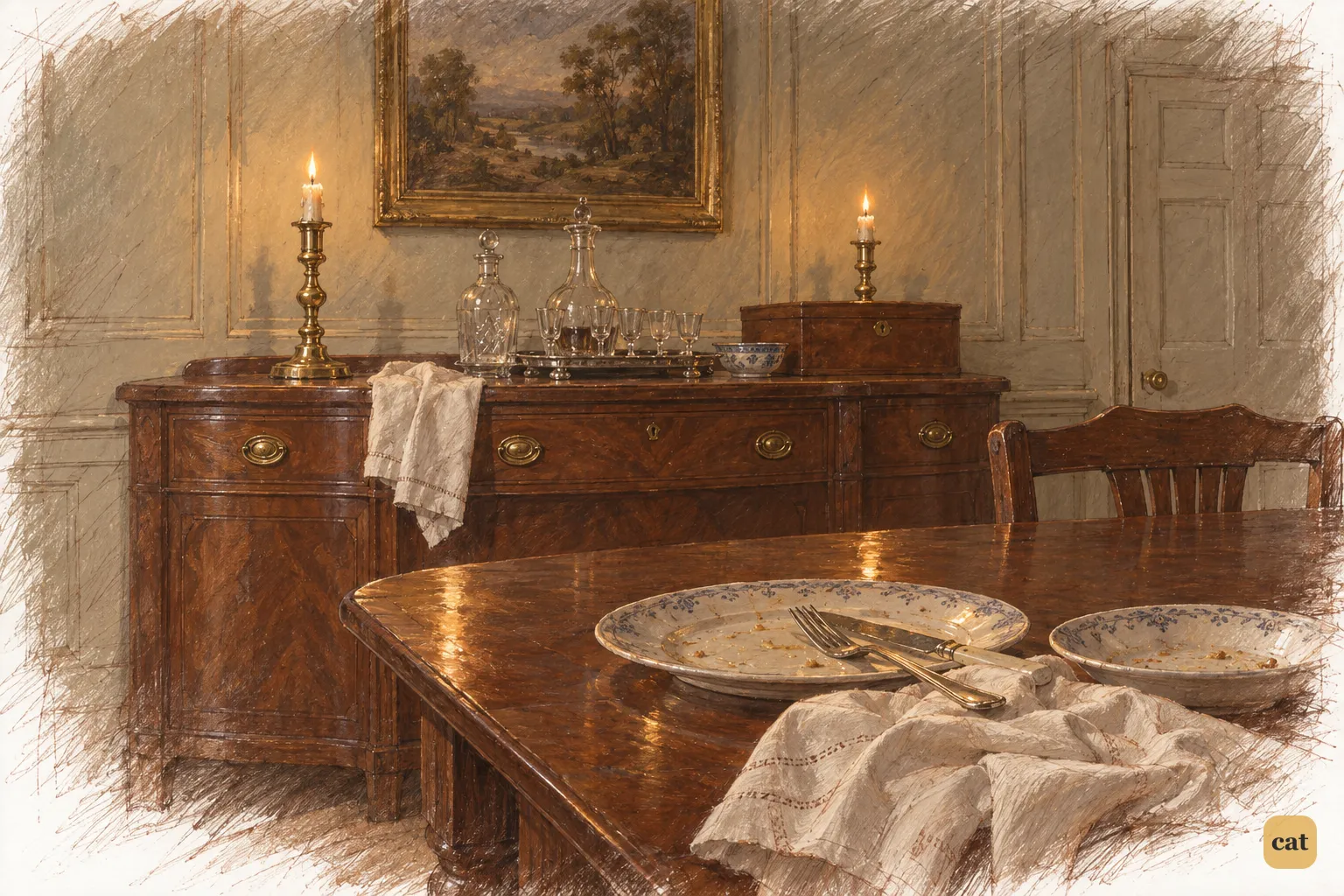
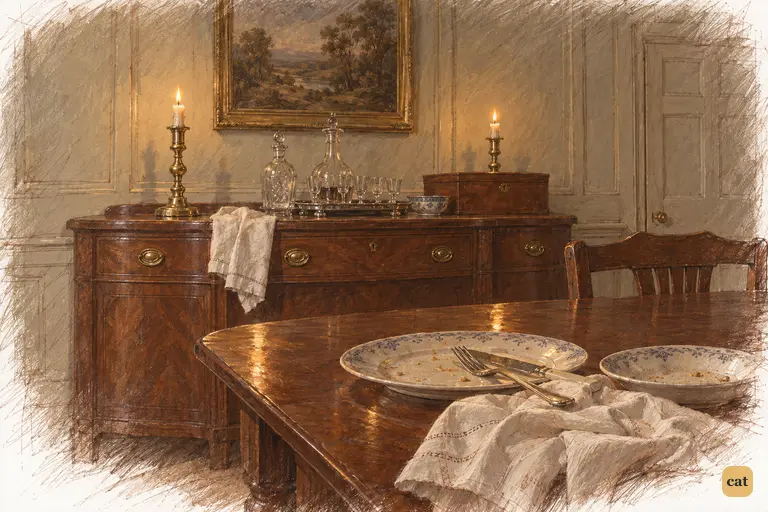
He was interrupted by a summons to dinner; and the girls smiled on each other. They were not the only objects of Mr. Collins's admiration. The hall, the dining-room, and all its furniture were examined and praised; and his commendation of every thing would have touched Mrs. Bennet's heart, but for the mortifying supposition of his viewing it all as his own future property. The dinner too in its turn was highly admired; and he begged to know to which of his fair cousins, the excellence of its cookery was owing. But here he was set right by Mrs. Bennet, who assured him with some asperity that they were very well able to keep a good cook, and that her daughters had nothing to do in the kitchen. He begged pardon for having displeased her. In a softened tone she declared herself not at all offended; but he continued to apologise for about a quarter of an hour.
Read from here → -
Chapter 13
Mr. Collins arrives at Longbourn
Next chapter: Mr. Collins at Longbourn table Read this chapter